TOKYO — In an era dominated by mass production and disposable convenience, the enduring appeal of Japanese craftsmanship offers a radical counter-narrative. A fine kitchen knife is rarely viewed merely as a utilitarian object in Japan; rather, it is an extension of the artisan’s hand, a lifelong companion designed to be sharpened, repaired, and passed down through generations.
Capturing this philosophy in physical form, the newly unveiled Tojiro Knife Gallery Tokyo "Hanare"—designed by architectural studio L/O (KATATA YOSHISHITO DESIGN)—redefines how we experience retail, craftsmanship, and material culture.
Main Facts: A Sanctuary for Custom Blades
The Tojiro Knife Gallery Tokyo "Hanare" (meaning "detached annex") is not a standard retail storefront. While Tojiro’s primary flagship stores function as comprehensive showrooms displaying the brand’s expansive production lines, the "Hanare" annex was conceived to answer a very specific architectural and cultural demand: individual commissions.
Core Concept: A specialized, intimate environment dedicated to bespoke experiences, one-off pieces, semi-custom blades, and fully custom kitchen cutlery.
Design Philosophy: Moving away from the high-volume retail rush, the space is engineered around the concept of time—offering clients an unhurried, contemplative atmosphere to discover a blade that will last a lifetime.
Chronology: The Evolution of Tojiro’s Retail Experience
To understand the necessity of the "Hanare" annex, one must trace the recent trajectory of Tojiro’s engagement with Tokyo’s design-conscious consumers and culinary professionals.
Phase 1: Establishing the Flagship Presence
For years, Tojiro’s main galleries focused on accessibility and scale. They served as educational hubs where customers could compare hundreds of stainless-steel and carbon-steel blades, learn traditional waterstone sharpening techniques, and grasp the storied heritage of Japanese blade-making traditions rooted in regions like Niigata prefecture.
Phase 2: The Shift Toward Personalization
As global appreciation for artisanal craftsmanship surged, Tojiro noticed an evolving consumer demographic. Chefs, culinary enthusiasts, and design aficionados were no longer satisfied solely with off-the-shelf solutions. They sought personalized ergonomics, specialized metallurgy, custom handle materials, and bespoke engravings.
Phase 3: Conceiving "Hanare" with L/O
Realizing that the high-traffic flagship stores could not provide the quiet, meditative environment required for complex, bespoke consultations, Tojiro commissioned L/O (KATATA YOSHISHITO DESIGN). The architects were tasked with designing an annex ("Hanare") that would shift the retail paradigm from browsing and buying to consultation and creation. The project culminated in the newly opened space, celebrated for its restrained materiality, spatial sequencing, and reverence for the craft.
Supporting Data & Architectural Analysis
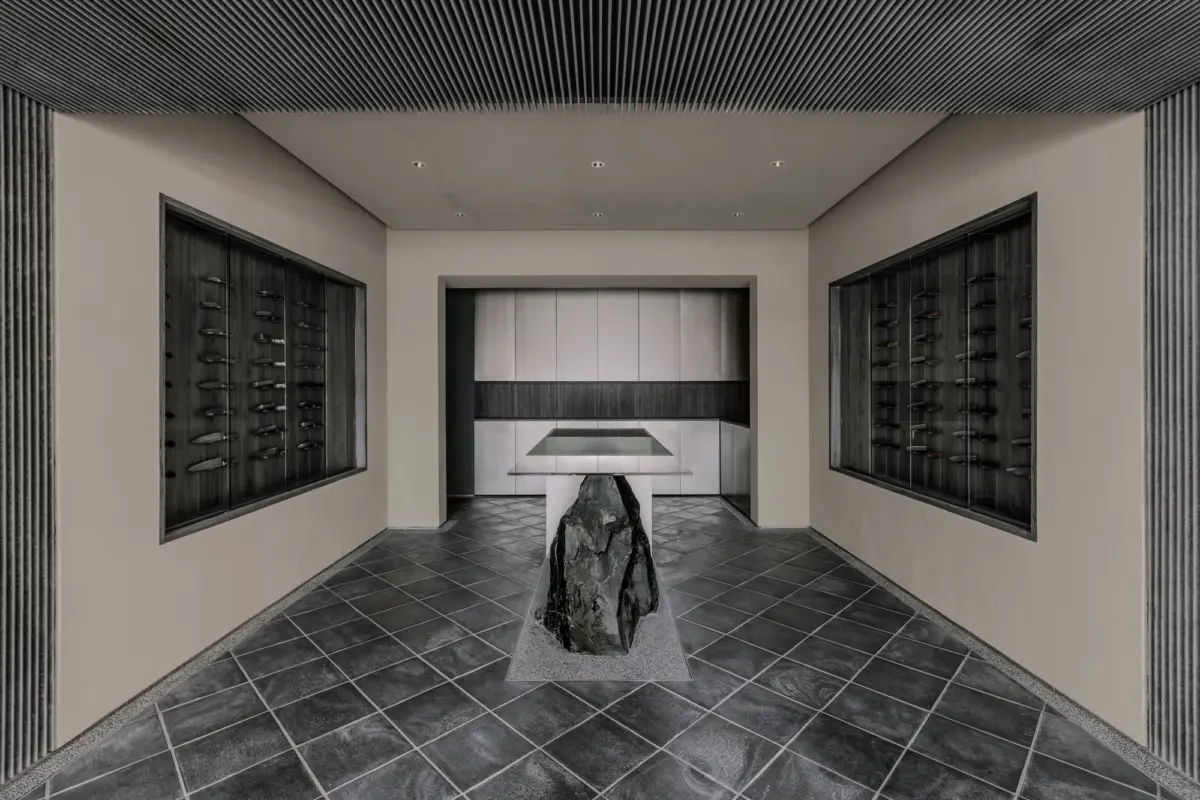
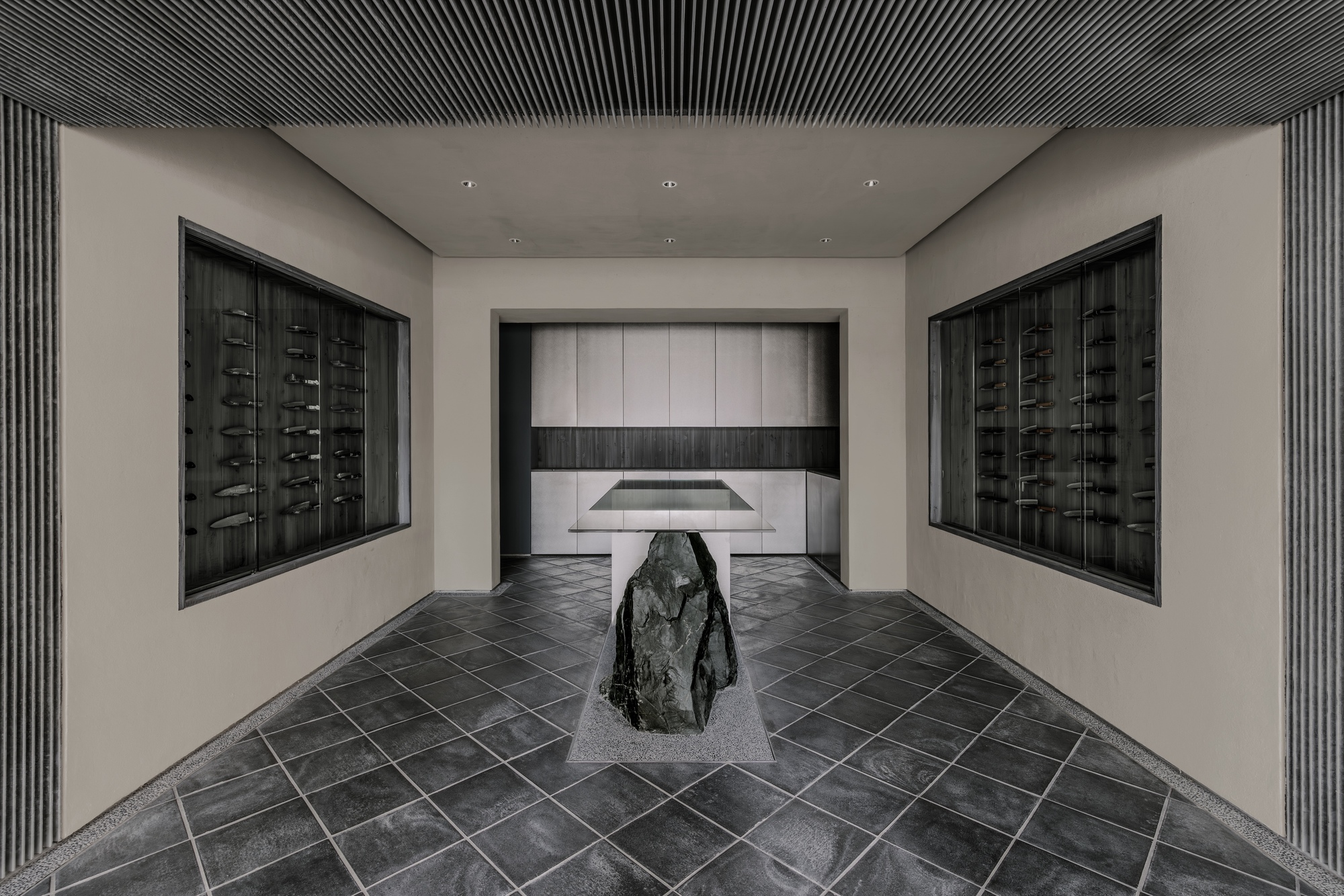
The architectural success of Tojiro Knife Gallery Tokyo "Hanare" lies in how L/O manipulated space, light, and material to mirror the precision of knife-making itself.
Spatial Choreography
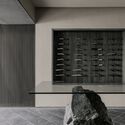
In traditional Japanese architecture, a hanare is a detached room or annex separated from the main house, providing a sense of seclusion and tranquility. L/O leveraged this vernacular concept to isolate the bespoke client from the bustling energy of Tokyo. Upon entering, visitors transition from an urban exterior into a hushed, gallery-like interior.
Materiality and Honesty
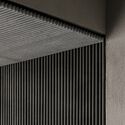
Mirroring the raw elements of steel, iron, and wood used in Tojiro’s forge, the interior architecture employs a restrained, tactile palette:
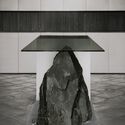
Subdued Finishes: Walls and display surfaces are treated with muted, mineral textures that draw the eye directly toward the polished steel of the knives.
Intimate Lighting: Precision spotlighting mimics the way light catches a freshly honed edge, turning individual blades into sculptural installations rather than mere merchandise.
Tactile Displays: Unlike traditional glass-case retail environments that create barriers, the layout encourages gentle interaction, allowing clients to feel the balance, weight, and handle contours of custom prototypes.
Official Responses and Design Intentions
In statements surrounding the opening of the "Hanare" annex, the design team and brand representatives elaborated on the philosophy driving the project:
"A Tojiro knife is not merely a product," notes the curatorial design statement from L/O and Tojiro. "It is a tool used for decades, resharpened, repaired, and growing alongside its owner. Choosing a knife, we believe, is therefore not an act of comparison but of time: the time it takes to find the one blade you will live with."
The architects focused on creating an environment that honors this temporal commitment. By slowing down the retail experience, the gallery encourages buyers to reflect on the lifecycle of a knife. The space bridges the gap between the industrial output of the factory floor and the intimate, domestic ritual of cooking.
Furthermore, the gallery serves as an educational bridge. Through scheduled consultations with master sharpeners and craftsmen, visitors learn that purchasing a custom knife is just the beginning of a lifelong relationship defined by maintenance, care, and generational storytelling.
Implications: The Future of Craft Retail
The launch of Tojiro Knife Gallery Tokyo "Hanare" carries significant implications for the future of retail architecture, particularly within the luxury and craft sectors.
1. The Death of the Generic Flagship
As e-commerce dominates transactional retail, physical stores must offer experiential value that screens cannot replicate. By creating a hyper-specialized, contemplative annex for bespoke commissions, Tojiro proves that brick-and-mortar spaces thrive when they pivot from warehousing goods to fostering intimate human experiences.
2. Elevating Craftsmanship to Fine Art
Projects like "Hanare" elevate industrial and traditional crafts into the realm of high design. By housing custom kitchen knives within a minimalist gallery framework curated by architectural visionaries like L/O, the project challenges cultural hierarchies that often separate "fine art" from "craft utility."
3. Sustainability Through Longevity
In an era of fast consumerism, the "Hanare" concept champions radical sustainability. By emphasizing knives meant to last a lifetime—supported by maintenance culture, custom fitting, and repair services—Tojiro and L/O present an architectural blueprint for a more thoughtful, durable future.
Conclusion
Tojiro Knife Gallery Tokyo "Hanare" stands as a triumph of spatial storytelling. Through the sensitive architectural lens of L/O (KATATA YOSHISHITO DESIGN), a commercial retail space has been transformed into a temple of time, patience, and bespoke craftsmanship. For anyone fortunate enough to cross its threshold, the search for the perfect blade becomes less about acquiring an object, and more about beginning a lifelong story.