

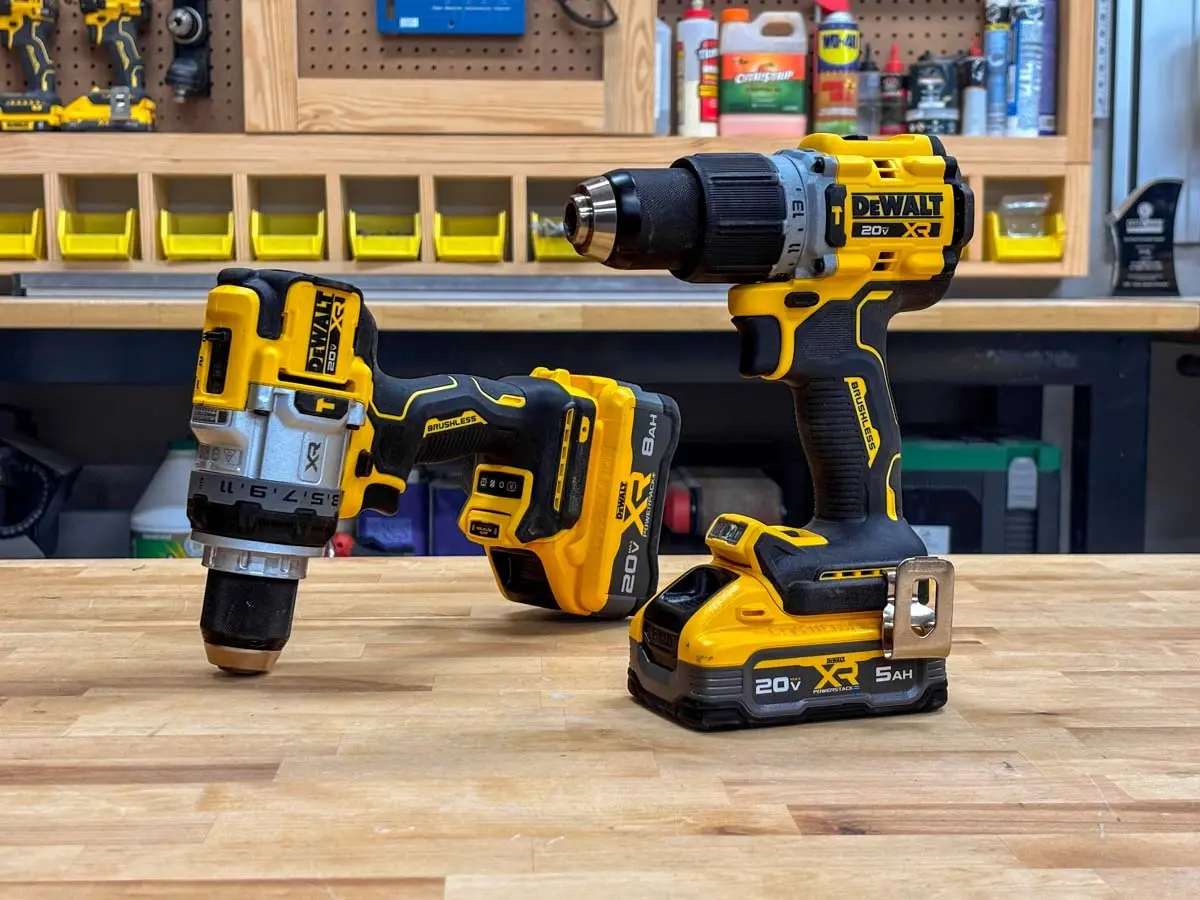
When evaluating the pinnacle of cordless power tool engineering, brute force often grabs the headlines. In the fiercely competitive arena of 2025 head-to-head tool testing, DeWalt’s flagship cordless hammer drill—the DCD1007—put on an absolute masterclass. Scoring an impressive 91 points, it cemented its status as one of the most powerful, high-performing drills on the market.
Yet, despite its powerhouse specifications and top-tier positioning within DeWalt’s extensive ecosystem, it is not the tool most industry professionals recommend.
For the average contractor, carpenter, or trade specialist navigating a demanding workday, the true champion of DeWalt’s 20V Max lineup isn’t the heavyweight flagship. Instead, it is the often-overlooked middle child of the family: the DeWalt DCD806.
To understand why seasoned pros are bypassing maximum specs in favor of balanced engineering, we must examine the evolution of cordless performance, the physics of tool fatigue, and the sweet spot where power meets pragmatism.
Main Facts: The Tale of Three Drills
To grasp the current landscape of DeWalt’s 20V Max hammer drill hierarchy, it helps to look at the three primary contenders: the compact DCD799 (Atomic), the mid-range DCD806, and the flagship DCD1007. Each tool targets a distinct philosophy of work, balancing speed, torque, weight, and ergonomics differently.
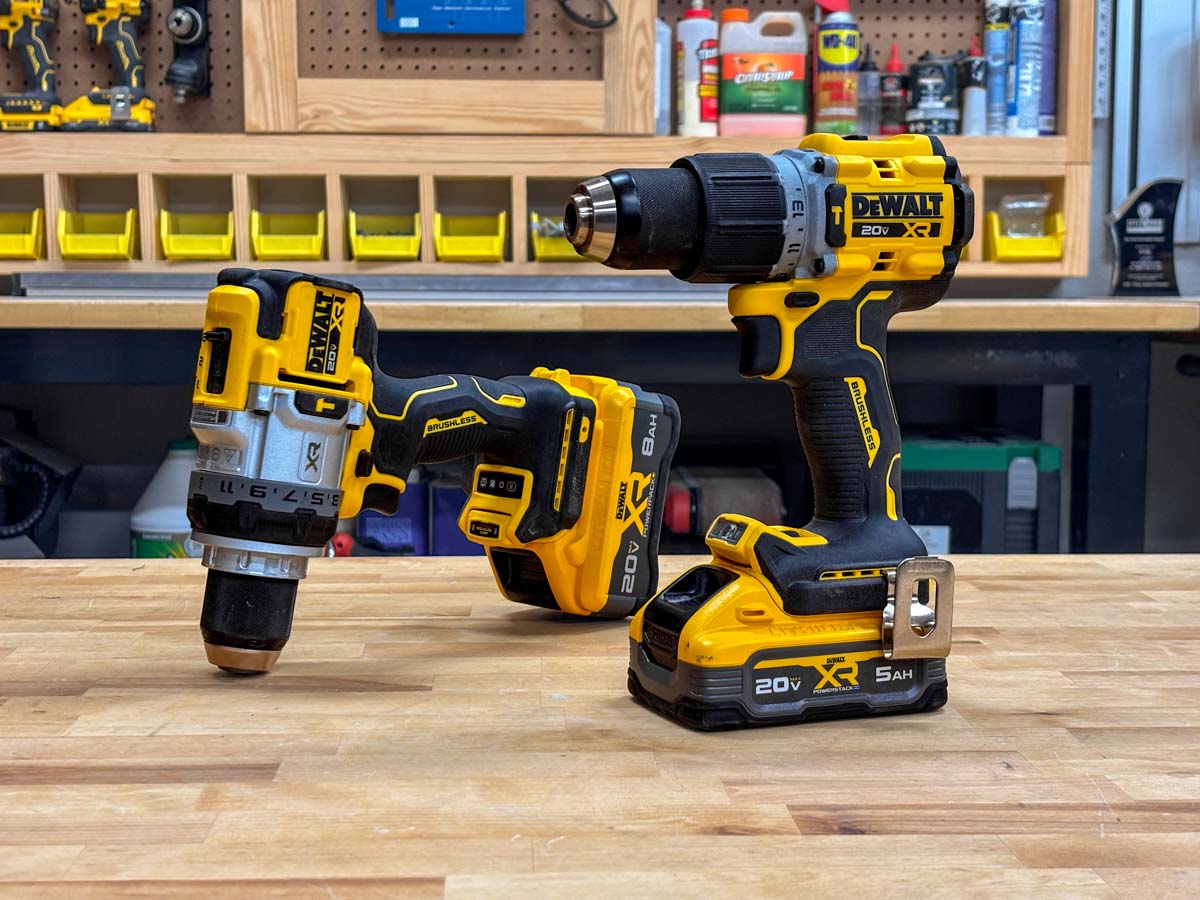
- DeWalt DCD799 (Atomic): Designed for tight spaces and lightweight applications, prioritizing portability and control over raw speed.
- DeWalt DCD806: The versatile workhorse balancing mid-tier ergonomics with high-end safety features and ample power for general construction tasks.
- DeWalt DCD1007: The absolute heavyweight champion of the 20V Max line, engineered for maximum torque, heavy-duty bit applications, and extreme commercial job site demands.
While the DCD1007 reigns supreme in raw output—boasting a staggering 1530 Unit Watts Out (UWO)—it demands a physical penalty in return. Weighing 4.2 pounds bare and stretching 7.5 inches in head length, it is a tool designed for specialized, heavy-duty execution. Conversely, the DCD806 strikes a strategic balance, weighing a full 1.3 pounds less while maintaining enough muscle to tackle the vast majority of day-to-day framing, drilling, and fastening tasks.
Chronology and Evolution: The Quest for Absolute Power
The trajectory of cordless drill development over the last decade has been defined by an aggressive arms race. Manufacturers have continually pushed the boundaries of brushless motor technology, smart electronics, and high-capacity lithium-ion batteries to deliver corded-level performance in a cordless package.
The Early Days vs. Modern Standards
Looking back over a decade of tool design, professional tradespeople managed demanding residential and commercial projects with drills outputting roughly 800 in-lbs of torque. At the time, those metrics represented the bleeding edge of engineering.
Over the years, the introduction of advanced battery chemistry—such as high-output pouch cells and advanced tabless cells—unlocked unprecedented power ceilings. Drills evolved past the 1,000 UWO threshold, and eventually, beasts like the DCD1007 shattered previous benchmarks entirely.
However, this rapid escalation created a secondary issue: diminishing returns for the average user. While drilling through triple-laminated headers or driving massive 2-9/16-inch self-feed bits certainly benefits from 1,500+ UWO, standard fastening and hole-saw applications in wood and metal rarely require such extreme output. The industry found itself asking a critical question: Are cordless drills becoming too powerful for their own good?
Supporting Data: Breaking Down the Specs
A granular review of the specifications reveals why the DCD806 has quietly earned the loyalty of experienced contractors.
| Specification | DeWalt DCD799 (Atomic) | DeWalt DCD806 (XR) | DeWalt DCD1007 (XR) |
|---|---|---|---|
| Max Speeds | 450 / 1,650 RPM | 650 / 2,000 RPM | 450 / 1,300 / 2,000 RPM (2,250 in Hammer Mode) |
| Max Hammer Rate | 28,050 BPM | 34,000 BPM | 38,250 BPM |
| Max Power Output | 585 UWO | 1,050 UWO | 1,530 UWO |
| Bare Weight | 2.5 lbs | 2.9 lbs | 4.2 lbs |
| Head Length | 6.5 inches | 7.0 inches | 7.5 inches |
| Bare Tool Price | $169 | $199 | $249 |
| Kit Price | $219 (w/ 5.0Ah battery) | $279 (w/ 5.0Ah XR battery) | $349 (w/ 8.0Ah XR battery) |
Speed and Productivity Analysis
Examining the performance data uncovers key operational differences:
- Low-End Sluggishness: The Atomic DCD799 tops out at 1,650 RPM. For standard drilling applications, this speed can feel notably slow, though it offers unmatched precision for delicate cabinetry or fine finishing work.
- The Sweet Spot Standard: The DCD806 matches the industry standard for top-tier productivity, hitting 2,000 RPM in standard drilling and driving modes. This puts it on par with the flagship DCD1007 and competitive offerings from rival brands like Milwaukee and Makita during everyday wood and metal tasks.
- Hammer Rate Realities: While the DCD1007’s 38,250 BPM and 3-speed transmission excel in dense aggregate and oversized masonry bits, standard concrete anchoring and everyday hammer-drilling requirements fall comfortably within the capabilities of the DCD806’s 34,000 BPM rate.
Ergonomics, Weight, and Balance: The Human Factor
Specifications on paper mean little at 4:00 PM on a Friday when a technician has spent eight hours overhead installing electrical boxes or hanging drywall. This is where the DCD806 pulls decisively ahead of its heavier sibling.
The Weight Penalty
At 4.2 pounds bare, the DCD1007 is a heavy instrument. To maintain optimal balance, it is preferentially paired with larger, high-capacity power sources like DeWalt’s 8.0Ah XR battery packs. Once loaded, the total package weight climbs significantly, accelerating operator fatigue during prolonged overhead or outstretched use.
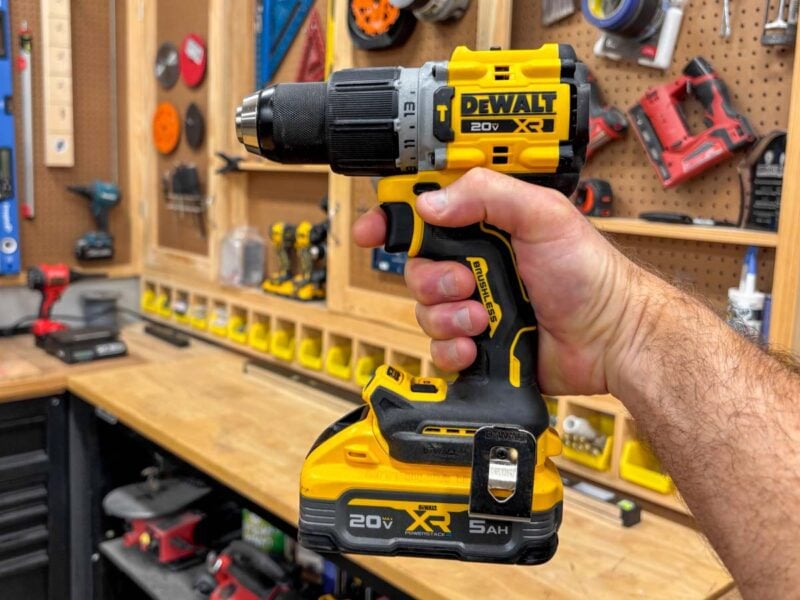
In contrast, the DCD806 weighs a modest 2.9 pounds. Paired with a nimble 5.0Ah XR battery, the tool remains exceptionally well-balanced, reducing wrist strain and arm fatigue. Despite shedding 1.3 pounds compared to the flagship, it delivers a respectable 1,050 UWO—more than double the power of the compact Atomic line.
Safety Features: Kickback Control Seals the Deal
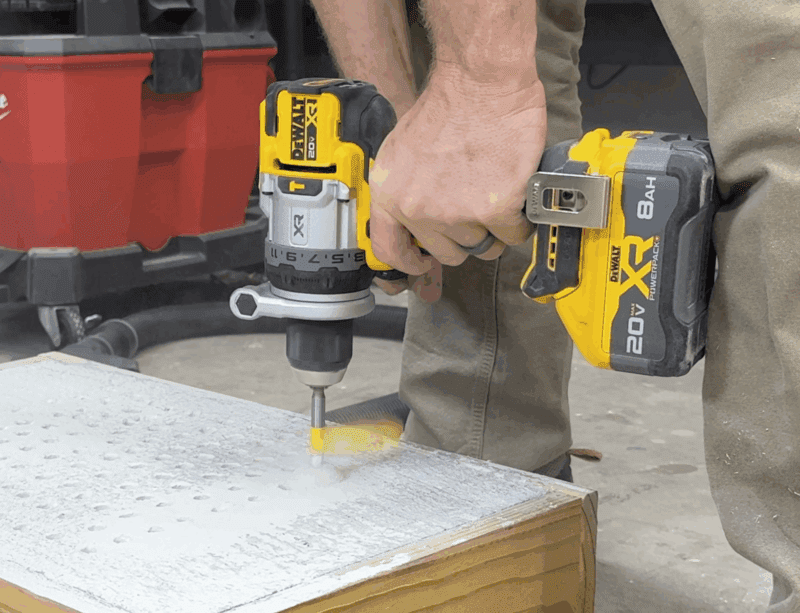
As cordless drills have grown exponentially more powerful, safety engineering has transitioned from a luxury to a baseline requirement. Sudden bit-binds—where a drill bit catches unexpectedly in dense material—can transfer tremendous rotational force into the user’s wrists, leading to severe sprains or rotator cuff injuries.
Why Mid-Range Safety Matters
Flagship drills routinely feature advanced electronic kickback control systems to mitigate this risk. However, manufacturers frequently omit these safety gyroscopes from compact and mid-range tools to hit aggressive price points.
DeWalt bucked this trend by incorporating responsive anti-rotation kickback control into the DCD806. While compact tools with lower power outputs pose minimal risk during a bind-up, mid-range platforms generate enough torque to cause genuine physical harm. The inclusion of intelligent electronic safety protocols in the DCD806 elevates it from a standard utility drill to a professional-grade safety asset, bridging the gap between heavy-duty protection and lightweight handling.
Implications for Professionals and DIYers
The enduring appeal of the DeWalt DCD806 highlights a broader psychological and practical shift within the construction and renovation industries. Tool selection is no longer a simple race for the highest specification sheet; it requires a nuanced calculation of daily operational reality.
1. Avoiding the Overbuy Trap
Purchasing flagship equipment when mid-tier alternatives suffice often results in unnecessary physical taxation. Carrying an extra 1.5 to 2 pounds of tool and battery weight over thousands of repetitive operations contributes directly to musculoskeletal strain and reduced daily efficiency.

2. Guarding Against Underbuying
Conversely, leaning too far toward ultra-compact tools can stall productivity when heavier-duty fastening or hole-boring tasks arise, forcing workers to switch tools mid-project.
3. Total Cost of Ownership
With the DCD806 kit priced at $279 compared to the DCD1007 kit at $349, the middle-tier option also presents a more accessible entry point for scaling contractor fleets without sacrificing professional-grade durability, brushless longevity, or safety compliance.
Conclusion: Finding Your Job Site Sweet Spot
The DeWalt DCD1007 remains an engineering triumph. For specialized heavy contractors, commercial electricians boring massive service holes, and masonry crews pushing tools to their absolute thermal and mechanical limits, the flagship model is a worthy investment.
However, for the general contractor, remodeler, and trade professional whose day consists of a diverse mix of fastening, drilling, and light hammer work, the DeWalt DCD806 represents the absolute sweet spot of the 20V Max platform. By delivering robust power, class-leading ergonomics, proper balance, and crucial kickback control in a significantly lighter chassis, it proves that sometimes, the best tool on the job isn’t the loudest one—it’s the one that lets you work smarter, longer, and with less pain.
