

Introduction
The commercial roofing industry is undergoing a profound transformation. As building owners and facility managers seek sustainable, cost-effective alternatives to expensive, disruptive roof tear-offs, roof restoration has emerged as a dominant market sector. At the forefront of this movement is silicone roof coating technology. Renowned for its exceptional resistance to ponding water, high UV reflectivity, and long-term durability, silicone has quickly become one of the fastest-growing elastomeric coatings in the global construction market.
However, transitioning to silicone application is not as simple as purchasing a few rollers and buckets of paint. Silicone is a highly technical material with unique chemical properties, requiring specialized knowledge, strict safety protocols, and a clear understanding of application equipment. For contracting companies looking to capitalize on this lucrative market, the initial investment decision is complex. Equipment setups can range from a modest $1,000 for manual rolling systems to upwards of $30,000 for state-of-the-art hydraulic spray rigs. Navigating this financial and technical spectrum requires a deep analysis of project scale, labor dynamics, and mechanical capabilities.
Main Facts
The transition into silicone roof coating applications presents contractors with distinct operational pathways, each defined by capital expenditure, labor requirements, and environmental constraints.
- Market Growth and Complexity: Silicone is currently one of the fastest-growing roof coating materials due to its ability to withstand permanent ponding water and resist UV degradation. However, its high viscosity and moisture-cure chemistry make it one of the most technically demanding materials to apply.
- The Cost Spectrum: Equipment investments vary drastically. Basic manual and power-assisted rolling systems can set up a contractor for under $1,000 to $3,000. Conversely, professional-grade, high-pressure spray systems command prices between $15,000 and $30,000.
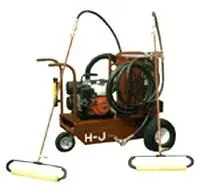
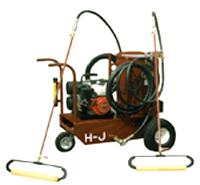
- Roll-Applied Systems: This method represents the lowest barrier to entry. Using commercial-grade rollers ranging from 14 to 40 inches in width, these systems utilize gravity-fed vats and wheeled frames to apply silicone directly to the roof substrate. This method is ideal for smaller projects, contractors entering the market, and as a backup system when high winds prevent spraying.
- Spray-Applied Systems: Spraying represents the pinnacle of application speed and efficiency, but demands highly sophisticated, high-pressure machinery. Because silicone is thick and heavy, standard paint sprayers are insufficient. Heavy-duty hydraulic sprayers are required to pump the material directly from 55-gallon drums, with costs dictated by pump power, hose length, and specialized hydraulic auxiliaries.
- Operational Risk and Training: Silicone application involves significant safety risks, including high-pressure injection injuries from sprayers, respiratory hazards from atomized silicone, and severe liability risks from wind-blown overspray settling on adjacent properties and vehicles.
Chronology: The Evolution of Liquid-Applied Roof Membranes
To understand the current state of silicone equipment technology, it is necessary to examine how the commercial roofing industry reached this point.
The Early Era: Asphalt and Acrylics (1970s–1980s)
Prior to the widespread adoption of silicone, liquid-applied roof coatings were dominated by asphaltic emulsions and, later, acrylic elastomeric coatings. These early systems were relatively easy to apply using low-pressure sprayers or simple paint rollers. However, acrylics suffered from a critical vulnerability: they are water-based and water-soluble before curing, meaning they wash away if caught in a rainstorm and degrade rapidly under standing (ponding) water.
The Silicone Breakthrough (1990s–2000s)
Silicone coatings emerged as a premium solution to the ponding water issue. Because silicone is a moisture-cure, solvent-free polymer, it creates a chemical bond that is completely impervious to standing water. Early silicone formulations, however, were difficult to pump. They had high solvent contents, lower solids by volume, and tended to settle or skin over rapidly in packaging, clogging standard equipment.
The Rise of High-Solids Formulations (2010s–Present)
Environmental regulations and technological advancements led to the development of "high-solids" silicone coatings (often 90% to 95% solids by volume). These environmentally friendly coatings emit virtually no volatile organic compounds (VOCs) and allow contractors to achieve the desired dry film thickness (DFT) in a single pass.
The physical reality of pumping a fluid that is almost entirely solid material forced a parallel evolution in application machinery. Equipment manufacturers had to design ultra-high-pressure pumps, robust hydraulic systems, and specialized packing materials capable of handling the highly abrasive nature of silicone without constant mechanical failure.
Supporting Data & Technical Breakdown
Choosing the right equipment requires a granular understanding of the mechanical differences between rolling and spraying systems.
Roll-Applied Systems: The Low-Cost, Low-Risk Alternative
For contractors testing the market or tackling smaller footprints (typically under 10,000 square feet), manual or power-assisted rolling is the most logical choice.
| Feature | Roll-Applied System Specifications |
|---|---|
| Roller Widths | 14 inches to 40 inches |
| Roller Diameter | 6 inches (heavy-duty commercial grade) |
| Material Delivery | Wheeled frame with integrated vat and flow-control holes |
| Typical Cost | $1,000 to $3,000 |
| Optimal Project Size | Small to medium (under 10,000 sq. ft.) or high-wind sites |
The primary advantage of the rolling method, beyond the low initial capital cost, is overspray mitigation. When liquid silicone is atomized through a spray tip, the fine mist can travel vast distances on a breeze. If this mist lands on parked cars, building facades, or HVAC intakes, the resulting property damage claims can easily exceed tens of thousands of dollars. Rollers completely eliminate this risk, allowing crews to work safely in dense urban environments or on windy days when spray rigs must remain idle.
Spray-Applied Systems: High-Output Engineering
For large-scale commercial roofs (exceeding 20,000 square feet), manual rolling becomes labor-prohibitive. Spraying allows a three-man crew to apply thousands of square feet of coating per hour. However, the physical properties of high-solids silicone demand specialized, industrial-grade equipment.
[55-Gallon Silicone Drum] ──> [Hydraulic Ram & Drum Agitator] ──> [High-Pressure Displacement Pump] ──> [Heated/High-Pressure Hose (up to 250+ ft)] ──> [Heavy-Duty Spray Gun & Reversible Tip]To successfully spray silicone, a system must typically deliver:
- High Operating Pressure: Between 4,000 and 7,000 PSI (Pounds per Square Inch) at the gun.
- High Flow Rates: A minimum of 3.0 to 5.0 GPM (Gallons Per Minute) to support long hose lengths without pressure drops.
- Hydraulic Drive Systems: Airless sprayers powered by gas engines or electric motors driving heavy-duty hydraulic pumps are preferred over direct-drive mechanical pumps, as they provide the consistent power required to shear high-viscosity fluids.
The Price Disparity in Spray Equipment ($15,000 vs. $30,000)
The cost of a spray rig is directly tied to its capacity, durability, and auxiliary features:
- Hose Length and Diameter: High-viscosity fluids suffer from friction loss as they travel through hoses. A system capable of pushing silicone through 150 feet of hose is significantly less expensive than a heavy-duty rig designed to pump material through 250 to 300 feet of hose to reach high-rise roofs.
- Hydraulic Drum Ramps and Elevators: Premium rigs ($25,000–$30,000) feature hydraulic lifts that raise and lower the heavy pump fluid section directly into and out of 55-gallon drums. This reduces physical labor, prevents contamination, and speeds up drum changeovers.
- Integrated Agitators and Mixers: Silicone can settle during transit and storage. High-end systems feature hydraulic auxiliary ports to run industrial mixers directly from the rig’s power source, ensuring the coating is perfectly homogeneous before application.
Official Responses & Expert Perspectives
Industry veterans emphasize that purchasing the equipment is only the first step; understanding its application and maintenance is where the real challenge lies.
Pat Amicucci, representing Roofmaster®, a company with 70 years of roofing industry expertise, highlights that equipping a contracting business is not a one-size-fits-all equation.
"Silicone has become one of the fastest growing roof coating applications today and one of the more technical," Amicucci notes. "Crews need to be familiar with the operations and dangers associated with the equipment. Fitting your company with the right options is not all black and white."
Amicucci stresses that the choice between rolling and spraying often hinges on geographic and environmental factors rather than just budget. Even the largest contractors with fleet spray rigs must maintain high-quality rolling equipment in their inventory. When wind conditions exceed safe thresholds for spraying, having a high-capacity power roller on-site ensures that the crew remains productive and the project stays on schedule.
Furthermore, technical experts from major silicone manufacturers emphasize that improper equipment maintenance is the leading cause of down-time. Because silicone cures upon exposure to atmospheric moisture, any moisture entering the pump, hoses, or gun will cause the material to cure inside the machine. This can ruin a $30,000 sprayer in a matter of hours. Experts advise that crews must undergo rigorous training on daily flushing protocols, using specialized plasticizers or solvent fluids to completely clear the system at the end of every shift.
Implications for the Roofing Industry
The rapid adoption of silicone coatings and the corresponding evolution of application equipment have several far-reaching implications for the commercial roofing sector.
Economic ROI and Labor Dynamics
The ongoing labor shortage in the construction trades is driving contractors toward automation and high-efficiency machinery. While a $30,000 spray rig represents a steep upfront cost, the return on investment (ROI) can be realized rapidly.
For example, on a 50,000-square-foot roof:
- Using manual rollers: A crew of six might take 5 to 7 days to apply the base and top coats, resulting in high labor costs and extended project exposure to weather.
- Using a high-output hydraulic sprayer: A crew of three can complete the same application in 1.5 to 2 days.
The labor savings alone can offset the cost of the spray rig in just a few large projects, while allowing the contractor to bid more competitively and complete more jobs per season.
Environmental and Regulatory Impact
Silicone coatings play a vital role in reducing the environmental footprint of the construction industry. By restoring existing roofs rather than tearing them off, contractors divert millions of tons of roofing waste—particularly non-biodegradable single-ply membranes and asphalt shingles—from landfills.
Furthermore, high-solids silicone coatings meet the strictest VOC regulations in North America, including those set by the South Coast Air Quality Management District (SCAQMD) in California. As municipalities increasingly mandate "cool roofs" to combat urban heat island effects and reduce building energy consumption, the demand for highly reflective silicone coatings will continue to climb, forcing more contractors to invest in dedicated application equipment.
The Professionalization of the Trade
The high technical barrier to entry for silicone application is raising the professional standards of the roofing industry. Manufacturers of high-end silicone coatings often refuse to issue long-term NDL (No Dollar Limit) warranties unless the material is applied by a certified contractor using approved, high-specification equipment. This requirement is weeding out low-bid, under-equipped operations and rewarding professional contractors who invest in proper machinery, safety training, and equipment maintenance.
Conclusion
The rise of silicone roof coatings represents a major market opportunity for commercial roofing contractors, but it requires a strategic approach to equipment acquisition. There is no simple, universal solution. Contractors must balance their immediate project pipeline, geographic wind conditions, labor availability, and capital budgets when deciding between the low-cost versatility of roll-applied systems and the high-speed capability of hydraulic sprayers.
By partnering with experienced equipment distributors like Roofmaster®, which brings seven decades of industry knowledge to the table, contractors can navigate these complex choices, customize their equipment suites, and ensure their crews are prepared to deliver high-quality, durable silicone roof installations safely and profitably.
