

NINGBO, China — The global electric vehicle landscape is once again shifting at breakneck speed, and the epicenter remains firmly rooted in China. Automobile giant Geely is set to officially unveil its next-generation AI-powered smart charging technology and high-performance battery ecosystem. Promising a staggering 4-minute charging time, the upcoming reveal threatens to upend conventional wisdom regarding EV infrastructure, outstripping local rival BYD and putting Western charging networks to shame.
Scheduled for presentation at the Geely Global All-Domain Safety Center in Ningbo, China, this latest technological salvo highlights a broader industry trend: the transition from measuring charging times in minutes to counting them in seconds. As Chinese automakers lock horns in a relentless charging-tech arms race, the definition of consumer convenience is being rewritten.
Main Facts: The 2.2MW Power Play
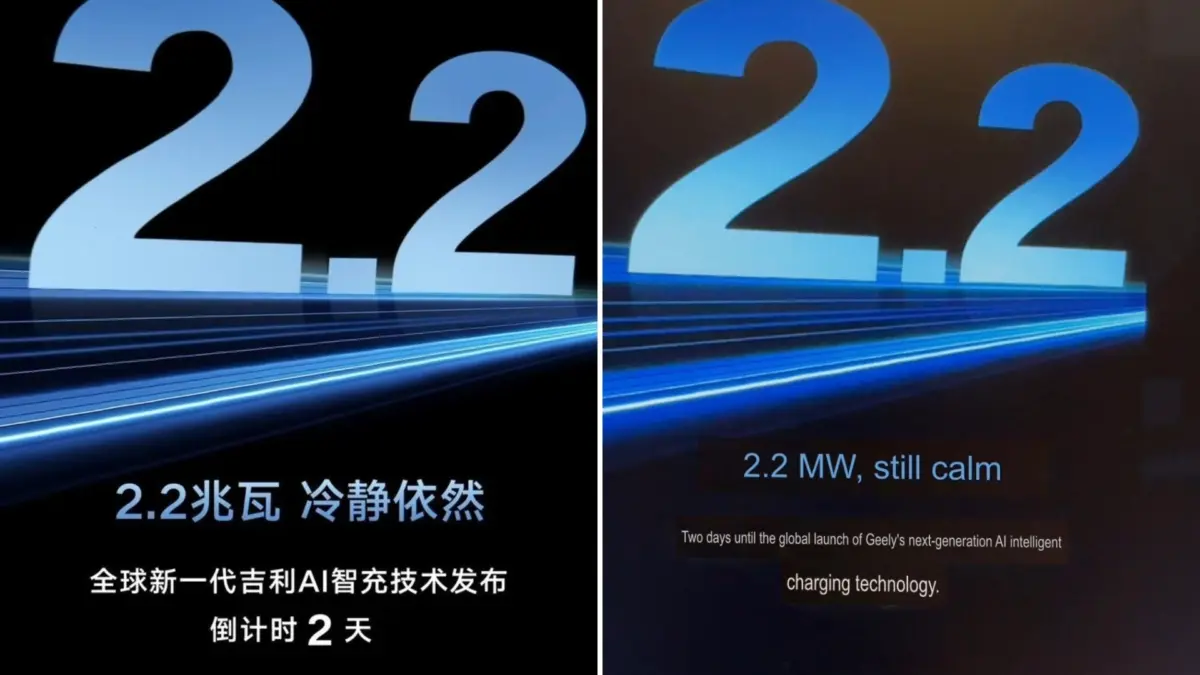
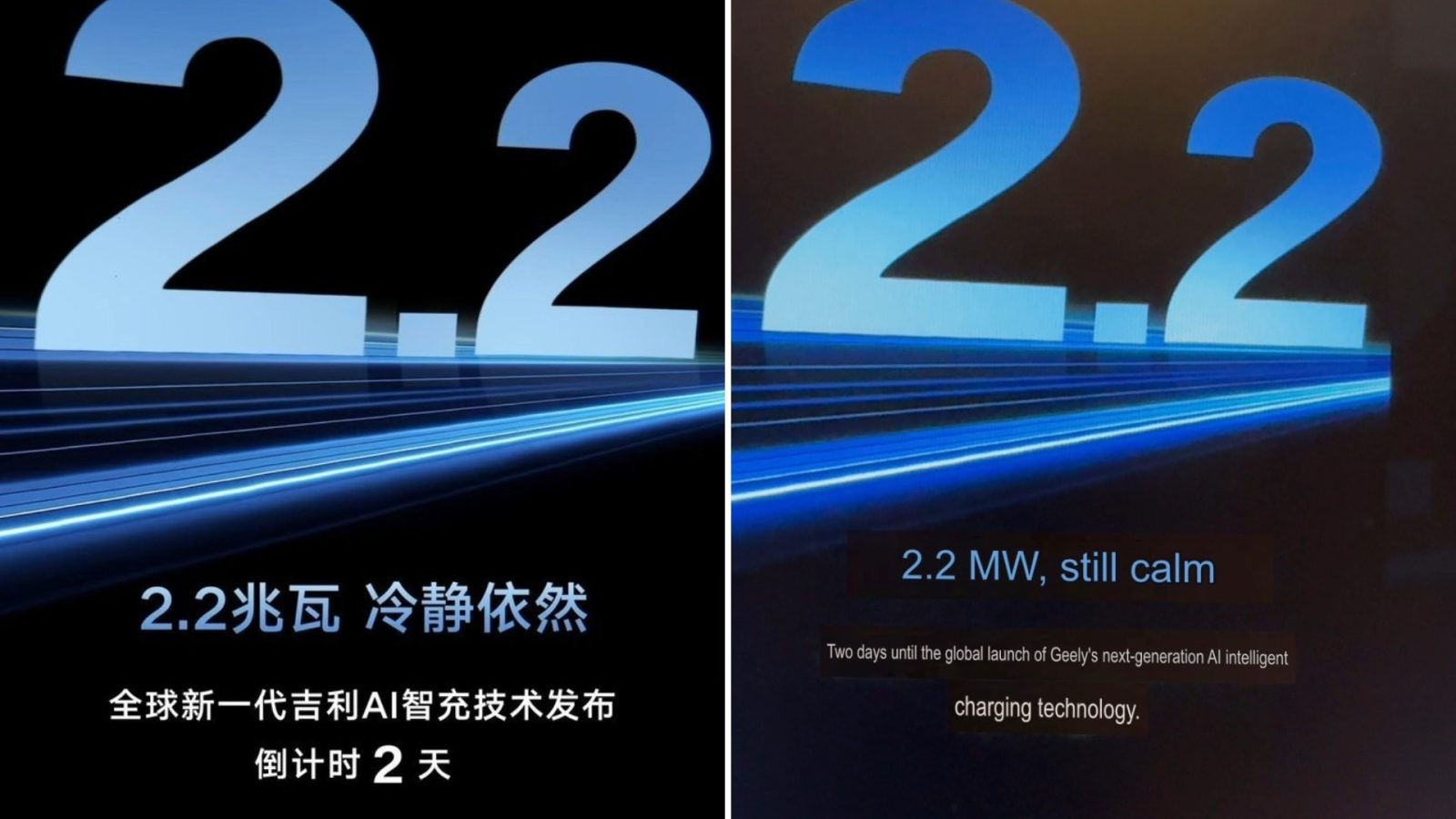
At the core of Geely’s upcoming announcement is a staggering hardware capability: chargers designed to deliver a massive 2.2 megawatts (MW) of power. To put this in perspective, Geely’s new system outputs roughly 50% more power than BYD’s recently introduced 1.5MW "Flash Charging 2.2" system, and nearly double the output of Tesla’s pioneering 1.2MW Megacharger locations, which were engineered specifically to support heavy-duty semi-trucks rather than passenger vehicles.
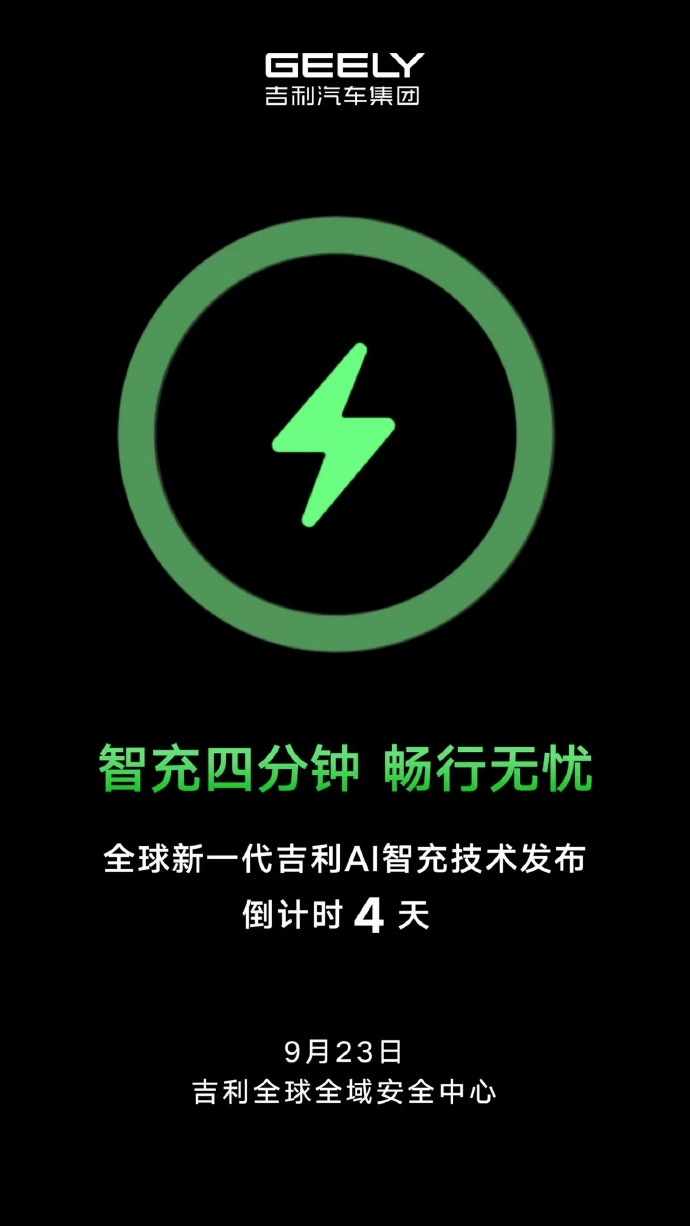
Geely’s promotional campaign, teased over the weekend via social media, carries a bold mantra:
"Charge in Four Minutes, Drive with Peace of Mind."
While a four-minute recharge window is revolutionary for consumer-grade EVs, industry analysts note that the exact metrics depend heavily on the state-of-charge (SoC) parameters—typically measured from 10% to 70% or 80%, as charging speeds inevitably taper off near maximum capacity to preserve battery health. Nevertheless, even conservative interpretations place Geely at the vanguard of ultra-fast charging capabilities.
Chronology: The Escalating Pace of Chinese EV Innovation
To understand the magnitude of Geely’s impending announcement, one must look at the rapid cadence of advancements dominating the Chinese automotive sector over the past several years:
- Late 2024 to 2025: Chinese automakers begin aggressively optimizing solid-state and semi-solid-state chemistry, pushing standard fast-charging times down from 15 minutes to under 10 minutes.
- Early 2026 (March): BYD captures headlines by launching its 1,500kW (1.5MW) Flash Charger, creating a benchmark that outpaced anything commercially available in North America or Europe by a factor of three.
- Mid 2026 (July): Industry shifts pivot entirely. Rather than discussing battery capacities in kilowatt-hours alone, media outlets and manufacturers begin tracking replenishment milestones in seconds. Incremental battles emerge between options like the BYD Blade 2.0 (offering roughly 5-minute fills) and Geely’s Golden Brick architecture (achieving targeted fills in 4 minutes and 22 seconds).
- September 23, 2026: Geely prepares to host its global launch event at the Ningbo Safety Center, introducing a 2.2MW ecosystem that aims to eclipse current domestic benchmarks and establish a new psychological ceiling for consumer EV readiness.
Supporting Data: By the Numbers
A comparative look at global charging infrastructure reveals just how far ahead the Chinese domestic market has surged compared to Western standards:
- Geely’s New System: 2.2MW peak power delivery, enabling consumer EV recharges in approximately 4 minutes. Furthermore, the system integrates advanced AI algorithms designed to support up to 3,500 charge and discharge cycles with minimal structural degradation.
- BYD Flash Charging 2.0: 1.5MW peak power output, historically cited as roughly three times faster than standard DC fast chargers deployed across the United States.
- Tesla Megacharger: 1.2MW infrastructure tailored for commercial freight (such as the Tesla Semi), utilizing massive thermal management footprints. Geely’s 2.2MW system, by contrast, is intended to scale down these extreme energy loads safely for everyday consumer cars.
- Western DC Fast Chargers: Typical public units in the US and Europe generally operate between 150kW and 350kW. Measured against these benchmarks, Geely’s upcoming technology operates at a scale that industry critics have jokingly compared to making legacy Western infrastructure look like a "children’s toy."
Official Responses and Teasers
Geely has maintained a tight lid on specific hardware specifications ahead of the official Wednesday reveal. However, translated excerpts from the company’s official social media teasers emphasize safety, autonomy, and holistic integration:
- "Global Launch of Geely’s Next-Generation AI Smart Charging Technology"
- "Geely Global All-Domain Safety Center"
The inclusion of "AI" in marketing copy can often border on corporate buzzword territory, but technical insiders note that artificial intelligence is vital for managing the extreme thermal loads associated with 2.2MW power transfers. Geely’s proprietary smart-charging software utilizes machine learning to actively monitor cell-level temperatures, regulate current flow, and mitigate lithium plating—a degradation phenomenon common during ultra-rapid ion absorption. This intelligent thermal throttling ensures that battery longevity is not sacrificed for the sake of a quick public relations stunt.
Implications: A Widening Technological Chasm
The arrival of Geely’s 2.2MW charging ecosystem carries profound implications for the global automotive market, raising critical questions about competitiveness, infrastructure investments, and international trade dynamics.
1. The Death of Range Anxiety
For mainstream consumers hesitant to adopt electric vehicles, the primary deterrents have always been upfront cost, charging availability, and refueling time. By compressing the refueling experience to roughly the time it takes to pump a tank of gasoline and grab a cup of coffee, ultrafast charging effectively neutralizes range anxiety. Drivers no longer need to plan routes around multi-hour charging stops; highway pit stops become indistinguishable from traditional internal combustion engine (ICE) travel routines.

2. Grid Strain and Infrastructure Challenges
While the consumer-facing benefits are immense, the rollout of 2.2MW chargers places unprecedented demands on electrical grids. Supplying megawatts of power to a localized bank of chargers requires sophisticated microgrids, localized energy storage systems (ESS), and heavy-duty utility upgrades. Geely’s ability to deploy these systems commercially will test the resilience of urban and highway energy grids in China, offering a real-world testing ground that Western nations are currently unequipped to replicate.
3. The Geopolitical Competitiveness Gap
Perhaps the most striking implication is the widening technological chasm between Chinese OEMs and their Western counterparts. While American and European manufacturers grapple with slowing EV adoption curves, shifting regulatory mandates, and high capital expenditure costs for 350kW hardware, Chinese automakers are iterating on multi-megawatt ecosystems.
As Chinese automotive brands increasingly look outward to expand their global footprints, the availability of vehicles that can charge in under five minutes—backed by dense, high-output charging networks—will present a formidable competitive advantage in export markets across Southeast Asia, Europe, and Latin America.
Conclusion
As the automotive world tunes into Geely’s presentation in Ningbo on Wednesday, September 23, the event will serve as a stark reminder of the pace of modern engineering. Whether driving a compact urban hatchback or a long-range sedan, the consumer expectation for EV refueling is no longer measured in the patience required for a coffee break, but in the fleeting seconds it takes to catch your breath.
