


By Automotive Industry Correspondent
Published: September 2026
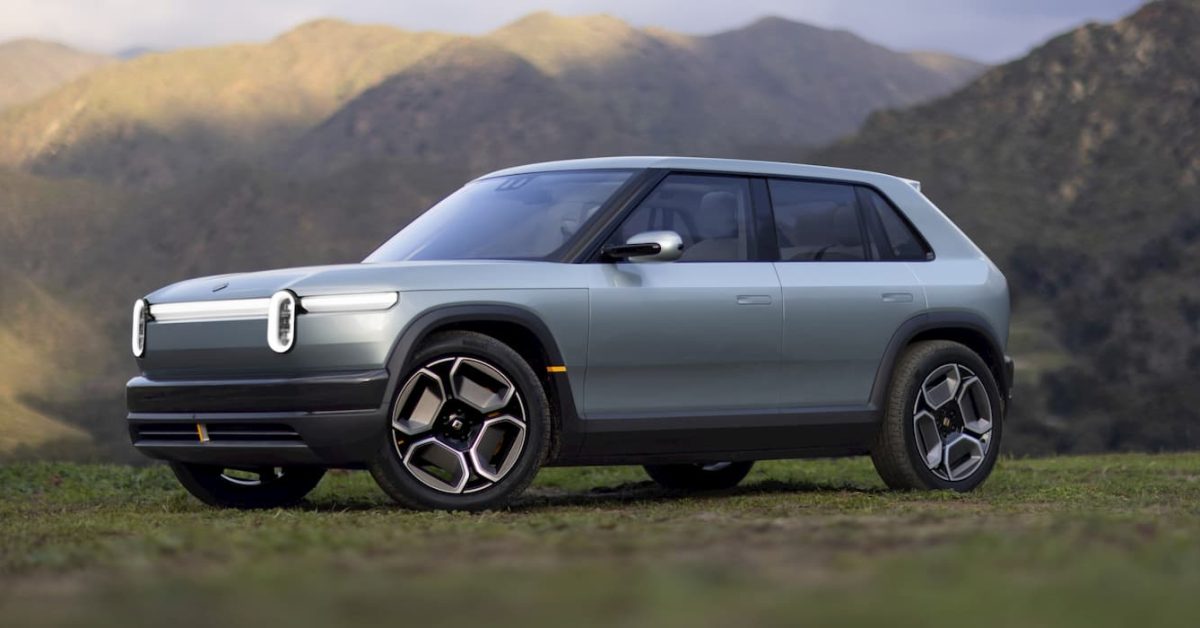
Rivian CEO RJ Scaringe has offered the clearest roadmap yet for the electric vehicle manufacturer’s long-term pricing strategy. In a sweeping interview with The New York Times, Scaringe confirmed that the upcoming Rivian R3 crossover will arrive at a price point "materially lower" than the R2, while an eventual R4 model will push the brand even further down-market into higher-volume territory.
While the company has stopped short of providing exact dollar figures or definitive release dates for these future iterations, the remarks signal a calculated, multi-stage evolution of Rivian’s product portfolio. By steadily walking its lineup down toward the heart of the consumer market, Rivian is methodically executing a high-stakes playbook designed to transition the boutique adventurer brand into a mainstream, high-volume automotive powerhouse.
Main Facts
- The R3 Strategy: Rivian CEO RJ Scaringe confirmed that the upcoming R3 crossover will be priced "materially lower" than the R2 SUV, following previous indications that it could land in the mid-to-high $30,000 range.
- The R4 Horizon: Scaringe also teased an eventual R4 model, noting it will push entry-level price points down further still, though the vehicle is currently in early conceptual phases without assigned engineering teams or release timelines.
- Production Roadmap: The R3 is slated to be built at Rivian’s multi-phase Georgia manufacturing plant, where production is scheduled to kick off in 2028 with a targeted annual capacity of up to 400,000 units.
- R2 Rollout Realities: Rivian’s current catalyst, the R2 SUV, carries a headline-grabbing base price of $45,000, though early production models are launching with higher-tier trims costing up to $57,990 through late 2026 and 2027.
- Financial Turnaround: Bolstered by the initial rollout of the R2, Rivian raised its full-year 2026 delivery guidance to between 65,000 and 70,000 vehicles, a significant leap from the roughly 42,000 units delivered the previous year.
Chronology: Rivian’s Product Evolution
Understanding Rivian’s pricing trajectory requires looking back at how the company entered the market and how its timeline has unfolded:
- The Flagship Era (2021–2023): Rivian launched its brand with high-end, heavy-duty luxury vehicles: the R1T pickup and the R1S SUV. Priced well north of $70,000 and frequently topping $90,000 fully optioned, these vehicles established the brand’s performance and off-road credentials, but catered exclusively to affluent buyers.
- The R2 Reveal and Staggered Launch (March 2026): Rivian pulled the covers off the complete R2 lineup and pricing structure. Rather than launching all trims simultaneously, the company structured a rollout starting with the $57,990 Performance launch edition in mid-2026, followed by the Premium trim late in the year, the Standard Long Range in early 2027, and the long-awaited $45,000 Standard RWD model in late 2027.
- Plant Groundbreaking and Expansion (September 2025 – 2028): Rivian officially broke ground on its massive Georgia manufacturing facility, designed specifically to serve as the production hub for the R2 and subsequent lower-priced platforms, with commercial manufacturing targeted for 2028.
- The Horizon for R3 and Beyond (2026 and Beyond): In late 2026 media appearances, executive leadership doubled down on product development strategies for the R3 and the conceptual R4, cementing the brand’s long-term commitment to affordable, mass-market electric mobility.
Supporting Data & Financial Metrics
Rivian’s strategic pivot toward mass-market affordability is underpinned by shifting financial realities and manufacturing scale.
The Pricing Matrix
To understand Scaringe’s promise that the R3 will be "materially lower" than the R2, market analysts must parse the complex rollout of the R2 itself. While media outlets and consumers frequently characterize the R2 as a "$45,000 electric SUV," the timeline to actually purchase a vehicle at that price point is staggered:
- Performance Launch Edition: $57,990 (Scheduled for mid-2026 delivery)
- Premium Trim: $53,990 (Scheduled for late 2026 delivery)
- Standard Long Range: $48,490 (Scheduled for early 2027 delivery)
- Standard RWD: $45,000 (Scheduled for late 2027 delivery)
When Scaringe previously hinted that the R3 would target the "mid to high 30s," it became clear that the vehicle would undercut even the most affordable base version of the R2 by a substantial margin, opening up a crucial demographic of buyers who have been priced out of the current EV market.
Volume and Loss Projections
Rivian’s financial standing reflects the classic growing pains of building an automotive startup. Following the commercial rollout of the R2, Rivian boosted its 2026 delivery guidance to an ambitious range of 65,000 to 70,000 vehicles, marking a substantial increase over the ~42,000 units delivered the previous year.
However, scaling production remains capital-intensive. The company’s financial guidance forecasts an adjusted EBITDA loss between $1.8 billion and $2 billion for the fiscal year as it invests heavily in retooling, scaling supply chains, and constructing the Georgia manufacturing plant.
Official Responses and Strategic Rationale
A central question facing automotive analysts has always been: Why didn’t electric vehicle startups just build cheap cars from day one?

During his interview, Scaringe addressed this head-on, explaining the harsh economic realities of entering the global automotive industry as an unproven newcomer. When Rivian was first sourcing parts for its flagship R1 platform, it possessed zero industry leverage. Consequently, suppliers forced the startup to absorb a 40% to 50% premium on component pricing compared to legacy automakers.
Today, that dynamic has completely reversed. As Rivian’s manufacturing footprint expands and its brand equity solidifies, the power dynamic has shifted. According to Scaringe, major automotive suppliers are now initiating the journey to Rivian’s headquarters to pitch their components, granting the company the purchasing power and supply chain stability required to engineer lower-cost vehicles profitably.
Regarding future product design, Scaringe confirmed that while the R3 has a clear product definition, sibling vehicles like the R4 and R5 represent an entirely new platform architecture. Because engineering teams have not yet been fully allocated to those downstream projects, the R4 remains a clear statement of pricing direction rather than an imminent product launch.
Industry Implications
Rivian’s strategic trajectory bears a striking resemblance to the playbook executed by Tesla a decade ago: establish an aspirational brand with high-margin, low-volume flagship models (Model S and Model X, or Rivian’s R1T and R1S), use that capital and brand cachet to fund a mid-market volume seller (Model 3/Model Y, or Rivian’s R2), and finally push into true mass-market territory with compact, highly accessible utility vehicles (the hypothetical "Model 2," or Rivian’s R3).
Navigating the Competitive Landscape
The mid-market and compact crossover segments are rapidly becoming the most fiercely contested battlegrounds in the automotive sector. Traditional internal combustion engine (ICE) manufacturers and aggressive EV competitors alike are racing to capture budget-conscious consumers who want zero-emission driving without breaking the bank.

By positioning the R2 to successfully challenge vehicles like the Tesla Model Y—with early first-drive impressions indicating it is a compelling enough alternative to sway loyal Tesla owners—Rivian is securing its mid-tier foundation. Once the R3 arrives at a projected mid-to-high $30,000 price point out of the Georgia facility, Rivian will capture an entirely new demographic.
The Macro Outlook
For the United States automotive market, the emergence of a stable, domestic EV competitor that operates outside the cultural and corporate baggage of some of its rivals is seen as a major economic positive. As consumer demand matures, the success of Rivian’s downward pricing spiral will likely dictate whether independent EV startups can survive the capital-intensive transition to high-volume manufacturing.
If Rivian successfully hits its operational milestones in Georgia by 2028 and keeps development on track for the R3 and R4, the company will enter the next decade with one of the most comprehensive, balanced, and financially viable lineups in the global electric vehicle space.
