

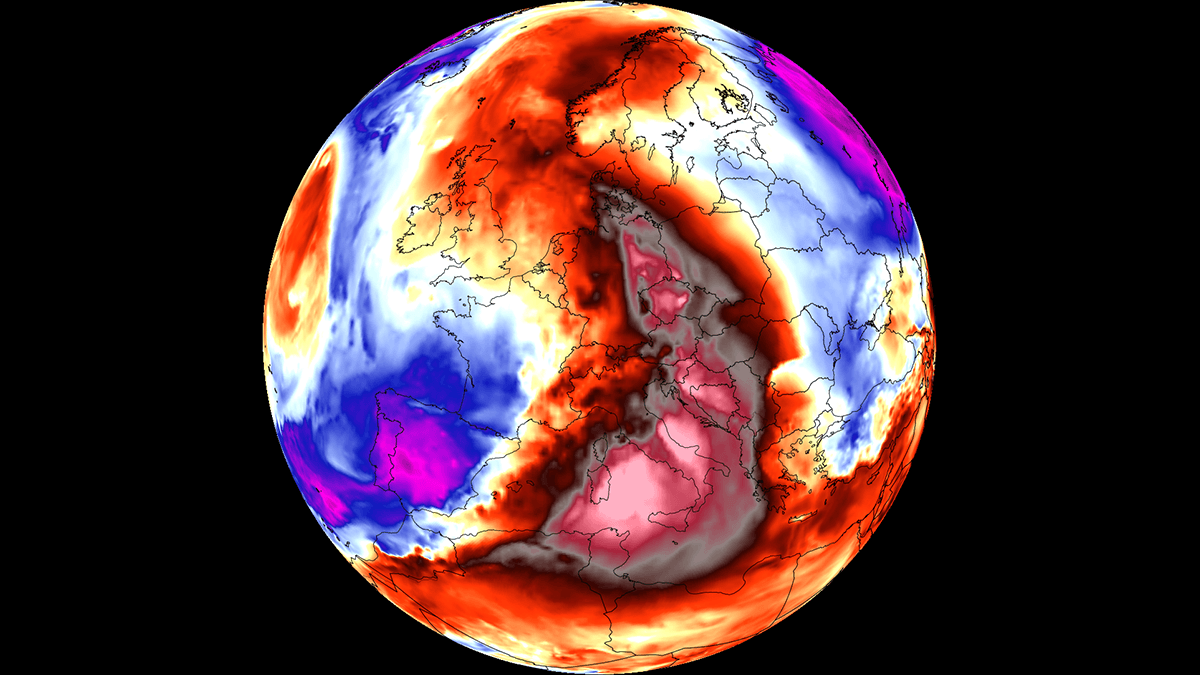
EUROPE — As summer enters its final stretch, large swaths of Southern and Central Europe are once again bracing for extreme weather. A stubborn, potent high-pressure system parked over the Central Mediterranean and Southern Europe has triggered the development of yet another intense "Heat Dome"—marking the sixth major heatwave to sweep across the continent this season.
Atmospheric scientists warn that this late-summer thermal surge will push afternoon surface temperatures to dangerous levels, accompanied by suffocating "tropical nights," heightened wildfire risks, and severe physiological stress for millions of residents. Simultaneously, the sharp temperature gradients driving the heatwave are setting the stage for a volatile severe thunderstorm outbreak across parts of France and the western Alps.
Main Facts: The Anatomy of Europe’s Sixth Heat Dome
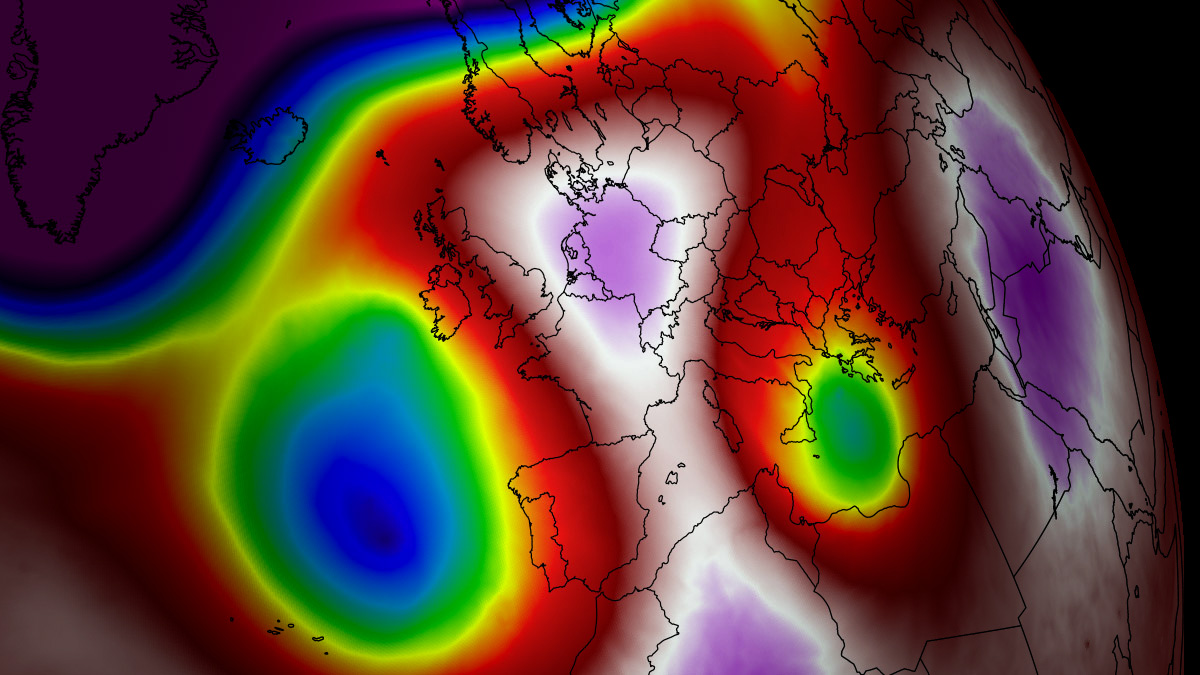
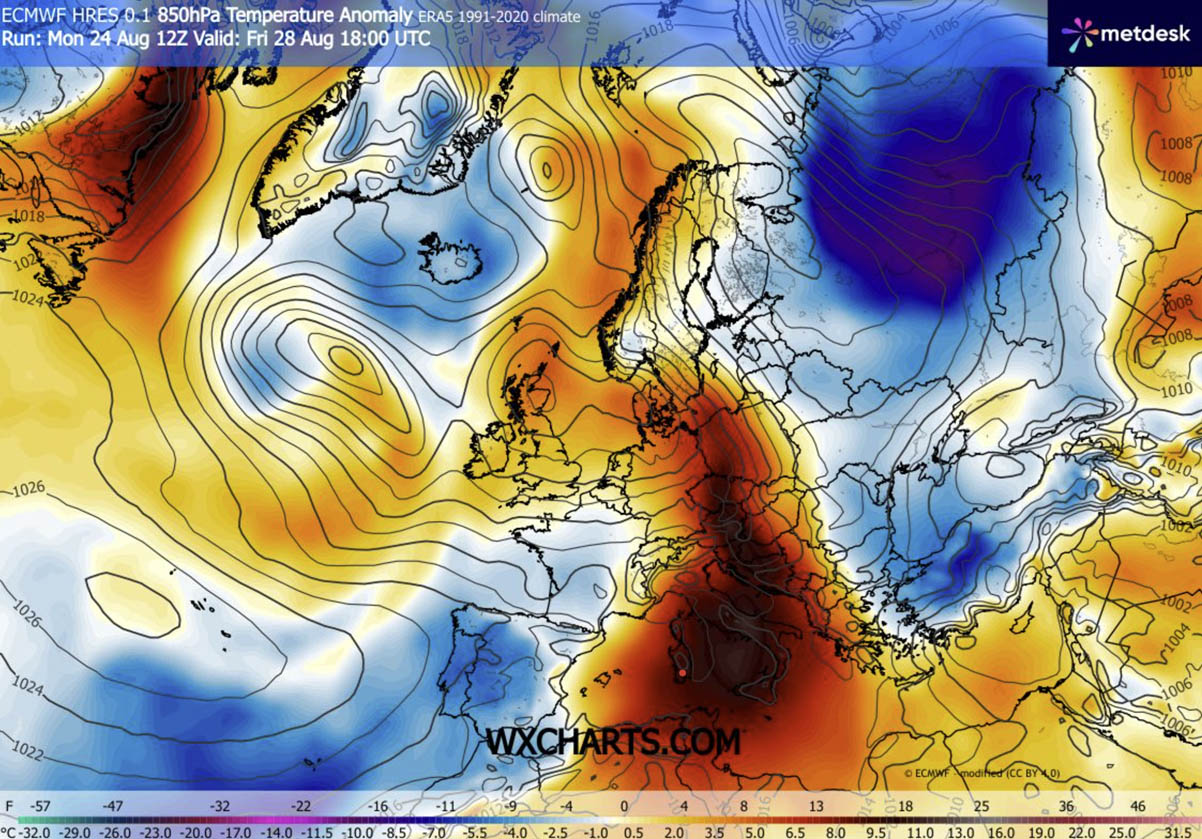
The primary driver behind this late-season thermal event is an unseasonably robust upper-level ridge. Originating from North Africa, this blocking high-pressure system has locked itself over the Mediterranean basin, expanding steadily northward into Central Europe and the Balkan Peninsula.
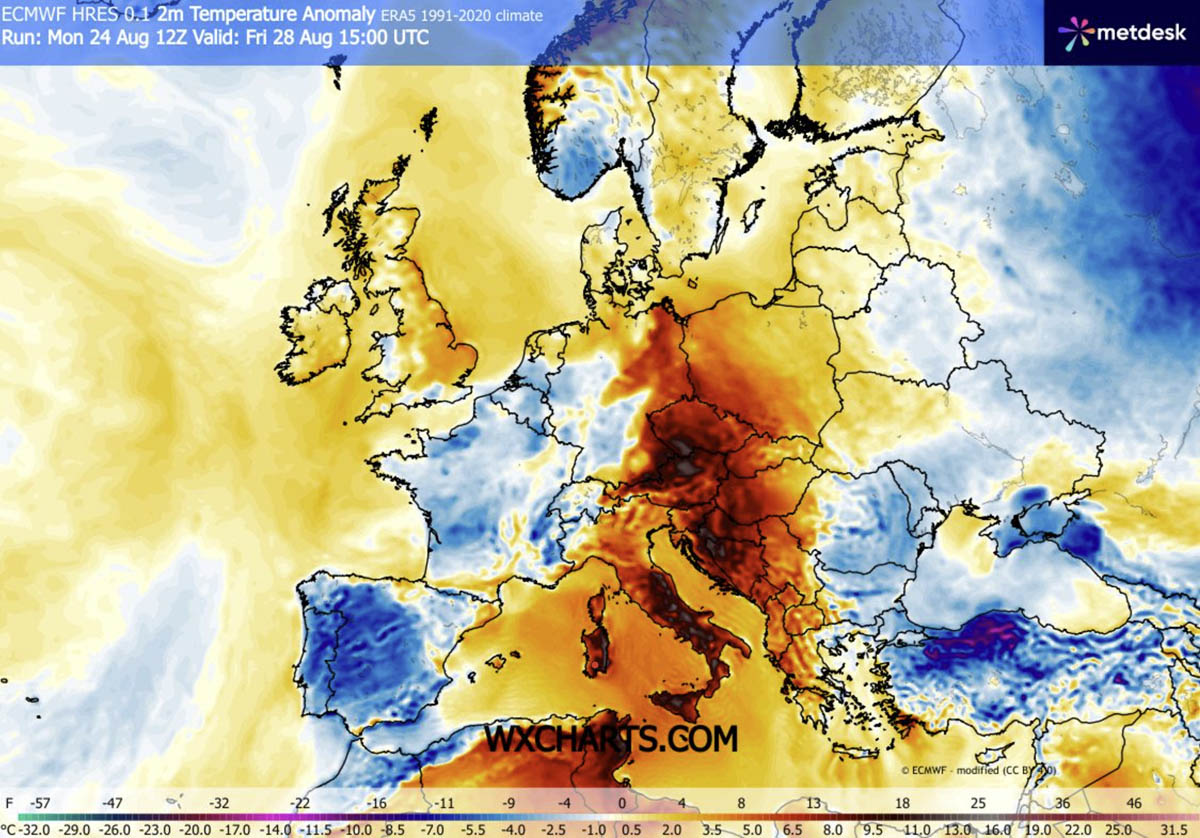
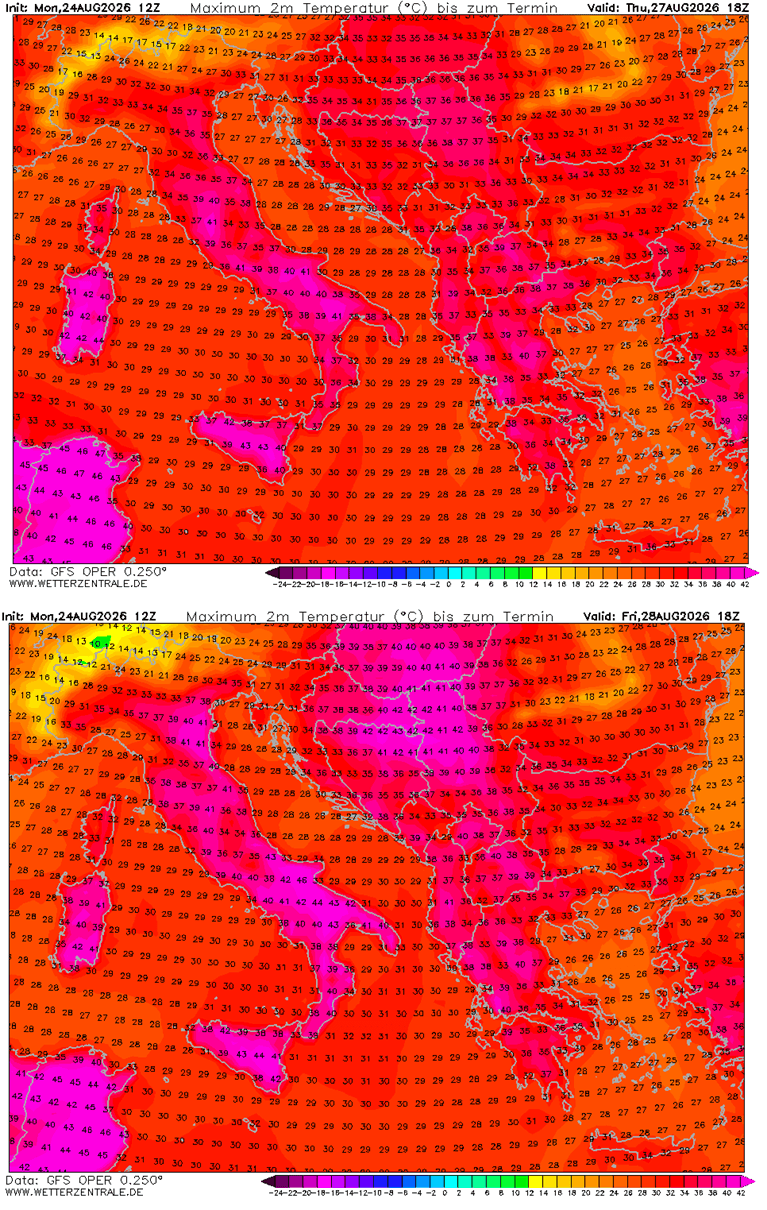
- Scorching Temperatures: Peak afternoon surface temperatures across low-lying river basins, valleys, and plains are forecast to range between 38°C and 43°C (100°F to 109°F).
- Temperature Anomalies: Forecast models indicate that 2-meter surface temperatures will range from 12°C to 16°C above the long-term historical average for late August.
- Suffocating Nights: Major urban corridors will see little to no nocturnal relief, with overnight lows refusing to drop below 22°C to 26°C (72°F to 79°F).
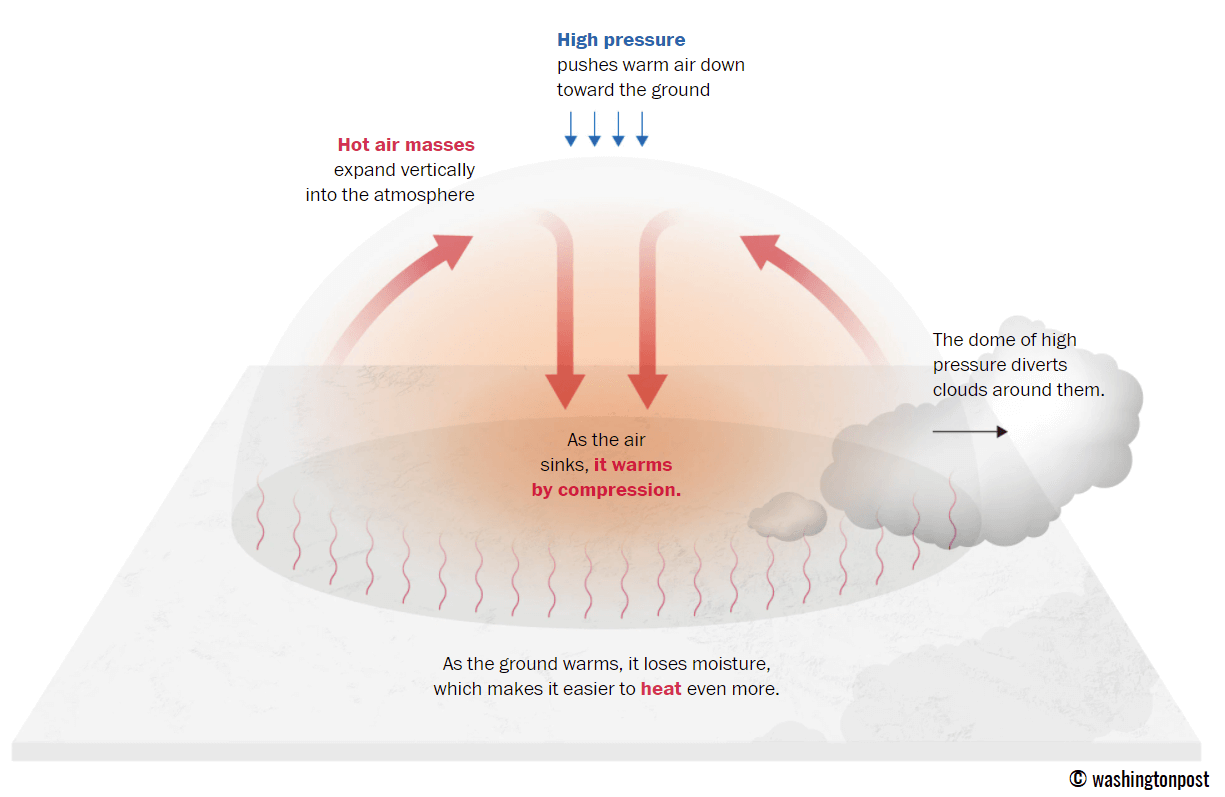
- The "Heat Dome" Mechanism: Operating much like a lid on a pot, the high-pressure system traps warm air at all levels. As sinking air adiabatically compresses and warms the lower troposphere, it creates a stagnant, punishing heat trap that accelerates soil moisture loss via dry continental winds.
- Collateral Severe Weather: While the heat dome bakes the south and center, a deep low-pressure wave over the Bay of Biscay is clashing with the warm plume, triggering extreme atmospheric instability—featuring Convective Available Potential Energy (CAPE) values ranging from 3,000 to nearly 5,000 J/kg—which threatens France and the western Alps with destructive severe weather, including giant hail and potential tornadoes.
Chronology of the Event: How the Thermal Surge Unfolds
The progression of this weather anomaly is mapped across a multi-day timeline, shifting from southern strongholds toward central and eastern Europe before finally breaking down over the weekend.
Mid-Week: The Peak in the Mediterranean and Balkans
The heatwave’s most severe phase is concentrated across Italy and the central Balkans. From Thursday through Saturday, countries like Italy, Bosnia and Herzegovina, Serbia, Croatia, and Hungary are enduring the worst of the peak temperatures. Pannonian plains and the Po Valley are experiencing maximum values soaring into the low-40s.
Concurrently, on Thursday, a brief thermal plume pushes northward across the Alps into Germany, lifting temperatures into the mid-30s before cooler Atlantic air begins its push from the west.
Friday: The Climax and Transition
By Friday night, the high-pressure ridge begins to elongate. While the upper-level Atlantic wave gradually dissipates, the core of the heat dome shifts eastward. The extreme heat expands across the Balkan Peninsula, western Ukraine, and Poland.
Meanwhile, Western and Southwestern Europe—including Portugal, Spain, and parts of France—begin to experience a refreshing shift as maritime air from the Atlantic moves inland, offering a stark contrast to the stifling conditions further east.
The Weekend: Eastern Shift and Dissipation
Over the weekend, the heatwave’s core completely vacates Western Europe, gradually vanishing from west to east. However, its eastern flank continues to impact Eastern Europe and the far western regions of Ukraine and Poland before the overarching pattern finally begins to break down heading into early September.
Supporting Data and Meteorological Dynamics
To understand the severity of this event, meteorologists look closely at the synoptic-scale patterns and thermodynamic indicators governing the lower troposphere.
Understanding the Heat Dome
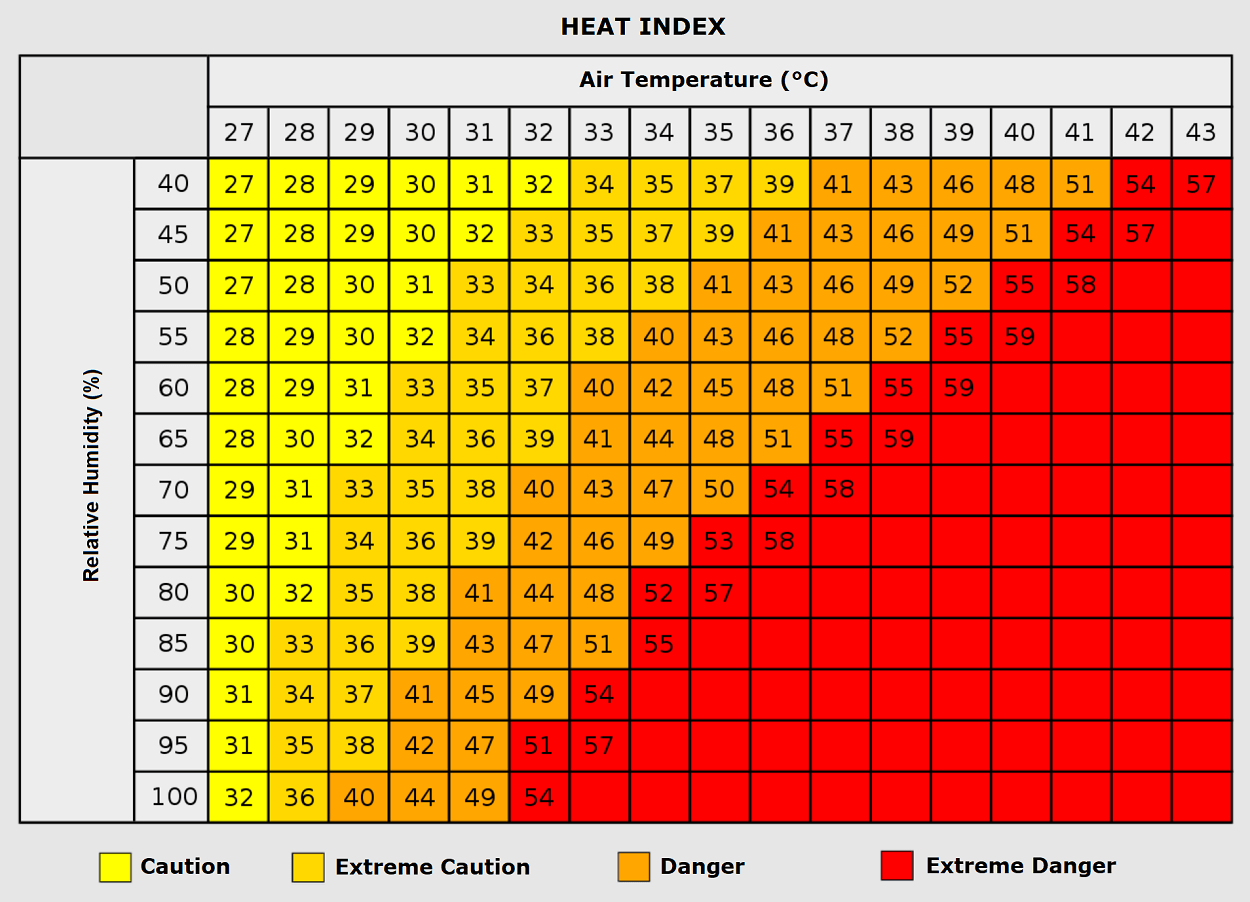
A "heat dome" occurs when a broad, stagnant area of high-pressure air parks itself over a vast geographic region for days or weeks. The upper-level ridge acts as a thermal barrier. As air at higher altitudes warms and sinks, it compresses adiabatically, heating up rapidly as it nears the surface. This downward motion prevents cloud formation, allowing maximum solar radiation to bake the terrain below.
The 850 hPa Level and Thermal Anomalies
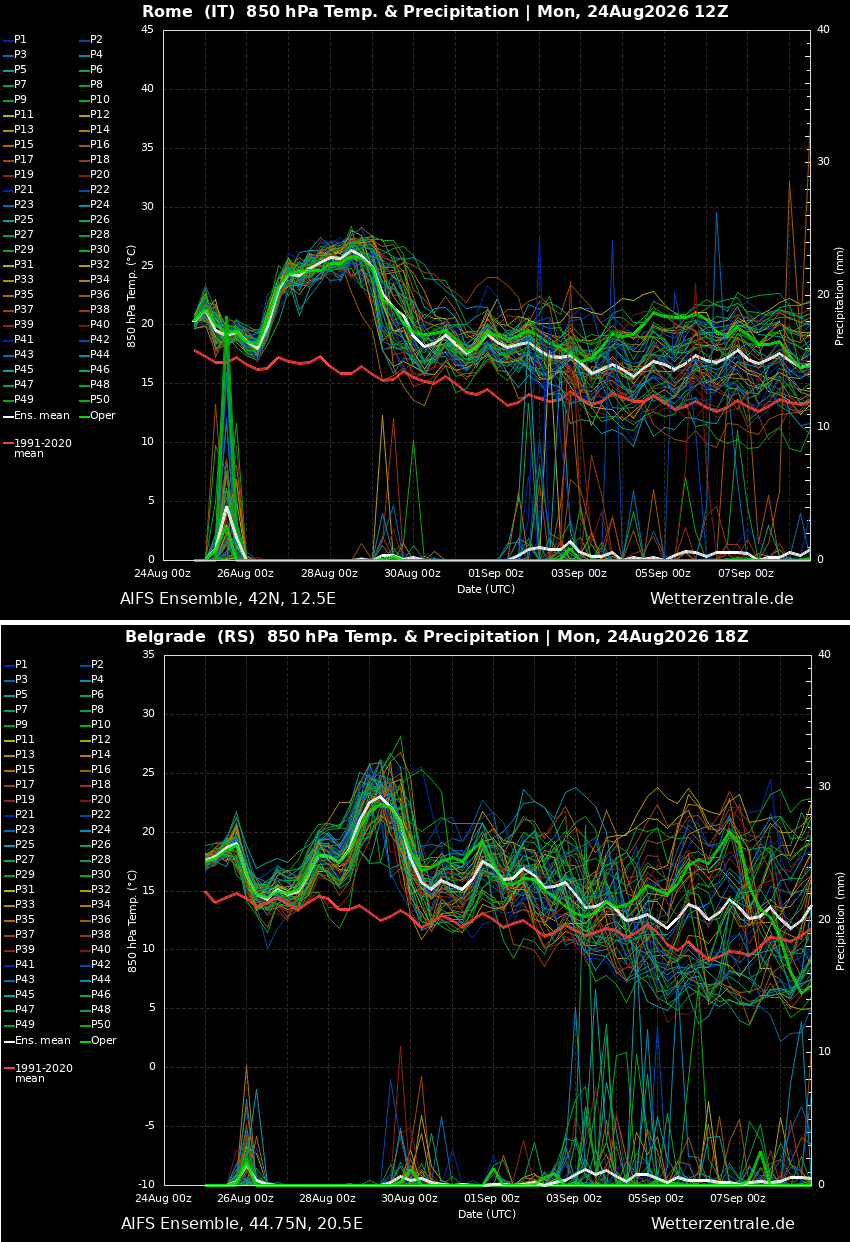
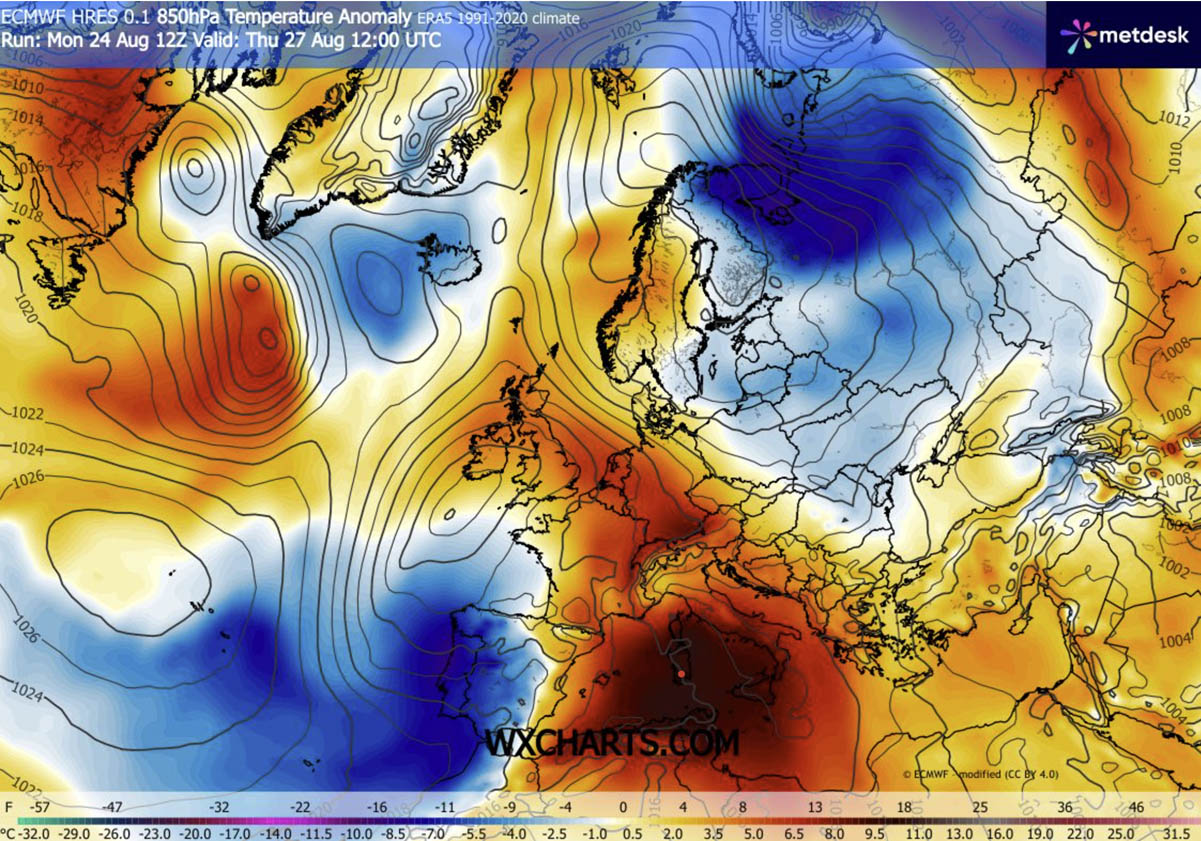
Weather models tracking temperatures at the 850 hPa isobaric surface (roughly 1,500 meters above sea level) highlight the immense scale of the warm air mass. The most anomalous temperatures are centered over the central Mediterranean and Italy through Thursday, before migrating toward the Balkans by Saturday.
The Heat Index Factor
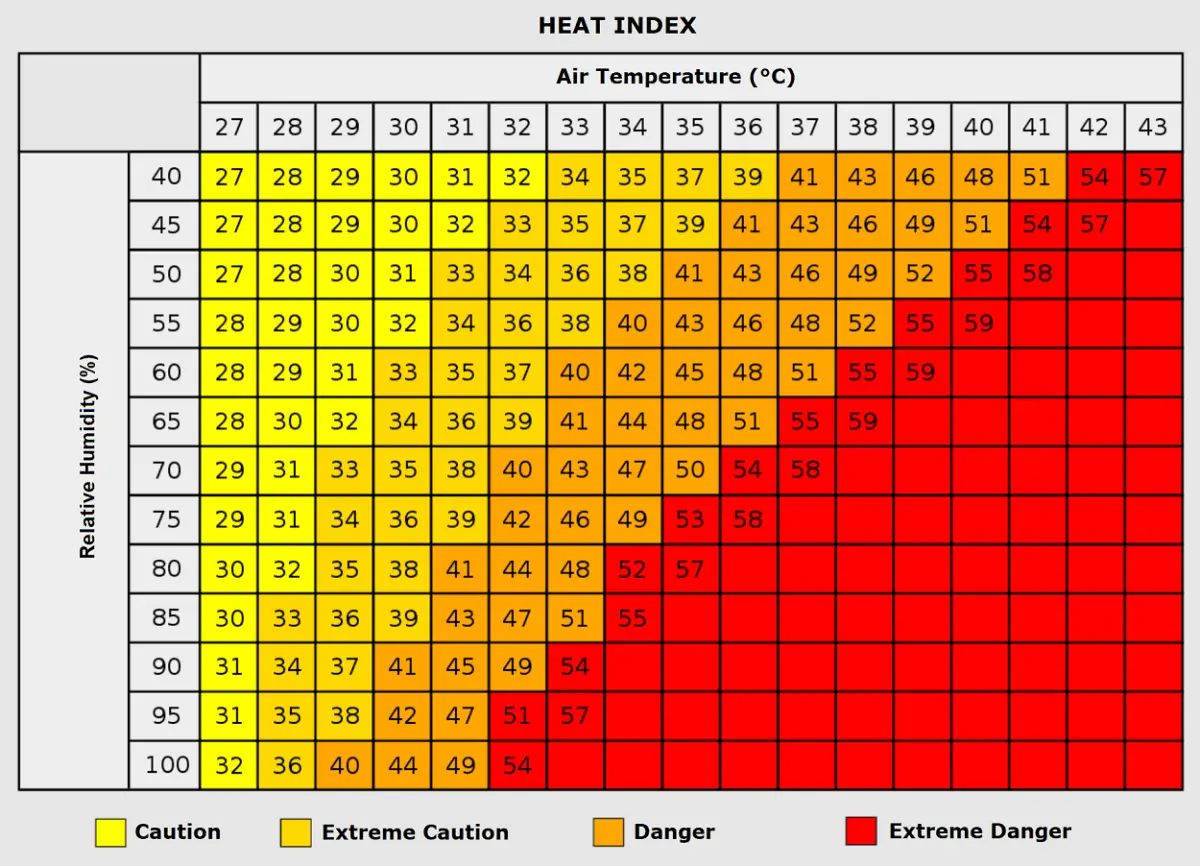
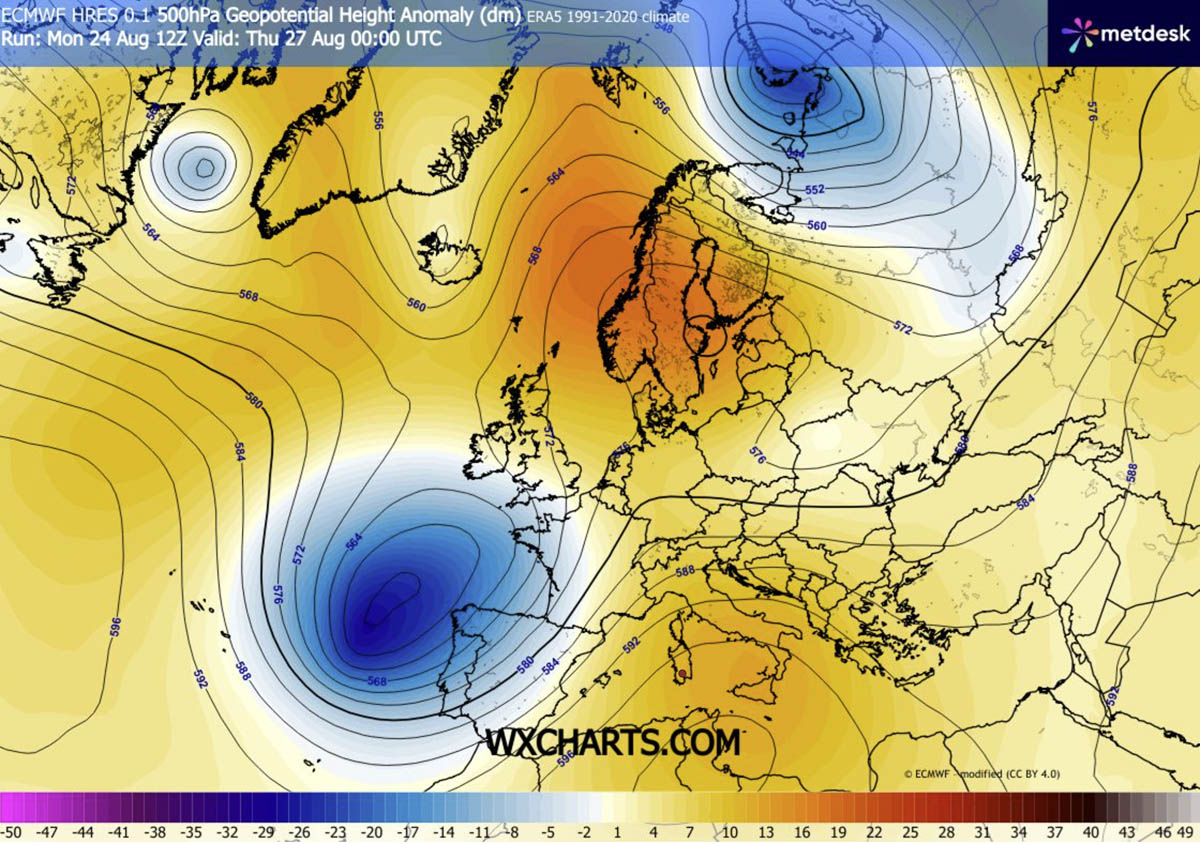
Humidity plays a critical role in how the human body experiences these temperatures. Meteorological guidelines emphasize that a temperature of 35°C paired with low humidity is manageable, but when relative humidity climbs above 80%, the apparent "feels-like" temperature can skyrocket to nearly 50°C (122°F). This high heat-index environment drastically accelerates dehydration and physiological exhaustion.
Physiological, Societal, and Energy Implications
The sustained nature of this sixth heat dome poses multi-faceted threats to public health, infrastructure, and the environment.
Public Health and Vulnerable Populations
The most insidious aspect of this heatwave is the persistence of "tropical nights." When temperatures fail to drop below 24°C overnight, the human cardiovascular system is denied its necessary recovery window. Prolonged exposure heightens the risk of:
- Heat exhaustion and life-threatening heat stroke.
- Exacerbated cardiovascular and respiratory illnesses, leading to spikes in heart attacks and strokes.
- Severe vulnerability among the elderly, children, and those with pre-existing medical conditions.
- Disproportionate impacts on low-income urban residents living in homes constructed with heat-trapping materials like concrete and asbestos.
- Occupational hazards for outdoor laborers, including agricultural workers and construction crews.
Infrastructure and the Energy Grid
As millions of residents turn to air conditioning to combat the sweltering daytime and nighttime heat, energy grids across Southern and Central Europe face unprecedented demand surges. The risk of localized brownouts and blackouts increases significantly during peak consumption hours.
Wildfire Hazards
The combination of continuous high temperatures, dry continental winds, and accelerated soil moisture loss has created a tinderbox across southern and central European valleys. Vegetation is rapidly desiccating, drastically lowering the threshold for explosive wildfire ignition and rapid spread.
Severe Weather and Storm Outbreaks: The Threat to France
While the eastern half of the continent bakes beneath the dome, the western periphery of the high-pressure system is interacting with a deep Atlantic wave to produce violent weather.
On Thursday, a pronounced pressure and temperature gradient set up between the Mediterranean ridge and a deep low over western Iberia. This configuration is driving powerful southwesterly jet-stream winds—complete with intense vertical wind shear—from eastern Spain across the western Mediterranean into southern and eastern France.
Fueled by a historic, exceptionally warm maritime heatwave in the Mediterranean, atmospheric instability has reached extraordinary levels. CAPE values ranging from 3,000 to nearly 5,000 J/kg are priming the atmosphere for explosive convective development. Forecasters warn that this overlap of extreme instability and robust wind shear will likely spawn severe, well-organized supercells capable of producing:
- Destructive straight-line winds.
- Very large to giant hail.
- The risk of tornadoes.
- Torrential downpours leading to flash flooding.
As Europe navigates the closing days of August, meteorologists emphasize that the atmospheric pattern remains highly dynamic. Long-term forecasting models suggest that unseasonably warm and active patterns could well bleed into early September, keeping emergency services and communities on high alert.
