

WASHINGTON — After four consecutive years of robust, uninterrupted growth, the United States clean energy sector experienced a significant contraction in 2025, shedding nearly 37,000 jobs. Newly released findings from environmental non-profit E2 (Environmental Entrepreneurs), which analyzed comprehensive employment data from the US Department of Energy (DOE), paint a sobering picture of an industry grappling with sweeping policy reversals, shifting federal priorities, and a wave of project cancellations.
The downturn has effectively erased nearly 40% of the massive employment gains achieved in the sector during 2024, lowering total clean energy employment nationwide to 3.52 million workers. While the green energy workforce remains considerably larger than legacy fossil fuel sectors, the reversal marks a stark psychological and economic milestone: the first annual contraction for the industry since the disruptions of the COVID-19 pandemic.
Main Facts: The Scope of the 2025 Contraction
According to the initial findings released by E2, the US clean energy economy lost precisely 36,949 jobs over the course of 2025. This downturn arrived against the backdrop of a broader contraction across the entire American energy landscape, which shed an estimated 86,000 jobs overall during the same period.
Clean energy accounted for roughly 43% of total energy industry job losses in 2025. Despite this retrenchment, green industries continue to anchor the nation’s energy workforce by a wide margin. More than 3.5 million Americans remain employed in clean energy sectors, outstripping traditional fossil fuel counterparts. For comparison:
- Oil and gas companies employ approximately 958,000 workers.
- Coal enterprises account for roughly 125,000 employees.
- Nuclear energy firms support around 70,000 workers.
Geographically, the pain was widespread, touching 35 states across the country. However, the impact was felt most acutely in states that have traditionally served as powerhouses for green technology manufacturing and deployment. California bore the heaviest brunt, shedding nearly 21,000 clean energy jobs alone—the highest total of any state in the nation. Conversely, a handful of states bucked the national trend; Florida, for example, managed to add approximately 3,800 clean energy jobs over the year.
Sector-by-sector analysis reveals that job losses were concentrated heavily in energy efficiency, traditional renewable energy generation (such as utility-scale solar and wind), and the electric vehicle (EV) supply chain. Conversely, select sub-sectors managed to eke out modest gains, particularly battery storage, grid modernization infrastructure, and biofuels.
Chronology: How the Policy Shifts Unfolded
To understand the sudden reversal in clean energy momentum, industry analysts point to a rapidly evolving regulatory and legislative landscape that took shape over the course of 2024 and 2025.
Late 2024: Anticipation and Uncertainty
As the political landscape shifted following the national elections, markets began pricing in anticipated changes to federal energy policy. For four years, the clean energy sector had expanded aggressively, supercharged by federal incentives, tax credits, and ambitious decarbonization frameworks. However, developers and manufacturers began issuing cautious warnings regarding potential policy pivots.
Early 2025: The Washington Pivot
Following the inauguration of the Trump administration and the consolidation of a Republican-controlled Congress, federal support for clean energy and zero-emission vehicles experienced a rapid rollback. Administration officials and congressional leaders initiated legislative and regulatory efforts aimed at dismantling or scaling back key climate provisions, targeting federal EV subsidies, renewable energy grants, and emissions standards.
Mid-2025: Project Cancellations and Downsizing
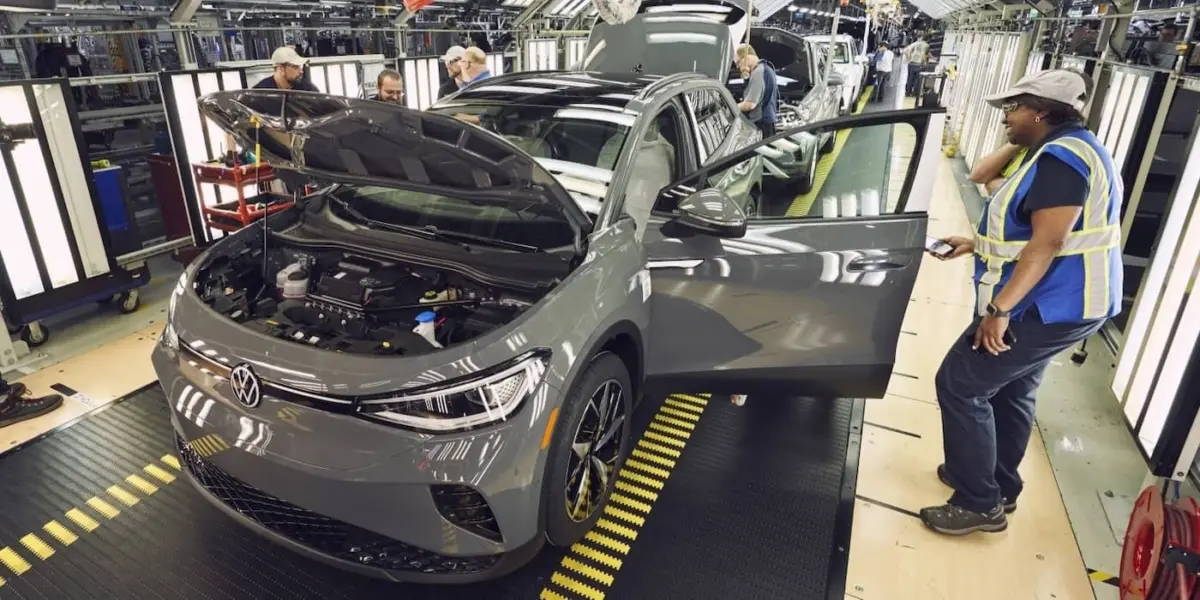
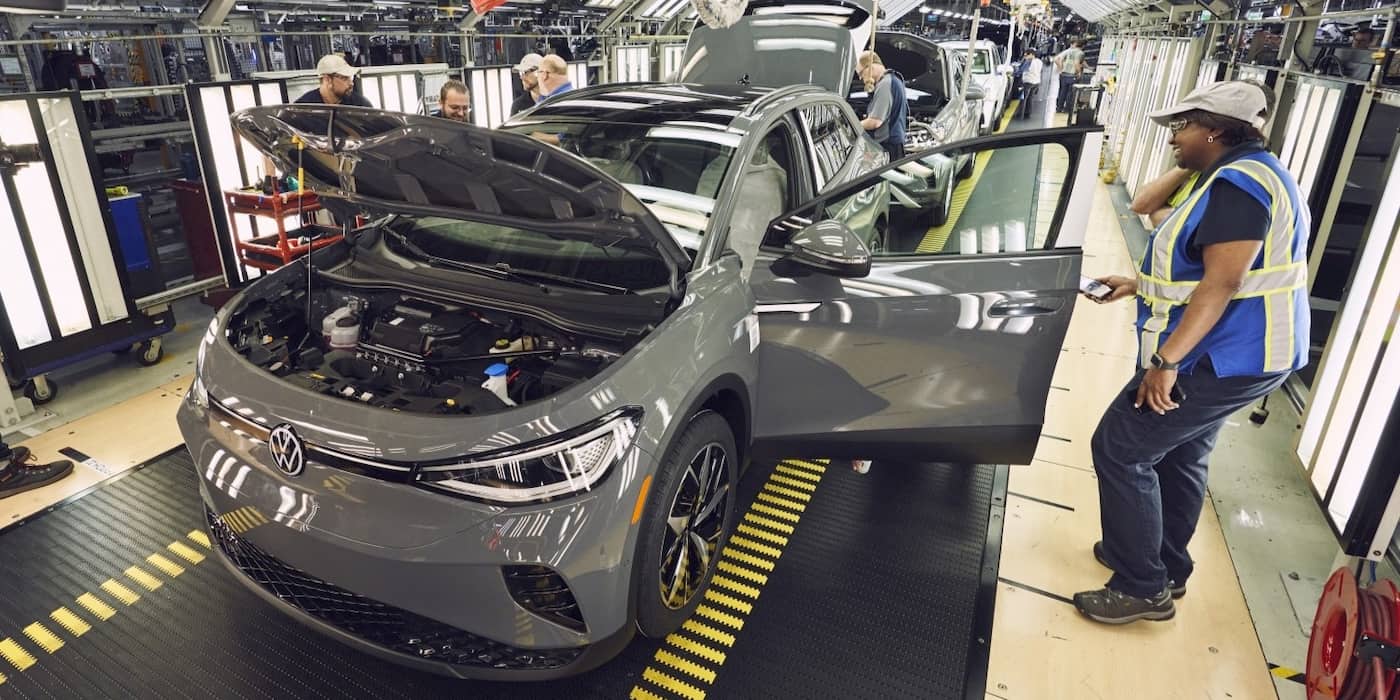
The regulatory uncertainty quickly translated into concrete business decisions. Boardrooms across the country began reevaluating capital-intensive projects. According to E2’s specialized project tracker, 142 major clean energy manufacturing, generation, and storage projects were either entirely canceled or significantly downsized during 2025. Major automotive and battery manufacturers—such as Volkswagen, which notably paused portions of its ID.4 electric vehicle production lines at facilities like the one in Chattanooga, Tennessee—faced mounting pressure to pivot strategies away from aggressive electrification timelines.
Late 2025 to Early 2026: Consolidation of Data
By the close of 2025, labor and economic indicators confirmed the worst fears of industry advocates. The Department of Energy’s employment metrics, processed and analyzed by E2 in early 2026, officially quantified the human cost of the policy shift, culminating in the release of the initial 2025 job figures. E2 has announced that its comprehensive, granular Clean Jobs America 2026 report—featuring deep dives into state, county, and sub-industry metrics—will be published in October 2026.
Supporting Data and Economic Indicators
The intersection between policy changes and job losses is complex, but macroeconomic data compiled by E2 and federal agencies provides a clear roadmap of the economic headwinds facing the green transition.

| Energy Sector | 2025 Estimated Workforce | Approximate Employment Share | Annual Trend (2025) |
|---|---|---|---|
| Clean Energy | ~3.52 million | Dominant | Decreased (-36,949 jobs) |
| Oil & Gas | ~958,000 | Legacy Major | Mixed / Stable |
| Coal | ~125,000 | Legacy Minor | Flat / Declining |
| Nuclear | ~70,000 | Specialized | Stable |
While employment figures document the net loss of nearly 37,000 positions, analysts emphasize that employment statistics alone do not tell the whole story. E2 notes that while the employment figures clearly map the downward trajectory, individual job losses cannot always be definitively traced to a single, isolated regulatory change. Instead, they represent a cumulative response to shifting market signals, altered tax credit timelines, and diminished investor confidence in long-term federal backing.
Adding a layer of paradox to the employment contraction, physical infrastructure deployment has not ground to a complete halt. According to recent forecasts from the US Energy Information Administration (EIA), the power sector is still slated to bring an impressive 83 gigawatts (GW) of new renewable generation and energy storage online over a 12-month window, even as traditional fossil fuel capacity continues to experience long-term retirement trends. This indicates that while foundational manufacturing and large-scale project pipelines faced turbulence, existing market momentum and corporate sustainability commitments kept certain grid-level installations moving forward.
Official Responses and Stakeholder Perspectives
The release of the 2025 employment data has sparked intense debate among policymakers, industry advocates, and labor representatives.
Environmental Entrepreneurs (E2) placed the blame squarely at the feet of the federal government. In their official statements accompanying the data release, E2 representatives argued that the job losses are the "direct impact" of deliberate political choices made by the Trump administration and Republican congressional leaders. By dismantling federal support structures for clean energy and electric vehicles, E2 asserts that policymakers actively undermined American competitiveness and manufacturing jobs that were previously revitalizing local economies.
"The drop in clean energy jobs is not a natural market correction; it is a manufactured crisis resulting from hostile federal policies," said a senior policy analyst familiar with the E2 findings. "When you pull the rug out from under American innovation and penalize clean technology, companies are forced to pull back, and workers pay the price."
Conversely, defenders of the administration’s policies offer a different perspective. Proponents of the regulatory rollback argue that scaling back federal mandates and subsidies restores a free-market equilibrium, reduces federal spending, and alleviates financial burdens on traditional energy sectors that remain vital to American energy independence and grid reliability. From this viewpoint, the contraction represents a necessary recalibration away from what critics termed "government-engineered energy transitions" toward a fuel-neutral approach that prioritizes immediate economic efficiency over mandated decarbonization timelines.

Labor organizations find themselves navigating a complex landscape. While traditional trade unions representing electrical workers and grid technicians have generally benefited from infrastructure and transmission investments, unions tied directly to automotive manufacturing and clean energy assembly lines have expressed deep anxiety over production pauses, canceled factory expansions, and the uncertain future of federal EV tax credits.
Implications: What Lies Ahead for the American Energy Economy
The contraction of 2025 raises critical questions about the future trajectory of American energy, industrial policy, and global competitiveness.
1. Global Competitiveness in Clean Tech
As the United States steps back from federal support for clean energy, international competitors—most notably China and the European Union—continue to pour massive state resources into renewable manufacturing, battery technology, and electric mobility. Economists warn that by allowing domestic clean energy momentum to stall, the US risks ceding long-term technological leadership and manufacturing dominance to foreign rivals.
2. State-Level Divergence
With federal policy turning hostile toward green energy, the burden of sustaining the transition has shifted increasingly to state governments and regional compacts. States like California, despite suffering major job losses in 2025, along with other proactive states committed to clean energy mandates, are likely to double down on regional incentives. However, this patchwork approach may create an uneven economic landscape, where green jobs concentrate heavily in politically supportive states while bypassing regions that rely solely on federal cues.
3. Consumer Impact and Market Realities
Despite regulatory headwinds, consumer and corporate demand for cost-effective energy solutions—such as residential solar, battery backup systems, and heat pumps—remains resilient. Programs and services that help consumers navigate energy upgrades, such as free advisory platforms for heat pump installations, continue to see steady engagement as homeowners seek relief from volatile utility bills.
Ultimately, the 2025 job figures serve as a stark reminder of how deeply intertwined modern energy development is with federal policy. As the industry awaits E2’s full Clean Jobs America 2026 report in October, stakeholders on all sides will be watching closely to see whether the contraction proves to be a temporary legislative speed bump or the beginning of a prolonged multi-year downturn for America’s clean energy economy.
