

For decades, the commercial refrigeration sector operated under a widely accepted geographic dogma: the "CO2 equator." This imaginary boundary drew a hard line across global climate zones, dictating that below a certain latitude, transcritical carbon dioxide ($CO_2$) refrigeration systems became fundamentally too inefficient to justify. Conventional wisdom held that in persistently hot regions, supermarket operators and industrial cold-chain facilities should steer clear of natural refrigerants, sticking instead to traditional synthetic hydrofluorocarbons (HFCs) or complex, expensive cascade systems.
Today, that geographic dogma is rapidly dissolving. Across some of the planet’s warmest and most punishing commercial markets—from the sprawling retail centers of the U.S. Sun Belt and northern Mexico to hyper-humid Asian metropolises—transcritical $CO_2$ systems are running with reliable, high-level performance.
The turning point is not a sudden chemical transformation of the refrigerant itself, but rather a fundamental shift in how engineers design the entire thermal ecosystem around it. For commercial refrigeration contractors, system designers, and facility operators, this distinction carries immense financial and operational weight. A warm climate does not automatically rule out $CO_2$; rather, it demands a sophisticated engineering approach tailored precisely to the environmental conditions the equipment will actually face.
Main Facts: Redefining Natural Refrigerant Limitations
The transition of $CO_2$ (designated as R-744) into warm-weather applications marks a major milestone in the HVACR industry’s broader migration toward low-Global Warming Potential (GWP) alternatives. To understand why warm climates once posed such a severe barrier, one must look at the thermodynamic properties of the fluid itself.
Unlike conventional synthetic refrigerants, the critical point of $CO_2$ sits relatively low, at approximately 88°F (31°C). When ambient temperatures remain below this threshold, $CO_2$ condenses much like a traditional refrigerant within a standard condenser coil. However, once ambient temperatures climb past 88°F, the refrigerant no longer condenses. Instead, it transitions into a dense, high-pressure supercritical fluid.
Because of this physical behavior, warm-weather transcritical systems do not utilize a traditional condenser; they rely on a gas cooler. In hot climates, systems spend a significant portion of their operational lifecycle in this transcritical, supercritical state. This makes heat rejection the single most critical parameter to address during the engineering and design phase.
[Traditional Refrigerant]  --> Condenses below critical point  --> Standard Condenser
[Transcritical CO2]        --> Supercritical above 88°F (31°C) --> Gas Cooler (High-Pressure)
Engineers have learned that the key to maintaining efficiency in high-ambient environments is sizing the gas cooler for actual peak ambient conditions rather than relying on comfortable, averaged historical weather data. By projecting peak thermal stress—such as a 100°F or 105°F afternoon—system designers protect refrigeration capacity when outdoor temperatures are at their highest and product integrity is most vulnerable.
Furthermore, the operating pressures of transcritical $CO_2$ systems are vastly higher than those of legacy synthetic systems like R-404A. High-side components—spanning the compressor discharge line, the gas cooler, and the high-pressure regulating valves—must be engineered for a nominal design pressure of roughly 130 bar (approximately 1,885 psi). During a hot summer day with ambient temperatures hitting 95°F, a transcritical system’s high-side pressure can easily approach 1,400 psi, running five to seven times higher than an equivalent R-404A system. Contractors and technicians must account for these extreme pressure ratings during component selection, pipe sizing, installation, and routine maintenance.
Chronology: The Evolution of the "CO2 Equator" Myth
To appreciate the current paradigm shift, it is helpful to trace how the commercial refrigeration industry arrived at the concept of the "CO2 equator" and how it systematically dismantled it.
- Early 2000s (The Nordic Pioneer Phase): Transcritical $CO_2$ technology initially gained traction in Northern Europe, Scandinavia, and other cold-climate regions. Because ambient temperatures in these areas remained below 88°F for the vast majority of the year, systems operated subcritically most of the time, delivering exceptional energy efficiency and eliminating regulatory worries associated with synthetic F-gases.
- The Mid-2000s to 2010s (The "Equator" Wall): As equipment manufacturers attempted to export these northern European designs directly into southern European, Middle Eastern, and North American markets without structural modifications, systems struggled. High ambient temperatures caused excessive discharge pressures, soaring energy consumption, and frequent high-pressure trips. This performance drop-off cemented the industry belief in the "CO2 equator."
- The Late 2010s (Architectural Innovation): Recognizing that global phase-downs of HFCs under the Kigali Amendment and domestic regulations were accelerating, progressive equipment manufacturers and engineering firms began rethinking warm-weather design. Instead of viewing high ambient temperatures as a dealbreaker, engineers introduced parallel compression, ejector technology, and variable-speed drives to recover lost efficiency.
- The Early 2020s (Global Field Validation): High-profile commercial installations in severe climates—ranging from hyper-arid regions in Mexico to dense urban centers in East Asia—proved that advanced transcritical architectures could match or outperform legacy systems even in grueling heat.
- Present Day (Mainstream Sun Belt Adoption): Today, the "CO2 equator" is widely recognized as an outdated engineering artifact. With sophisticated software modeling, adiabatic pre-cooling integration, and robust high-side component manufacturing, transcritical $CO_2$ is rapidly becoming a standard design choice across the U.S. Sun Belt.
Supporting Data: Performance Metrics from the Field
The theoretical viability of warm-weather $CO_2$ is no longer up for debate; empirical field data from major commercial installations validate the engineering models.
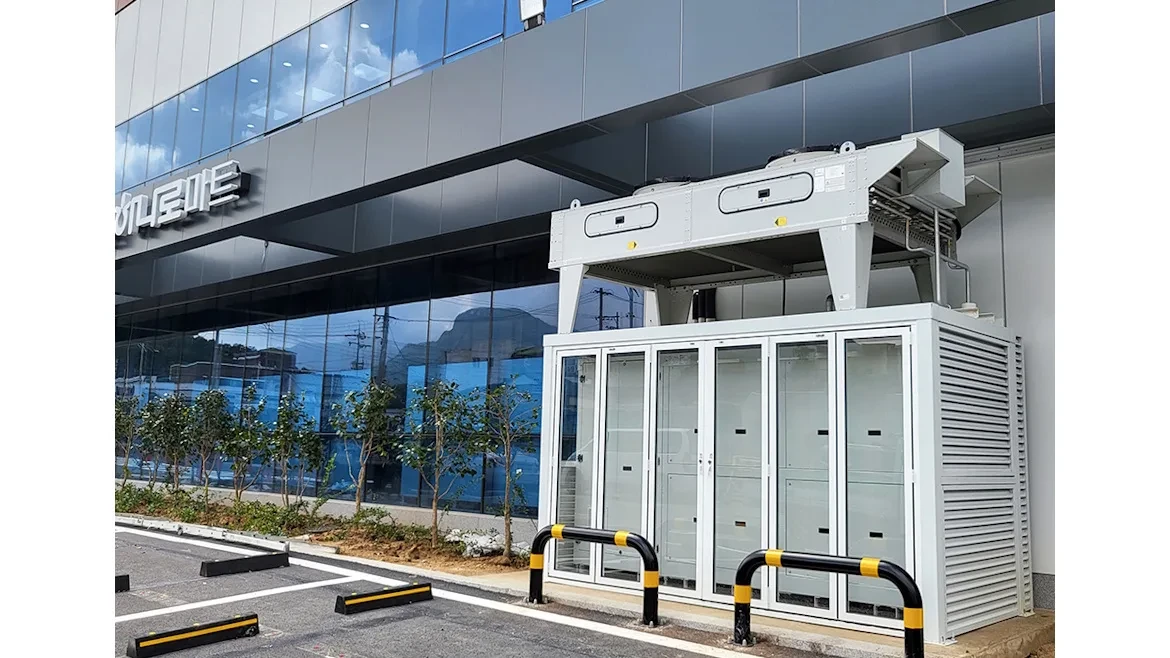
A prominent landmark supermarket project in South Korea serves as a benchmark for modern warm-climate $CO_2$ engineering. The facility was intentionally engineered for a punishing 100°F (38°C) peak-ambient condition and a 130-bar design pressure. Rather than settling for a standard single-stage or basic booster setup, the system architecture integrated:
- Parallel compression systems to handle flash gas efficiently.
- Variable-speed inverter compressors for precise load matching.
- Comprehensive heat recovery to divert waste thermal energy toward domestic water heating or space conditioning.
When evaluated post-installation, the South Korean supermarket reported a Coefficient of Performance (COP) approximately 34% higher than a comparable legacy R-404A supermarket system operating under the same regional climate constraints.
+-------------------------------------------------------+
|            Performance Comparison (COP)               |
|                                                       |
|  Legacy R-404A System: [ Standard Baseline ]          |
|                                                       |
|  Transcritical CO2:    [=== +34% Higher COP ===>]     |
+-------------------------------------------------------+
While specific design blueprints cannot be copy-pasted universally—since environmental pressures in Phoenix, Arizona; Houston, Texas; and Monterrey, Mexico differ significantly—the underlying engineering methodology remains consistent: accurately model the local microclimate, and size heat rejection and electronic controls to match those distinct parameters.
Managing Heat: The Role of Adiabatic Pre-Cooling
In the hottest and driest locations, ambient air temperatures alone can push gas coolers to their thermodynamic limits. To combat this, engineers increasingly rely on adiabatic pre-cooling.
Hot Ambient Air ---> [ Wetted Pad / Media ] ---> Pre-Cooled Air ---> Gas Cooler
                            ^
                      Water Supply
By drawing incoming ambient air across a wetted pad or misting surface before it reaches the gas cooler coils, adiabatic systems lower the effective dry-bulb temperature of the air the system has to work against. This simple physical intervention reduces the peak high-side pressure, instantly dropping compressor energy consumption during peak afternoon heatwaves.
However, this thermodynamic gain comes with a direct operational trade-off: water consumption.
In the U.S. Sun Belt and northern Mexico, commercial operators frequently face simultaneous regulatory and economic pressures regarding both energy grid capacity and municipal water scarcity. Consequently, implementing adiabatic cooling requires a careful cost-benefit analysis. Water availability varies drastically by municipality; a pre-cooling strategy that makes complete economic sense in a dry inland desert may offer diminishing returns—or run afoul of local water conservation ordinances—in regions where water is scarce or where high humidity reduces evaporative efficiency.
Official Responses and Industry Perspectives
Leading voices in commercial refrigeration and contracting emphasize that successful transcritical deployment in warm climates requires an institutional shift in how projects are specified and bid.
"For years, contractors looked at $CO_2$ as a northern luxury that simply couldn’t survive a Texas or Arizona summer," notes a senior application engineer specializing in natural refrigerants. "That mindset has completely inverted. Today, the conversation is no longer about if $CO_2$ can run in the heat, but how we configure the mechanical package to extract maximum efficiency out of those hot-weather hours."
Equipment manufacturers have responded by expanding their portfolios of high-side components rated explicitly for 130-bar service pressures, alongside advanced system controllers equipped with predictive ambient-temperature algorithms.
Furthermore, industry associations and trade bodies have intensified training initiatives aimed at bridging the technical knowledge gap. Because transcritical $CO_2$ systems operate at pressures exponentially higher than traditional HFC systems, technician safety, proper tube-bending techniques, and thorough understanding of electronic expansion valves (EEVs) and high-pressure safety relief mechanisms are now core competencies demanded by forward-thinking mechanical contracting firms.
Implications for the Future of Commercial Refrigeration
The fading relevance of the "CO2 equator" carries profound implications for supermarket chains, cold-storage operators, convenience store networks, and mechanical contractors across warm-weather regions.
1. Lifecycle Cost Optimization vs. Initial Capital Expenditure
Evaluating refrigeration technology strictly through the lens of initial equipment cost is no longer viable. Transcritical $CO_2$ systems often command a higher upfront capital expenditure (CapEx) due to heavy-duty high-side components, specialized control architecture, and precision valves. However, when viewed across a 15-to-20-year operational lifecycle—factoring in escalating HFC refrigerant replacement costs, tightening environmental regulations, stringent energy penalties, and integrated heat-recovery savings—warm-weather $CO_2$ routinely delivers a superior Total Cost of Ownership (TCO).
2. Regulatory Future-Proofing
With global phasedowns of high-GWP synthetic refrigerants continuing apace under international agreements and domestic environmental policies, retailers who build new warm-climate stores with legacy synthetic fluids risk locking themselves into stranded assets. Adopting natural refrigerants like $CO_2$ future-proofs commercial facilities against impending regulatory bans and severe virgin-refrigerant price spikes.
3. Holistic Facility Integration
The modern transcritical $CO_2$ installation is no longer an isolated mechanical island; it functions as the thermal heart of the building. By aggressively capturing waste heat from the refrigeration rack and redirecting it for space heating, defrosting, or potable water pre-heating, facilities can dramatically lower their total building energy footprint.
Conclusion
The myth of the "CO2 equator" is officially a relic of the past. As demonstrated by high-performing installations from Seoul to the North American deserts, transcritical carbon dioxide is fully capable of thriving in the world’s most demanding thermal environments.
For commercial operators and contractors across the U.S. Sun Belt, Mexico, and other warm global markets, the operational takeaway is clear and practical: treat $CO_2$ not as a climate-limited chemical restriction, but as a comprehensive, whole-system heat-rejection challenge from the earliest design stages. Design for peak ambient realities, select robust high-side components, optimize controls, and evaluate systems through a full lifecycle lens—and $CO_2$ will not only survive the heat, but excel in it.
