

By [Author Name]
Published: October 2026
As the digital economy accelerates—driven by the relentless expansion of cloud computing, artificial intelligence, and cryptocurrency mining—communities across the United States are welcoming massive data centers into their backyards. However, a hidden byproduct of this technological boom is testing the limits of human patience, municipal zoning laws, and building engineering: a persistent, low-frequency hum.
According to new research and model guidelines released by Saint Louis University biology professor Kasey Fowler-Finn, mitigating the distinct, low-pitched drone generated by industrial-scale data center cooling and HVAC systems would require building walls an extraordinary 4.5 feet thick.
As noise-related lawsuits pile up across multiple states and public health surveys reveal widespread distress among neighbors, experts are warning that current municipal codes are fundamentally unequipped to handle the unique acoustic footprint of modern digital infrastructure.
Main Facts: The Physics of the Digital Hum
At the heart of the emerging conflict is a fundamental misunderstanding of how sound travels, how buildings absorb it, and how regulatory bodies measure it.
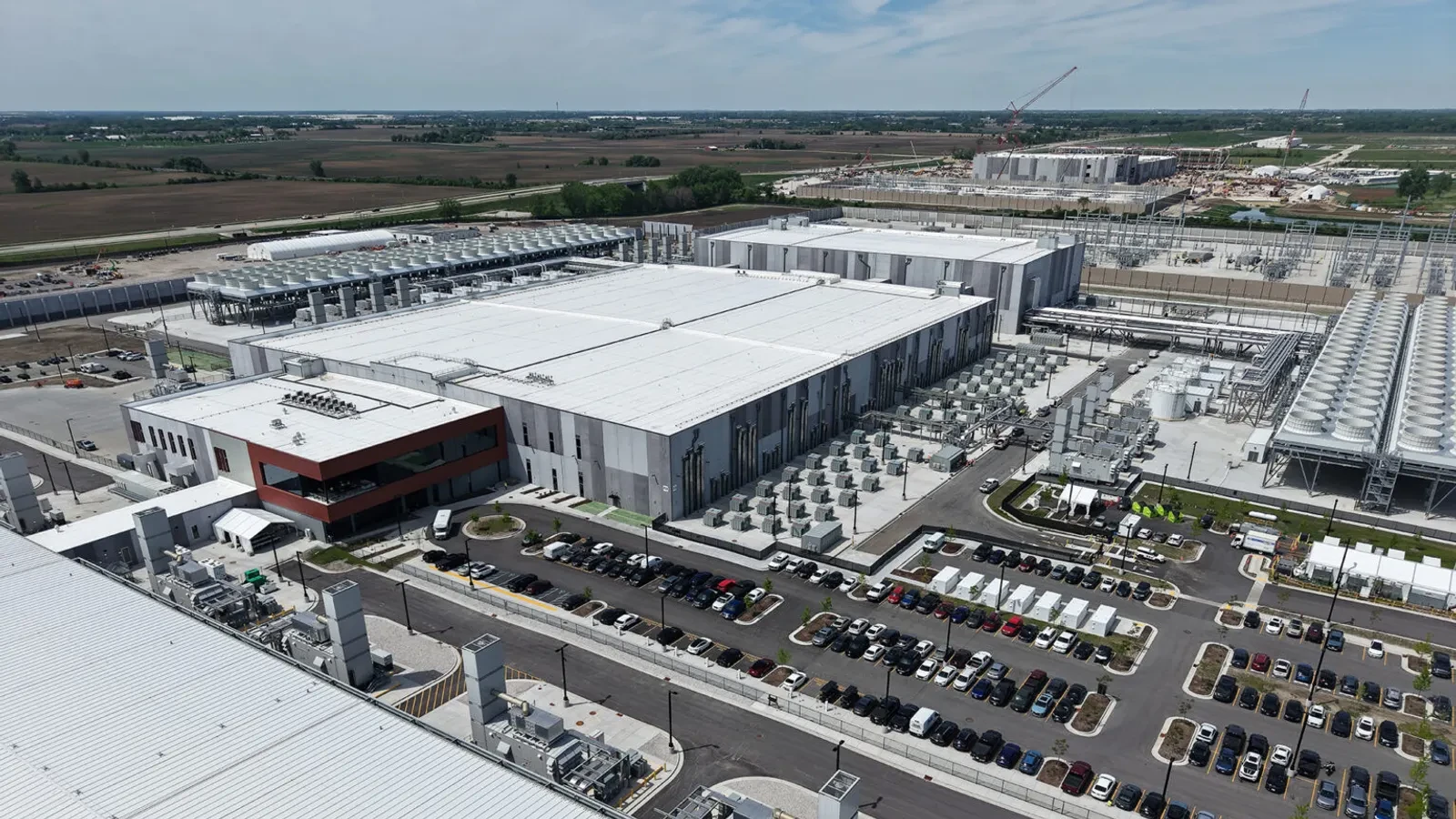
Data centers house thousands of high-density servers that generate immense heat. To keep hardware from failing, these facilities rely on massive, industrial-scale heating, ventilation, and air conditioning (HVAC) systems. While many traditional noise ordinances target high-frequency sounds—such as the whine of a jet engine or the whir of a vacuum cleaner—data centers emit a concentrated, low-frequency hum, often sitting around 63 hertz (Hz) or even lower at 20 Hz.
Fowler-Finn, who has been studying animal and environmental acoustics since 2001, notes that these low frequencies behave entirely differently than high-frequency noises.
"Data center hums are concentrated in single frequencies and they really stand out from background noise no matter how loud or what frequency that background noise is in," Fowler-Finn explained in a recent interview.
While sound naturally loses intensity as it spreads out geometrically—weakening by 6 decibels every time the distance from the source doubles—low-frequency wavelengths are notoriously difficult to block. Ordinary building materials, such as drywall and standard insulation, are virtually useless at attenuating them.
- High-Frequency Mitigation: A standard 4-inch wall is typically sufficient to mitigate a 1,000 Hz high-frequency sound like a vacuum cleaner.
- Low-Frequency Mitigation: To adequately block a 63 Hz hum typical of large-scale cooling units, facility walls would need to be 4.5 feet thick.
- Extreme Low Frequencies: For a 20 Hz tone, exterior barriers would need to reach an impractical 14 feet in thickness to block the acoustic energy.
Furthermore, low-frequency sound does not simply dissipate; it passes through walls and windows with minimal loss, inducing secondary vibrations, rattles, and structural resonance in nearby homes.
"A facility can be compliant on paper while still delivering audible—or, for very low frequencies, inaudible but still physiologically relevant—daytime and nighttime noise exposure linked to numerous health concerns," Fowler-Finn warns in her newly published model guidance.
Chronology: From Whispering Servers to Roaring Litigation
The friction between data center developers and local residents has evolved rapidly over the past two decades, shifting from isolated local complaints into a coordinated legal and scientific movement.
- 2001–2025 (The Research Phase): Dr. Fowler-Finn begins foundational acoustic and biological research, eventually realizing that industrial cooling infrastructure creates low-frequency acoustic profiles that bypass standard environmental impact assessments.
- Early 2026 (The Legal Wave Materializes): A surge of lawsuits hits operational data centers across the United States. Out of roughly half a dozen major lawsuits filed against data center operators in mid-2026, five cite chronic noise pollution as the primary grievance, according to data compiled by the law firm WilmerHale.
- July 2026: Legal experts highlight a nationwide trend of nuisance, environmental, and land-use litigation targeting data centers, noting that complaints transcend regional jurisdictions. Affected communities span from Vineland, New Jersey, and Dowagiac, Michigan, to North Tonawanda, New York, and Hood County, Texas.
- September 14, 2026: Science for Georgia and Quiet Communities release a landmark survey detailing the psychological and physiological impacts of data center and cryptomining noise on nearby residents.
- Late September 2026: Dr. Fowler-Finn formally releases her model data center noise guidance during an interview with Saint Louis Public Radio, establishing standardized testing recommendations and demanding drastically expanded setback distances.
Supporting Data: What the Numbers Tell Us
The subjective experience of living near a modern data center is increasingly backed by hard data. The September 2026 survey published by Science for Georgia and Quiet Communities provides the first comprehensive look at the human cost of digital infrastructure noise:
- 80%+ of respondents living near a data center reported that they can clearly hear facility noise inside their homes.
- 70%+ stated that the constant hum interfered with their ability to relax.
- Nearly 70% admitted they had actively considered moving away from their homes to escape the noise.
- Residents frequently reported chronic sleep disruption, an inability to use outdoor yards or patios, and a pervasive feeling of helplessness against a sound they could not escape.
From a regulatory standpoint, traditional testing methods are failing to catch these violations. Commonly used A-weighted decibel (dBA) and C-weighted decibel (dBC) measurements compress a wide range of frequencies into a single broadband number. This allows a facility to pass compliance tests on paper by averaging a loud, disruptive low-frequency band against several quieter frequencies.
To close this loophole, Fowler-Finn’s guidance advocates for third-octave band sound pressure testing, which captures precise sound levels between 20 Hz and 200 Hz. This methodology ensures that narrow-band and tonal components are independently identifiable and cannot be masked by averaging.
Official Responses and Zoning Failures
Local governments are increasingly caught in the crosshairs between economic development incentives—which promise high tax revenues and tech jobs—and outraged constituents demanding peace and quiet.
Most data centers are currently permitted under legacy zoning laws designed for standard light-industrial buildings, which typically mandate setback distances of just 100 to 600 feet from residential property lines. According to Fowler-Finn, these setbacks were drafted with ordinary, broadband industrial noise in mind, failing entirely to account for the unique propagation power of low-frequency cooling fans.
In her model guidance, Fowler-Finn calls for setback distances of at least 1,500 feet—more than double or triple current minimum requirements—to allow low-frequency sound waves sufficient distance to dissipate naturally before reaching human habitation.
Thus far, major data center industry groups and individual operators have defended their construction practices, arguing that they adhere strictly to existing municipal noise codes and environmental regulations. However, as class-action lawsuits multiply, defense strategies are shifting. Legal analysts note that operators are increasingly forced to invest in expensive, retroactive acoustic baffles, sound walls, and variable-speed fan upgrades—remedies that can cost millions of dollars per facility.
Implications: The Future of Digital Infrastructure and Community Health
The collision between rapid technological expansion and environmental acoustics carries profound implications for urban planning, public health, and the tech sector at large.
1. Public Health Consequences
Chronic exposure to low-frequency noise is not merely an annoyance; it is a recognized physiological stressor. Prolonged exposure has been linked by public health experts to elevated cortisol levels, high blood pressure, sleep fragmentation, chronic fatigue, and cognitive impairment. Because low-frequency waves penetrate walls easily, sleeping residents cannot escape the vibration, even with windows closed and earplugs inserted.
2. A Shift in Zoning and Permitting
Municipalities nationwide are beginning to reevaluate their zoning codes. Local planning boards are facing intense political pressure to place moratoriums on new data center approvals until comprehensive acoustic studies and third-octave testing protocols can be written into law. Future developments will likely face rigorous environmental impact reports that specifically model low-frequency sound propagation.
3. Engineering Innovations Required
Rather than continuing to build massive facilities adjacent to urban and suburban population centers—or fighting community pushback through endless litigation—industry leaders are being urged to pivot their engineering strategies.
"Instead of fighting to put these in where people live and work, [building owners] should be working on technology that makes these friendlier to the environment," Fowler-Finn asserted.
This may spur a new wave of research and development into quieter liquid-cooling technologies, advanced acoustic metamaterials, subterranean housing for cooling units, and remote facility siting in unpopulated regions where low-frequency hums do not infringe upon human health and well-being.
As the demand for computational power continues its exponential climb, the lesson for the tech industry is clear: ignoring the physics of sound is no longer a viable business model.
