

The construction industry is experiencing a period of intense momentum, marked by the advancement of multi-billion-dollar infrastructure megaprojects, massive life sciences and technology investments, critical healthcare infrastructure deliveries, and strategic leadership transitions. While high-profile endeavors like the $16 billion Hudson Tunnel project and a $15 billion liquefied natural gas (LNG) expansion in British Columbia dominated industry headlines, a cascade of other vital developments underscores a rapidly evolving commercial, industrial, and institutional landscape.
From cutting-edge digital twin software deployments at high-tech research facilities to the cross-continental expansion of global engineering firms, contractors, developers, and project executives must navigate an increasingly complex, technology-driven, and regulated environment. This report examines the week’s defining construction developments, breaking down the major facts, operational timelines, supporting financial data, official stakeholder responses, and broader industry implications.
Main Facts
The week’s news cycle highlighted several primary developments across distinct sectors of the built environment:
- The Hudson Tunnel Project: Following years of delays, political hurdles, and funding debates, the $16 billion Hudson Tunnel project in New Jersey officially commenced boring operations with a ceremonial milestone.
- Genentech’s Oregon Expansion: Biotechnology leader Genentech broke ground on a $750 million manufacturing facility expansion in Hillsboro, Oregon, aiming to double its campus footprint and strengthen domestic pharmaceutical supply chains.
- Nvidia and Jacobs Partnership: Jacobs secured a software-as-a-service (SaaS) agreement to deploy its advanced data center digital twin technology at a large-scale Nvidia research and development facility in the United States.
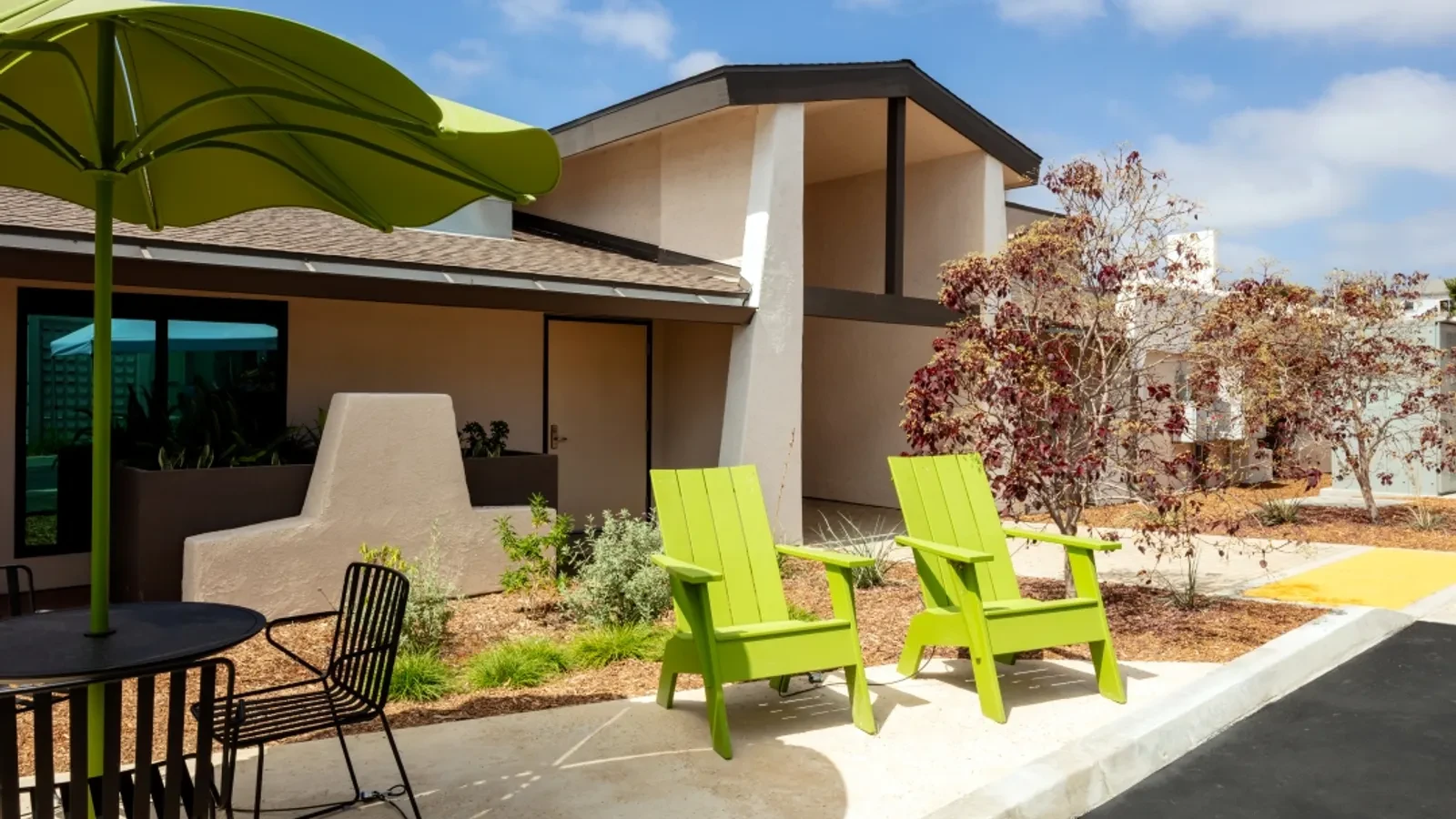
- Turner Construction’s California Healthcare Delivery: Turner Construction successfully completed and handed over the $29 million Substance Use Residential & Treatment Services (SURTS) center in National City, California, for San Diego County.
- CMAA Leadership Transition: The Construction Management Association of America (CMAA) appointed Kevin D. Watkins, current COO of the American Institute of Architects (AIA), as its next president and chief executive officer.
- Black & White Engineering’s U.S. Entry: Global engineering consultancy Black & White Engineering established its North American footprint by opening twin offices in Tampa, Florida, and Arlington, Virginia.
Chronology of Weekly Developments
The timeline of announcements demonstrates a synchronized push across North America toward advanced manufacturing, sustainable infrastructure, and specialized institutional facilities:
- Monday:
- The embattled $16 billion Hudson Tunnel project in New Jersey held its official tunnel-boring commencement ceremony.
- Genentech broke ground on its $750 million manufacturing expansion in Hillsboro, Oregon.
- Black & White Engineering officially announced the completion of its global footprint with the launch of its North American operations in Florida and Virginia.
- Tuesday:
- Turner Construction and the County of San Diego celebrated the grand opening and ribbon-cutting ceremony for the $29 million SURTS center in National City, California.
- Wednesday:
- Jacobs announced its three-year agreement to implement a data center digital twin for Nvidia’s R&D infrastructure.
- The CMAA publicly named Kevin D. Watkins as its incoming president and CEO, effective November 16.
- Fluor and JGC Corporation announced they had secured a massive $15 billion contract for Phase 2 of the LNG Canada expansion in British Columbia.
- Throughout the Week:
- Fluor and Balfour Beatty announced the final completion of a critical $677 million highway infrastructure project in Texas, capping off a series of heavy civil and industrial milestones.
Supporting Data and Financial Metrics
The sheer scale of capital expenditure defining these projects reflects robust investment in healthcare, technology, and foundational logistics:
- $16 Billion: The estimated total investment required for the Hudson Tunnel project, designed to alleviate commuter bottlenecks between New Jersey and New York.
- $750 Million: Genentech’s capital outlay for its Hillsboro, Oregon, biotechnology campus expansion, which will add 211,000 square feet of advanced manufacturing space.
- $29 Million: The total capital cost allocated by the County of San Diego to convert a vacant county building into the all-electric SURTS facility, providing 73 residential treatment beds and 16 recuperative care beds.
- 200 Employees: The target workforce head count that Black & White Engineering aims to establish across its North American offices by the year 2029.
- $15 Billion & $677 Million: The respective contract valuations for the Fluor-JGC LNG Canada Phase 2 expansion and the recently completed Fluor-Balfour Beatty Texas highway modernization project.
Official Responses and Stakeholder Insights
Industry leaders and organizational executives have weighed heavily on what these strategic investments mean for the future of design and construction:
Regarding the North American market entry, Mick Cairns, chairman and CEO of Black & White Engineering, noted the strategic timing of their expansion:
"For 19 years, we have built our reputation, technical capability, and culture across some of the world’s most important markets. North America is the final piece of the jigsaw." He specifically highlighted the firm’s new Arlington, Virginia office as an ideal beachhead near the country’s most active data center development corridors.
In discussing the technological integration for Nvidia, Amer Battikhi, executive vice president at Jacobs, emphasized the evolving utility of spatial computing and operational analytics in construction and engineering:
The digital twin platform helps operators simulate scenarios, giving them greater visibility into infrastructure management, dynamic power load balancing, energy forecasting, liquid coolant leak detection, predictive maintenance, and operator training.
On the institutional side, county officials and project partners underscored the systemic community impact of adaptive reuse. The transformation of a vacant San Diego County building into an all-electric, state-of-the-art behavioral health facility is projected to serve approximately 500 individuals annually through residential care and another 167 individuals through recuperative services.
Implications for the Construction Industry
The convergence of these events signals several overarching trends that will shape contractor workflows, engineering practices, and executive decision-making for years to come:
1. The Rise of High-Tech and Life Sciences Infrastructure
Traditional commercial office construction has cooled in many urban centers, but industrial, life sciences, and advanced technology builds are surging. Projects like Genentech’s Hillsboro expansion and the localized data center booms driving firms like Black & White Engineering to the U.S. demonstrate that contractors skilled in cleanroom standards, strict mechanical-electrical-plumbing (MEP) tolerances, and mission-critical power management will remain in high demand.
2. Digital Transformation and Asset Lifecycle Management
The adoption of Jacobs’ digital twin technology for Nvidia’s R&D facilities points to a broader industry shift: the boundaries between construction, commissioning, and facility management are dissolving. General contractors and specialized engineers are increasingly expected to deliver not just physical structures, but data-rich, simulated virtual models that empower owners to manage energy forecasting, power load balancing, and predictive maintenance from day one.
3. Focus on Sustainable Adaptive Reuse and Electrification
The successful delivery of the Turner-built SURTS center in California highlights a growing regulatory and societal preference for sustainable adaptive reuse. Transforming vacant commercial or municipal real estate into energy-efficient, all-electric healthcare and institutional facilities reduces embodied carbon compared to greenfield developments while breathing new economic life into urban neighborhoods.
4. Executive Leadership Evolution in Professional Associations
With Kevin D. Watkins transitioning from the American Institute of Architects to lead the CMAA, industry associations are positioning themselves for cross-disciplinary advocacy. As project delivery methods—such as design-build and integrated project delivery (IPD)—blur the lines between architecture, engineering, and construction management, leadership with a proven track record in membership growth and cross-sector coalition building will be essential for navigating modern regulatory and economic hurdles.
Ultimately, the week’s developments illustrate an industry that is simultaneously tackling massive, legacy civil infrastructure challenges while aggressively building out the physical infrastructure for the clean energy, artificial intelligence, and biotechnology economies of tomorrow.
