

By Tyler Graham
Published: Launch Day
If you were planning on purchasing one of Google’s brand-new, Intel-powered Googlebooks, you might want to exercise a bit of patience. On launch day, the search giant confirmed to Android Authority that certain Android applications may experience performance hiccups or fail to run smoothly right out of the box on specific configurations.
This unexpected friction casts a shadow over the debut of Google’s latest hardware lineup—a heavily marketed, premium category of laptops designed to seamlessly bridge ChromeOS, Gemini AI, and the expansive library of Android apps. While the majority of users may not notice immediate issues, the architecture-driven growing pains highlight ongoing challenges in cross-platform software compatibility.
Main Facts
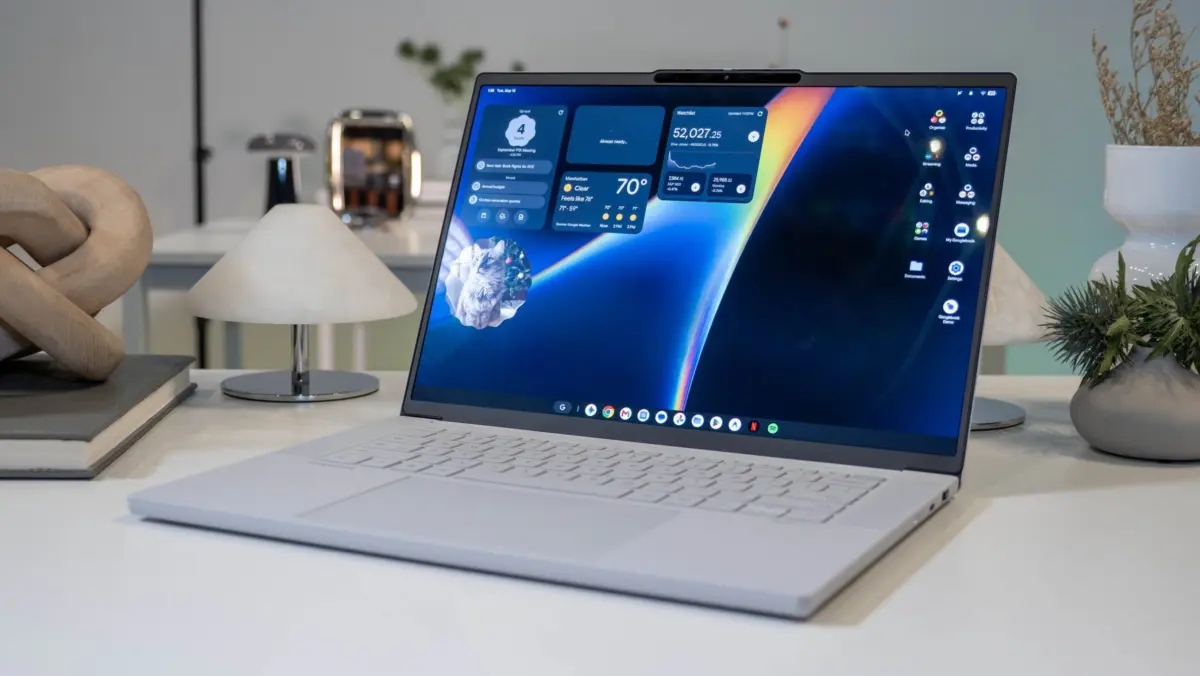
The core issue centers around hardware architecture and translation overhead. Google’s newly released Googlebook lineup consists of five primary laptop models manufactured by major hardware partners: Lenovo, Acer, Asus, Dell, and HP. However, a distinct hardware split divides these devices regarding how they process Android applications.
- The Intel-Powered Models: Three of the new Googlebooks—manufactured by Lenovo, Acer, and Asus—are built around Intel’s cutting-edge Panther Lake architecture (utilizing x86 silicon).
- The Qualcomm-Powered Models: The remaining two models, manufactured by Dell and HP, are powered by Qualcomm’s Snapdragon X Elite chips (Arm-based architecture).
- The Core Problem: Because Android apps were natively designed for Arm chips, complex applications and high-end games running on Intel’s x86-based Googlebooks require real-time code translation. This translation layer frequently results in degraded performance and reduced battery life compared to native execution.
- Pricing and Bundles: The first wave of Googlebooks is available now, with the entry-level Acer model starting at $899, while configurations from other partners scale up to $1,299 and beyond. Every purchase includes value-added perks: one year of Google AI Pro, Nvidia’s GeForce Now cloud gaming service, and three-month trials of YouTube Premium and Adobe Photoshop.
Chronology of Events
The road to the Googlebook launch has been years in the making, defined by Google’s continuous efforts to unify its desktop and mobile ecosystems.
- Pre-Launch Developer Warnings: Long before the retail rollout, Google’s developer relations division flagged potential roadblocks. Documentation on the official Android developer blog explicitly noted that running Android applications on x86 silicon inevitably incurs performance and efficiency penalties due to the necessity of real-time Arm-to-x86 code translation.
- Launch Day Reality Check: As review embargoes lifted and retail units hit store shelves, early testers and industry analysts noted discrepancies in how applications scaled across different hardware variants.
- Official Confirmation: Responding to mounting inquiries on launch day, a Google representative issued a statement to Android Authority, publicly acknowledging that a subset of complex applications and games would require developer optimization to perform optimally on Intel-based platforms.
- Current Status: The first wave of Googlebooks is officially on sale at major retailers like Best Buy, leaving prospective buyers to navigate a fractured landscape of hardware choices depending on their preferred software ecosystem.
Supporting Data and Technical Analysis
To understand why day-one performance variations exist, one must examine the fundamental differences in silicon architecture.
Historically, mobile operating systems like Android were engineered exclusively for Arm architecture, prioritized for power efficiency and mobile processing constraints. Meanwhile, traditional laptops and desktops largely relied on x86 architecture (dominated by Intel and AMD), designed for heavy-duty, multi-threaded desktop computing.
When running Android apps on an Intel-powered Chromebook or Googlebook, the system cannot process the Arm binary code natively. Instead, it relies on an emulation and translation layer. Google’s developer insights indicate that this translation process consumes processing overhead, which impacts:
- Frame Rates in Gaming: Graphic-heavy mobile games may suffer from stuttering or lower average frame rates.
- Thermal Performance: Sustained translation tasks can force laptop fans to spin up earlier, generating more heat.
- Battery Longevity: Real-time decoding drains system resources faster than native code execution, directly undercutting the all-day battery life traditionally associated with Chromebooks.
Conversely, the Qualcomm Snapdragon X Elite chips found in the Dell and HP variants utilize Arm-based architecture natively. Consequently, these machines bypass the translation hurdle entirely, running the full breadth of the Google Play Store with maximum efficiency.
Official Responses and Industry Commentary
Google’s official stance attempts to downplay the severity of the issue while acknowledging the reality of cross-architecture development:

"The vast majority of Android apps run smoothly across both Intel and Qualcomm Googlebooks right out of the box," a Google representative stated. "Because many Android apps were originally designed for Arm chips, a handful of complex apps or games need some developer tuning to run their best on Intel-based platforms."
Despite this assurance, Google has remained tight-lipped regarding specific metrics. The company has not clarified exactly how many apps are affected, nor has it published a whitelist or blacklist of popular Play Store titles experiencing friction. Furthermore, requests for additional comment from Google representatives went unanswered at the time of publication.
Industry experts advise consumers to take a measured approach. CNET Managing Editor Josh Goldman offered pragmatic guidance for shoppers eyeing the new hardware:
"While the potential for app incompatibilities is something to be aware of, it’s not a huge cause for concern unless you’re considering a Googlebook for mission-critical work," Goldman noted. "If there’s an Android app that’s an absolute must-have and you’re concerned, you should contact the app developer to check for compatibility before you buy one of the Intel-based models."
Implications for the Googlebook Ecosystem
The day-one performance hurdles present a notable marketing and strategic dilemma for Google and its manufacturing partners.
The Googlebook line was not introduced as a standard, budget-friendly classroom Chromebook. Instead, it was aggressively positioned as a premium laptop tier designed to showcase the pinnacle of modern computing: a seamless convergence of ChromeOS utility, Gemini AI integration, and universal access to the entire Android mobile ecosystem.
The primary selling point of this unified vision is friction-free continuity—the promise that a user can transition effortlessly between working on their smartphone and typing away on their laptop without missing a beat. If critical productivity apps, high-end design tools, or favorite mobile games experience lag, stutter, or crashing on the Intel variants, that core narrative begins to fracture.
Furthermore, industry analysts suggest that these compatibility hurdles may not disappear overnight. Fixing translation-related performance bottlenecks often requires sustained collaboration between Google, chipmakers like Intel, and thousands of independent third-party developers. It is entirely possible that these performance disparities will persist across multiple generations of Intel-based Googlebooks until x86 translation frameworks mature further or developers universally adopt multi-architecture compilation.
What Should Consumers Do?
For shoppers currently browsing retail shelves or checking online storefronts, the launch-day news introduces a clear decision matrix:
- Prioritize Qualcomm for Seamlessness: If your workflow heavily relies on mobile apps, Android gaming, or resource-heavy Play Store utilities, opting for the Qualcomm Snapdragon X Elite-powered Googlebooks from Dell or HP ensures native, unhindered compatibility.
- Vet Your Must-Have Apps: If you prefer an Intel-based model (manufactured by Acer, Asus, or Lenovo) due to pricing, port selection, or specific processing preferences, verify that your core software tools perform adequately. Reach out to app developers directly if you rely on specialized utilities.
- Consider the Long-Term Horizon: Keep in mind that software optimization is an ongoing process. As developers roll out updates tailored to the new Googlebook hardware tiers, day-one performance gaps on Intel silicon are expected to narrow over time.
Ultimately, while the Googlebook lineup represents an ambitious and exciting leap forward for ChromeOS, day-one buyers of the Intel-based configurations should proceed with a healthy awareness of the architectural boundaries beneath the hood.
