

As the smart home landscape matures, consumers are increasingly moving away from novelty gadgets toward devices that offer tangible utility: lower utility bills, heightened home security, and seamless daily automation. With major retail events like Amazon’s October Prime Day drawing near, homeowners and renters alike are evaluating which technology investments are genuinely worth their hard-earned money.
Navigating the vast ecosystem of connected devices requires a discerning eye. After more than a dozen years of hands-on testing, reviewing, and stress-testing smart home equipment—ranging from climate control systems to automated security gear—industry experts have established a strict baseline for what makes a product worthy of a recommendation.
Main Facts: The Criteria for a Worthy Smart Home Investment
Not all smart devices are created equal. When evaluating hardware for everyday living, experts look beyond slick marketing to focus on three core pillars:

- Real-World ROI: Does the device actively reduce household energy consumption or lower monthly utility expenditures?
- Frictionless Daily Utility: Does it solve a genuine daily annoyance, making life noticeably easier without adding setup or maintenance headaches?
- Robust Privacy Standards: Does it incorporate advanced security features to safeguard user data against breaches and unauthorized access?
During major sales events like Amazon’s October Prime Day, the market floods with steep discounts. However, differentiating between high-end architectural upgrades and budget-friendly conveniences is crucial for building a cohesive, effective smart home. The curated selection below highlights products that have cleared rigorous testing standards and are slated for significant price reductions.
Chronology: The Evolution of Smart Home Hardware
To understand why today’s connected devices are worth buying, it helps to look at how the market has evolved over the past decade:
- Phase 1: The Novelty Era (Early 2010s): The market was dominated by disconnected, single-purpose gadgets. Smart bulbs required proprietary bridges, and thermostats offered basic remote-control features via smartphone apps without predictive intelligence.
- Phase 2: The Integration Boom (Mid-to-Late 2010s): The rise of centralized voice assistants (Amazon Alexa, Google Assistant, Apple HomeKit) allowed disparate ecosystems to talk to one another. Smart plugs, security cameras, and basic automated locks became household staples.
- Phase 3: The Efficiency and Intelligence Era (2020s–Present): Modern devices rely heavily on machine learning algorithms, advanced energy-monitoring capabilities, and hyper-local processing. Today’s hardware—such as the latest generation of learning thermostats and multi-color LED string lights—focuses on aesthetic integration, extreme energy efficiency, and predictive automation that requires minimal human intervention.
Supporting Data: Standout Prime Day Picks Put to the Test
1. The Prettiest, Most Cost-Saving Upgrade: Google Nest Learning Thermostat (4th Gen)
- The Pitch: If there is one device that should be on every modern homeowner’s radar, it is a high-end smart thermostat.
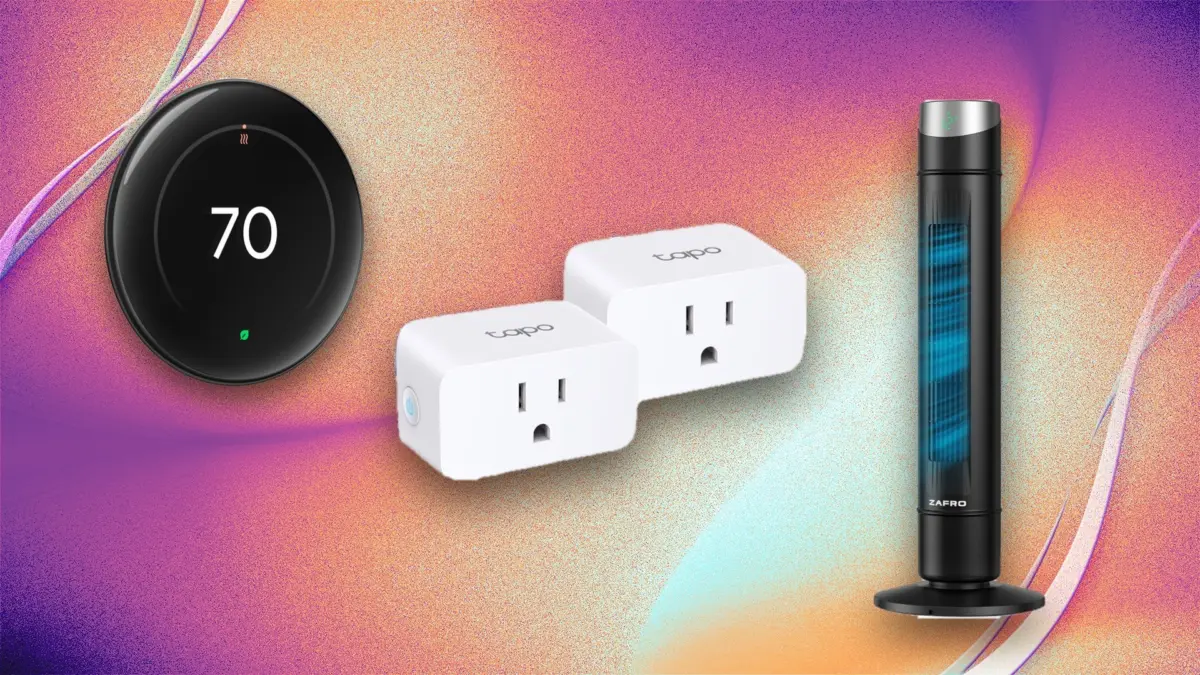
- The Performance: The fourth-generation Google Nest Learning Thermostat represents a massive leap forward from legacy climate controls. Featuring a stunning, edge-to-edge glass dial display and advanced atmospheric sensors, it manages ambient temperature and humidity with precision. Beyond basic scheduling, it utilizes machine learning algorithms to study household patterns, automatically shifting into eco-modes when the home is empty or quiet.
- The Economics: While upfront costs are higher than standard thermostats, energy-saving features and humidity management often allow the device to entirely pay for itself within one to two years through reduced heating and cooling bills.
+-----------------------------------------------------------------+
|              NEST LEARNING THERMOSTAT (4TH GEN)                 |
+--------------------------+--------------------------------------+
| Primary Benefit          | Energy & Utility Cost Reduction      |
| Standout Feature         | Dazzling Dial Display & AI Learning  |
| Estimated Payback Period | 12 to 24 Months                      |
+--------------------------+--------------------------------------+
2. Holiday Lights Done Right: Nanoleaf Smart String Lights (Indoor)
- The Pitch: Seasonal lighting has historically meant tangled cords, single-use bulbs, and tedious manual timers. Smart string lights completely change the paradigm.
- The Performance: Nanoleaf’s indoor smart string lights combine durable, high-output LEDs with an intuitive app interface. Users can cycle through virtually limitless color palettes, gradients, and dynamic visual effects.
- The Versatility: Because the app allows for custom color themes and music synchronization, these lights are not just for the winter holidays. They easily transition from Halloween orange-and-black to Thanksgiving ambers, New Year’s celebrations, and ambient year-round accent lighting, maximizing the value of your investment.
3. High-Performance Climate Control: Zafro Smart Tower Fan
- The Pitch: When summer heatwaves strike or indoor spaces get stuffy, traditional fans often prove inadequate or frustratingly loud for light sleepers.
- The Performance: Following rigorous airflow and reach evaluations, the Zafro Smart Tower Fan has emerged as a top-tier contender in indoor climate management. Pumping out robust airflow with up to a 43-foot reach, it offers granular speed and directional controls.
- The Smart Integration: Controlled seamlessly via smartphone apps or voice commands from across the room, the fan includes programmable timers and a dedicated smart sleep mode designed to keep air circulating without disrupting light sleepers.
Official Perspectives and Expert Analysis
Industry analysts and consumer tech reviewers consistently emphasize that smart home investments should solve specific friction points rather than add technological clutter.

According to senior smart home editors who have lived with, tested, and occasionally stress-tested connected tech in varied climates:
"The goal of a smart home isn’t to make your life more complicated with endless notifications; it’s to automate the mundane so efficiently that you forget the technology is even there. When a thermostat pays for itself or a smart plug prevents energy waste from idle space heaters, the system is doing its job."
Furthermore, experts highlight the underrated value of energy monitoring. Devices like Tapo smart plug packs—which stand out as rare exceptions by offering built-in energy tracking—allow users to monitor the precise power draw of heavy appliances, space heaters, and tower fans. This granular data empowers households to make informed adjustments that yield immediate savings on monthly electric bills.

Implications: Should You Wait for Prime Day?
As October Prime Day approaches, consumers face a familiar dilemma: buy now or wait for the promotional window to open?
Financial Implications
Retail analytics consistently demonstrate that major shopping holidays like Amazon Prime Day yield the absolute lowest prices of the autumn season for smart home hardware. Waiting a day or two to execute purchases can result in savings ranging from 20% to over 40% on high-end items like the Google Nest Learning Thermostat and Nanoleaf lighting systems.
Practical Recommendations for Shoppers
- Build a Wishlist Now: Bookmark the desired models ahead of time to track baseline pricing and catch flash sales instantly when they go live.
- Audit Your Current Infrastructure: Ensure your home Wi-Fi network can handle additional connected devices, particularly if you are adding multi-room lighting and heavy streaming or automation hardware.
- Prioritize Utility Over Novelty: Focus first on devices that offer direct utility—such as climate control and energy monitoring—before investing in aesthetic accents.
By approaching the October Prime Day sales event with a strategic mindset and an eye toward verified performance data, consumers can transform their living spaces into secure, energy-efficient, and effortlessly automated modern homes.
