

Main Facts
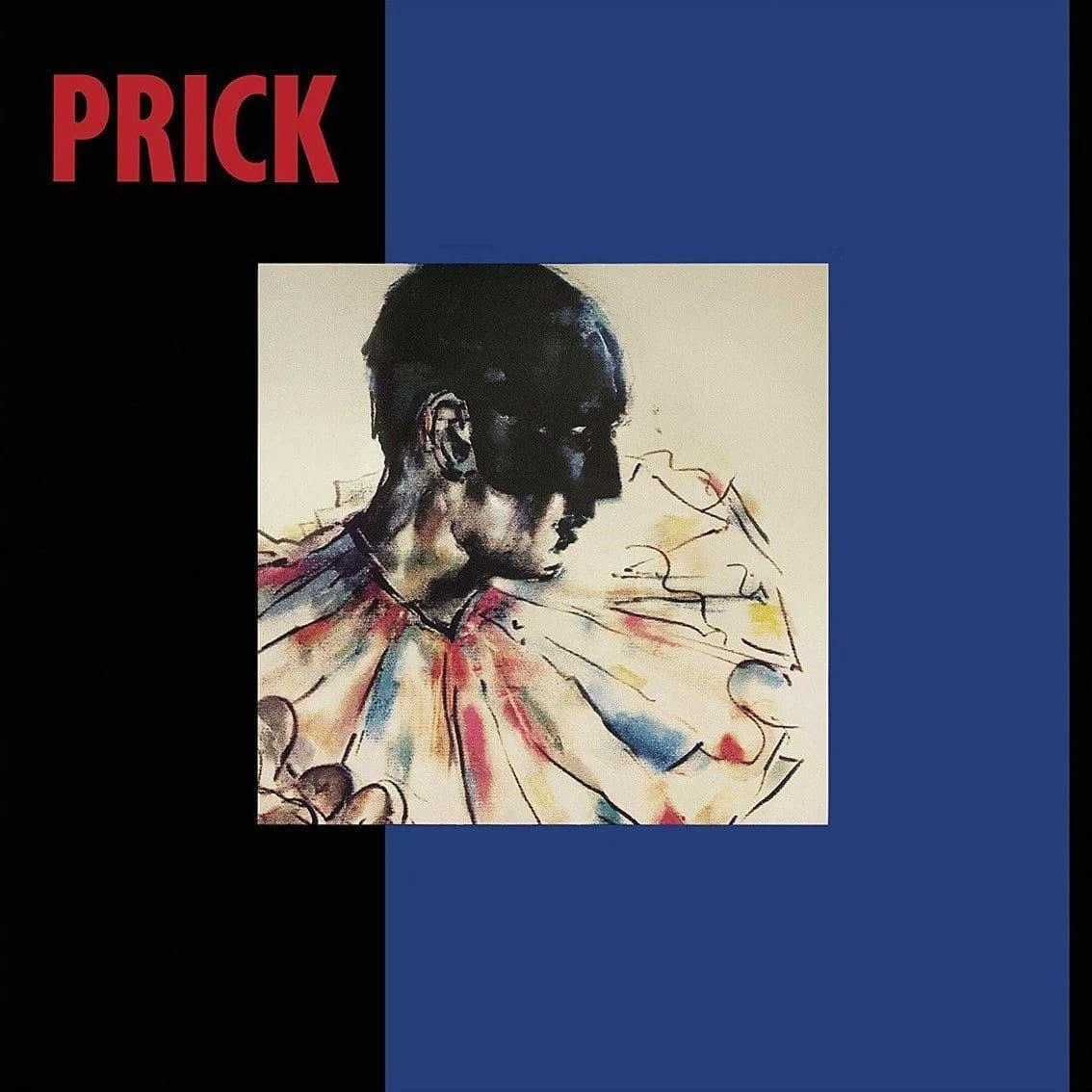
In the hyper-saturated alternative and industrial landscape of the mid-1990s, few releases captured the erratic genius, abrasive textures, and peculiar charm of the underground quite like Prick, the 1995 self-titled debut album by the project spearheaded by Kevin McMahon. While the record initially surfaced amidst a tidal wave of Nine Inch Nails imitators looking to cash in on the mainstream viability of dark, distorted electronic music, Prick occupies a far more nuanced and historically fascinating position.
At the core of the album’s legacy is its deep connection to Trent Reznor. While sweating over the composition and recording of Nine Inch Nails’ seminal masterpiece The Downward Spiral, Reznor found time to lend his production talents to his old friend Kevin McMahon. McMahon and Reznor shared a history in the Ohio new wave band Lucky Pierre, of which Reznor was briefly a member.
Officially, Reznor is credited as a producer on only four tracks of Prick’s self-titled debut. Yet, his sonic fingerprint, mixing philosophy, and structural sensibilities permeate the entire release. At the same time, McMahon’s distinct artistic personality prevents the record from feeling like a mere carbon copy of Nine Inch Nails. Infused with a theatrical, glam-rock flamboyance reminiscent of T. Rex and an unapologetic embrace of goth’s inherent melodrama, Prick bridges the gap between mechanical coldness and organic, theatrical chaos.
Today, decades after its initial release and subsequent drifting into relative obscurity, Prick remains available across major streaming platforms including Apple Music, Spotify, Qobuz, Deezer, and YouTube Music. It stands as a masterclass in ’90s lo-fi industrial experimentation—a record that understood the genre’s bleakness, but refused to surrender its sense of humor.
Chronology
To understand the existence of Prick, one must trace the timeline of the Midwest industrial and new wave underground of the 1980s and 1990s.
The Pre-History: Lucky Pierre and Cleveland Roots (Mid-1980s)
Long before The Downward Spiral dominated the charts and alternative radio, Trent Reznor and Kevin McMahon crossed paths in the fertile underground music scene of Cleveland, Ohio. During this formative period, McMahon fronted the new wave outfit Lucky Pierre. Reznor, searching for his footing in the regional music circuit, spent a brief stint as a member of the band. Though this collaboration was short-lived, it forged a creative bond and mutual respect between Reznot and McMahon that would endure long after Reznor relocated to New Orleans to build Nothing Studios and launch Nine Inch Nails into global stardom.
The Crucible of The Downward Spiral (1993–1994)
By 1993, Reznor was deeply entrenched in the grueling recording process for The Downward Spiral at Le Pig—the house at 10050 Cielo Drive where the Tate murders had taken place. Despite the psychological toll of the sessions, Reznor maintained a network of side projects and production duties, helping nurture talent through his newly minted Nothing Records imprint. It was during this intense period of creative output that McMahon approached Reznor with material for his new project, Prick.
Recognizing the strength of McMahon’s songwriting and keen to assist his former bandmate, Reznor stepped in. He officially took on production duties for four tracks on the album, while informally offering guidance, studio access, and sonic textures that aligned with the aggressive technological evolution happening in Reznor’s own work at the time.
The Release of Prick (1995)
Released in 1995 via Nothing Records/Interscope, Prick entered a market hungry for aggressive electronic music. The album’s lead single and best-known track, "Animal," managed to secure some airplay on MTV’s alternative programming blocks, accompanied by a striking music video. However, despite major-label backing and Reznor’s implicit endorsement, the album failed to achieve massive commercial crossover, slipping into cult-classic status as listeners fixated on more straightforward industrial acts of the era.
Supporting Data & Track-by-Track Musical Analysis
A granular examination of Prick reveals an album constructed on deliberate contradictions. It is a record that juxtaposes pristine, multi-layered electronic production with sloppy garage-punk aesthetics, shifting effortlessly from theatrical crooning to full-throated industrial screams.
"Communiqué" and the Proto-With Teeth Aesthetic
The album opens with "Communiqué," a fuzzy blast of simple punk riffs overlaid with delicate electronic sprinklings. McMahon’s vocal delivery sets the tone for the record immediately, alternating between half-spoken, musical-theater-style verses and piercing, Al Jourgensen-esque screams. The production philosophy here—characterized by a rough-around-the-edges grit and a heavy reliance on live instrumentation—feels less like the polished sheen of The Downward Spiral and more like a prophetic prototype for the organic rock textures Reznor would eventually revisit a decade later on 2005’s With Teeth.
"Riverhead": The Ghost of Reznor’s Production
Although Reznor is not officially credited as the producer for the second track, "Riverhead," his shadow looms large over every second of the song. The vocal melodies twist and turn with the angular cadence of David Bowie’s Outside and Earthling eras, floating gracefully over guitars that buzz with the unmistakable digital charr found on Nine Inch Nails’ Broken EP.
Approximately three minutes into the track, the song undergoes a stunning breakdown. It slowly constructs itself out of stacked layers of electronic drums, mechanical chords, and loping, synthetic guitar melodies. The back half of "Riverhead" is so compositionally dense and texturally faithful to Reznor’s mid-90s output that it could easily have functioned as a B-side for The Downward Spiral or The Fragile.
The Subversion of Perfection
These moments of meticulous, richly layered production, however, are rarely allowed to sit in a state of unblemished industrial seriousness. McMahon frequently undercuts his own atmospheric tension. For instance, the lush soundscapes of "Riverhead" are immediately contrasted by the sloppy, garage-punk intro of the subsequent track, "Tough."
This self-sabotaging charm is what elevates Prick above its contemporaries. McMahon is entirely unpretentious; he is a serious artist who refuses to take himself too seriously. On "Other People," he gleefully embraces the goofy and over-the-top: "Pink panties, blue panties, yellow panties. I’m gonna wrap around your nose, oh panty-ho-hose," he sings with unhinged theatricality. He actively allows his guitars to drift out of time and his bass strings to rattle, revelling in the glorious imperfections of industrial lo-fi.
"Animal": MTV Airplay and Sleaze
"Animal" remains the definitive entry point for casual listeners, buoyed by its MTV-era music video. The track utilizes backward melodic samples that bear a striking resemblance to the hypnotic architecture of Nine Inch Nails’ "Closer," leaning into similar themes of carnal obsession:
Consent is all I need
To bring out the savage in me
Your scent is all I need
To bring out the animal in me
Yet, while "Closer" opts for a slinky, sophisticated disco-sleaze aesthetic, "Animal" strips away the slickness, presenting desire as raw, unvarnished shouting.
"I Apologize": Controlled Chaos
Perhaps the most ambitious and scatter-brained composition on the record is "I Apologize." The track begins with awkward, whip-crack-like percussion paired with McMahon singing slightly flat and entirely unaffected. It quickly accelerates into a jangly new wave verse, before slamming violently into a hard-rock stop during the chorus.
The structural whiplash doesn’t stop there. The second verse shifts dramatically into acoustic strums evocative of Space Oddity-era David Bowie. This gives way to a bizarre guitar solo that mimics an arcade machine on the verge of a complete meltdown, which then dissolves into a Ministry-esque dirge of layered wall-of-sound guitars and screams. Finally, the song attempts to loop back to its chorus, piling on elements until the arrangement is structurally overstuffed and collapses under its own weight.
Official Responses and Industry Context
At the time of its release, Prick was evaluated largely through the prism of its connection to Trent Reznor and Nothing Records. Independent music publications and alternative rock critics were quick to point out the clear sonic lineage linking McMahon’s project to the reigning kings of industrial rock.
However, retrospective critical appraisal has been far kinder, recognizing Prick as an outlier within the Nothing Records catalog. While Reznor’s label was instrumental in championing uncompromising electronic acts like Marilyn Manson, Meat Beat Manifesto, and Pop Will Eat Itself, Prick occupied a stranger, more eccentric niche.
Kevin McMahon himself has frequently highlighted the collaborative, yet independent nature of his relationship with Reznor during the production of the album. Rather than serving as a passive puppet molded by a superstar producer, McMahon retained total creative control over the project’s theatrical eccentricities. Industry insiders noted that while Reznor provided the technical polish and industrial muscle required to make the tracks viable for a major label, McMahon injected a sense of camp, humor, and theatricality that distanced the record from the humorless, macho posturing that occasionally plagued the mid-90s industrial scene.
Implications
The enduring legacy of Prick’s self-titled debut extends far beyond its status as a piece of Nine Inch Nails trivia. It serves as a vital case study in the collaborative ecosystem of the 1990s alternative music boom, illustrating how major-label resources could be funneled into genuinely eccentric, uncommercial art.
1. Expanding the Boundaries of Industrial Music
Mainstream industrial music in the mid-90s often fell into rigid tropes: aggressive distortion, misanthropic lyrical themes, and militaristic rhythm loops. By injecting the glam sensibilities of T. Rex and the self-aware theatricality of goth culture into the machinery of industrial rock, Prick proved that the genre could accommodate humor, camp, and vulnerability. McMahon demonstrated that industrial music did not have to take itself with total, suffocating gravity to be effective.
2. The Blueprint for Post-Industrial Evolution
As noted in contemporary analysis, the rough-around-the-edges, guitar-driven production of tracks like "Communiqué" anticipated the trajectory that Trent Reznor would follow years later. When Nine Inch Nails moved away from the pristine, synthesizer-heavy sequencing of the late ’90s toward the raw, live-band energy of With Teeth and Year Zero, they were operating within a sonic framework that McMahon and Reznor had informally mapped out in the studio a decade prior.
3. Reappraisal in the Streaming Era
In the modern digital landscape, cult-classic albums like Prick are no longer restricted to the dusty bins of used CD shops or forgotten cassette tapes. Their availability on major streaming platforms allows a new generation of listeners to discover the hidden tributaries of the ’90s alternative explosion. Prick stands as a testament to the fact that commercial success is not the sole metric of artistic endurance. By remaining delightfully unhinged, brilliantly flawed, and utterly unafraid to look ridiculous, Kevin McMahon crafted a record that outlived the fleeting trends of its era, securing its place as an essential, quirky cornerstone of industrial history.
