

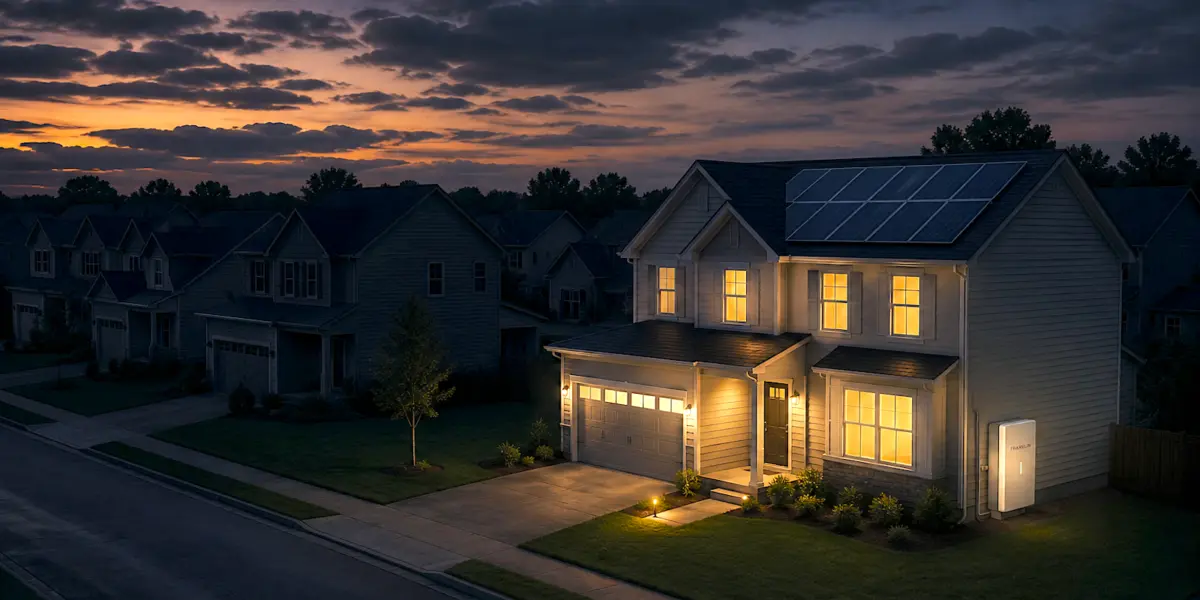
As the United States grapples with an unprecedented frequency of major power grid failures—experiencing severe, widespread outages month after month amid extreme weather events, surging electricity demands, and the exponential expansion of energy-hungry data centers—reliable backup power has transitioned from a niche concern for doomsday preppers to a fundamental priority for everyday homeowners.
While the Tesla Powerwall has long dominated the public consciousness as the default home battery storage solution, a shifting market dynamics landscape has driven consumers to explore alternative options. Whether prompted by corporate controversies, product recalls, or a desire for superior technological capabilities, buyers are discovering that keeping the lights on during a storm is often the least interesting feature modern home batteries have to offer.
![Not sold on Tesla Powerwall? There are great battery alternatives out there [update]](https://electrek.co/wp-content/uploads/sites/3/2026/07/home-solar-battery.png?w=1600)
Main Facts: The Evolution of Residential Energy Storage
The residential energy storage market is undergoing a structural transformation. Consumers are no longer looking merely for emergency backup generators; they are investing in sophisticated, multi-functional Energy Storage Systems (ESS) designed to optimize household energy consumption, hedge against rising utility rates, and participate in Virtual Power Plants (VPPs).
Alphabetized by brand, the current landscape of leading home battery alternatives to the Tesla Powerwall highlights a diverse array of engineering approaches—from modular lithium-iron-phosphate (LFP) systems and vehicle-to-home (V2H) integration to ultra-durable lithium-titanium-oxide (LTO) chemistry.
![Not sold on Tesla Powerwall? There are great battery alternatives out there [update]](https://electrek.co/wp-content/uploads/sites/3/2026/08/solix-x1-copy.jpg?quality=82&strip=all)
Anker SOLIX X1
Built around a highly modular design, the Anker SOLIX X1 starts at a modest 5 kWh of energy storage utilizing a low-profile LiFePO4 battery. Homeowners can scale the system upward to a massive 180 kWh. Featuring an IP66-rated weatherproof enclosure, automatic storm preparation protocols, and a blazing-fast 20-millisecond switchover time, the X1 provides an adaptable pathway for homeowners looking to gradually expand their energy independence.
BLUETTI EP800
Renowned for portable power solutions, BLUETTI offers the EP800 system, which pairs an advanced inverter with modular B500 battery packs. Ranging from 9.92 kWh to nearly 40 kWh of capacity with a 7.6 kW output, the system seamlessly integrates with solar panels or microinverters. Crucially, the EP800 can charge directly from the grid during cheaper off-peak hours, offering time-of-use savings and backup power even for homeowners or renters without rooftop solar.
![Not sold on Tesla Powerwall? There are great battery alternatives out there [update]](https://electrek.co/wp-content/uploads/sites/3/2026/08/bluetti_EP800-copy.jpg?quality=82&strip=all)
EcoFlow DELTA Pro Ultra
Positioned as a versatile middle ground between semi-portable power stations and permanent whole-home setups, the EcoFlow DELTA Pro Ultra features a 7.2 kW (120/240V) inverter paired with stackable 6.144 kWh LFP batteries. Scaling up to roughly 30 kWh per stack, the system supports up to 4 kW of high-voltage photovoltaic input. Furthermore, its batteries are rated to retain at least 80% capacity after an impressive 3,500 charge-discharge cycles.
Enphase IQ Battery 5P
For homeowners seeking a holistic, single-brand ecosystem encompassing solar, battery storage, and EV charging without being locked into automotive manufacturers like Tesla or General Motors, Enphase Energy provides an appealing off-grid capable architecture. Combining the IQ Battery 5P with IQ8 series microinverters, Sunlight JumpStart technology, and a compatible Wi-Fi-enabled IQ EV charger, the system offers robust, phone-controlled household energy management.
![Not sold on Tesla Powerwall? There are great battery alternatives out there [update]](https://electrek.co/wp-content/uploads/sites/3/2026/08/EcoFlow-DELTA-Pro-Ultra.jpg?quality=82&strip=all)
FranklinWH aPower S
Mirroring the sleek, integrated aesthetic of the Tesla Powerwall, the FranklinWH aPower S houses its inverter and a 15 kWh usable energy battery inside a single, minimalist unit capable of 10 kW of continuous power. Designed for straightforward installation, the aPower S integrates smoothly with existing solar arrays and virtual power plant (VPP) aggregation programs.
GM Energy Home System
General Motors offers one of the most comprehensive automotive-integrated energy ecosystems on the market. The GM Energy Home System operates as a standard home solar battery while interfacing directly with compatible GM electric vehicles. This setup allows users to utilize their EV’s battery capacity for emergency home backup or, conversely, draw from home solar storage to power their vehicles.
![Not sold on Tesla Powerwall? There are great battery alternatives out there [update]](https://electrek.co/wp-content/uploads/sites/3/2025/10/garage_battery_5_system_controller_3_US-1.jpg?quality=82&strip=all&w=1024)
Sigenergy V2X
Addressing a major frustration for non-Cybertruck Tesla owners—specifically the lack of native vehicle-to-home (V2H) charging on Model 3 and Model Y vehicles—the Sigenergy V2X system enables bidirectional charging across a wide range of popular EV models using standard communication protocols like DIN70121 and ISO15118-2.
Villara VillaGrid+
Evaluated as a top-tier performer in rigorous industry equipment ratings, the Villara VillaGrid+ utilizes advanced lithium-titanium-oxide (LTO) chemistry. While significantly more expensive upfront than traditional lithium-ion batteries, LTO chemistry provides superior recharge capabilities, extended life cycles, carbon-free thermal safety, and an industry-leading 20-year warranty.
![Not sold on Tesla Powerwall? There are great battery alternatives out there [update]](https://electrek.co/wp-content/uploads/sites/3/2026/02/gm-energy-1-5.webp)
Chronology: How the Market Shift Unfolded
- October 2023: Enphase Energy expands its consumer ecosystem by launching the Wi-Fi-enabled IQ EV charger line, bridging the gap between residential solar, storage, and electric vehicle charging.
- November 2025: Operational safety scrutiny intensifies across the energy sector following notable component recalls, pushing consumers to actively research non-Tesla alternatives. Concurrently, brand perception metrics highlight shifting consumer trust in legacy tech versus specialized energy providers.
- Early 2026: Escalating frequency of grid failures prompts municipal and state regulators (such as those in California) to heavily incentivize residential storage through localized rebates and Virtual Power Plant (VPP) rollouts.
- Mid 2026: Leading alternative energy brands—including Anker, BLUETTI, EcoFlow, and FranklinWH—gain major market share by introducing modular, highly scalable battery architectures that lower the barrier to entry for energy independence.
- Late 2026: The commercialization of advanced bidirectional V2X charging systems (such as Sigenergy) and automotive home integration platforms (such as GM Energy) redefines home batteries as central nodes in a broader vehicular and residential energy network.
Supporting Data & Industry Metrics
The financial and operational realities of home energy storage reveal distinct trade-offs across different system tiers:
- Capacity Scalability: Systems range from entry-level modular blocks starting around 5 kWh (Anker SOLIX X1) to massive scalable arrays exceeding 180 kWh for high-demand residential applications.
- Lifespan and Durability: Standard lithium-iron-phosphate (LFP) systems typically offer a 10-year warranty with multi-thousand-cycle durability (e.g., EcoFlow DELTA Pro Ultra rated at 3,500 cycles to 80% capacity). Premium LTO chemistries, such as the Villara VillaGrid+, extend manufacturer warranties to 20 years.
- Power Output: Continuous power delivery spans from residential baseline needs to heavy-duty whole-home outputs of 7.6 kW (BLUETTI EP800) and 10 kW (FranklinWH aPower S).
- Cost Efficiency via Third-Party Procurement: According to solar industry analysts at EnergySage, utilizing pre-vetted competitive marketplace platforms allows homeowners to save between 20% and 30% on total installation costs compared to pursuing single-vendor direct quotes.
Official Responses and Industry Perspectives
Industry leaders and technical experts emphasize that the future of residential power relies heavily on flexibility, interoperability, and safety standards.
![Not sold on Tesla Powerwall? There are great battery alternatives out there [update]](https://electrek.co/wp-content/uploads/sites/3/2026/08/Villara-Energy-Systems-and-Lumin-to-Provide-High-Power-Battery-Backup-with-Smart-Load-Management.jpg?quality=82&strip=all)
Gary Lam, CEO of FranklinWH, highlighted the absolute necessity of scalability during industry discussions on whole-home electrification, noting that consumer energy demands will only accelerate as households electrify heating, transport, and appliances.
Meanwhile, Kristina Zagame of EnergySage underscored the engineering rationale behind premium technological choices: "The Villara VillaGrid+ stands out as the best battery on the market… Unlike more traditional lithium-ion batteries, LTO has better recharge capabilities for longer life cycles, and doesn’t contain any carbon, which makes it extra safe. The downside is you’ll definitely shell out more money upfront."
![Not sold on Tesla Powerwall? There are great battery alternatives out there [update]](https://electrek.co/wp-content/uploads/sites/3/2025/03/DES-1038_Electrek-Banners_EVs_0797c2.png)
Automotive manufacturers have similarly shifted their messaging. Rather than treating EVs as isolated transportation units, companies like General Motors are positioning vehicles as mobile energy assets that act as force multipliers for home backup systems during prolonged grid failures.
Implications for Homeowners and the Future Grid
The widespread pivot toward diversified home energy storage carries profound implications for both individual consumers and national infrastructure.
- Enhanced Grid Resilience: As localized extreme weather events and grid congestion threaten traditional power distribution, distributed home batteries act as a localized shock absorber, reducing strain on utility companies during peak demand hours.
- Financial Optimization: Time-of-use optimization allows households without solar panels to arbitrage utility rates—charging batteries from the grid when electricity is cheap and discharging during peak pricing windows.
- The Rise of Virtual Power Plants (VPPs): Aggregated networks of home batteries can feed surplus energy back into the public grid during emergencies, transforming individual homeowners from passive consumers into active participants in regional energy management.
- Ecosystem Freedom: Consumers are no longer forced to accept proprietary lock-in. The availability of open-protocol V2X chargers and modular, brand-agnostic inverters means homeowners can mix and match solar arrays, backup batteries, and electric vehicles to suit their exact financial and technical requirements.
