

Main Facts
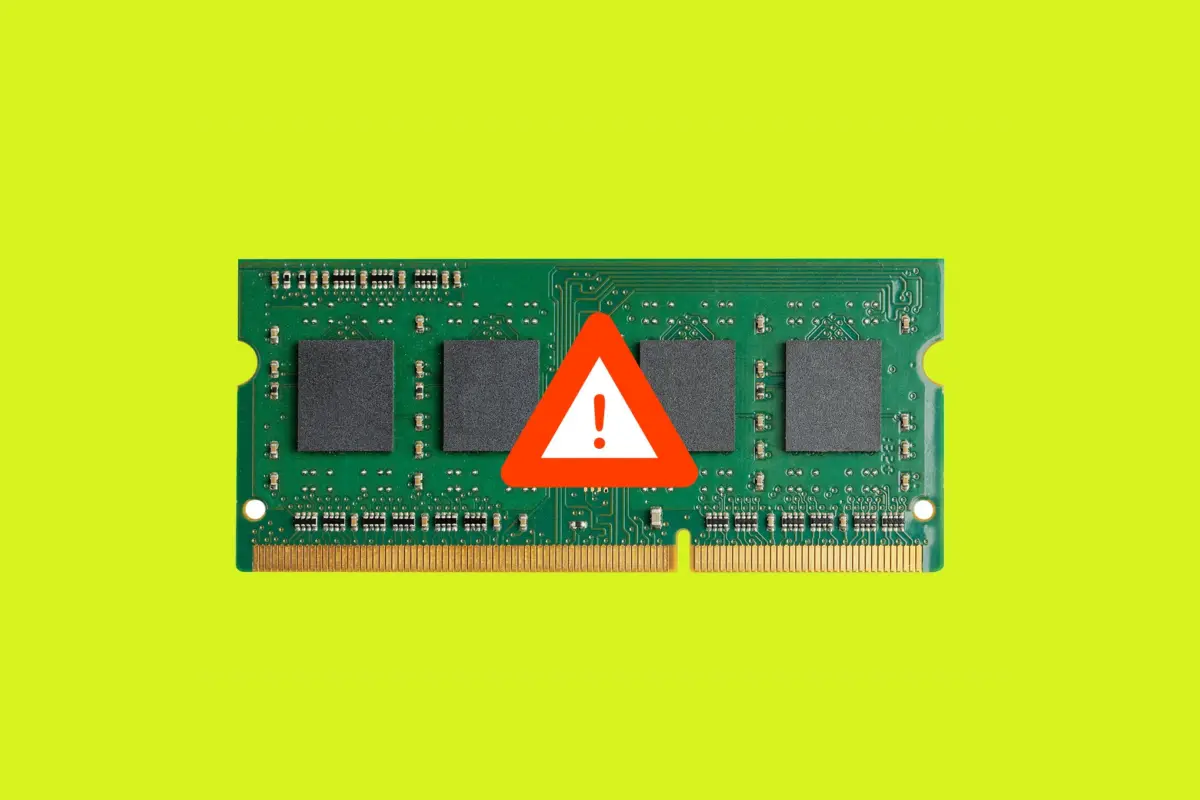
The persistent and punishing global RAM shortage is fundamentally reshaping the modern consumer PC hardware landscape. Driven by massive corporate investments in artificial intelligence infrastructure, data center expansion, and semiconductor supply chain constraints, the cost of high-performance memory has skyrocketed to unprecedented heights.
Facing a market where PC upgrades have become prohibitively expensive for the average consumer, industry titans Intel and AMD are making a surprising and pragmatic about-face. Rather than forcing users onto cutting-edge, ultra-costly platforms, both CPU makers are orchestrating a strategic return to older, more affordable technology: DDR4 random-access memory.
Recent industry developments highlight this significant shift. Gigabyte, a leading motherboard manufacturer, officially announced that two of its upcoming motherboard lines will maintain support for new processors built on Intel’s aging LGA 1700 socket. Originally introduced in 2021 alongside 12th-generation Alder Lake CPUs, the LGA 1700 socket uniquely bridged two eras of computing by supporting both legacy DDR4 RAM and the then-emerging DDR5 standard.
While Intel had initially phased out dual-format support in favor of a strictly DDR5-only approach by 2024, market realities have intervened. According to Gigabyte’s disclosures, Intel is reviving dual-format support, with brand-new LGA 1700 chips slated to hit the market in early 2027.
This unexpected fallback strategy exploits the inherent cross-compatibility of Intel’s older socket architecture—an architectural advantage that its newer successors abandoned. By offering consumers the choice to purchase a modern CPU without the mandatory, exorbitant ancillary cost of upgrading to DDR5 memory, chipmakers hope to keep the PC builder market alive.
Competitor AMD is executing a nearly identical playbook. In August, Gigabyte revealed a new series of motherboards designed specifically for AMD’s legacy, DDR4-compatible AM4 platform. This hardware refresh coincides with the 10th-anniversary relaunch of the legendary Ryzen 7 5800X3D CPU, proving that consumer demand for high-performing yet affordable legacy hardware remains remarkably robust.
Chronology of the Crisis: From Next-Gen Transition to Retrograde Hardware
To understand how the PC industry reached a point where manufacturers are reviving a memory standard that debuted in 2014, it is necessary to examine the timeline of the hardware transition and the macroeconomic pressures that disrupted it.
2014–2020: The Reign and Maturation of DDR4
Introduced to the market in late 2014, DDR4 established itself as the gold standard for consumer computing over the better part of a decade. It offered a massive leap in bandwidth and efficiency over its predecessor, DDR3, and steadily dropped in price as manufacturing yields matured and production lines scaled globally. For years, system builders could easily acquire generous amounts of fast memory for minimal investment.
2021–2023: The Dawn of DDR5 and Dual-Format Bridges
As computing demands evolved, the industry began its inevitable migration toward DDR5. Intel’s launch of the 12th-generation Alder Lake architecture in October 2021 marked a pivotal turning point. Utilizing the LGA 1700 socket, Intel offered a transitional bridge. Motherboard manufacturers produced boards supporting either DDR4 or DDR5, allowing early adopters to reuse their existing memory kits while slowly plotting an upgrade path. AMD followed a similar trajectory with its shift to the AM5 platform, though AMD made a cleaner, faster break from the past by committing exclusively to DDR5.
2024: The Forced Migration and the AI Boom
By 2024, Intel sought to leave DDR4 behind entirely, shifting newer chipsets toward a mandatory DDR5-only framework. However, this transition coincided with an explosive, unprecedented surge in global artificial intelligence research and deployment. Hyperscale data center operators, cloud providers, and enterprise tech giants began aggressively buying up semiconductor fabrication capacity, high-bandwidth memory (HBM), and standard DRAM modules to fuel massive generative AI models. Consumer PC components were suddenly pushed to the back of the queue, triggering a severe supply crunch and sending retail prices climbing.
Late 2025–Early 2027: The Pivot Back to the Past
By late 2025, the compounding effects of the RAM shortage made standard PC upgrades economically unfeasible for millions of consumers. Recognizing the market stagnation, hardware vendors began adapting. The announcement by Gigabyte and Intel regarding the early 2027 return of LGA 1700 chips with DDR4 support—alongside AMD’s continued support for AM4 platforms—signals a formal acknowledgement that consumer budgets have reached a breaking point. Rather than abandoning the mid-range and budget segments entirely, manufacturers are turning the clock back to keep the PC ecosystem functioning.
Supporting Data: The Stark Reality of the Price Disparity
Under normal economic conditions, advising consumers to invest in hardware technology that is over a decade old would be considered poor financial advice. Purchasing a CPU and motherboard ecosystem tied to 2014 memory standards would typically limit system longevity, bandwidth potential, and future upgrade paths. However, the current economic math of the RAM market has entirely inverted traditional logic.
The price disparity between DDR4 and DDR5 memory modules is nothing short of staggering. A real-world examination of current retail pricing underscores why consumers and manufacturers alike are fleeing toward legacy standards:
- DDR5 32GB Kit (e.g., Corsair Vengeance 6000MHz): Retailing at approximately $620.
- DDR4 32GB Kit (e.g., Corsair Vengeance 3200MHz): Retailing at approximately $260.
While $260 for a 32GB DDR4 kit is undeniably inflated compared to historical baselines—costing significantly more than it did during mid-2025 lows—it remains less than half the price of its DDR5 equivalent. Consumers are currently faced with a monumental penalty for adopting next-generation memory.
To be sure, DDR5 holds clear, quantifiable technical advantages over DDR4. It delivers vastly superior clock speeds, greater data bandwidth, improved power efficiency through on-die Power Management Integrated Circuits (PMICs), and higher density ceilings per stick. For enterprise environments, scientific computing, and bleeding-edge enthusiasts, these perks are indispensable.
However, for the average gamer, student, or productivity user, paying a massive premium for DDR5 yields diminishing marginal returns in everyday applications, making the steep price of admission virtually unjustifiable.
Official Responses and Industry Silence
As the hardware community reacts to the leaked roadmaps and official motherboard announcements, the corporate response from major semiconductor players reveals a calculated reticence.
When contacted for comment regarding the revival of DDR4-compatible LGA 1700 processors slated for early 2027, Intel representatives did not immediately respond to requests for clarification. This corporate silence is typical of semiconductor firms guarding unreleased product roadmaps, yet it also speaks volumes about the delicate balancing act chipmakers must perform.
Admitting publicly that next-generation adoption rates are stalling due to economic constraints risks undermining the marketing narratives built around high-performance DDR5 platforms.
Conversely, motherboard manufacturers like Gigabyte have been far more transparent, treating the resurrection of older sockets not as a step backward, but as a responsive market service. By proactively releasing motherboards that bridge the gap between older memory formats and newer silicon, hardware vendors are positioning themselves as consumer allies during a period of acute financial strain.
Industry analysts suggest that AMD and Intel are quietly greenlighting these legacy-compatible configurations to prevent a broader contraction in desktop PC sales. If upgrading a PC requires a complete, bank-breaking overhaul of motherboard, CPU, and RAM simultaneously, consumers simply stop upgrading. By maintaining backward compatibility, chipmakers ensure that cash-strapped builders can upgrade their processing power incrementally, swapping out a CPU while retaining their existing, affordable memory modules.
Broader Implications for the PC Hardware Ecosystem
The forced return to DDR4 RAM carries profound implications for the future of consumer computing, manufacturing logistics, and market accessibility.
1. Prolonged Hardware Lifespan
For years, the planned obsolescence cadence of the tech industry forced users to discard perfectly functional components every three to four years. The current RAM crisis is abruptly reversing this trend. Users holding onto DDR4 memory kits are finding themselves in an unexpectedly enviable position. Rather than being forced to scrap their entire setups, consumers can stretch the lifespan of their rigs significantly further, fostering a more sustainable, circular hardware economy.
2. A Prolonged Component Shortage
Industry forecasters warn that the structural factors driving the RAM shortage—namely, the insatiable global demand for AI infrastructure and specialized memory production lines—are not temporary blips. Experts estimate that it could be several years before retail prices for DDR5 stabilize to pre-crisis levels. This realization is what has truly driven the official return of older sockets and chipsets; manufacturers realize they must accommodate a multi-year drought rather than waiting it out over a few months.
3. Market Stratification
The PC building community is splitting into distinct tiers. On one side are enterprise users, deep-pocketed enthusiasts, and professional creators who can absorb the high costs of DDR5, PCIe Gen 5 storage, and cutting-edge platforms. On the other side is a massive, underserved demographic of budget-conscious gamers and everyday users who will rely on optimized legacy architectures like LGA 1700 and AM4 to maintain performance without breaking the bank.
Conclusion
The resurrection of DDR4 support by Intel and AMD is a rare instance of corporate pragmatism triumphing over marketing ideology. While the underlying cause—a crippling global RAM shortage driven by the AI boom—is deeply frustrating for consumers, the resulting industry pivot offers a vital lifeline. As we look toward the hardware landscape of the coming years, the message to PC builders is clear: holding onto your DDR4 memory isn’t just a temporary workaround anymore; it is the smartest survival strategy in a volatile tech market.
