

By Abrar Al-Heeti
Senior Technology Reporter
Main Facts: The Viral Sensation Sparked by Apple’s Entry into Foldables
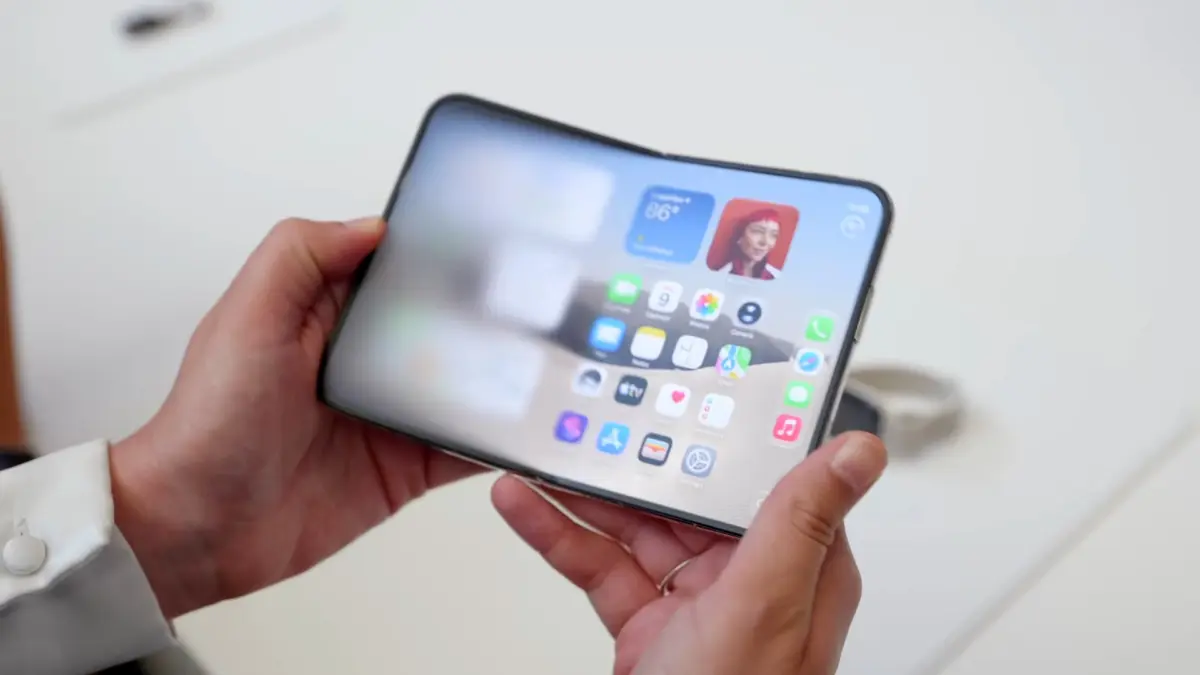
When Apple officially pulled back the curtain on its long-awaited debut in the foldable handset market, the iPhone Duo, it commanded immediate attention across the tech landscape. Scheduled for release on October 23, the device naturally drew scrutiny for its premium hardware choices—most notably its matte inner display and a remarkably seamless, virtually invisible hinge crease.
Yet, amidst the high-level hardware breakdowns and spec-sheet comparisons, an unexpected software nuance hijacked the online discourse: a fluid, cascading unfolding animation. As content dynamically shifts from the outer cover screen to the expansive inner display, the visual transition happens with a cinematic grace that immediately captured the internet’s imagination.
What began as a subtle user interface (UI) flourish quickly transformed into a viral social media trend. Within weeks of the announcement, digital creators and tech enthusiasts across TikTok, Instagram, and YouTube began frantically engineering workarounds to replicate the iPhone Duo’s cascading transition effect on their own Android foldables. Chief among the targeted devices is Samsung’s reigning heavyweight, the Galaxy Z Fold 8.
While the Google Play Store is historically packed with third-party launchers capable of mimicking Apple’s home screen layouts, this marks a rare instance where mobile consumers are going to extraordinary lengths—utilizing GitHub developer scripts and unofficial third-party apps—just to capture an iOS visual transition.

Chronology: From Cupertino’s Reveal to the Android Modding Wave
The trajectory of this software obsession follows a rapid, digitally accelerated timeline:
- July: Samsung releases the Galaxy Z Fold 8, a passport-sized foldable that earns widespread critical acclaim (including a CNET Editors’ Choice Award) for its versatile form factor, razor-sharp cover screen, and optimized multitasking capabilities. Running on Samsung’s One UI, the device shifts content instantly from the exterior display to the interior panel upon a halfway unfold, though it lacks an accompanying aesthetic transition animation.
- Late September: Apple debuts the iPhone Duo, positioning itself relatively late to the foldable smartphone ecosystem. Reviewers and early hands-on testers highlight the device’s smooth software behaviors, instantly broadcasting the fluid unfolding animation across social media short-form video platforms.
- Early October: Online reactions explode. A wave of viral videos demonstrates how the animation creates an illusion of uninterrupted physical-to-digital continuity.
- Mid-October: Independent developers and tech creators begin releasing third-party apps, GitHub tools, and unofficial modding guides enabling Galaxy Z Fold 8 users to approximate the iPhone Duo’s visual effect—sparking warnings from creators about installation risks and variable smoothness.
- October 23: The iPhone Duo officially hits store shelves and doorstep pre-orders, setting the stage for a broader consumer showdown between Apple’s tightly controlled ecosystem and Samsung’s established foldable dominance.
Supporting Data & Ecosystem Analysis: iPhone Duo vs. Samsung Galaxy Z Fold 8
Beneath the viral animations lie two remarkably similar hardware philosophies, contrasted by profoundly different software ecosystems.
Hardware Parity
Apple and Samsung have effectively converged on the "passport-style" foldable footprint. Both the iPhone Duo and the Samsung Galaxy Z Fold 8 feature:
- Inner Displays: Expansive 7.6-inch folding panels designed to bridge the gap between smartphones and tablets.
- Cover Screens: Ergonomically designed exterior displays (such as the Z Fold 8’s sharp-cornered 5.5-inch panel) built for one-handed vertical text and media consumption.
- Camera Arrays: Dual rear camera systems capable of producing crisp, vibrant photography despite missing dedicated long-range telephoto lenses.
- Battery Life: All-day endurance metrics that keep pace with heavy streaming and social media workflows.
Software Divergence: iOS vs. One UI
The core friction point isn’t physical dimensions; it’s how software treats those dimensions.
Android operates across a fragmented matrix of screen sizes, folding angles, and hardware configurations manufactured by dozens of brands. Consequently, Samsung’s One UI prioritizes functional efficiency—swapping content instantly between screens without demanding unnecessary computational resources for transition graphics.

Conversely, Apple enters the market with a single, highly unified foldable hardware target. This allows iOS developers to optimize applications with surgical precision. Early developer previews—such as Netflix’s bespoke interface adjustments for the iPhone Duo—hint that Apple’s hardware-software integration will leverage the Duo’s unique 1.4:1 aspect ratio in ways that could push the industry forward.
Official Responses and Industry Reactions
The competitive tension between Cupertino and Seoul has rarely been more palpable. Smarting from Apple’s entry into a market Samsung pioneered, the South Korean tech giant responded with a series of sharp, highly publicized digital jabs. Following the iPhone Duo’s unveiling, Samsung Mobile’s official social media channels fired off a sequence of pointed remarks, famously stating on X (formerly Twitter):
"Let us know when you’re done reheating our leftovers."
Despite the corporate chest-beating, independent reviewers situated at the intersection of both ecosystems have taken a more measured approach. Industry analysts note that "borrowing" features has historically driven mobile innovation forward. Apple’s delayed entry allowed engineers in Cupertino to meticulously study the structural and ergonomic pitfalls faced by early foldable pioneers, refining the hardware template before launching their own iteration.
Meanwhile, users attempting to sideload unofficial "Duo-copycat" apps onto their Samsung flagships face a stark warning from community modders: "The smoothness and quality won’t be the same," and "Install it at your own risk." For most mainstream consumers, risking system stability merely to copy an aesthetic transition on an already stellar device represents a bridge too far.

Implications: What This Means for the Future of Mobile Design
The obsession with a simple unfolding animation carries broader implications for smartphone evolution, UI design, and brand tribalism:
- The Power of Micro-Delights: In an era where smartphone hardware upgrades have become increasingly incremental (better chips, slightly brighter screens, marginal camera bumps), software polish and emotional design ("micro-delights") hold immense sway over consumer perception. Apple has once again proven its mastery over sensory feedback, turning a mechanical action into a viral digital moment.
- Cross-Pollination of Features: As foldable technology matures, the historical wall between iOS and Android engineering teams will continue to porous. Just as Android popularized notification dropdowns, widgets, and multitasking splits that Apple later adopted, Apple’s fluid transition animations will almost certainly inspire native responses in upcoming iterations of Samsung’s One UI—perhaps arriving officially in a future Galaxy Z Fold lineup.
- App Ecosystem Optimization: Apple’s disciplined approach to a single foldable hardware standard could pressure developers to build more cohesive multi-window tablet experiences, forcing Android developers to address fragmentation issues in how applications scale across diverse folding displays.
Conclusion
While it remains amusing to watch Android power-users bend over backward—and risk security alerts—to install bootlegged iOS transition effects on a Samsung Galaxy Z Fold 8, the trend ultimately underscores a deeper truth.
The Samsung Galaxy Z Fold 8 remains an award-winning marvel of mobile engineering that doesn’t need to borrow Cupertino’s aesthetic flourishes to justify its place in a user’s pocket. At the same time, Apple’s arrival validates the foldable category once and for all, ensuring that the next generation of mobile devices will be faster, sleeker, and infinitely more animated. Until Samsung chooses to introduce its own native opening flourish, the smartest move for Android loyalists is to appreciate their hardware for what it does best: standing proudly on its own merits.
