

By The Environmental Desk
Published: October 2026
Main Facts
Two years after the apocalyptic deluge of Hurricane Helene reshaped the topography of western North Carolina, a surreal and monumental cleanup operation continues along the region’s waterways. While homes have been rebuilt and roads reopened, the iconic French Broad River—celebrated globally for its roaring whitewater rapids—remains choked by an industrial ghost of the storm: millions of feet of polyvinyl chloride (PVC) pipe.
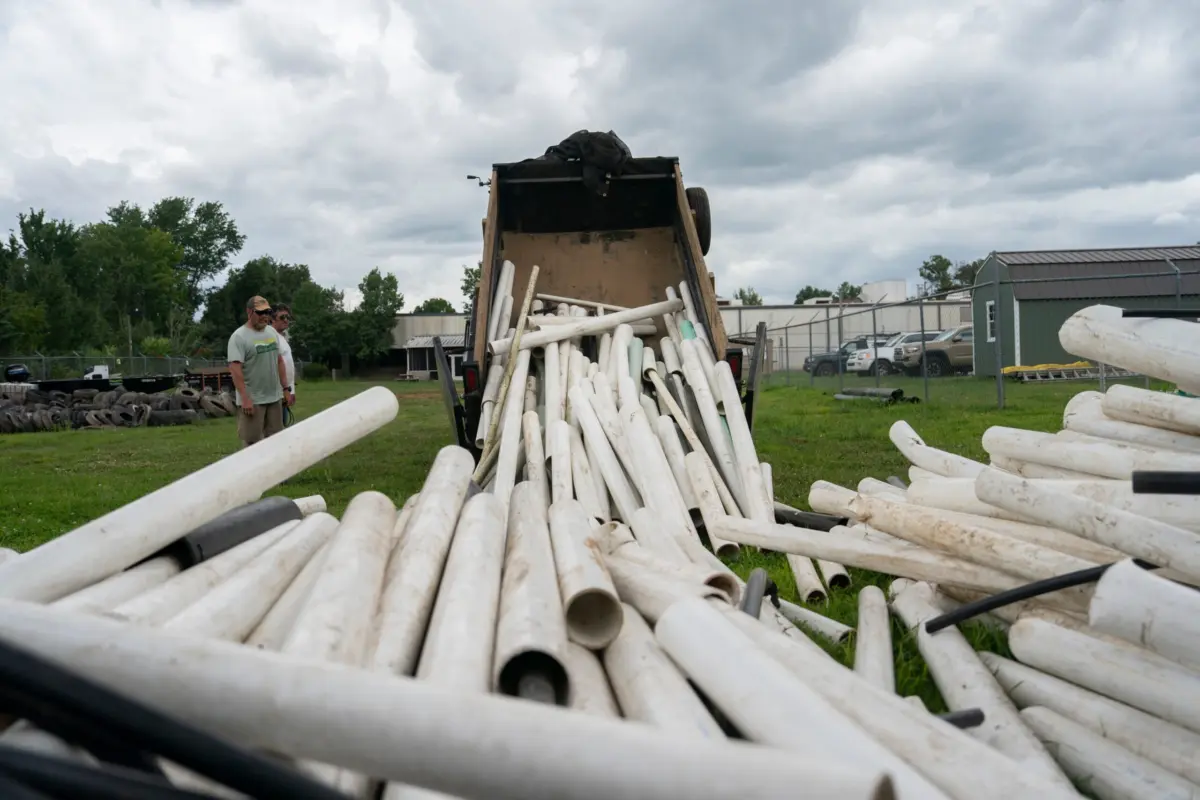
Washed away from a manufacturing facility in Woodfin, north of Asheville, during the catastrophic late-September 2024 flood, these pipes now dominate the river’s ecosystem. They are piled high on riverbanks, lodged deep inside uprooted sycamores, embedded beneath layers of heavy sediment, and jammed beneath massive logjams stretching up to two stories high.
MountainTrue, a regional environmental nonprofit spearheading the remediation effort, estimates its specialized crews have pulled hundreds of thousands of pipes from the water. Yet, an untold number still litter a 70-mile stretch extending all the way to a large lake at the Tennessee border. Comprising up to 80% of the debris in hardest-hit sectors, the PVC hazard threatens recreational safety, alters natural water flows, traps river wildlife, and degrades slowly into harmful microplastics.
The daunting operation has consumed more than 50,000 work-hours and cost upward of $1.5 million for the French Broad alone. While the manufacturer, Canada-based IPEX, has contributed $500,000 toward remediation, and state grants have been extended, cleanup leaders warn that the battle against the plastic contamination will stretch on for years.
Chronology: The Anatomy of a Disaster and Recovery
September 2024: The 1,000-Year Deluge
When Hurricane Helene slammed into the southern Appalachians in late September 2024, it dropped staggering amounts of rainfall—exceeding 30 inches in isolated pockets of western North Carolina. The resulting disaster triggered catastrophic landslides, leveled entire neighborhoods, and pushed rivers far beyond any recorded historical high.
At the IPEX manufacturing plant in Woodfin, operations had been halted a day prior, and workers secured the site based on standard flood preparations. Sandwiched tightly between railway tracks and the banks of the French Broad River, the facility relied on an earthen berm to protect its towering outdoor storage stacks of rigid and flexible PVC piping. Company officials anticipated a worst-case "100-year flood"—a weather event with a 1% annual probability—and shifted inventory accordingly.
However, Helene delivered a catastrophic 1,000-year flood. The roaring waters overwhelmed the berm, sweeping away an estimated 60% of the plant’s outdoor inventory in a matter of hours.
Late 2024 – 2025: Emergency Response and Shock
In the immediate aftermath, the factory closed for two months as corporate leadership tallied structural and inventory losses exceeding $100 million. Meanwhile, local residents, former river guides, and outdoor enthusiasts initiated grassroots recovery efforts. Many joined forces out of a psychological need for community healing—a process cleanup organizers describe as "trauma bonding."
Recognizing the immense scope of the crisis, the State of North Carolina awarded MountainTrue a $10 million resilience and debris-removal grant in 2025. Specialized crews, heavily staffed by out-of-work whitewater guides and rock climbers comfortable with extreme physical exposure, began navigating treacherous river hazards to extract the industrial plastic.
2026: Ongoing Remediation and Extended Grants
Two years post-storm, the cleanup has evolved from an emergency triage into a grueling, technical campaign. With the original December 2025 expiration date for state funding pushed to February 2026, and a supplementary $500,000 settlement agreement secured from IPEX, MountainTrue has extended its operations. Crews continue to battle stubborn log-and-pipe matrices, even as new seasonal tropical systems—such as the strengthening Atlantic storms of the current season—threaten to displace remaining sediment-trapped debris.
Supporting Data and Metrics
The scale of the PVC contamination and the subsequent cleanup effort is quantified by striking metrics gathered by MountainTrue, IPEX, and regional emergency management agencies:
- 70 Miles: The length of the primary contamination corridor along the French Broad River, stretching from Asheville downstream to the Tennessee border lake.
- 80%: The estimated percentage of total river debris composed of PVC pipe in the hardest-hit zones around Madison County.
- 50,000: The number of labor hours logged by MountainTrue river teams explicitly dedicated to pipe removal on the French Broad River.
- $1.5 Million+: The direct financial cost incurred by MountainTrue for pipe extraction and disposal alone.
- $10 Million: The total value of the state debris-removal grant awarded to MountainTrue in 2025, which received an extension to early 2026.
- $500,000: The financial contribution agreed upon by IPEX to fund MountainTrue’s ongoing cleanup operations.
- $100 Million+: The estimated physical damage and operational losses suffered by IPEX during the 2024 flood, matched by subsequent facility investments to fortify the plant against future disasters.
- 60%: The portion of IPEX’s outdoor-stored inventory swept away by the initial surge of the French Broad River.
Official Responses and Corporate Accountability
The presence of industrial plastic on this scale has sparked intense scrutiny regarding corporate preparedness, environmental stewardship, and community restitution.
IPEX Chief Executive Officer Colleen Pritchett addressed the ongoing crisis, acknowledging the severity of the situation while emphasizing the unpredictable nature of the disaster. "We understand the ongoing challenge," Pritchett stated. "We recognize that… recovery efforts are complex, they’re resource-intensive, and it’s constantly shaped by the river conditions."
Pritchett noted that IPEX has invested more than $100 million into repairing and modernizing the Woodfin manufacturing plant since the hurricane. The company is actively conducting engineering studies to develop next-generation containment measures designed to withstand extreme floods—a preventative safeguard MountainTrue had demanded for months.
However, transparency remains a point of friction. IPEX declined to publicly disclose the precise pre-storm inventory count stored at the Woodfin site or release the full findings of its internal environmental assessment tracking remaining river debris, citing "commercially sensitive" data. Despite these friction points, the company’s $500,000 voluntary contribution has allowed MountainTrue to sustain its labor force into the following year.
Jon Stamper, operations director for MountainTrue, emphasized the grinding fatigue of the operation. "Just the amount of time and energy that we put into removing all this pipe is exhausting," Stamper said. "We still have stretches of river that haven’t been touched."
Environmental and Long-Term Implications
The ecological fallout of millions of feet of industrial plastic residing in a dynamic river system extends far beyond aesthetic blights or navigational hazards for kayakers and tubers.
Structural and Biological Threats
The PVC debris does not merely float on the surface; it interlocks with fallen timber, boulders, and silt to form massive, synthetic-organic dams up to 20 feet high. These structures alter natural channel morphology, redirect high-velocity currents into vulnerable riverbanks, and exacerbate erosion. Furthermore, fish, macroinvertebrates, and amphibians frequently take up residence inside submerged pipe segments, complicating extraction without causing collateral ecological damage.
The Microplastic Time Bomb
Perhaps the most alarming long-term threat is the physical degradation of the material itself. Anna Alsobrook, MountainTrue’s French Broad Riverkeeper, and operations staff have noted that pipes exposed to relentless solar radiation over the past two years are becoming brittle and fractured.
"We want to avoid that stuff sitting there forever and just slowly deteriorating and breaking into smaller and smaller pieces," Stamper warned, noting that sun-baked PVC cracks easily under pressure. As these plastics fragment, they release persistent microplastics into the aquatic food web, threatening water quality and public health across the watershed.
Technical Rigors of Extraction
Removing the debris requires a specialized workforce. Jemima Filiss-Cook, who oversees Madison County cleanup operations, describes the tangled log-and-pipe piles as a hazardous "jungle gym" that crews must scale safely. Operating chainsaws from floating boats in fast-moving whitewater requires exceptional technical prowess—skills possessed primarily by former whitewater guides, rock climbers, and outdoor professionals.
While most recovered PVC is hauled to landfills due to a lack of viable regional recycling pathways for weathered industrial plastic, undamaged sections are occasionally salvaged and distributed to local community members for utility projects.
Ultimately, environmental advocates concede that complete eradication of the plastic is mathematically impossible. While grant applications are underway to extend cleanup windows, Stamper offers a sobering reality check: "We’re going to do our best as long as the funding allows. But there’s going to be pipe out there that we can’t get ever."
