

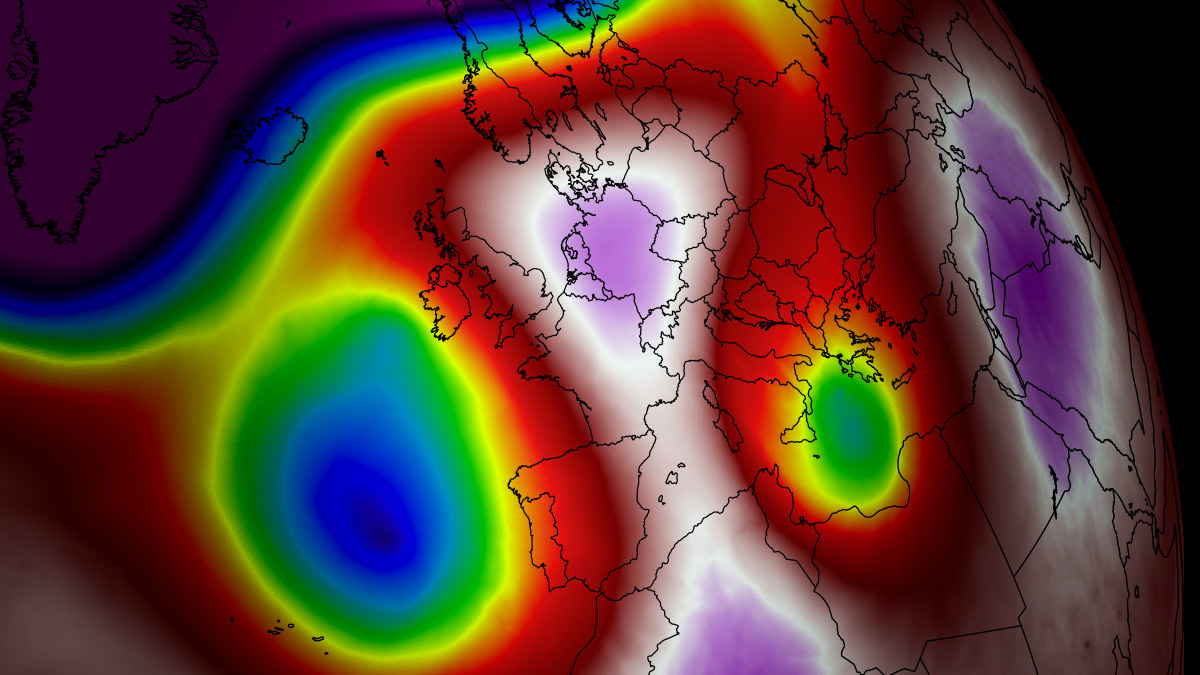
EUROPE — A high-amplitude upper-level ridge is expanding aggressively eastward across Central Europe and the Balkan Peninsula, locking in a widespread, punishing heatwave that is forecast to sustain daytime highs above 40°C through the first week of August.
Driven by a persistent Heat Dome synced with a robust Omega block pattern, an exceptionally warm and dry air mass continues to surge northward from North Africa. This atmospheric engine is pushing upper-air thermal anomalies into the 99th percentile, delivering excessive and potentially dangerous heat conditions across northern Italy, Hungary, Croatia, Serbia, and surrounding territories.

As meteorologists monitor the unfolding crisis, early indications suggest this event is far from an isolated anomaly. Mid-range ensemble models warn that another intense ridge could form and expand into Western Europe by next week, threatening to prolong extreme summer heat well into mid-August.
Main Facts: The Anatomy of an Extreme Continental Heat Event
The primary atmospheric driver behind this multi-week thermal event is a stubborn, slow-moving high-pressure system parked directly over the heart of the European continent.
The Mechanics of a Heat Dome
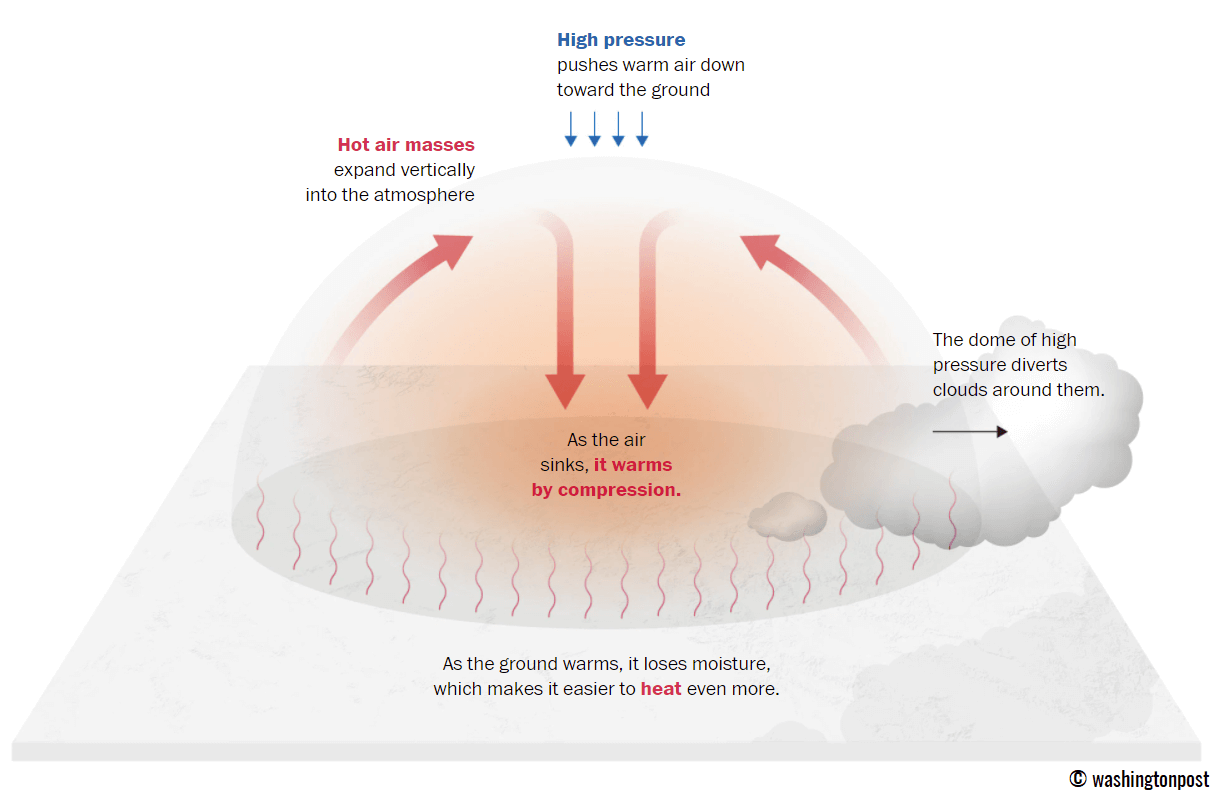
Often described as a "lid on a pot," a heat dome forms when a broad, strong area of high-pressure air settles over a vast region. The system traps warm air at all altitudes underneath it, forcing lower atmospheric layers to compress and heat up as the air sinks toward the ground.
This dynamic creates an anomalously warm air mass at low elevations and bakes the surface. Continental dry winds sweep across the region, keeping humidity low and aggressively accelerating soil moisture loss.
- Peak Surface Temperatures: Low-lying river basins—including the fertile Po Valley in Italy and the Pannonian Basin—are bearing the brunt of the heat. Forecast models predict peak temperatures ranging from 40°C to 43°C.
- The "Tropical Nights" Crisis: Perhaps most dangerous is the complete lack of nocturnal relief. Major urban centers are recording overnight lows refusing to drop below 22°C to 26°C. These suffocating "tropical nights" deny the human body its vital window to cool down and recover, compounding physiological stress for millions.
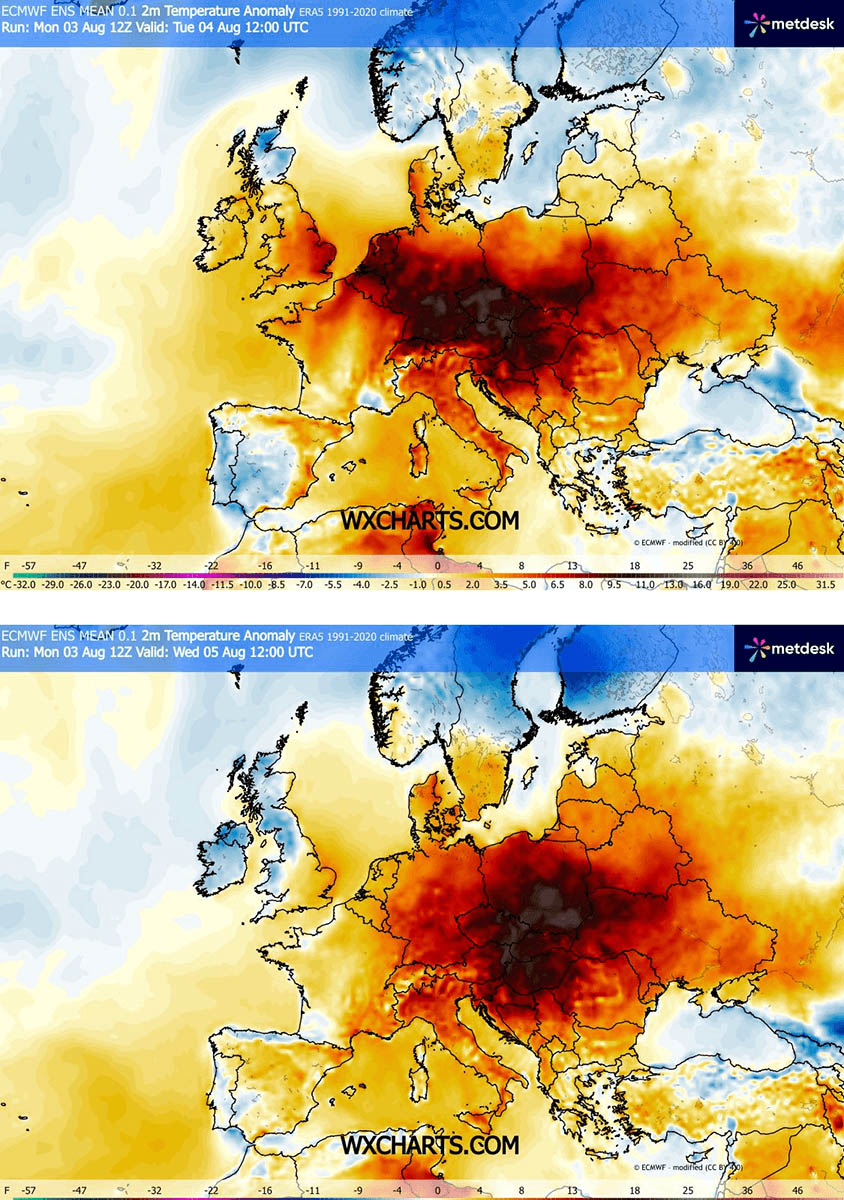
- Geographical Spread: The thermal anomaly spans a massive swath of the continent, impacting Germany, the Czech Republic, Poland, Slovakia, Austria, northern Italy, Slovenia, Croatia, Hungary, Serbia, Romania, and pushing onward toward Ukraine and western Russia.
Chronology: Day-by-Day Progression of the Ridge
The evolution of the synoptic setup dictates a shifting geography of extreme heat as the week progresses.
Tuesday: Central Europe Takes the Initial Hit
The surface heatwave delivers its initial peak across Central Europe on Tuesday. Germany, eastern Austria, and the Czech Republic face severe heat, with temperatures reaching 36°C to 38°C in Germany, 37°C to 40°C in the Czech Republic, and up to 40°C across the eastern Austrian plains. Hungary and parts of Slovakia register even higher readings.
Wednesday and Thursday: The Shift Eastward
By midweek, an upper-level wave emerging into Western Europe brings maritime Atlantic air that provides some refreshment to the UK, France, the Iberian Peninsula, and eventually Benelux and western Germany.
However, this same wave causes the central European ridge to elongate and shift east-southeast.
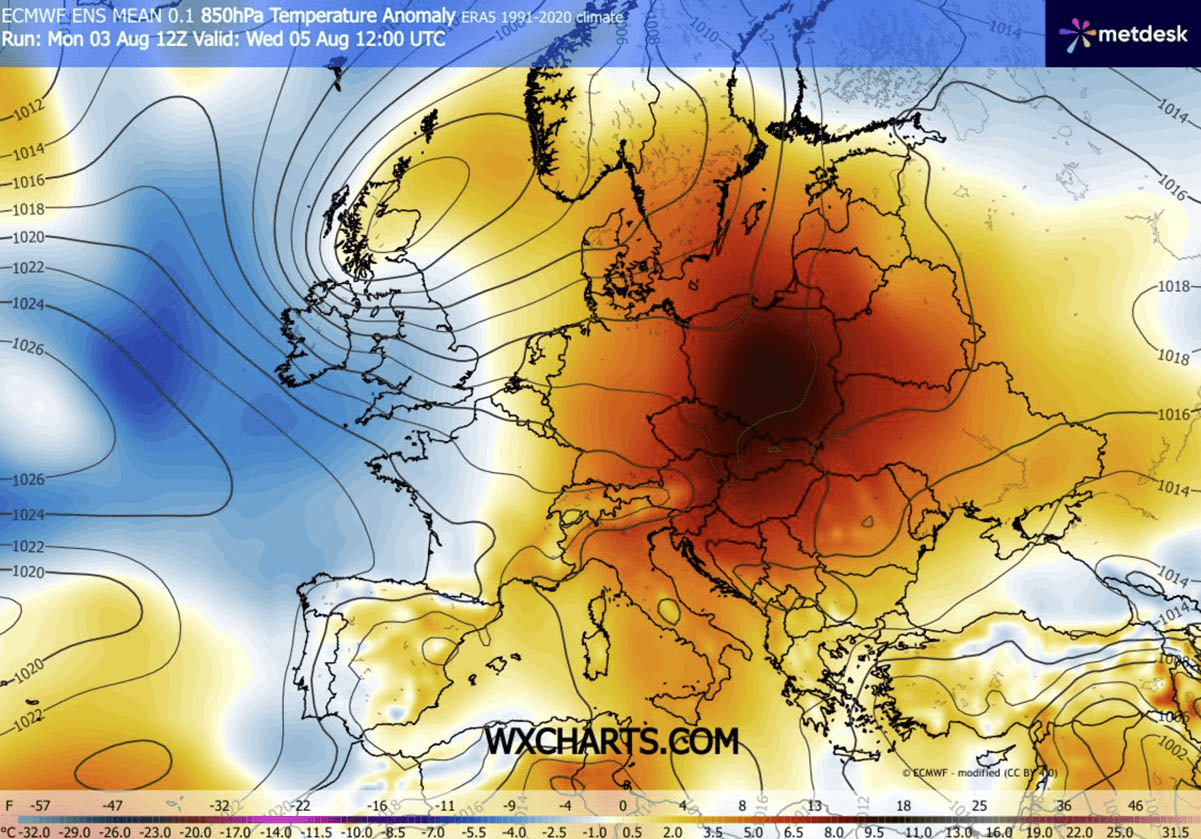
- On Wednesday, the core of anomalous warmth slides toward Poland, eastern Germany, and the western Czech Republic and Austria.
- Simultaneously, temperatures spike in the south, reaching the low 40s across the Po Valley and up to 42°C from Hungary to eastern Croatia and northern Serbia.
- Thursday is expected to be the hottest day overall for the northern Balkans and Eastern Europe, with the heart of the Pannonian basin peaking at a staggering 43°C.
Friday and Beyond: Expanding into Eastern Europe and the Balkans
By Friday, the high-pressure dome solidifies its grip on Eastern Europe and the southern Balkans. Excessive heat expands into western Russia, Bulgaria, and Greece. Valleys across Ukraine, eastern Poland, and southern Belarus experience persistent daytime highs between 38°C and 41°C, accompanied by persistent tropical nights.
Supporting Data: Meteorological and Climatological Metrics
Meteorological analysis underscores the extreme nature of this August 2026 event:
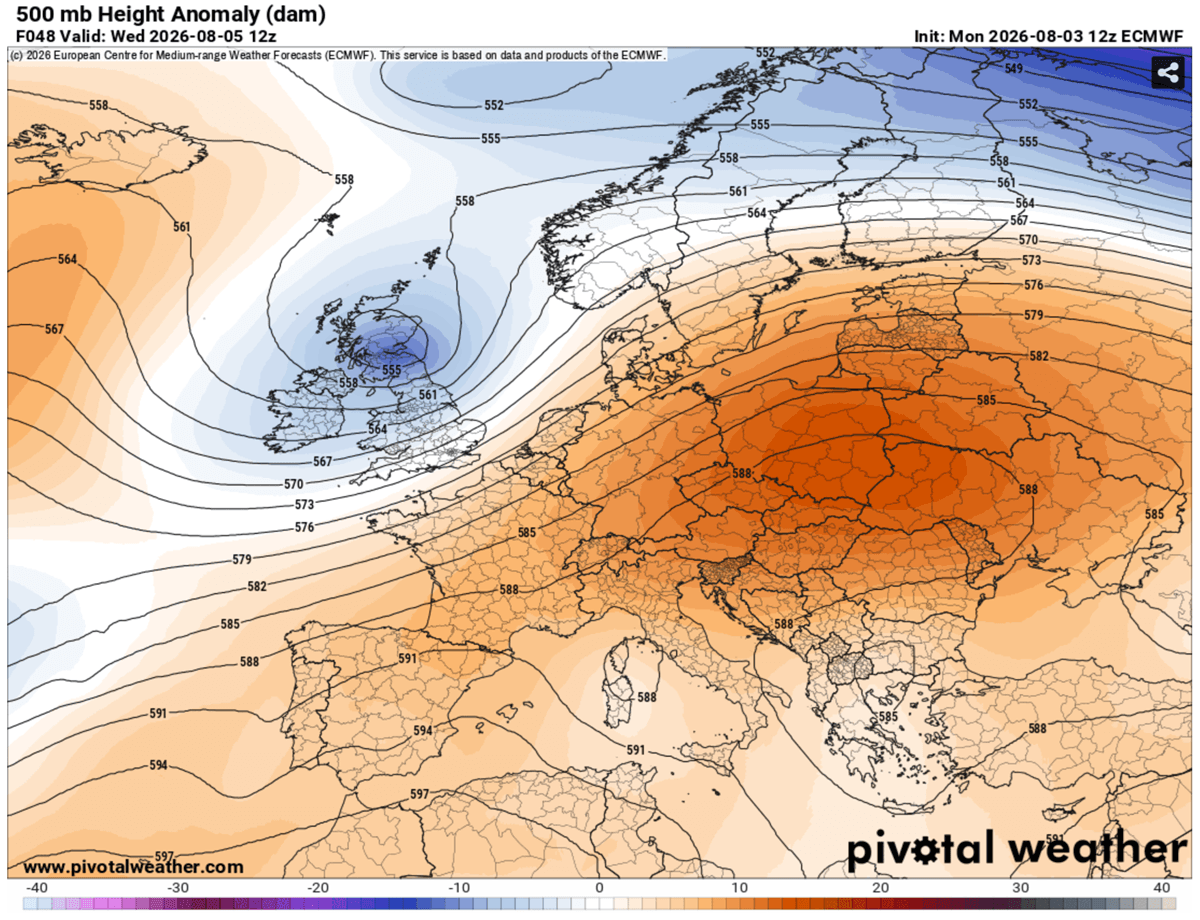
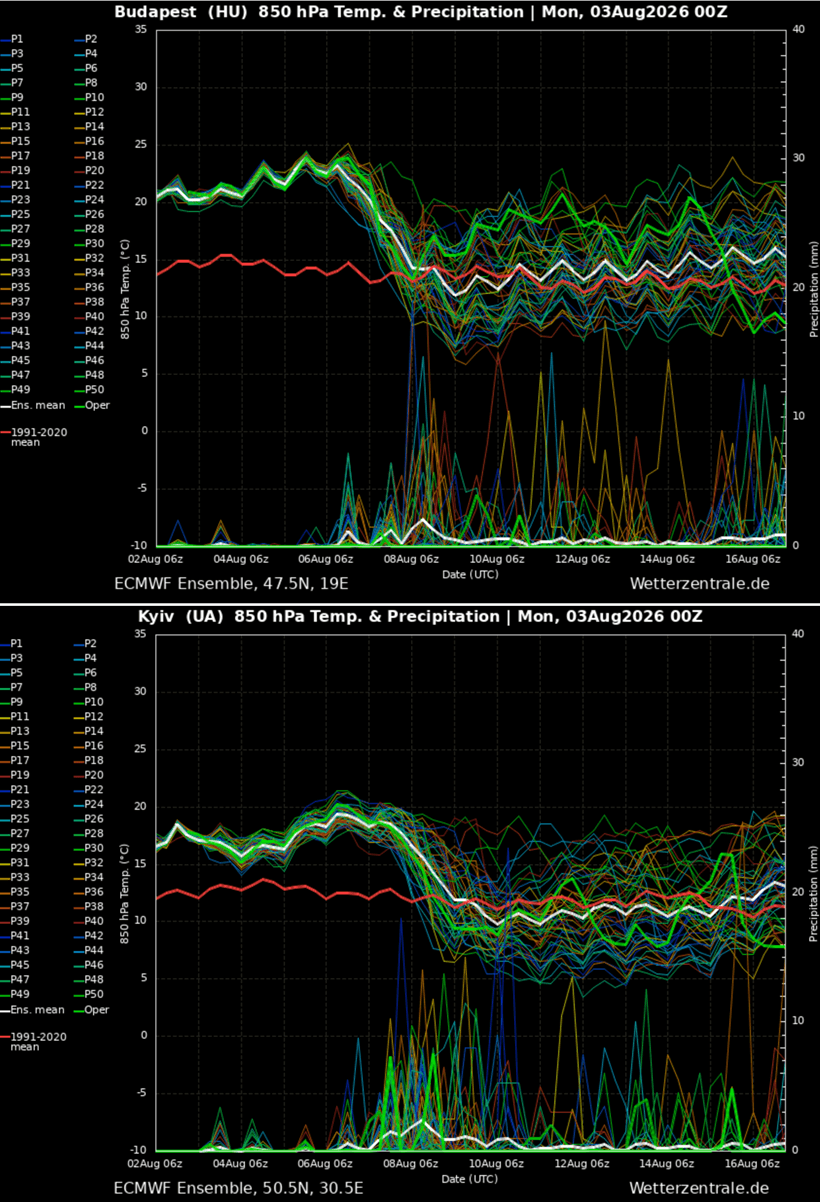
- 850 hPa Thermal Anomalies: Upper-air thermal anomalies at the 850 hPa pressure level sit firmly in the 99th percentile for early August, signifying air masses historically rare for this time of year.
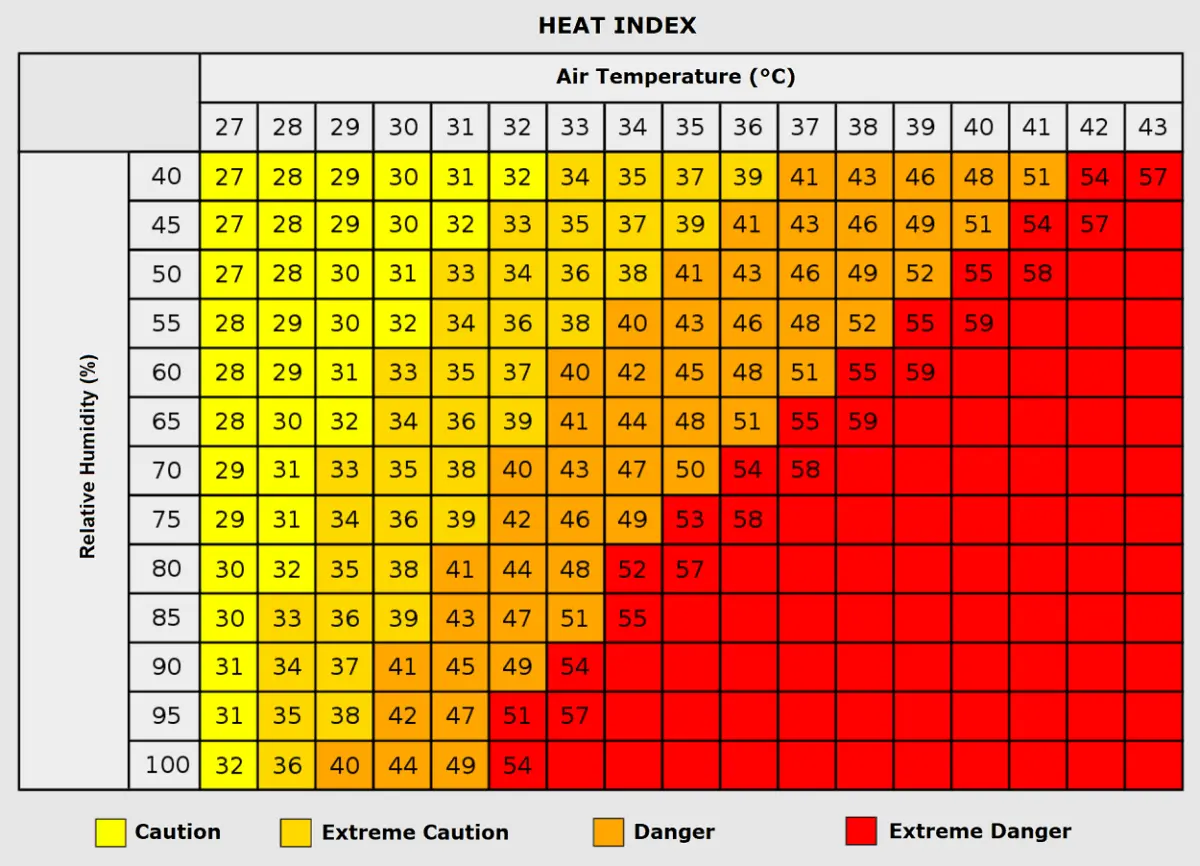
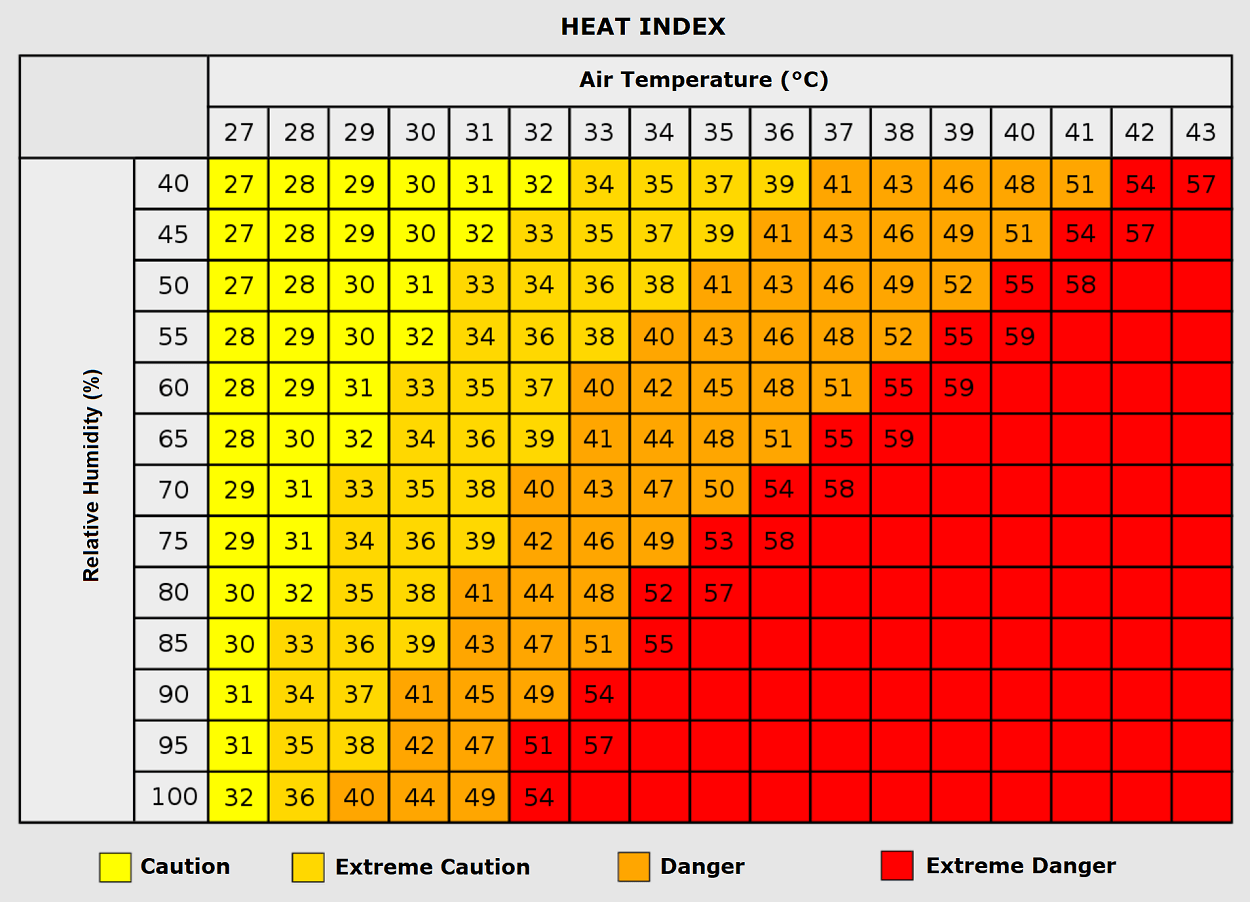
- The Heat Index Factor: In environments where air temperatures hover around 35°C, humidity levels dictate human tolerance. While dry continental winds are keeping relative humidity relatively low in some areas, regions experiencing higher humidity see "feels-like" heat index values soaring near 50°C.
- Model Agreement: Data provided by PivotalWeather and WXcharts confirm high confidence among ensemble forecasting models regarding the current Omega block breakdown and the potential formation of a secondary ridge system next week.
Official Responses and Human Impacts
Public health officials, civil protection agencies, and municipal governments across Central and Eastern Europe have heightened alert levels as the multi-week heatwave tests public infrastructure and emergency services.
Vulnerable Populations at Risk
Prolonged exposure to extreme heat and high heat index values poses severe health risks. Medical authorities have issued widespread advisories emphasizing the dangers to vulnerable demographics:
- The Elderly and Children: Highly susceptible to rapid dehydration and heat-related organ stress.
- Outdoor Workers: Construction laborers, agricultural workers, and maintenance crews face heightened risks of heat exhaustion and deadly heat stroke due to extended daytime exposure.
- Urban Heat Islands: Impoverished urban populations living in high-density housing constructed with heat-trapping materials such as concrete and asbestos face magnified indoor temperatures, often lacking adequate air conditioning.
Public Health Consequences
Beyond heat exhaustion and heat stroke, extended heatwaves are statistically linked to spikes in cardiovascular events, including heart attacks and strokes, as well as severe respiratory distress. Medical professionals urge residents to hydrate aggressively, avoid strenuous outdoor activity during peak afternoon hours, and check on vulnerable neighbors.
Infrastructure, Agriculture, and Wildfire Hazards
- Agricultural Stress: Persistent dry winds and unyielding heat are rapidly accelerating soil moisture loss, threatening staple crops across the Pannonian Basin and eastern agricultural breadbaskets.
- Wildfire Danger: The combination of prolonged dry spells, parched vegetation, and high temperatures has triggered extreme wildfire warnings across southern Europe and the western Balkans, where emergency fire services remain on high alert.
Implications: A Glimpse at Mid-August and Climate Trends
As emergency responders and citizens grapple with the current heat dome, long-range meteorological trends indicate that relief may be short-lived.
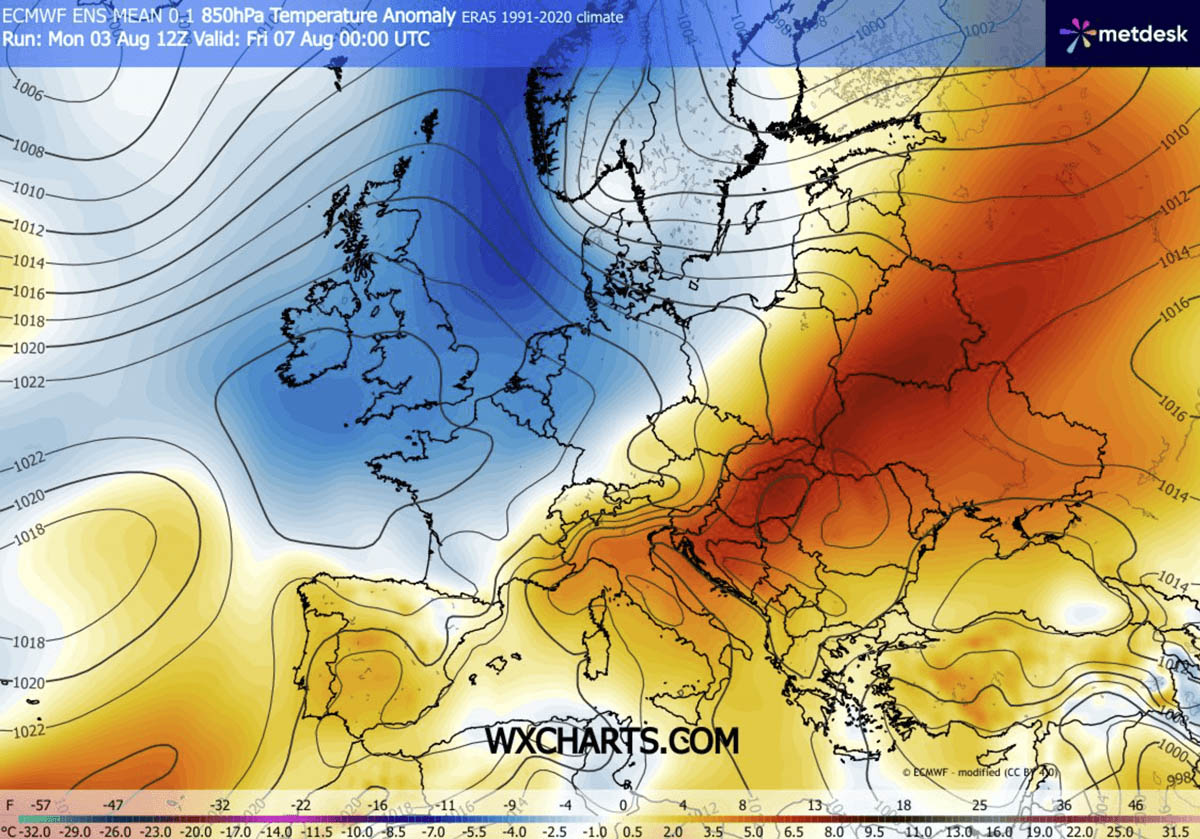
Mid-range ensemble models show strong agreement that a new high-pressure ridge could build across southwestern, western, and central Europe by next week. Though exact positioning remains subject to refinement at a 10-day lead time, the emerging pattern hints at the establishment of a secondary Heat Dome capable of sustaining extreme heat through mid-August.
This prospective heatwave would target Portugal, Spain, France, and the Alpine region before gradually expanding toward the British Isles. Meanwhile, the current ridge dominating Eastern Europe and the Balkans is projected to collapse by the following weekend.
As climate patterns increasingly favor persistent blocking highs and amplified thermal ridges, scientists continue to stress the growing frequency and intensity of extreme weather events across the European continent. Authorities advise all residents in affected zones to monitor local forecasts closely and adhere strictly to civil protection warnings as the crisis unfolds.
