

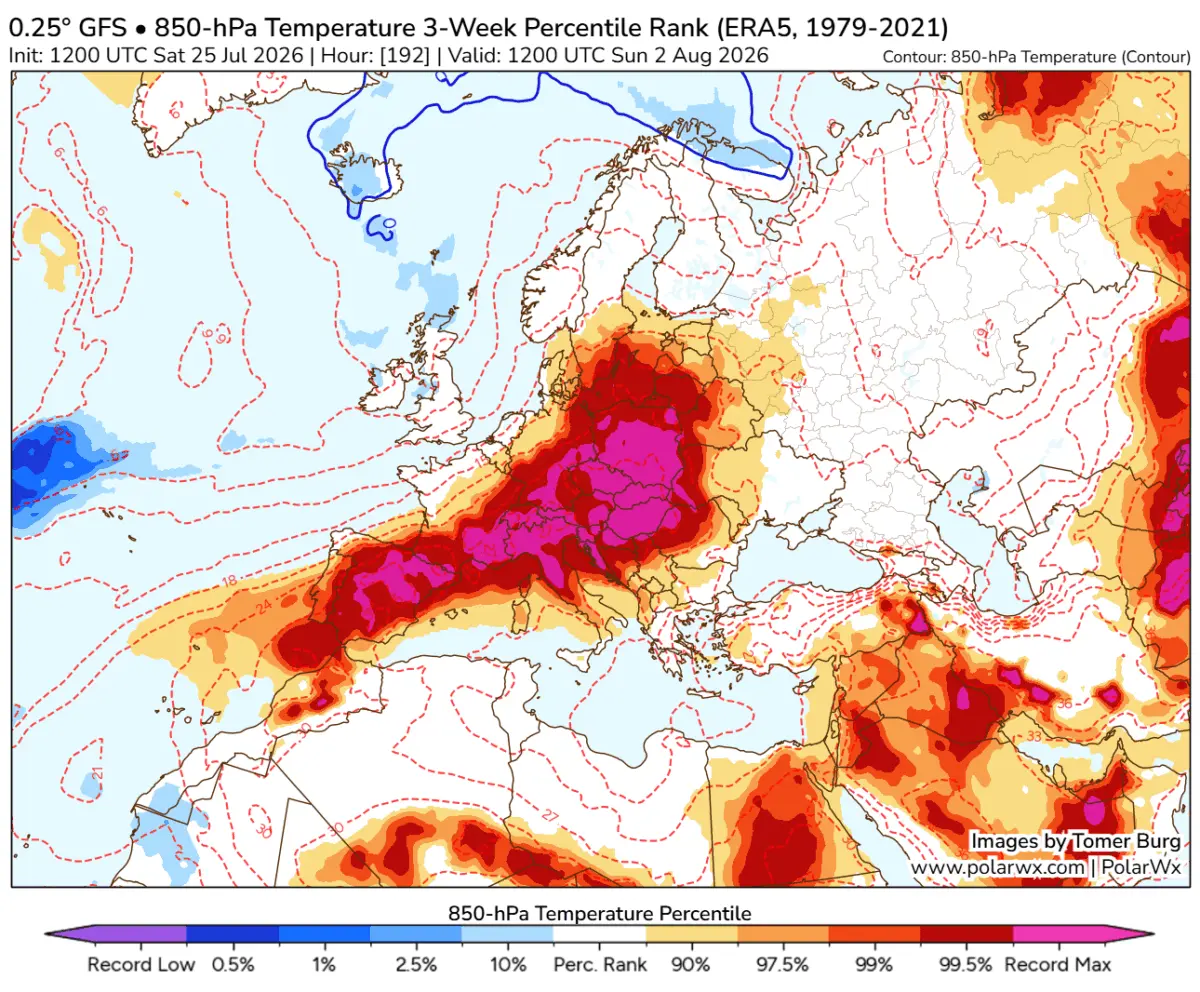
EUROPE — As the calendar turns from July to August 2026, the European continent is bracing for a punishing and potentially historic escalation of excessive heat. Driven by a textbook atmospheric Omega block, a monstrous and long-lasting fourth heatwave of the season is surging northward from North Africa. A relentless "Heat Dome" is locking into place over Western and Central Europe, as well as the Mediterranean basin, threatening to shatter long-standing temperature records and severely strain infrastructure, public health, and ecosystems.
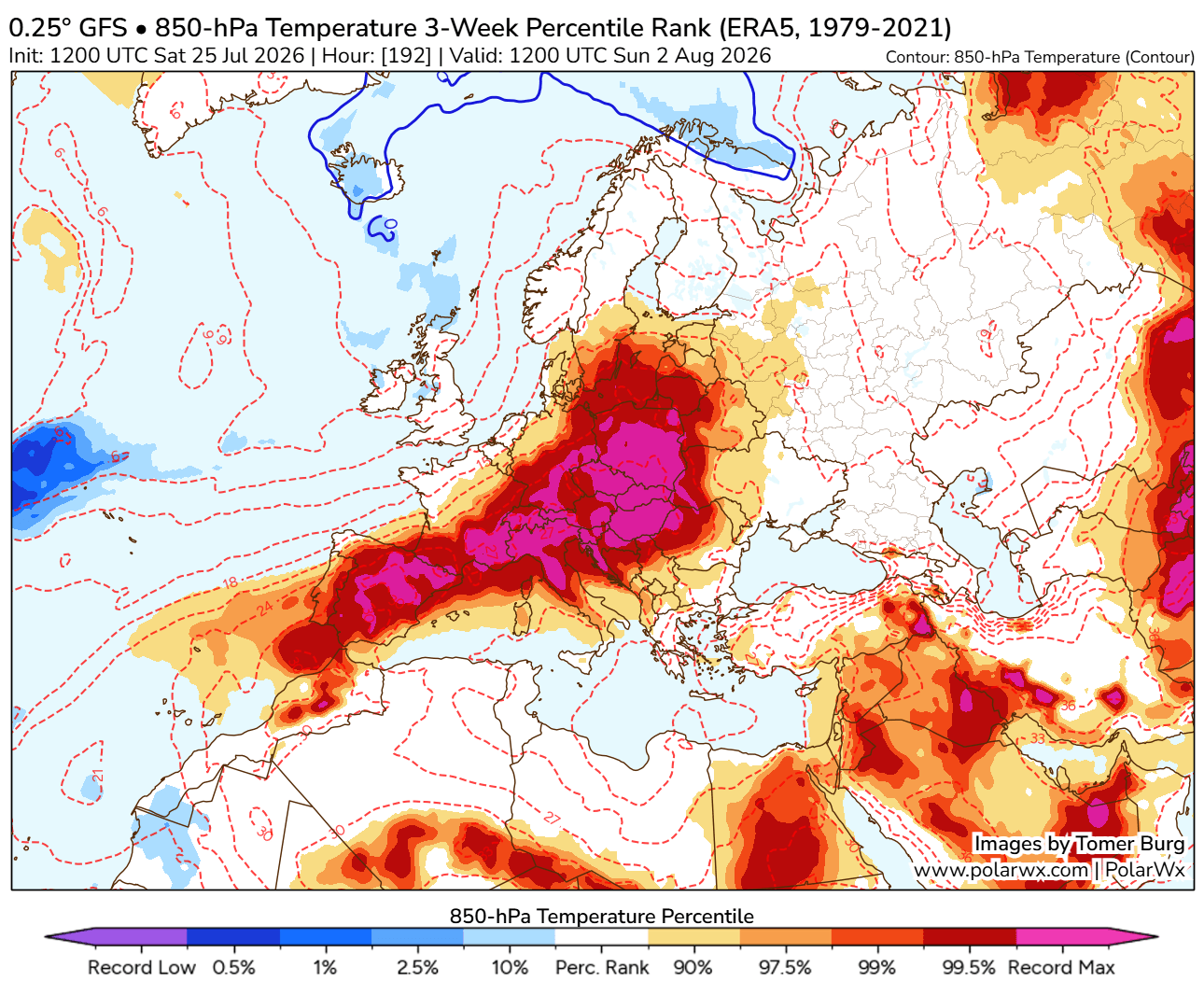
High-resolution global ensemble weather models point toward mid- to upper-air thermal anomalies tracking well into the 99th percentile. This atmospheric setup sets the stage for a brutal, record-challenging meteorological event that will expand across the majority of the continent by the end of July and persist deep into August.

Main Facts: The Anatomy of a Continental Furnace
The driving mechanism behind this severe weather event is an upper-level ridge pattern—commonly referred to as a Heat Dome—reinforced by a synoptic setup that pumps exceptionally hot, dry air straight from the Sahara Desert into the heart of Europe.
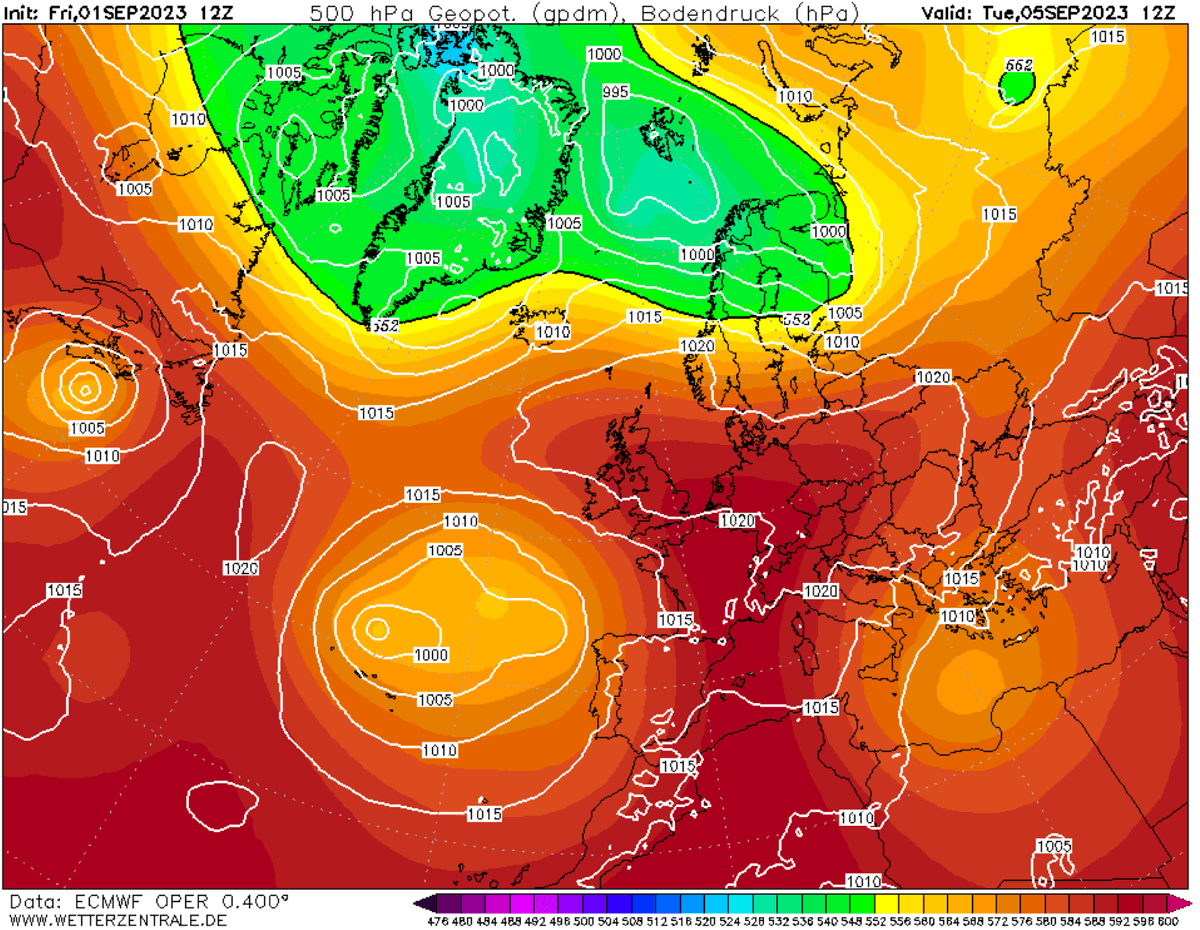
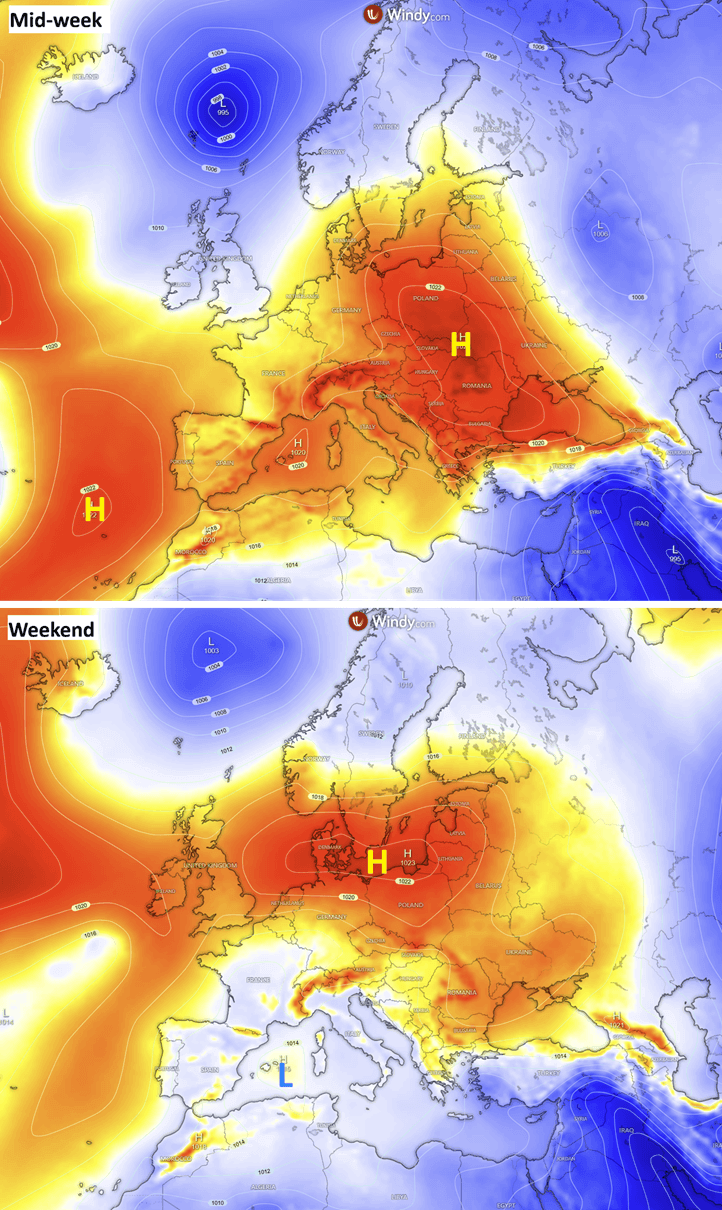
- The Omega Block Setup: The blocking pattern features a dominant high-pressure ridge parked squarely over the core of Europe, flanked by two deep low-pressure systems over the North Atlantic and Russia.
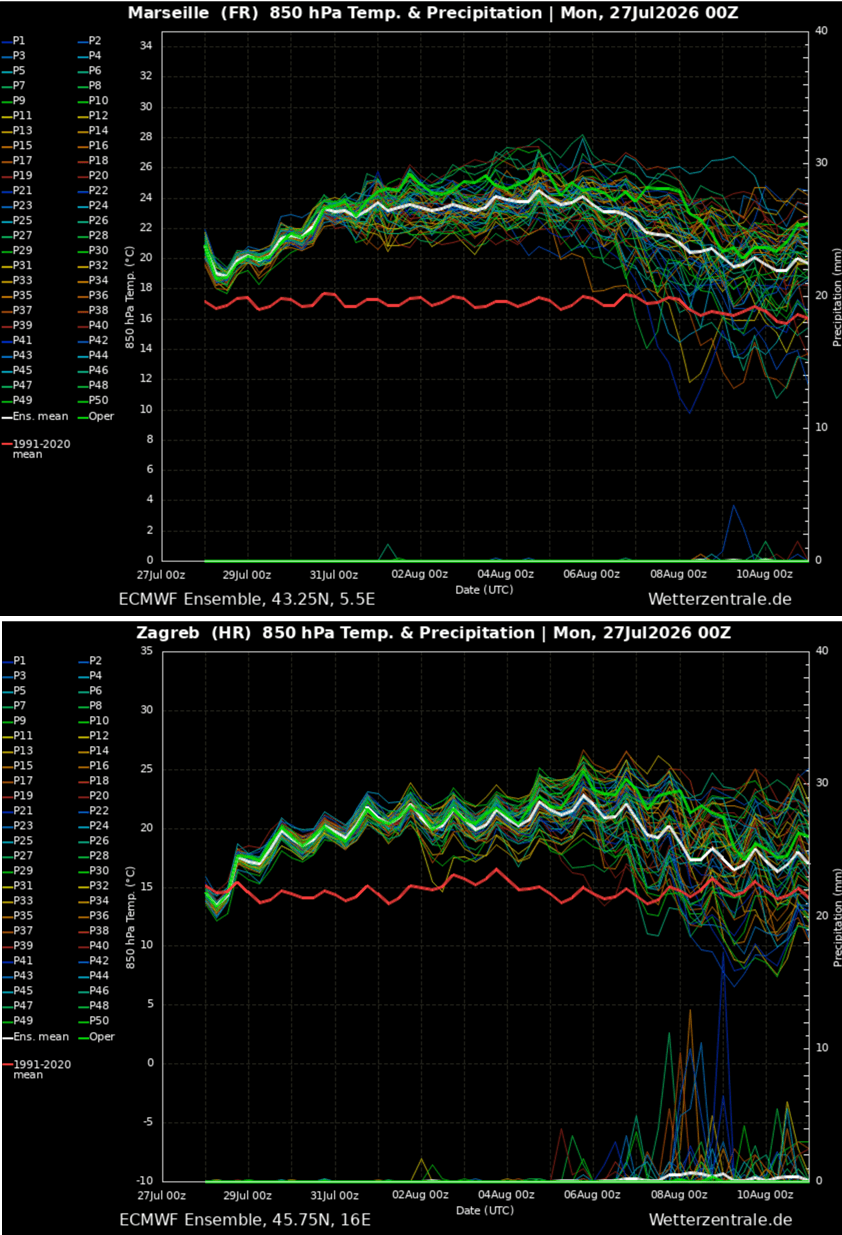
- Intense Thermal Anomalies: All atmospheric layers are challenging historic records. Weather models indicate 850 mbar level temperatures reaching between 25 °C and nearly 28 °C across broad swaths of the continent.
- Widespread 40°C+ Readings: Peak daytime highs are projected to soar past the 40 °C mark easily across large parts of the Iberian Peninsula, France, Germany, Italy, Hungary, and the northern Balkans, with localized hot spots potentially reaching 45 °C to 46 °C.
- Ecological and Wildfire Crisis: Parched forests, particularly in Spain, France, Italy, and the western Balkans, face explosive wildfire risks due to relative humidity plunging well below 20 percent.
- Relentless Nighttime Stress: "Tropical nights," where overnight lows fail to drop below mid-to-upper 20s °C, will deny populations any natural cooling window, drastically compounding physiological strain.
Chronology: How the 2026 Heatwave Unfolds
The progression of this prolonged atmospheric event is mapped across distinct phases, moving from western flanks toward eastern and central regions over a two-week period.
Mid-Week Peak in Western Europe
By Wednesday, the core of the ridge centers aggressively over the Iberian Peninsula and France. Western and central France are forecast to experience extreme afternoon peaks of 40 °C to 43 °C, while the rest of the country registers between 34 °C and 39 °C.
Simultaneously, the British Isles experience a short-term, intense surge of heat. Tuesday and Wednesday mark the peak for the UK, with south-central England anticipating 33 °C to 36 °C before maritime Atlantic air masses push cooler conditions westward later in the week.
Late-Week Intensification in Iberia and Central Europe
Spain and Portugal face their most brutal conditions late in the week, specifically on Friday, when southern Portugal and south-central Spain see temperatures peak at a staggering 42 °C to 46 °C in heat-prone lowlands.
In Central Europe, Germany and the Benelux region experience their most intense heat mid-week through Thursday, with temperatures climbing into the upper 30s and touching 40 °C to 41 °C in localized zones. Austria, the Czech Republic, Slovakia, and Poland quickly follow suit, maintaining mid-to-upper 30s readings through the weekend.
Weekend Shift Toward Italy, the Balkans, and Eastern Europe
As the weekend arrives and August begins, the center of the surface high pressure shifts eastward toward Germany, Denmark, and the Baltic region. Lower pressure establishes over the Mediterranean, creating a dry east-northeast flow. This pattern promotes adiabatic warming via Foehn wind effects across the Mediterranean and Balkan corridors.
North-central Italy, the Pannonian plains, Tuscany, the Po Valley, Slovenia, Croatia, Bosnia & Herzegovina, Serbia, Hungary, and western Romania will bear the brunt of 40 °C+ temperatures for multiple consecutive days. By Sunday, the extreme heat mass spills further into Ukraine, Moldova, and Western Russia, where temperatures will hover between 38 °C and 41 °C well into the following week.
Supporting Data: Understanding the Physics of a Heat Dome
To comprehend the severity of the 2026 summer forecast, meteorologists look closely at the mechanical forces creating the Heat Dome.
What is a Heat Dome?
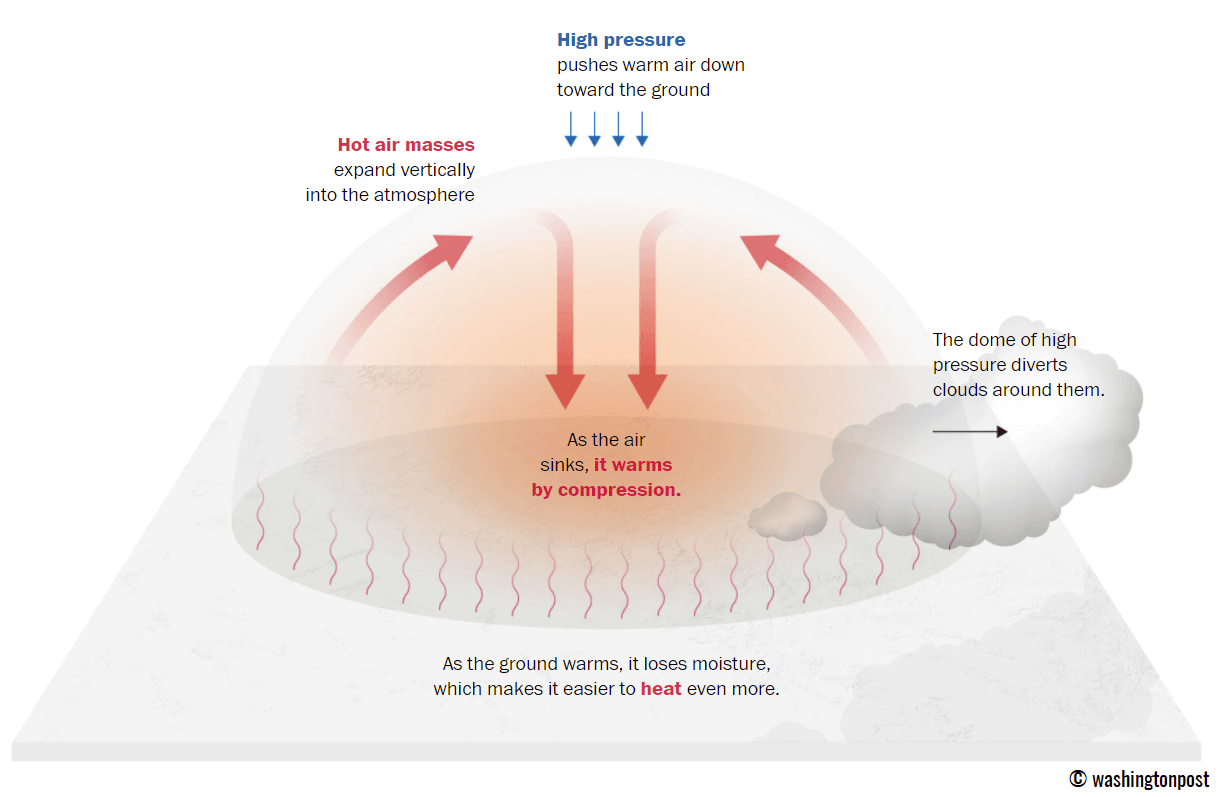
A heat dome forms when a broad, stagnant area of high pressure parks over a large continental region for days or weeks. Acting literally like a lid on a pot, the upper-level high-pressure ridge traps warm air at all levels while forcing air masses to sink toward the ground. This downward compression warms the air significantly at lower elevations, creating extreme surface heat.
The 850 mbar Level and Geopotential Heights
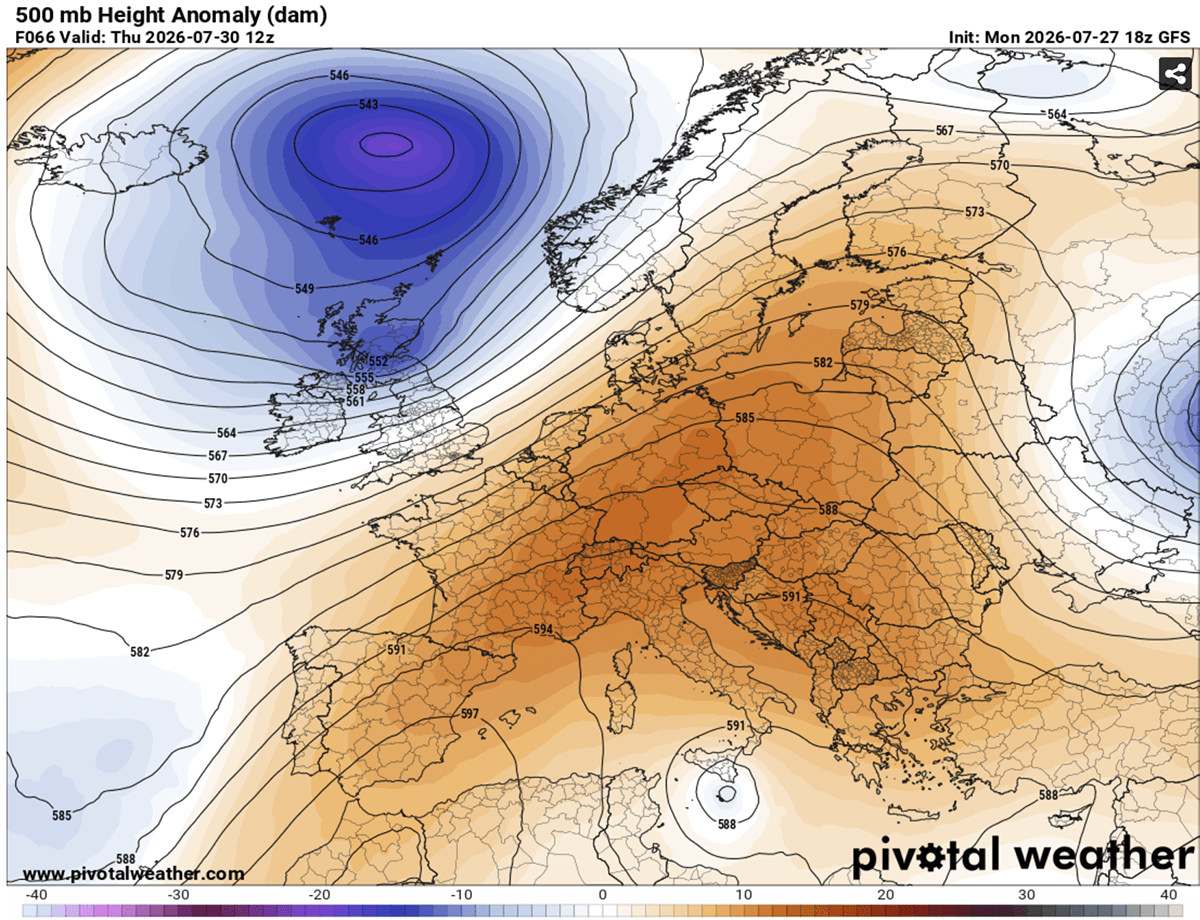
Medium-range ensemble guidance from both the ECMWF and GFS models reveals that 500 mbar geopotential heights will reach near-record levels by the end of July. Sinking air within the dome compresses and warms the lower troposphere, pushing 850 mbar temperatures to between 24 °C and 28 °C (and touching 30 °C locally over the Mediterranean).
Humidity and the Heat Index
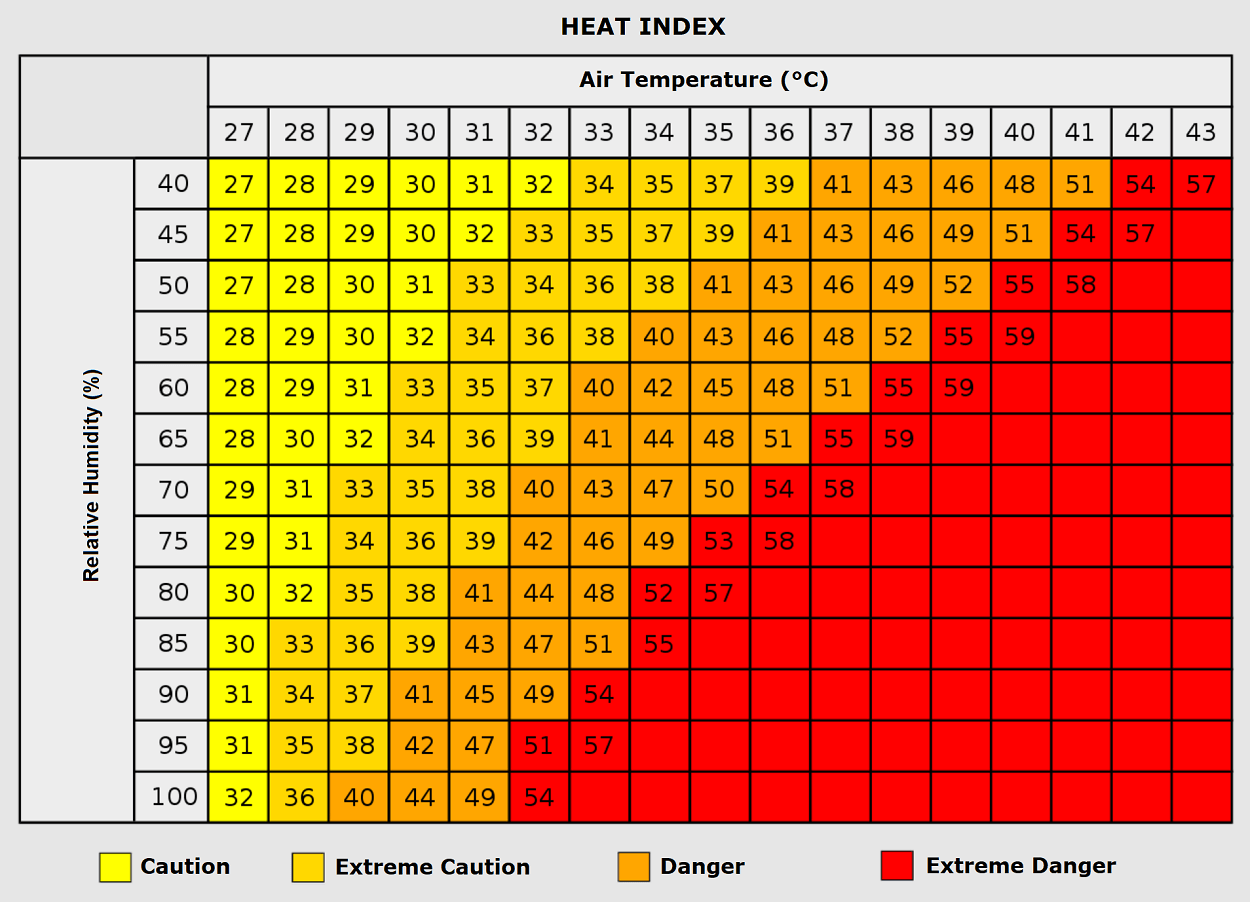
While the incoming air mass is notably dry, high temperatures interact dangerously with human physiology. Meteorologists utilize the Heat Index to measure perceived discomfort. While 35 °C with low humidity is manageable, high humidity combined with stagnant air makes the effective temperature soar toward 50 °C, turning standard summer weather into a hazardous environment.
Public Health and Ecological Implications
Beneath the staggering meteorological statistics lies a grim human and environmental toll. Extreme heat is widely recognized by medical professionals as a "silent killer."
Vulnerable Populations and Health Risks
The current Heat Dome has already turned lethal in its opening days, claiming lives across France and Spain. Prolonged exposure without adequate relief leads rapidly to dehydration, heat exhaustion, and fatal heat stroke.
- The Urban and Labor Crisis: Because centralized residential air conditioning is uncommon across much of Europe, indoor living spaces routinely trap heat. Construction workers, agricultural laborers, and outdoor employees face extreme occupational hazards.
- Tropical Nights: With overnight temperatures refusing to drop below 24 °C to 28 °C, the human cardiovascular system receives no respite. Medical facilities are bracing for surges in heat-related heart attacks, strokes, and respiratory distress, particularly among the elderly, children, and economically disadvantaged populations residing in concrete-dense urban environments.
Escalating Wildfire Threats
Environmental conditions are rapidly deteriorating. Tinder-dry forests in southern France, Spain, Italy, the Alpine region, and the western Balkans are under extreme ecological stress. With relative humidity plunging below 20 percent and moderate-to-strong winds picking up as the high-pressure center shifts, conditions are ripe for explosive, fast-moving, and uncontrollable wildfires that threaten rural communities and vital ecosystems alike.
Official Responses and Outlook
Civil protection agencies, municipal governments, and health authorities across Europe have activated emergency protocols ahead of the weekend peak. Red-level heat warnings have been issued in multiple regions, urging citizens to limit outdoor physical activity, check on vulnerable neighbors, and adhere to hydration guidelines.
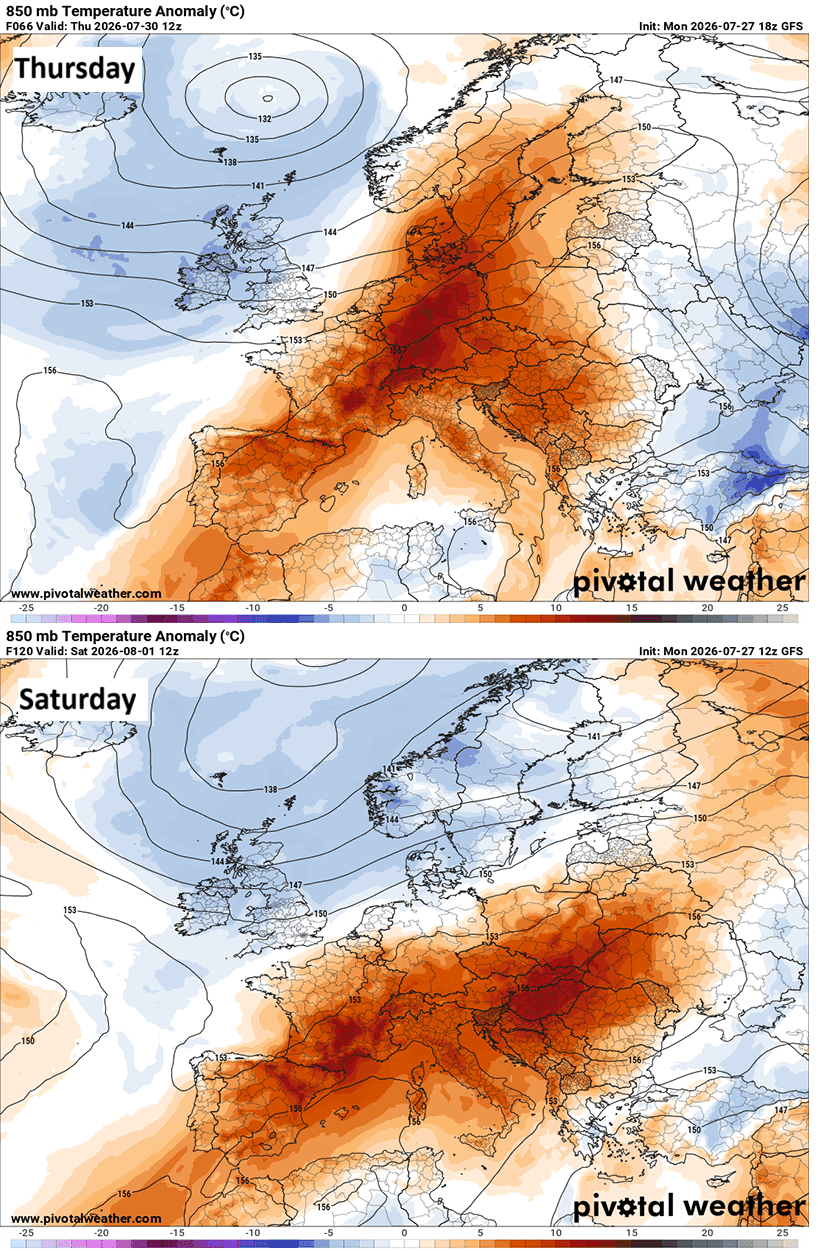
Forecasters at meteorological centers note that this blocking pattern will remain entrenched over Europe for nearly two weeks. While far northwestern Europe—including northern Scandinavia and parts of the British Isles—will experience near-normal maritime temperatures, the rest of the continent remains locked in a historic climate stress test.
Meteorologists will continue monitoring the evolution of this fourth major heatwave of the season, evaluating whether the Heat Dome will maintain its structural integrity or expand further as mid-August approaches. Residents across the affected zones are advised to stay tuned to local civil defense alerts and updated weather advisories.
