

As the twenty-first century progresses, metropolitan regions worldwide face a complex triad of challenges: rapid urbanization, climate change, and the imperative to bridge economic and social divides across sprawling peripheries. Few initiatives confront these challenges on the scale of the Grand Paris Express (GPE).
Encompassing 200 kilometers of new, fully automated metro lines, 68 architect-designed stations, and four major orbital routes—alongside the vital expansion of existing arteries—this massive transit infrastructure project is Europe’s largest coordinated public architecture program. Slated for phased completion by 2031, the GPE is much more than a masterclass in civil engineering. It is an ambitious urban renewal strategy designed to fundamentally reshape the geography, identity, and economic vitality of the French capital and its surrounding departments.
Main Facts: Anatomy of a Megaproject
At its core, the Grand Paris Express seeks to decentralize the traditional Paris transport model. Historically, the Paris Metro and regional RER systems operated on a hub-and-spoke model, forcing commuters traveling from one suburb to another to journey inward through central Paris before heading back out. The GPE introduces four new orbital transit lines—Lines 15, 16, 17, and 18—that weave a dense, continuous web across the outer rings of the Île-de-France region, bypassing the city center entirely.
Key Infrastructure Metrics:
- Total Track Length: Approximately 200 kilometers of new metro lines.
- New Stations: 68 state-of-the-art stations, each commissioned through distinct architectural competitions.
- Line Portfolio:
- Line 15: The backbone orbital ring circling Paris.
- Line 16 & 17: Connecting northern hubs like Saint-Denis Pleyel to suburban centers and airports.
- Line 18: Spanning the southwestern corridor from Massy-Palaiseau to Orly Airport and Versailles.
- Line 14 Extension: A critical north-south connector acting as an early backbone.
- Governance and Delivery: Spearheaded by the French public agency Société des Grands Projets (SGP), working in tandem with Île-de-France Mobilités and local municipalities.
What sets the GPE apart from contemporary transit developments globally is its absolute commitment to design excellence. Rather than deploying a uniform corporate aesthetic, every single station has been assigned to a world-renowned architect or emerging studio, often working in close collaboration with landscape architects.
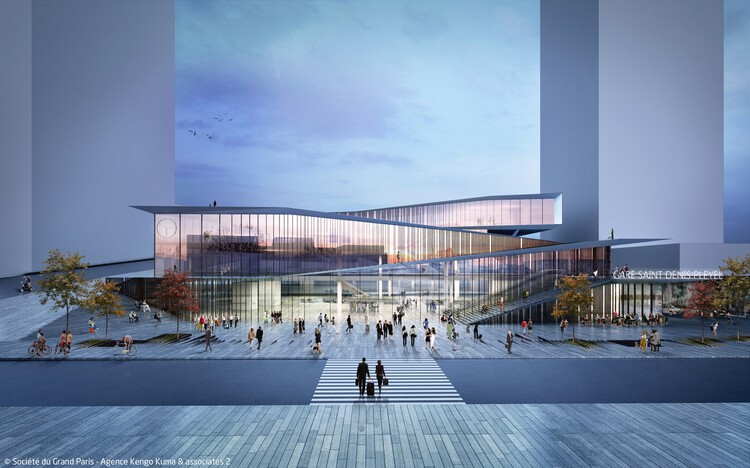
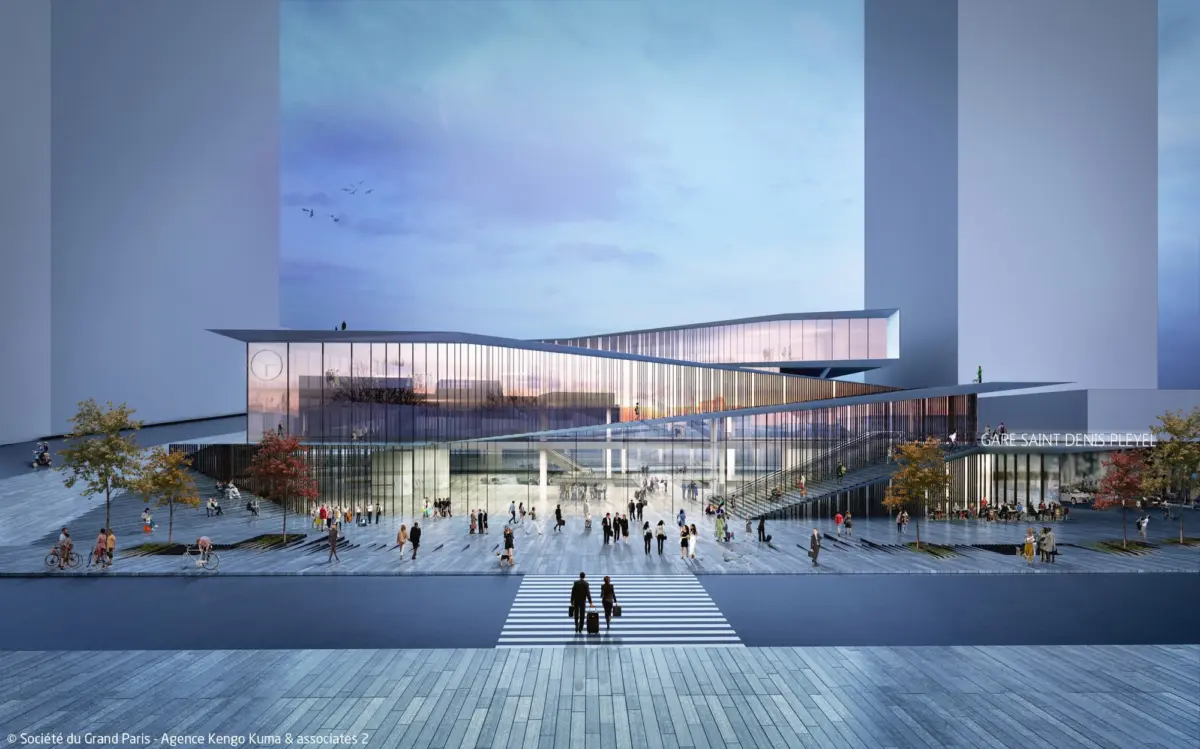
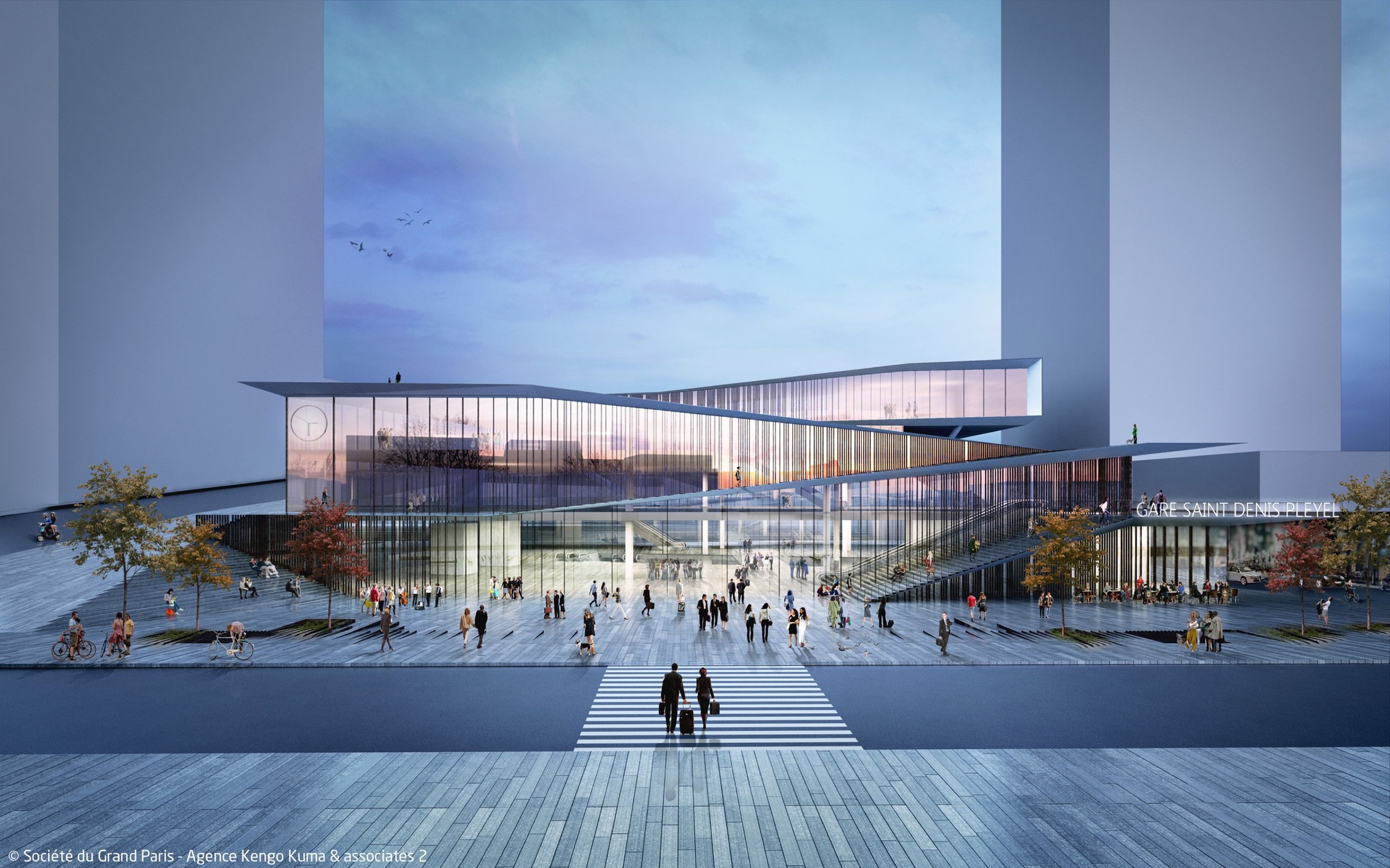
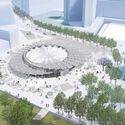
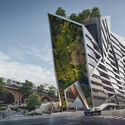
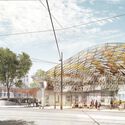
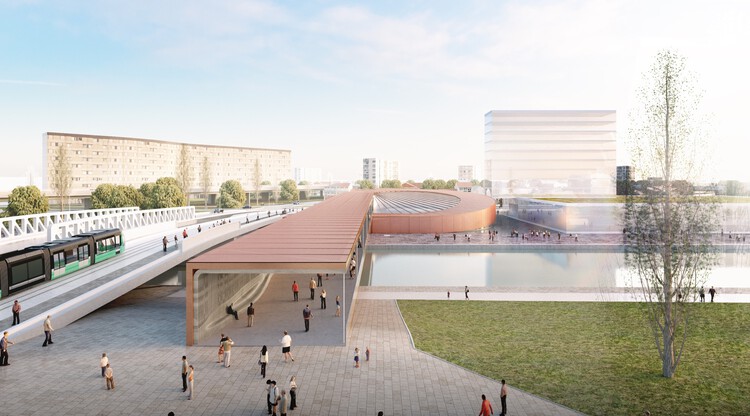
Iconic global practices have left their stamp across the suburban map: Kengo Kuma & Associates designed the striking Gare Saint-Denis Pleyel; BIG (Bjarke Ingels Group) paired with Silvio d’Ascia Architecture for the Pont de Bondy station; Dominique Perrault Architecture shaped the multi-level Villejuif Institut Gustave-Roussy station; and Studio Libeskind engineered the transformative mixed-use area around the Issy-les-Moulineaux station. Additional contributions come from Atelier Novembre, Dietmar Feichtinger Architectes, Valode & Pistre, Marc Barani, and Agence Miralles Tagliabue EMBT.
Chronology: The Phased Rollout (2024–2031)
Delivering a subterranean and surface transit network of this magnitude requires rigorous staging. The GPE’s schedule spans nearly a decade of active commissioning, testing, and public integration.
Phase 1: The Olympic Catalyst (2024)
The first major milestone arrived in June 2024, strategically timed to coincide with the Paris Summer Olympic Games. The northern and southern extensions of Line 14 opened to the public, creating a high-capacity arterial line connecting Saint-Denis–Pleyel in the north to Paris-Orly Airport in the south. This line serves as the primary operational blueprint, offering seamless interchanges with the future Lines 15, 16, 17, and 18.
Phase 2: Testing and Opening the First New Orbital Lines (2026–2027)
- Late 2026: Line 18 is scheduled to open its first operational segment between Massy–Palaiseau and Christ de Saclay. As the most advanced of the entirely new lines, it features automated trains currently undergoing rigorous system testing.
- Throughout 2027: A flurry of milestones will occur. Line 15 South is slated to launch between Pont de Sèvres and Noisy–Champs. Simultaneously, initial segments of Line 16 (linking Saint-Denis–Pleyel to Clichy–Montfermeil) and Line 17 (connecting Saint-Denis–Pleyel to Le Bourget Airport) will welcome their first passengers. Line 18 will also push eastward toward Paris-Orly Airport.
Phase 3: Regional Expansion and Industrial Integration (2028–2030)
- 2028: Line 16 will extend its reach to Noisy–Champs, while Line 17 will stretch to the Parc des Expositions, servicing one of Europe’s largest exhibition and convention complexes.
- 2030: The regional network approaches its final physical boundaries. Line 17 will continue onward to Le Mesnil-Amelot near Charles de Gaulle Airport, while Line 18 will successfully reach its western terminus at Versailles-Chantiers.
Phase 4: Final Completion (2031)
The grand finale of the construction program is scheduled for 2031, when final track connections, system integrations, and surrounding civic spaces will consolidate the 75-kilometer circular super-loop, effectively finishing the Grand Paris Express master plan.
Supporting Data: Sustainability, Urban Integration, and Art
The architectural ambition of the Grand Paris Express is governed by a strict regulatory and design framework. To ensure cohesion across 68 distinct stations, architects must adhere to a comprehensive manual of architecture guidelines authored by Jacques Ferrier and Pauline Marchetti.
Environmental Performance and Materials
The Ferrier-Marchetti manual dictates strict parameters regarding sustainability, life-cycle carbon footprints, natural lighting optimization, thermal performance, and volumetric efficiency. Stations are engineered to minimize subterranean energy consumption, utilizing advanced passive ventilation strategies and high-performance, locally sourced materials such as low-carbon concretes and engineered timber.
Public Realm and Real Estate Synergy
Infrastructure investment under the SGP is directly paired with real estate and public space development. By 2030, over 100 coordinated real estate projects will materialize around the new stations, generating residential housing, commercial hubs, research incubators, and public plazas.
Urban planning frameworks explicitly prioritize pedestrian pathways, cycling infrastructure, and soft mobility networks. Traditional surface bus networks are being systematically re-routed to terminate at GPE stations, reducing vehicular congestion and knitting formerly isolated commuter towns into walkable, human-scaled civic nodes.
The Cultural Dimension: A Museum Underground
In a nod to Paris’s rich artistic heritage, the SGP has integrated a unique cultural initiative into the network: one contemporary art piece per station, resulting in a collection of roughly 70 site-specific installations, sculptures, and large-scale platform illustrations by internationally renowned artists. This integration ensures that transit spaces function simultaneously as public galleries, enriching the daily commute with high culture.
Official Responses and Stakeholder Perspectives
The realization of a project as complex as the Grand Paris Express requires continuous coordination between national agencies, municipal leaders, transport operators, and architectural visionaries.
- Société des Grands Projets (SGP): The public agency driving the buildout emphasizes that the GPE is fundamentally a social equalizer. Representatives have consistently noted that the project dismantles the historical barrier between central Paris and its peripheral banlieues, transforming neglected post-industrial zones into vibrant hubs of economic innovation.
- Île-de-France Mobilités: Regional transit authorities have highlighted the operational triumph of the automated network. By removing human error from train operations, the system guarantees high-frequency intervals, exceptional reliability, and reduced operational overhead, setting a new benchmark for European mass transit.
- The Architectural Community: Architects involved in the project have praised the SGP’s decision to utilize open competitions rather than centralized bureaucratic design. Speaking on his firm’s work on the Saint-Denis Pleyel station, Kengo Kuma remarked that the station was conceived not merely as a machine for transit, but as a three-dimensional public square—a porous, welcoming gateway that knits together disparate urban fabrics through warm, organic geometries and local timber construction.
Implications: A Global Paradigm for Metropolitan Transit
The implications of the Grand Paris Express extend far beyond the borders of France. As global metropolises grapple with car dependency and spatial inequality, the GPE offers a compelling new paradigm for urban development.
- Decentralized Economic Growth: By connecting suburban research clusters, universities, and commercial zones directly to one another—without forcing transit through a central CBD—the GPE stimulates polycentric growth. Suburban innovation hubs, such as the Paris-Saclay scientific cluster, stand to gain immense competitive advantages.
- Infrastructure as Civic Monument: The project proves that mass transit need utilitarian compromises. By investing in world-class architecture and contemporary art, Paris elevates mundane commuter experiences into moments of civic pride, demonstrating that public infrastructure can successfully double as high public art.
- A Global Wave of Transit Renewal: The philosophy underpinning the GPE is already inspiring similar megaprojects globally. Recent international benchmarks mirror this shift toward integrated urban mobility:
- In Italy, Park was selected to redesign the ground floor and mezzanine levels of the historic Milano Centrale station, transforming a fascist-era railway monument into a porous contemporary urban platform.
- In Turin, the design proposal for Metro Line 2—led by UNStudio in collaboration with Settanta7, Mijksenaar, Frigorosso, 3BA, and WSP—was championed by an international jury chaired by Dominique Perrault as a "new urban river" weaving 32 stations through the city.
- In Taiwan, Zaha Hadid Architects’ Danjiang Bridge nears completion ahead of its scheduled opening, uniting the banks of the Tamsui River estuary through bold structural engineering.
Ultimately, the Grand Paris Express redefines what a city can be. By the time its final tracks are laid in 2031, it will have rewritten the spatial logic of Île-de-France, proving that thoughtful architecture, sustainable engineering, and visionary transit planning can successfully heal the fractures of the modern metropolis.
