

By Global News Desk
Published: September 11, 2026
Introduction: The Day That Redrew the Map of American Life
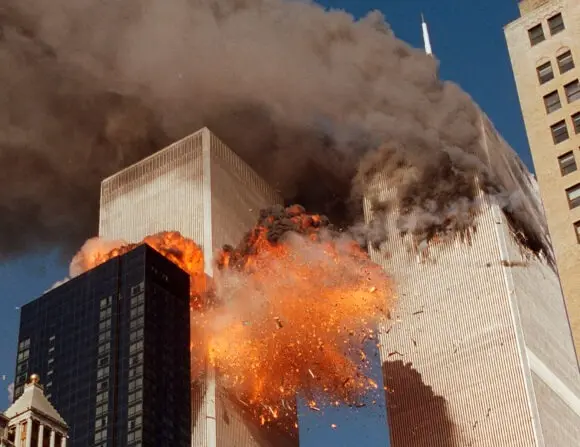
When hijacked commercial airliners sliced into the twin towers of the World Trade Center, crashed into a quiet field in rural western Pennsylvania, and struck the Pentagon just outside Washington, D.C., on a brilliant, cloudless Tuesday morning 25 years ago, the resulting shock waves obliterated any remaining illusions of geographic invulnerability. The ensuing dismay and grief radiated far past downtown Manhattan, enveloping communities large and small across the United States.
It was an unwanted moment of horrifying togetherness. Americans in tiny rural townships and sprawling metropolitan hubs alike felt an immediate, jarring fracture in their collective sense of safety and their perceived place in the world. Hearts broke nationwide—not only for those who lost family and friends, but among complete strangers mourning the anonymous dead.
A quarter of a century later, those profound tremors still linger. Every citizen of the United States lives today in a post-9/11 reality characterized by entrenched security strictures, ubiquitous surveillance, and hardened public infrastructure. Yet, a fundamental paradox defines this anniversary: Americans do not all live in the same post-9/11 world.
The meaning of the attacks and their cascading aftermath has splintered. Chronological distance, political alignments, and deeply personal experiences have ensured that there is no longer a single, unified national viewpoint. Instead, the legacy of September 11, 2001, has transformed into a complex tapestry of meaning and grief—one as diverse and fractured as the nation itself.
Chronology of a Fractured Era: From Shock to Surveillance State
To understand how the American consciousness fractured, one must trace the timeline of policy, panic, and structural transformation that followed the initial tragedy.
- September 11, 2001: Nineteen terrorists associated with al-Qaeda hijack four commercial airplanes, executing coordinated suicide attacks against strategic targets in the United States. Nearly 3,000 lives are lost, instantly transforming national security priorities.
- Late 2001 – 2002: In the immediate wake of the attacks, the U.S. government launches the War in Afghanistan. Domestically, Congress passes the USA PATRIOT Act, vastly expanding government surveillance powers, while the federal government establishes the Transportation Security Administration (TSA).
- 2002: The Department of Justice implements the National Security Entry-Exit Registration System (NSEERS), compelling non-citizen males over the age of 16 from 25 predominantly Muslim nations to register with immigration authorities—a move heavily criticized as religious and racial profiling.
- 2003: The United States invades Iraq, broadening the scope of the post-9/11 global "War on Terror" amid disputed claims regarding weapons of mass destruction.
- 2003 – 2005: The Department of Homeland Security (DHS) is formally organized, consolidating numerous federal agencies. Immigration and Customs Enforcement (ICE) is created, laying the institutional groundwork for future aggressive enforcement crackdowns.
- The Ensuing Decades: NSEERS is eventually dismantled, but the everyday markers of heightened security—metal detectors, gate passes, expanded border patrols, and heightened racial profiling—become permanently embedded in American life.
Supporting Data and Sociological Realities: The Power of Networks
How an individual perceives September 11 depends heavily on their proximity to the event and the social networks they inhabit.
"The same event, whether it’s a disaster or a shock or even the recovery process, is completely different depending on your network," explains Daniel Aldrich, a professor at Northeastern University who studies community resilience and disaster recovery.
These networks operate across distinct, overlapping layers:
- Direct Losses: Families and friends of those killed in the towers, the Pentagon, and United Flight 93.
- First Responders and Clean-up Crews: Firefighters, police officers, construction workers, and volunteers who spent months breathing toxic air while clearing the rubble at Ground Zero.
- Military Families: Individuals motivated to enlist in the armed forces, deploying to multiple tours in Iraq and Afghanistan.
- Economic Casualties: Workers who lost their livelihoods in hard-hit sectors such as commercial aviation, tourism, and hospitality.
- Targeted Communities: Immigrants, Muslims, Middle Easterners, Sikhs, and other religious and ethnic minorities subjected to heightened surveillance, xenophobia, and suspicion.
The Intergenerational Ripple Effect
For many families, these networks intersect in deeply personal ways. Jenna McPartland was expecting her first child with her husband, Ariel Jacobs, when he was killed at the World Trade Center. Days later, she gave birth to their son, Gabriel—a child whose life was irrevocably altered by a historical catastrophe he never consciously experienced.
Over the next 25 years, McPartland’s life evolved. She remarried twice, welcomed two more sons who had no biological connection to Jacobs, and spent a decade as a stepmother. Yet, she meticulously ensured that Gabriel remained connected to his father’s family, and that her younger children understood 9/11 as a foundational chapter of their family history.
"My middle boy wrote his college entrance essay on being the child of a 9/11 family, but not being the ‘9/11 kid,’ and how he wouldn’t exist had his brother’s dad not died," says McPartland, now a 52-year-old chef and restaurant owner in Fairfield, Connecticut. "They all acknowledge it in different ways, they feel it in different ways, they sense it in their lives in different ways."
Official Responses and Systemic Implications
The geopolitical and domestic policy choices made by the U.S. government in the wake of the attacks fundamentally altered the relationship between the citizen and the state. The creation of the Department of Homeland Security, the institutionalization of the TSA, and the expansion of agencies like ICE permanently hardened American civil society.
Jayesh Rathod, a professor at Georgetown Law, notes that the panic following the attacks institutionalized a permanent state of exception.
"The idea that there’s this outside threat in the form of people who look like this or from particular countries really fueled the reorganization of the Department of Homeland Security and has continued to fuel the ways in which we’ve funded and contributed to the securitization of our immigration system and society more broadly," Rathod observes. "The idea that we need to do everything possible to protect ourselves from whatever this threat is—this amorphous threat—has become totally normalized."
This securitization frequently targeted innocent individuals. Four days after the attacks, Balbir Singh Sodhi—a Sikh gas station owner in Arizona who wore a turban and a beard—was shot and killed by a gunman who assumed he was Arab. Sodhi’s tragic death was an early indicator of the violent xenophobia unleashed across the country.
Vida Lashgari, a 21-year-old college student in California born years after the attacks, reflects on how this legacy filtered down through her family. With a Mexican mother and a Persian father, Lashgari grew up acutely aware of how the post-9/11 landscape altered the lives of Middle Easterners and South Asians.
"My dad, and many Middle Easterners, became more hyper-aware of their appearance, their difference in the way they spoke and dressed in the U.S. after 9/11," Lashgari says. "And that kind of fear, I think, has carried throughout the Middle Eastern community since then."
Shifting Memory: From Lived Experience to Historical Textbook
For Lashgari’s generation, 9/11 is strictly a historical event—studied in classrooms alongside Pearl Harbor and the American Civil War. They belong to a cohort that finds it baffling that non-passengers were once permitted to walk loved ones all the way to airport boarding gates. They know the facts of the day, but they did not experience the sudden, terrifying fracture of a world divided cleanly into "before" and "after."
Paradoxically, however, this younger generation found a conceptual bridge to understanding 9/11 through another modern catastrophe: the COVID-19 pandemic.
"The pandemic shook up so many lives, especially in my generation who had not experienced some sort of drastic change like that… I think it definitely gave me perspective that there are some things that we can’t be protected from," Lashgari notes, adding that COVID "was, to this day, the closest I’ve ever felt to my world changing overnight and knowing I had no control over it."
The Evolution of Collective Memory
As time advances, historic events inevitably lose their immediacy, pushed aside by newer crises, political realignments, and generational turnover. Amy Sodaro, a sociology professor at the Borough of Manhattan Community College who studies memorials and museums, points out that this fading is a natural mechanism of history.
Initially, Sodaro believed the trauma of September 11 would permanently dictate the trajectory of her life and American society. Instead, subsequent geopolitical shocks, domestic political polarization, and monumental cultural shifts reshaped the nation’s focus.
It is precisely because collective memory fades that investments in museums, educational initiatives, and formal memorials remain vital, Sodaro argues. These institutions serve as anchors, fighting against the natural erosion of time.
Ultimately, it is "these other geopolitical events and changes to our world that have changed the face of 9/11 in historical memory at the collective level—and I think also at the level of individuals," Sodaro concludes. Twenty-five years later, America remains united by the memory of the fall, but divided by the myriad ways it learned to live among the ruins.
