

By Global News Desk
Updated: September 2026
Executive Summary & Main Facts
Global energy security faced its most severe test in years over the weekend, as a coordinated escalation of maritime and territorial attacks rippled across the Middle East. The latest wave of violence—featuring missile strikes on Saudi infrastructure, explosions aboard commercial vessels in vital shipping lanes, and strategic territorial advances by Yemen’s Houthi movement—has brought the economic fallout of the ongoing six-month regional conflict directly to the doorsteps of consumers worldwide.
The developments threaten to upend critical global supply chains just as oil markets prepare for Monday’s opening bell. Analysts anticipate significant upward pressure on crude prices following a weekend that placed the infrastructure of the world’s premier petroleum exporter, Saudi Arabia, squarely in the crosshairs.
Key developments shaping the crisis include:
- Attacks on Vital Energy Arteries: A strategic east-west Saudi pipeline, crucial for bypassing the blockaded Strait of Hormuz, remains offline following drone strikes late last week.
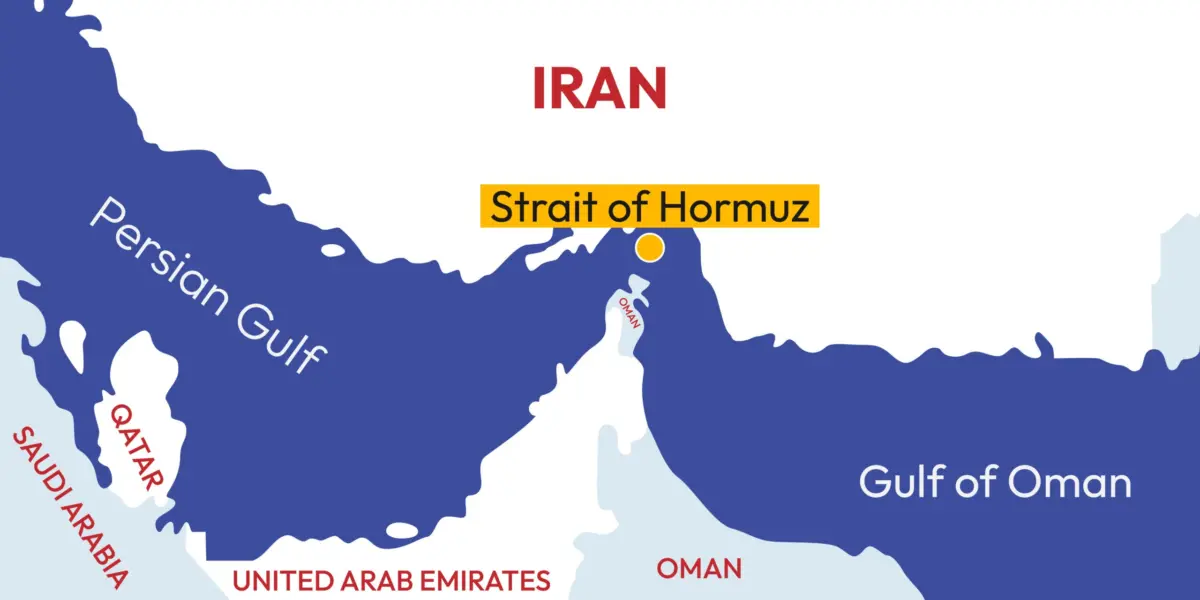
- Escalating Maritime Insecurity: Commercial shipping in both the Strait of Hormuz and the Bab El-Mandeb strait suffered direct hits, resulting in vessel evacuations, fires, and casualties.
- Houthi Territorial Expansion: The capture of Perim Island by Houthi forces places a chokehold on the southern entrance to the Red Sea.
- Domestic Energy Pressures: In the United States, retail diesel prices climbed to a record-breaking $6.20 per gallon, compounding domestic political sensitivities.
- Diplomatic Setbacks: A high-stakes regional meeting in Oman, intended to address shipping security and foster dialogue, was indefinitely postponed "in the interests of consensus."
Chronology of the Weekend Escalation
The rapid deterioration of security across the Arabian Peninsula unfolded over a tense 48-hour window, compounding weeks of simmering hostilities.
Friday: Infrastructure Crippled and Strategic Chokepoints Seized
The groundwork for the weekend crisis was laid on Friday when a series of coordinated drone strikes targeted the heart of Saudi Arabia’s energy grid. The attacks knocked out the 1,200-kilometer (745-mile) east-west pipeline—an essential conduit designed to transport crude oil across the Arabian Peninsula to Red Sea ports, thereby circumventing the volatile Strait of Hormuz.
Simultaneously, hundreds of miles to the south, Houthi forces completed a strategic offensive, capturing Perim Island. Situated squarely in the middle of the Bab El-Mandeb strait—the "Gate of Tears" controlling the southern mouth of the Red Sea—this tactical gain granted the group unprecedented leverage over international maritime traffic.
Sunday: Maritime Strikes and Diplomatic Collapse
As the region braced for fallout, Sunday brought fresh kinetic strikes on multiple fronts:
- The Strait of Hormuz: The British maritime security agency UKMTO reported that a commercial vessel was struck by an airborne projectile while transiting the vital waterway. The impact triggered a major onboard fire and forced the immediate evacuation of the crew.
- Iranian Territorial Waters: Concurrently, Iranian state media reported that an Iranian commercial vessel was struck off its coast, resulting in one fatality and four injuries among the crew.
- Southern Saudi Arabia: State media in Riyadh broadcast footage of civilian structural damage to residential homes and a mosque in Jazan province, resulting from cross-border projectiles. The Houthis separately claimed responsibility for targeting a Saudi military base in an adjacent province.
Diplomatic efforts suffered a parallel blow. Iranian officials had signaled their intent to travel to Muscat on Monday to present a localized shipping security agreement mediated by Oman. However, late Sunday, Omani Foreign Minister Sayyid Badr Albusaidi announced the postponement of the regional summit. Despite commitments from Iraq, Qatar, and Saudi Arabia to participate, and a parallel refusal by Bahrain to engage with Iranian delegations, the talks collapsed under the weight of regional friction.
Supporting Data & Market Metrics
The convergence of pipeline outages, maritime blockades, and stalled diplomacy has pushed global energy metrics to alarming thresholds.
+-------------------------------------------------------------------+
|                  CRITICAL ENERGY & MARKET METRICS                 |
+----------------------------------+--------------------------------+
| Metric                           | Current Status                 |
+----------------------------------+--------------------------------+
| U.S. Retail Diesel Price         | > $6.20 per gallon (All-time)  |
| Global Benchmark Crude           | > $100 per barrel              |
| Saudi Red Sea Storage (Yanbu)    | 5 to 7 days remaining supply   |
| At-Risk Global Oil Supply        | Up to 4% of worldwide volume   |
| Pipeline Repair Estimates        | Days to weeks (Conflicting)    |
+----------------------------------+--------------------------------+
Oil Markets and Supply Vulnerabilities
Crude benchmarks broke the psychologically significant $100-per-barrel threshold last week for the first time since July. Energy traders and international buyers informed Reuters that Riyadh’s emergency stockpiles at its Red Sea port of Yanbu are sufficient to sustain normal export volumes for a mere five to seven days if the bombed east-west pipeline remains non-operational.
Once these reserves are exhausted, approximately 4% of total global oil supply could be effectively severed from international markets. This shortfall comes on top of millions of barrels per day already lost due to restricted transit through the blockaded Strait of Hormuz.
Repair timelines for the damaged pipeline remain highly uncertain. While satellite imagery reveals dense plumes of smoke billowing from multiple nodes along the infrastructure corridor, Saudi authorities have yet to release a comprehensive damage assessment. Industry sources offer divergent estimates, suggesting repairs could take anywhere from a few days to several weeks.
The Consumer Impact
The shockwaves are rapidly translating into domestic economic pain. In the United States, where inflation and fuel costs remain acute political vulnerabilities for the administration, retail diesel prices surged past $6.20 a gallon on Sunday, setting yet another historic record.
Official Responses & Diplomatic Manuevering
As the geopolitical crisis deepens, reactions from Washington, Riyadh, Tehran, and regional capitals reveal profound strategic calculations and widening diplomatic divides.
Washington’s Dilemma and "Operation Epic Fury"
The United States finds itself ensnared in a strategic paradox. Six months after President Donald Trump launched "Operation Epic Fury," primary military objectives—including degrading Iran’s nuclear program, halting its regional aggression, and fostering conditions for internal regime change—remain largely unfulfilled. Despite absorbing severe economic and military blows, Tehran has demonstrated resilience, retaining aspirations to emerge from the conflict with enhanced regional leverage, including the capacity to extract transit tolls from ships navigating the Strait of Hormuz.
Washington’s immediate policy dilemma centers on how to support its traditional Saudi allies and safeguard international sea lanes without entangling U.S. forces in an open-ended, multi-front war.
Diplomatic channels behind the scenes reflect these tensions. Sources indicate that Saudi Arabia’s de facto ruler, Crown Prince Mohammed bin Salman, placed an urgent phone call to President Trump on Thursday seeking direct military assistance to beat back the Houthi advance. Washington reportedly offered intelligence-sharing support, stopping short of direct kinetic intervention.
President Trump acknowledged the conversation on Saturday, noting simultaneously that Houthi representatives had also reached out to the U.S. administration with demands that Washington remain neutral in the internal Yemeni conflict.
Tehran’s Hardline Stance
Iran’s diplomatic posture remains uncompromising. In a frank interview with the London-based pan-Arab outlet Al-Arabi Al-Jadeed, Iranian Foreign Minister Abbas Araqchi stated unequivocally that Tehran has no intention of reopening the Strait of Hormuz—regardless of any localized transit agreements negotiated with Oman—until the United States meets Tehran’s core political and economic demands.
The postponement of the Muscat talks highlights the deep distrust plaguing the region. While Iranian state media attributed the delay to a joint decision made in coordination with Oman at the behest of unnamed regional actors, the failure to establish baseline dialogue leaves the region hurtling toward deeper confrontation.
Implications for Global Stability and Regional Security
The convergence of systemic energy disruptions and asymmetric warfare creates profound long-term implications for the Middle East and the broader international community.
1. The Economic Squeeze on Gulf States
For regional monarchies, the current crisis exposes the limits of conventional deterrence. Southern Saudi cities face near-constant air defense alerts, and critical economic infrastructure has proven vulnerable to low-cost asymmetric drone technology. Gulf states are increasingly forced to choose between absorbing escalating economic damage to infrastructure and trade, or opening politically fraught diplomatic channels with Iran and its regional proxies.
2. The Resurgence of the Yemeni Theater
The Houthi movement’s rapid military consolidation along the Red Sea coast—highlighted by the seizure of Perim Island—marks a dangerous evolution in the decade-long Yemeni conflict. Long viewed as a localized insurgency, the movement has successfully leveraged the broader regional war to project power across critical international trade corridors, effectively holding global supply chains hostage.
3. Fragility of the Global Recovery
With energy prices remaining elevated and key maritime chokepoints contested, the global economy faces renewed stagflationary pressures. As geopolitical risk premiums become baked into commodity markets, central banks and industrial consumers worldwide must brace for prolonged volatility. Unless a breakthrough occurs in backchannel diplomacy—or effective security frameworks are established to protect transit through the Bab El-Mandeb and the Strait of Hormuz—the Middle East’s widening conflict will continue to exact a heavy toll far beyond its borders.
