

By the Editorial Design Desk
For decades, the standard blueprint for kitchen illumination relied almost entirely on the harsh, utility-driven glare of overhead recessed fixtures and stark under-cabinet strip lighting. While undeniably functional for chopping vegetables or scrubbing pots, these clinical lighting schemes often stripped the heart of the home of its warmth and personality, leaving spaces feeling more like commercial laboratories than inviting living areas.
In recent years, a major counter-movement has taken over interior design circles. Homeowners and high-end designers alike are increasingly abandoning sterile overhead lighting in favor of cozy, residential touches—most notably, the placement of decorative table lamps directly onto kitchen countertops.

While this trend may feel like a thoroughly modern, TikTok-fueled aesthetic born from the desire for "cozy luxury" and layered spaces, archival photographic evidence reveals that Hollywood royalty got there first. A newly resurfaced snapshot of the 1992 kitchen shared by iconic actress Goldie Hawn and longtime partner Kurt Russell proves that the secret to a beautifully ambient kitchen was perfected over thirty years ago.
Main Facts: The Rediscovered 1992 Blueprint
Long before interior influencers began styling their marble countertops with cordless lamps and pleated shades, Goldie Hawn and Kurt Russell were already executing the look with effortless style.
Archival photographs taken in 1992 offer a rare glimpse into the couple’s domestic life, showcasing a kitchen packed with the kind of layered, lived-in charm that contemporary homeowners spend thousands of dollars trying to replicate. The space featured classic blue-and-white checkerboard floor tiles, rustic open shelving crowded with everyday dishware, and a professional-grade stainless-steel range.
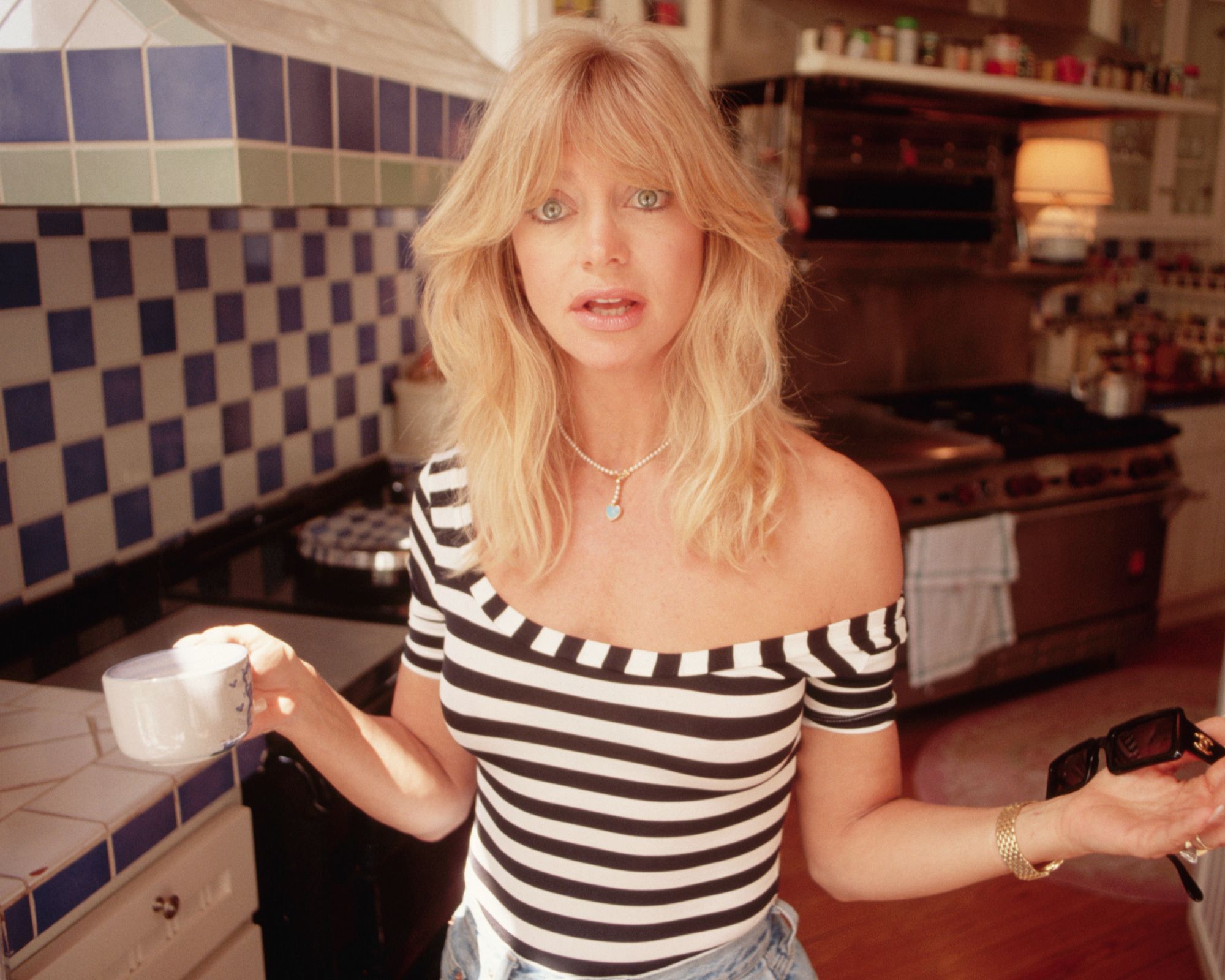
Yet, what truly elevates the space—and sets it apart as a masterclass in interior styling—is a small, unassuming table lamp sitting directly on the countertop, positioned just behind the stove.
In an era defined by hyper-practical kitchen design where lighting was treated as an afterthought, this single lighting fixture introduced an unexpected layer of softness. The warm glow of the lamp caught the wooden and painted kitchen cabinets directly behind the stove, creating a gentle halo effect that rivaled the visual impact of the decorative tiles beside it.
Rather than relying on blinding overhead spotlights once the sun went down, Hawn’s kitchen utilized low-level, ambient lighting to create a sense of sanctuary. It is a brilliant design hack that interior experts are only now fully championing as the gold standard of modern kitchen styling.
Chronology: The Evolution of Kitchen Lighting
To understand why Hawn’s 1992 design choice was so revolutionary, it helps to trace the historical timeline of how we light our kitchens:
- The Mid-Century Utility Era (1950s–1970s): Kitchens were treated strictly as workspaces. Lighting consisted of single flush-mount ceiling fixtures, industrial fluorescent tube lights, or utilitarian chrome tracks designed purely for maximum visibility.
- The Rise of Recessed Lighting (1980s–1990s): The proliferation of drywall-heavy suburban construction brought "can lights" or recessed lighting into vogue. While cleaner in appearance, this trend eventually led to over-lit, shadowless environments lacking spatial depth. Even during this peak era of harsh overhead lighting, anomalies like Hawn and Russell’s 1992 kitchen quietly existed, prioritizing atmosphere over clinical brightness.
- The Minimalist Revolution (2000s–2010s): Sleek, ultra-modern kitchens dominated catalogs. Hidden LED strips, minimalist pendant clusters, and high-gloss surfaces amplified brightness, pushing coziness entirely out of the culinary space.
- The Countertop Lamp Renaissance (Present Day): Driven by the shift toward open-plan living and the multi-functional role of the kitchen—which now serves as a hub for homework, socializing, and evening relaxation—homeowners are demanding residential-style lighting. The tabletop lamp has officially migrated from the living room to the kitchen island and perimeter countertops.
Supporting Data: Shop the Look & Modern Iterations
Recreating Goldie Hawn’s effortless ’90s kitchen aesthetic does not require a complete structural renovation. Designers emphasize that introducing a low-profile, shaded lamp to a kitchen counter is one of the highest-impact, lowest-effort updates a homeowner can make.
Current market trends highlight several standout fixtures capable of delivering that precise historical charm with modern technological conveniences:
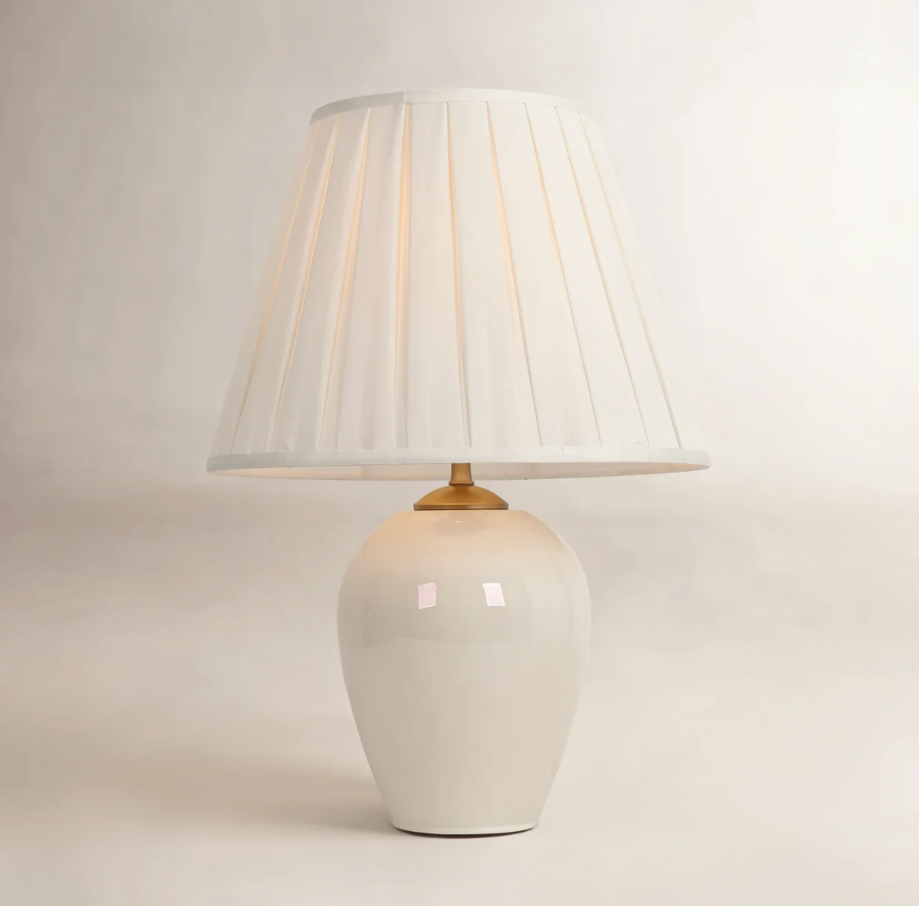
1. The Classic Pleated Look: Ravenna Dimmable Table Lamp (Wayfair)
- Design Profile: Features a traditional fabric pleated shade and an elegant silhouette.
- Why it works: The pleats diffuse light softly downward and outward, casting a warm glow across backsplashes and cabinetry without creating a blinding glare.
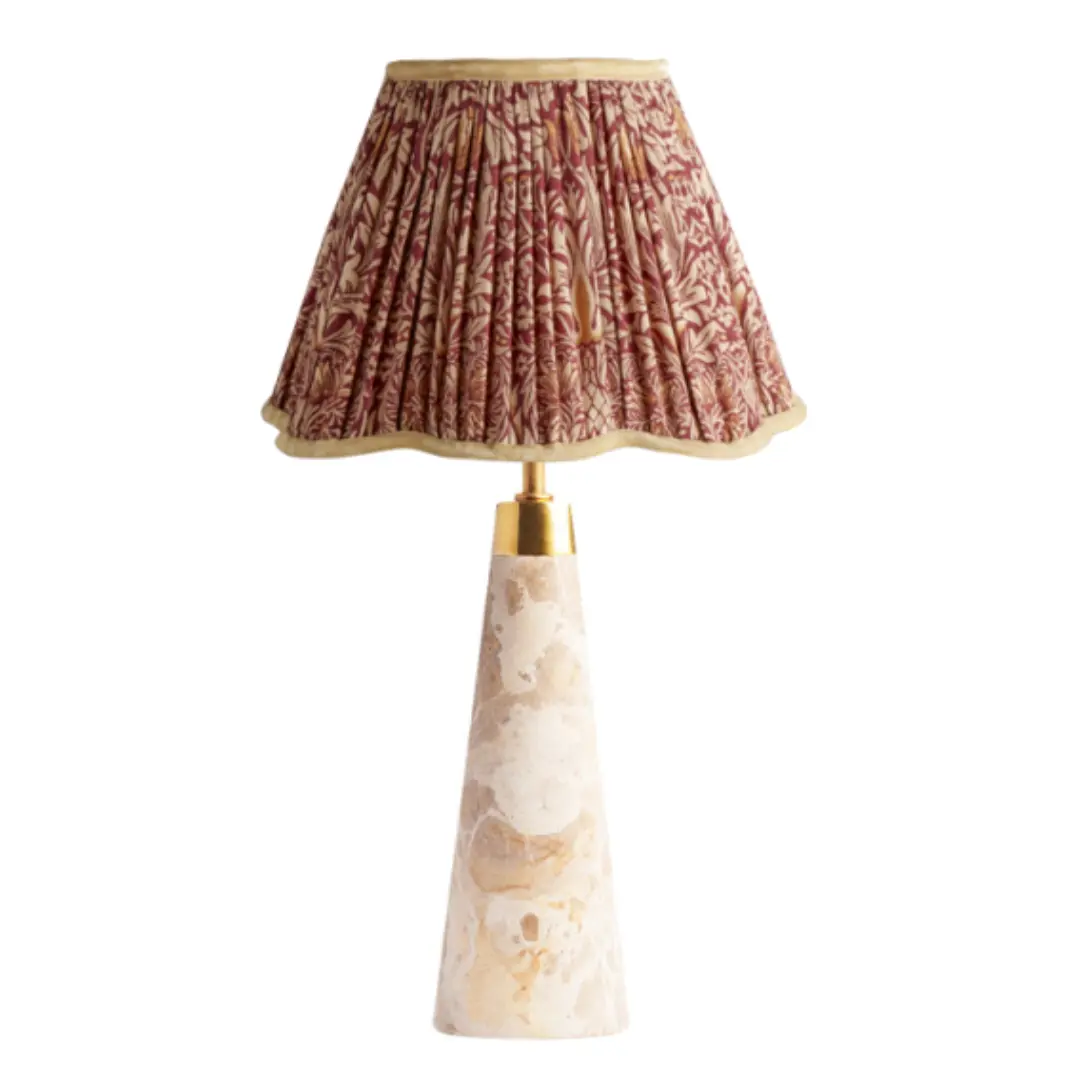
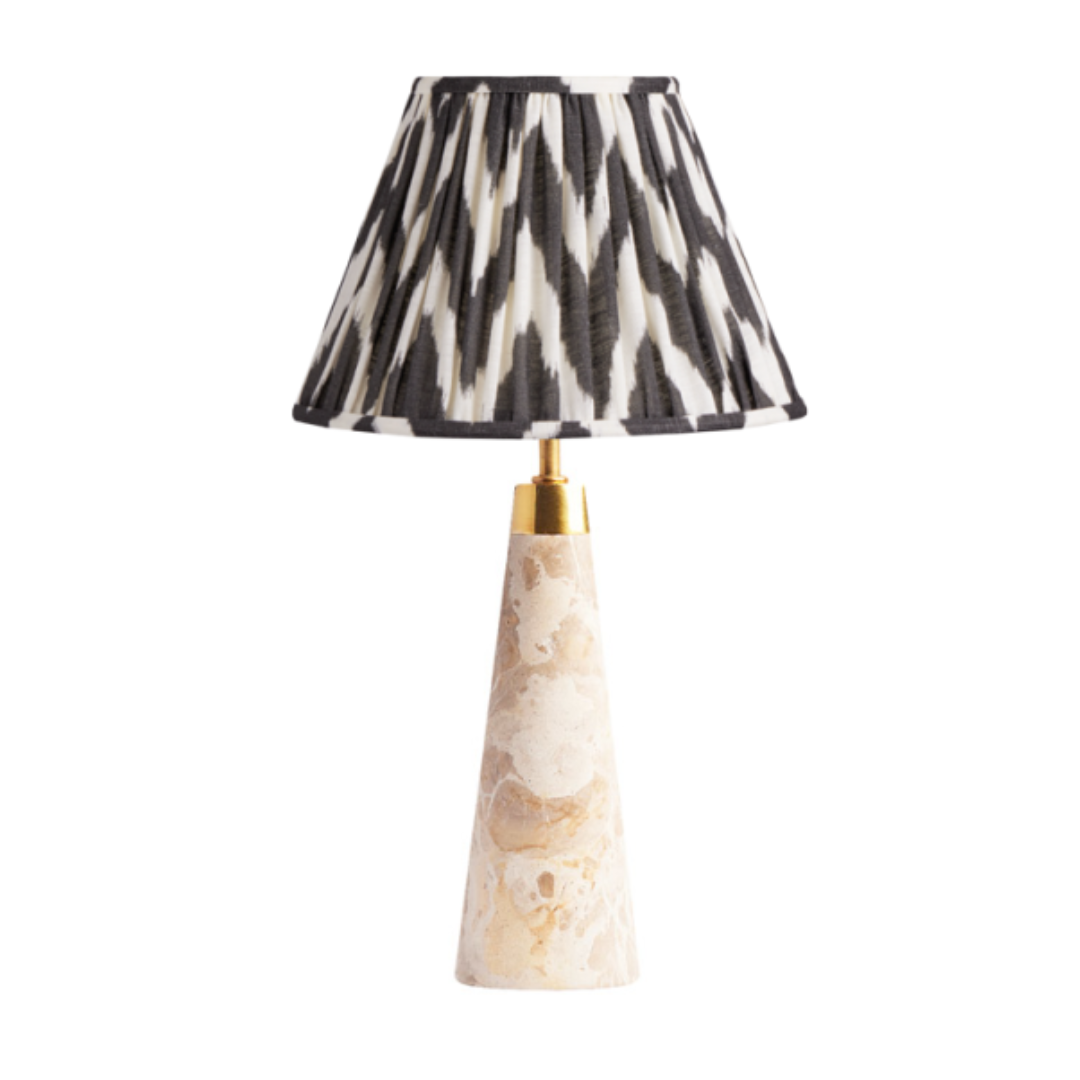
2. The Editor’s Choice: Marmaron Cordless Table Lamp (Pooky)
- Design Profile: Pairs a weighty grey marble base with a striking patterned shade (such as an ikat or silk print).
- Why it works: Being completely cordless, it eliminates the clutter of unsightly wires near water sources and appliances, allowing it to be tucked easily into tight corners or onto busy kitchen islands.
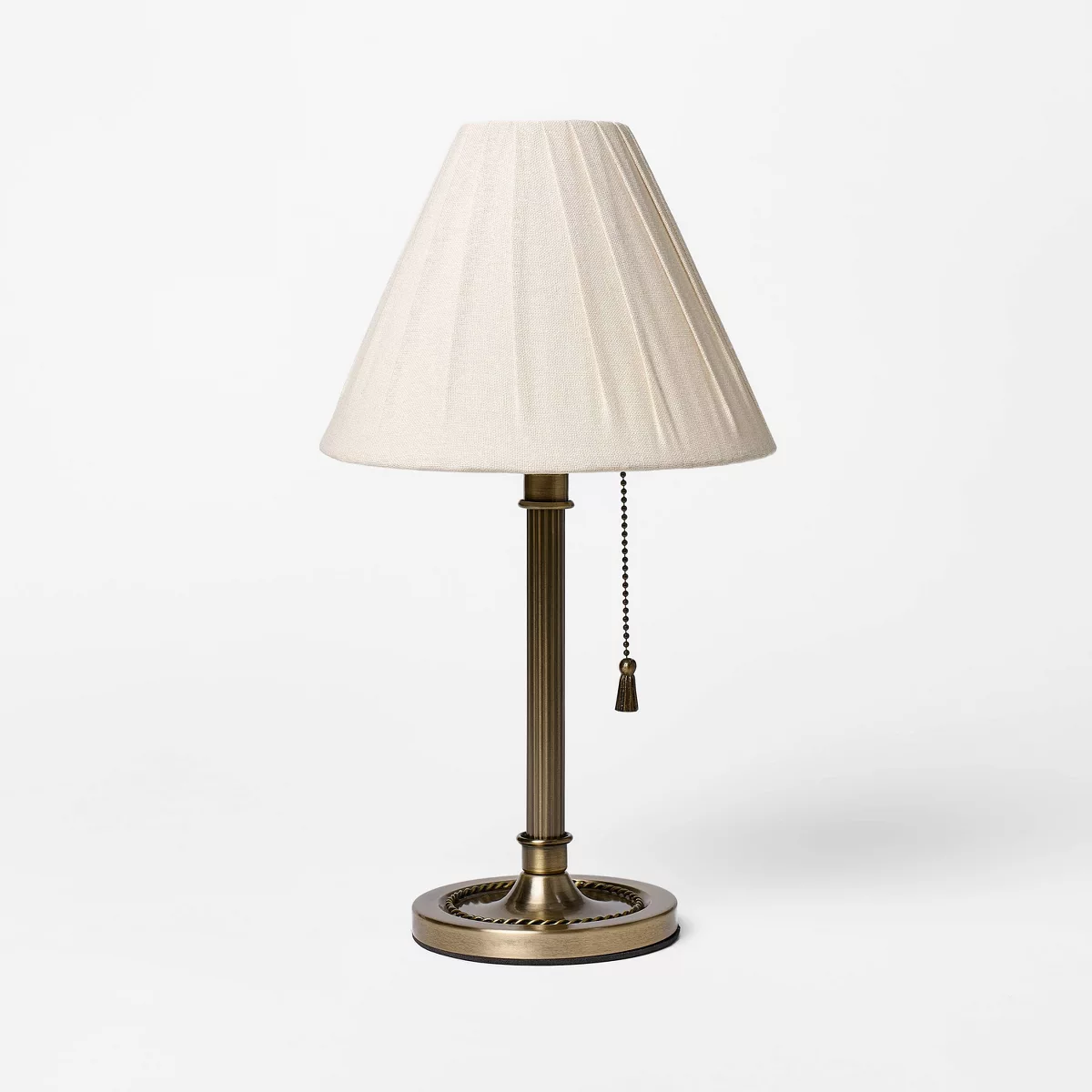
3. Transitional Elegance: Threshold Fluted Brass Table Lamp (Target, Designed with Studio McGee)
- Design Profile: Features turned brass, subtle stone detailing, and a softly shaded light.
- Why it works: It adds a collected, antique feel to smaller countertops, ensuring the space looks curated rather than overly staged.
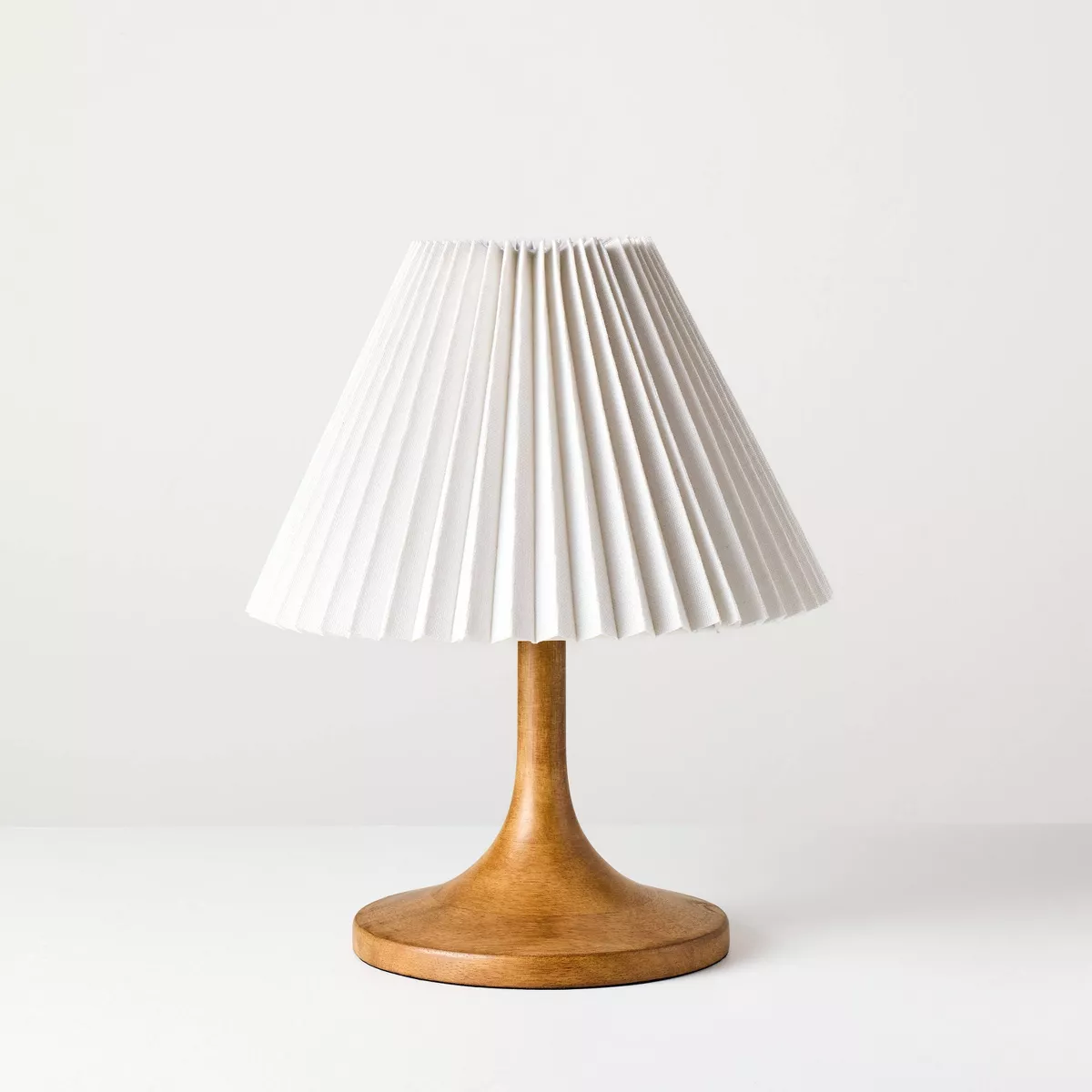
4. Warm & Natural: Wooden Mid-Tone Lamp with Pleated Shade (Hearth & Hand with Magnolia)
- Design Profile: Combines a warm wooden base with a classic empire shade.
- Why it works: Introduces organic textures that complement wooden cabinetry and cutting boards, enhancing the rustic charm of a country-style or transitional kitchen.
5. Playful Scallops: Ceramic Base Table Lamp with Wavy Shade (Threshold)
- Design Profile: A fresh, contemporary take featuring a vibrant ceramic base and a sculptural wavy shade.
- Why it works: It serves as a statement art piece during daylight hours and morphs into an inviting mood light after dark.
Official Responses and Expert Insights
Industry professionals are quick to praise the enduring brilliance of low-level ambient lighting in non-traditional spaces.
"Light is much more than simply illumination; it’s one of the key elements that can transform the feel of a room with the flick of a switch," notes Tom Raffield, founder and creative director of the renowned sustainable lighting brand bearing his name. "Table lamps, in particular, bring a softer, warmer quality to a space, creating little pools of light that can make a room feel instantly more inviting."
Raffield points out that Hawn and Russell’s historic design choice succeeded because it established a localized focal point. Instead of bathing the entire room in uniform brightness, the countertop lamp carved out a cozy, intimate zone.
Furthermore, Raffield advocates for a layered approach to residential lighting schemes: "Varying the height and position of the lamps helps to create those layers, while similar materials and forms can help the different sources feel connected."
Applying this philosophy to the modern kitchen means looking beyond the single kitchen island pendant. Homeowners are encouraged to place a small lamp on an end countertop, position another on an open shelf displaying dishware, or tuck a compact cordless lamp into a darker corner.
"The point isn’t to replace practical lighting entirely," design analysts note, "but to have another layer to turn on when the evening begins, and the room no longer needs to be lit for heavy cooking."
Implications: The Enduring Power of Timeless Design
The rediscovery of Goldie Hawn’s 1992 kitchen holds a broader lesson for contemporary interior design: true style is cyclical, and the most enduring trends are often rooted in comfort rather than fleeting novelty.
In an era dominated by fast-moving interior micro-trends propagated by social media algorithms, it is easy to assume that every novel design idea is a product of the current decade. Yet, Hawn’s casual incorporation of a living room staple into a working culinary space demonstrates that intuitive, human-centric design transcends eras.
By prioritizing atmosphere over strict utility, Hawn and Russell anticipated a cultural shift toward making the kitchen feel as emotionally resonant and comfortable as a parlor or den. As homeowners continue to seek sanctuaries within their own four walls, the kitchen lamp stands as a testament to the fact that sometimes, the best interior design advice is hidden in plain sight—quietly illuminating the background of a 1992 photograph, waiting for the rest of the world to catch up.
