

The dawn of 2024 marked a regulatory watershed for California. While public attention has largely focused on the state’s transition to electric lawnmowers and leaf blowers, a far more disruptive regulatory shift is quietly sending shockwaves through the state’s construction, roofing, and specialty contracting industries.
Under Assembly Bill 1346, which was signed into law in 2021, California has officially banned the sale of new small off-road engines (SORE) rated at or below 19 kilowatts—approximately 25 gross horsepower. While the public relations campaign surrounding the legislation touted the environmental benefits of phasing out gas-powered gardening tools, the broad statutory definition of SORE has ensnared an array of critical industrial machinery. Equipment essential to commercial roofing, concrete placement, and general contracting—such as high-pressure pumps, material handlers, tear-off machines, and portable generators—is now facing an existential regulatory squeeze.
Main Facts: The Scope and Mechanics of the SORE Ban
To understand the friction this law has created, one must first understand what is—and is not—permitted under the current regulatory framework.
What is Restricted?
The California Air Resources Board (CARB) defines SORE as spark-ignition engines rated at or below 19 kilowatts (25 horsepower). The ban, which took effect on January 1, 2024, prohibits the sale of new gas-powered equipment utilizing these engines. The scope of this ban extends far beyond residential landscaping, encompassing:
- Roofing Equipment: Gas-powered asphalt pumps, material hoists, tear-off machines, and spray-applied coating pumps.
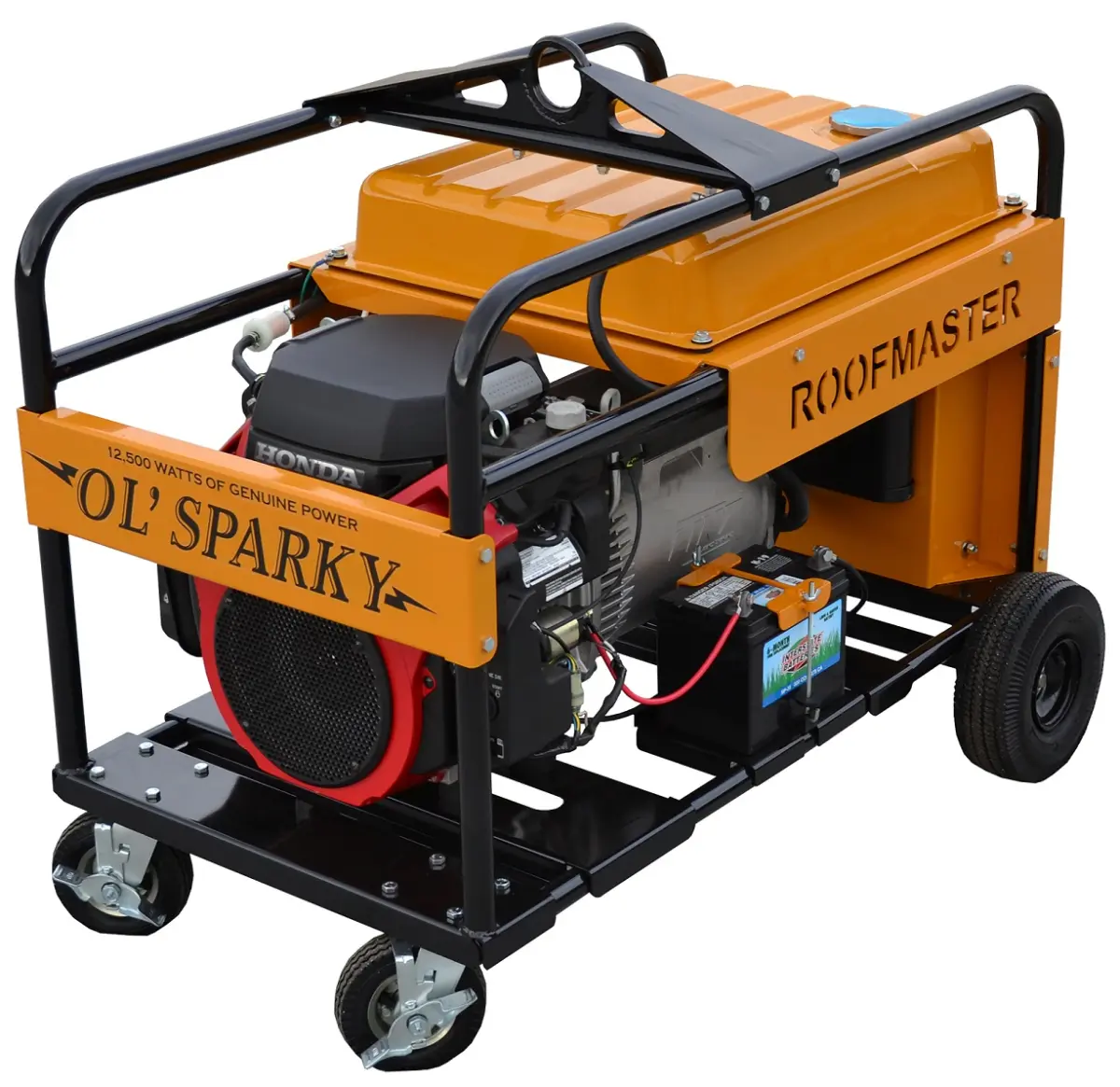
- Power Generation: Portable gasoline generators, which are widely used to power tools on jobsites lacking utility hookups.
- Specialty Industrial Vehicles: Certain utility carts, concrete mixers, pressure washers, and air compressors.
- General Construction Tools: Chainsaws, concrete saws, and weed trimmers.
The "Use vs. Sale" Distinction
It is critical to note that the law does not criminalize the use of existing gas-powered SORE equipment. Contractors and homeowners are legally permitted to continue operating the gas-powered machinery they currently own. However, they can no longer purchase new gas-powered replacements within the state of California once current dealer inventories are exhausted.
The Illusion of the "Construction Exemption"
During the legislative drafting of AB 1346, industry advocates were assured that vital economic sectors, such as agriculture and heavy construction, would be shielded from the most disruptive aspects of the transition. However, the practical application of the rule has revealed a different reality.
While heavy diesel-powered construction equipment remains exempt under separate federal and state categories, smaller support equipment has not escaped the ban. If a piece of machinery relies on a spark-ignition engine under 25 horsepower and does not fall under highly specific, narrow emergency-use exemptions, its sale is prohibited. This has left the roofing sector particularly vulnerable, as much of its specialized application and transport machinery falls directly within this horsepower window.
Chronology: From Assembly Bill 1346 to the 2024 Mandate
The path to the current regulatory environment was paved over several years of legislative action and administrative rulemaking:
[Oct 2021] AB 1346 Signed into Law
   │
[Dec 2021] CARB Adopts SORE Amendments
   │
[2022-2023] Industry Transition & Inventory Stockpiling
   │
[Jan 1, 2024] Ban on New Gas-Powered SORE Sales Takes Effect
   │
[2024-Present] Depletion of Pre-2024 Inventory
October 2021: Legislative Passage
Governor Gavin Newsom signed Assembly Bill 1346 into law. Co-authored by Assemblymembers Marc Berman and Lorena Gonzalez, the bill directed CARB to write regulations to phase out the sale of SORE by 2024, or as soon as CARB determined was technologically and commercially feasible.
December 2021: Administrative Codification
Following the bill’s passage, CARB formally adopted amendments to the state’s SORE regulations. This administrative action set the hard deadline of January 1, 2024, for transitioning to zero-emission standards for most SORE categories. Portable generators were granted a slightly longer runway, with more stringent emission standards phasing in by 2028, though many standard retail generators have still been heavily restricted or phased out of California store shelves starting in 2024.
2022–2023: The Transition and Stockpiling Period
During this two-year window, manufacturers and distributors began adjusting their supply chains. Recognizing that the law permitted the sale of equipment manufactured before the January 1, 2024 deadline, distributors built up inventories of 2023-compliant gas-powered equipment. Contractors who were aware of the impending changes began purchasing backup machinery to extend the operational lifespans of their gas-powered fleets.
January 1, 2024: Implementation
The ban officially took effect. From this date forward, any SORE-reliant equipment sold in California must be certified as zero-emission (typically battery-electric or corded electric), unless it utilizes an approved engine manufactured and certified prior to 2024.
Supporting Data: The Environmental Push vs. Technical Realities
To understand why California took such drastic measures, and why industry groups are pushing back so strongly, one must examine the stark contrast between the environmental data driving the regulators and the technical data driving the contractors.
The Environmental Argument
According to CARB, small off-road engines are disproportionately dirty compared to modern passenger vehicles. Because SORE lack the sophisticated catalytic converters and emissions-control systems found in cars, their exhaust contains high concentrations of reactive organic gases (ROG) and nitrogen oxides ($NO_x$), which contribute to smog.
| Equipment Type / Activity | Smog-Forming Emissions Equivalent |
|---|---|
| 1 Hour of Commercial Leaf Blower Use | Driving a 2017 Toyota Camry 1,100 miles (e.g., Los Angeles to Denver) |
| 1 Hour of Standard Lawnmower Use | Driving a 2017 Toyota Camry 300 miles |
CARB data from 2020 indicated that there were more than 16.7 million SORE units in California—surpassing the state’s 13.7 million light-duty passenger cars. Regulators argued that without addressing SORE, the state could not meet its federally mandated air quality standards.
The Technical and Logistical Realities
While the environmental metrics are compelling, contractors point to thermodynamic and electrical realities that make battery-powered alternatives highly problematic for heavy-duty applications.
1. Energy Density Limitations
Gasoline possesses an energy density of approximately 47.5 megajoules per kilogram (MJ/kg). By contrast, state-of-the-art lithium-ion batteries offer an energy density of roughly 0.5 to 0.9 MJ/kg. For high-draw construction equipment, replacing a small, highly concentrated fuel source with batteries requires massive, heavy battery packs that add weight to rooftops and transport vehicles, while requiring hours of downtime to recharge.
2. The Clean Power Paradox of Single-Ply Roofing
Commercial roofing often relies on single-ply thermoplastic membranes (such as TPO or EPDM) that must be fused together using hot-air welders. These welders require incredibly stable, continuous electrical power—typically 230-volt single-phase or three-phase power pulling between 4,000 and 8,000 watts per unit.
- The Problem: Running multiple hot-air welders simultaneously on a commercial roof requires massive amounts of continuous energy.
- The Battery Deficit: Current battery-electric "generator" alternatives (portable power stations) cannot sustain this level of draw for an eight-hour shift without requiring multiple swap-outs or trailer-sized battery arrays, which are cost-prohibitive and logistically unfeasible for most job sites.
Official Responses: Regulatory Mandates Meet Industry Friction
The implementation of AB 1346 has drawn starkly contrasting statements from state officials and industry representatives.
The Regulatory Perspective
State regulators emphasize public health and the necessity of the transition. In public statements, CARB officials have emphasized that the transition is a critical step in protecting both the environment and the health of workers who are directly exposed to SORE exhaust.
"These small engines are a significant source of air pollution in our communities," said a CARB representative during the rulemaking hearings. "Phasing them out not only helps us meet our climate goals, but it directly protects the health of the operators—landscapers and construction workers alike—who breathe in these toxic emissions day in and day out."
To ease the transition, the state allocated tens of millions of dollars to the Clean Off-Road Equipment Voucher Incentive Project (CORE), aimed at helping small businesses and sole proprietors purchase zero-emission landscaping equipment. However, construction and roofing-specific tools have largely been excluded from these initial subsidy pools.
The Industry Perspective
Trade groups, such as the Western States Roofing Contractors Association (WSRCA) and various builder exchanges, have expressed frustration over what they view as a disconnect between regulatory ambitions and jobsite realities.
In discussions surrounding the transition, industry spokespeople have raised alarms about jobsite productivity and safety:
"We support clean air, but you cannot roof a commercial building with a screw gun and a prayer," noted one industry veteran. "Some of our application equipment requires three-phase power. When you ban the small, portable gas generators that create that clean power on-site, and there is no utility hookup available yet on a new construction project, you effectively halt the job. The technology to replace these heavy-duty engines with batteries simply isn’t mature enough yet."
Market Implications: The Near-Term Loophole and Long-Term Strategies
As California contractors navigate this new regulatory landscape, several key implications are shaping business strategies and equipment procurement.
1. The Pre-2024 Inventory Loophole
Manufacturers and distributors are legally allowed to sell their remaining stock of equipment featuring pre-2024 certified engines. This has created a gold-rush dynamic in the California commercial equipment market. Contractors who anticipate needing new gas-powered pumps, generators, or tear-off machines over the next three to five years are actively buying up remaining 2023 stock. Once these inventories are completely exhausted, however, the loophole closes.
2. The Out-of-State Procurement Risk
Some contractors have considered purchasing gas-powered equipment in neighboring states like Nevada or Arizona and transporting it back to California. However, CARB maintains strict enforcement mechanisms. Operating non-compliant, post-2024 manufactured SORE for commercial purposes within California borders can result in severe administrative fines and penalties if discovered during jobsite inspections.
3. Escalating Capital Expenditures
Transitioning to commercial-grade electric equipment requires a massive capital outlay. Not only are battery-powered alternatives often twice as expensive as their gas counterparts, but contractors must also invest in:
- Redundant battery packs to ensure continuous operation.
- Jobsite charging stations.
- Upgraded fleet vehicles capable of transporting heavy battery arrays.
4. Strategic Advice for Contractors
For businesses operating in the California market, industry analysts offer a clear two-pronged strategy:
- Immediate Action: Audit your current fleet. Identify gas-powered SORE equipment nearing the end of its operational life and acquire remaining 2023-compliant stock from distributors immediately.
- Long-Term Adaptation: Begin partnering with equipment manufacturers to pilot zero-emission alternatives. Developing an early understanding of the charging logistics and power requirements of electric machinery will be a competitive advantage as gas-powered options inevitably phase out completely.
While California’s push for an emissions-free future continues to reshape the regulatory landscape, the immediate reality for the state’s contractors is a challenging period of adaptation. Balancing environmental compliance with the rigid physical demands of the jobsite remains the industry’s most complex project yet.
