

In the high-stakes world of digital infrastructure, the greatest threats often arrive invisibly and from miles away. For modern data centers—the sprawling fortresses of servers and storage that power the global digital economy—a lightning strike does not need to physically pierce a building to cause catastrophic operational failure. A bolt touching down miles down the road can introduce violent electrical disturbances into utility grids, communication lines, and grounding systems. These transients propagate rapidly through interconnected infrastructure, sparking costly outages, voltage spikes, server crashes, and irreversible equipment damage.
As society grows increasingly dependent on continuous cloud computing and real-time data processing, even a microsecond of downtime can translate to massive financial losses and reputational damage. Consequently, comprehensive lightning and surge protection has shifted from an optional facility upgrade to a mission-critical engineering imperative. Leading industry bodies—including the Uptime Institute, the Telecommunications Industry Association (TIA), and the Institute of Electrical and Electronics Engineers (IEEE)—now emphasize robust lightning mitigation as a foundational pillar of data center resiliency.
Main Facts: The Anatomy of Data Center Lightning Vulnerability
Data centers are uniquely vulnerable to lightning-induced anomalies due to the sheer density of sensitive microelectronics and complex, sprawling electrical architectures.
According to Peter Carpenter of Lightning Eliminators & Consultants Inc. (LEC), electrical hazards can travel through a litany of pathways. "Even a strike several miles away can induce voltage spikes in power lines or communications cables that propagate into the facility and damage power supplies, network interfaces, or other electronic components," Carpenter explains.
These disturbances enter through multiple vectors, including:
- Utility Feeds and Telecommunications Lines: Primary conduits for externally generated voltage surges.
- On-Site Generation and Power Distribution: Switchgear, uninterruptible power supplies (UPS), battery banks, power distribution units (PDUs), and backup generators.
- Building Management Systems: Environmental controls, security monitoring, and cooling infrastructure.
- Rooftop Assets: Cooling towers, dry coolers, air-handling units, and communications antennas that sit exposed to the elements.
Because lightning energy can exploit any of these pathways, modern data center protection cannot rely on a single line of defense. Instead, engineers must deploy a coordinated, multi-faceted strategy encompassing direct-strike prevention or interception, low-resistance grounding, equalizing bonding, and dedicated surge protection devices (SPDs).
Chronology: High-Profile Precedents and Industry Wake-Up Calls
The vulnerability of mission-critical facilities to atmospheric electrical activity is not merely theoretical; it has been painfully demonstrated by some of the world’s leading technology and colocation providers.
2015: Google’s Saint-Ghislain Cloud Facility Outage
In August 2015, a severe weather system passed over Saint-Ghislain, Belgium, subjecting the local power grid to a barrage of lightning strikes. The resulting electrical disturbances penetrated the infrastructure serving Google’s flagship European cloud facility, ultimately breaching portions of the campus’s advanced data storage systems. Despite the facility boasting robust surge protection and heavy redundant design architectures, repeated high-voltage transients bypassed initial defenses. The spikes damaged a limited number of physical storage disks, resulting in permanent data loss for a subset of cloud customers and serving as a stark reminder that legacy redundancies cannot always withstand intense atmospheric anomalies.
2016: Equinix Sydney Facility Storm Disruptions
Just one year later, a severe thunderstorm over Sydney, Australia, put an Equinix data center to the ultimate test. Lightning severely disrupted external high-voltage power grids. The cascading electrical shockwaves contributed to secondary failures within the facility’s internal electrical protection equipment and emergency backup generators. The compounding failures caused significant service interruptions for enterprise customers relying on the facility for continuous network connectivity, prompting a widespread re-evaluation of how backup systems interface with primary grid protections.
Supporting Data: The Pillars of Comprehensive Mitigation
To prevent recurrences of the Saint-Ghislain and Sydney incidents, modern facilities employ an intricate matrix of engineering solutions. Each component addresses a specific vector of lightning energy.
1. Direct-Strike Interception vs. Prevention
Traditional protection relies on Franklin rods (lightning rods) installed on rooftops. While these serve as standard attraction points to intercept a strike and safely channel its energy to the ground, they come with a structural caveat.
"Data centers typically will have lightning rods because that is the standard practice," Carpenter notes. "But lightning rods are attraction systems, so they are attracting more lightning than they would have received if they didn’t have lightning rods on them."
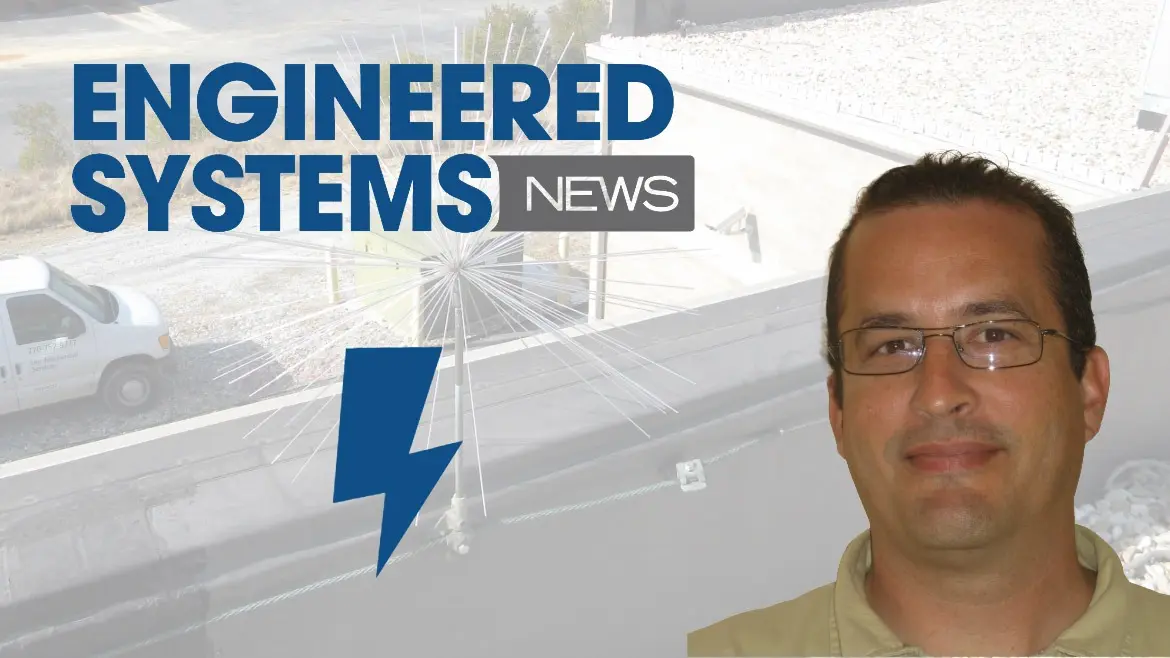
As an alternative, technologies like LEC’s Dissipation Array System (DAS) aim to prevent strikes altogether within a designated protection zone. By utilizing point-discharge technology and grounded arrays, DAS reduces the local electric field, actively interfering with the atmospheric conditions required for a downward cloud leader and an upward ground streamer to connect. LEC reports a 99.8% success rate across more than 35,000 global installations over the past five decades, backed by a "No-Strike" warranty for certified sites.
2. Grounding Systems and Soil Mechanics
A low-resistance path to earth is non-negotiable for routing fault currents and lightning energy safely away from sensitive IT assets. Data centers typically deploy complex ground loops encircling the building and tying into deep underground grids.
For critical infrastructure, engineers often target a grounding resistance of 5 ohms or less. However, achieving this benchmark depends heavily on local geology. Rocky, sandy, or dry soils exhibit high resistivity, requiring deeper ground rods, chemical soil enhancements, or expanded grid networks. Facilities frequently contract specialized firms to conduct soil resistivity testing to design optimized grounding grids that suppress electromagnetic interference (EMI) and transient voltage fluctuations.
3. Electrical Bonding
While grounding sends fault currents downward, bonding addresses lateral threats. Bonding electrically connects all disparate metal components—including server racks, raised floors, cable trays, structural steel, and equipment enclosures—to maintain a uniform electrical potential.
Bonding does not stop lightning energy from entering a facility, but it ensures that energy does not create dangerous voltage differentials between adjacent pieces of equipment, thereby mitigating the risk of side-flashes and internal arcing.
4. Layered Surge Protection
A common operational misconception is that a facility’s UPS system doubles as an all-encompassing surge protector. Industry experts warn against this assumption.
"Although UPS units provide a level of surge protection, this capability is limited in both scope and duration," Carpenter cautions. "For comprehensive protection, a dedicated, standalone AC surge protection device should be incorporated into the system design."
An unmitigated surge can easily overpower and destroy a UPS, instantly eliminating the facility’s emergency power continuity and exposing downstream servers to lethal voltage spikes.
Official Responses and Engineering Guidelines
Recognizing the escalating frequency of severe weather events driven by climate shifts, global engineering authorities have updated their guidelines for mission-critical facilities.
Organizations such as the Uptime Institute, the Telecommunications Industry Association (TIA), and the Institute of Electrical and Electronics Engineers (IEEE) mandate rigorous integration of surge mitigation and grounding in their facility tier certifications. These bodies stress that building management systems (BMS), supervisory control and data acquisition (SCADA) networks, and HVAC infrastructure must be bound directly into the primary protection scheme.
Engineers are increasingly moving away from isolated fixes, adopting holistic frameworks where lightning protection is engineered into the very blueprints of civil, electrical, and mechanical designs before ground is even broken on a new data center campus.
Implications for Data Center Operators
The operational implications for the data center industry are clear: complacency in lightning mitigation carries an unacceptably high price tag. With cloud adoption accelerating and edge computing pushing smaller data centers into storm-prone suburban and rural environments, the threat landscape is expanding.
Facility managers must abandon the "one-size-fits-all" mindset. Crafting a resilient defense requires a customized evaluation of a site’s geographical location, historical weather patterns, soil composition, and legacy electrical architecture.
As Peter Carpenter summarizes, successful protection is fundamentally about layered coordination: "Understanding a data center’s past issues, vulnerabilities, and protection goals helps determine whether the solution should focus on grounding enhancements, surge protection, direct strike prevention/avoidance, bonding, or a combination of all."
Ultimately, by treating lightning defense as a dynamic, multi-layered ecosystem rather than an afterthought checkbox, data center operators can safeguard their infrastructure, maintain uninterrupted uptime, and protect their clients from the unpredictable fury of the skies.
