

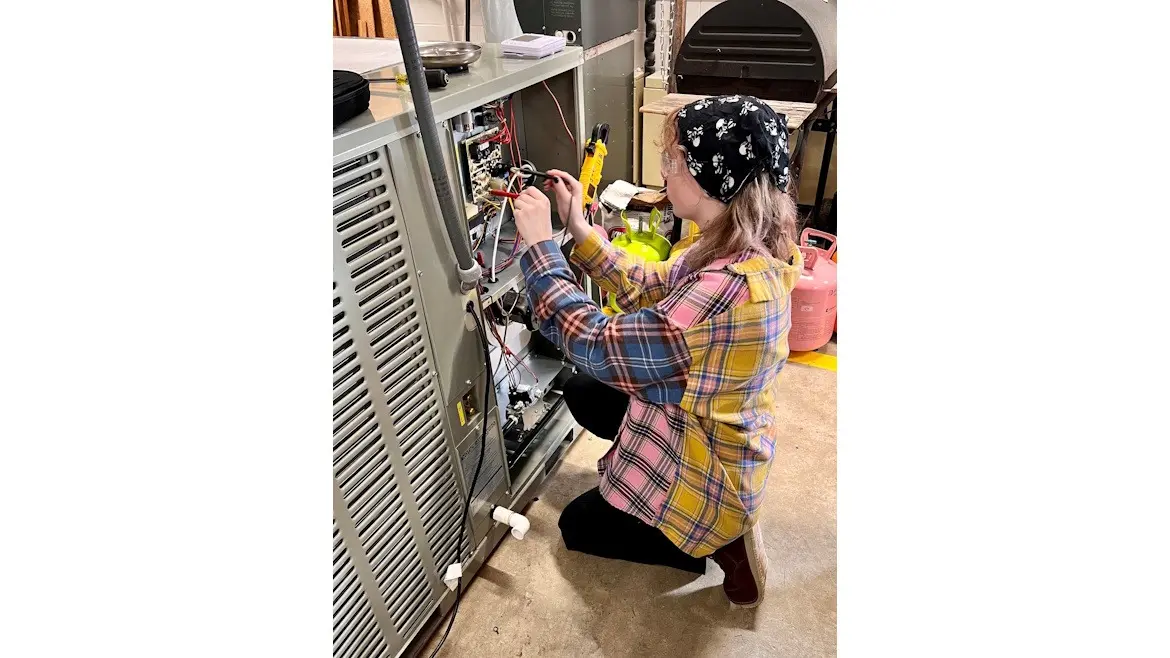
LANSING, Mich. — As the American workforce faces a persistent and widening skills gap, state legislators in Michigan are moving forward with a creative educational paradigm shift. A pending legislative proposal seeks to bridge the chasm between traditional K-12 education and the booming demand for skilled labor by allowing public high school seniors to earn academic credit through full-time employment in the trades.
House Bill 5648, which has already cleared the Michigan House of Representatives by a decisive 59-39 bipartisan margin, is now under consideration in the Michigan Senate. If enacted, the measure would fundamentally alter how public schools value non-traditional career paths, providing an official pathway for teenagers to step directly from high school classrooms into well-paying, career-track trades.
Proponents argue that the bill is a long-overdue modernization of an education system too often hyper-focused on four-year university degrees at the expense of equally lucrative and critical vocational professions. Industry leaders, local contractors, and educators are rallying behind the proposal, viewing it as a vital tool to recruit, shape, and retain the next generation of technicians, mechanics, builders, and HVACR (heating, ventilation, air conditioning, and refrigeration) professionals.
Main Facts of House Bill 5648
At its core, House Bill 5648 establishes a flexible framework for high school seniors to substitute traditional classroom seat time with practical, hands-on workforce experience.
Under the current text of the bill, eligible students must meet specific criteria to qualify for academic credit:
- Target Demographic: Public high school seniors enrolled in Michigan districts or public school academies (charter schools).
- Work Requirement: Students must be employed in a paid role for a minimum of 30 hours per week, or an equivalent threshold as defined by their local school board or public school academy board.
- Qualifying Occupations: The employment must be in a "trade or occupation that provides documented training or verifiable skills aligned with recognized career and technical education (CTE) pathways."
- State Recognition: While the bill does not explicitly single out individual trades by name, it specifies that qualifying occupations must fall under technical education and career pathways defined by the Michigan Department of Labor and Economic Opportunity (LEO). This state agency officially recognizes a vast array of high-demand fields, including HVACR, construction, plumbing, electrical work, and advanced manufacturing.
Crucially, the legislation does not completely abandon academic standards. It incorporates built-in safeguards, including mandatory provisions for workplace safety compliance, proper insurance coverage, systematic documentation of student training progress, and contingency plans for students who find themselves unable to complete the work program.
Furthermore, the bill empowers local school boards to determine whether a student’s rigorous, real-world employment satisfies the state’s mandatory senior-year mathematics credit requirement. However, the current language leaves open questions regarding alternative credit distribution if a local board decides the employment does not sufficiently overlap with standard high school math curricula.
Chronology of the Legislative Push
The journey of House Bill 5648 reflects a growing nationwide realization that modern workforce development must begin well before young adults reach graduation day.
- Early 2025–2026 Legislative Session: Recognizing the acute labor shortages plaguing nearly every sector of the skilled trades in Michigan, state lawmakers began drafting a legislative remedy to provide high schoolers with viable alternatives to the traditional university track.
- Spring 2026: House Bill 5648 was formally introduced in the Michigan House of Representatives by lead sponsor Rep. Jason Woolford (R-Howell). The bill was designed specifically to address the disconnect between eager-to-work students and desperate employers.
- Recent House Vote: Following committee reviews and floor debates, the Michigan House of Representatives passed the measure by a 59-39 vote. The vote crossed traditional partisan boundaries as lawmakers recognized the universal economic imperative of workforce development.
- Current Status: The bill has officially crossed over to the Michigan Senate, where it awaits committee assignment, further amendments, and potential floor votes before it can head to the governor’s desk for final signature.
Supporting Data: The Skilled Trades Crisis in Michigan
The urgency behind House Bill 5648 is underpinned by a mountain of economic and demographic data highlighting the stark reality of Michigan’s labor market. For years, manufacturing plants, construction sites, and mechanical service companies have sounded the alarm over an aging workforce. As thousands of baby boomers reach retirement age, there are simply not enough younger workers stepping up to take their places.
According to economic indicators from the Michigan Department of Labor and Economic Opportunity, technical sectors across the state are experiencing chronic job vacancies.
- The HVACR Deficit: The heating, ventilation, air conditioning, and refrigeration sector alone faces an ongoing talent crunch. Modern buildings require increasingly complex climate control systems, smart thermostats, energy-efficient heat pumps, and sophisticated indoor air quality technologies. The demand for certified, highly trained technicians far outpaces the current supply of graduates from traditional technical colleges.
- Earning Potential Without Debt: Proponents of vocational pathways point out that skilled trades workers frequently command starting salaries that rival or exceed those of four-year college graduates—without the burden of tens of thousands of dollars in student loan debt. By entering the workforce at age 17 or 18, students participating in the proposed program would gain up to a full year of paid work experience, seniority, and hands-on mentorship before their peers even graduate from college.
Official Responses and Stakeholder Perspectives
The legislative proposal has drawn widespread praise from business owners, educators, and trade associations who deal with the state’s labor shortage on a daily basis.
Lawmaker Perspective
Rep. Jason Woolford, R-Howell, the primary sponsor of the legislation, emphasized that the education system must evolve to meet modern economic realities.
"College isn’t the only path to a successful career, and our education system should reflect that reality," Rep. Woolford said during floor debates. "Michigan needs more skilled trades workers, and many students are eager to enter these careers. My plan gives seniors the flexibility to gain valuable, real-world experience while finishing high school and prepares them to step directly into good-paying jobs."
Industry Leadership
Business owners on the front lines of the trades have enthusiastically welcomed the bill, noting that early exposure is the single best way to secure dedicated, long-term employees.
Bob Hutchison, president of Accu-Temp Heating & Air Conditioning Inc. in Howell, Michigan, and a board member of the Southeast Michigan Air Conditioning Contractors Association, expressed dismay that such a program did not exist decades ago. Hutchison, who has operated Accu-Temp since 1984, reflected on his own youth.
"It’s a real good idea, and I don’t know why it took so long for it to come up," Hutchison said. Describing himself as having been the "perfect example of a kid that would’ve benefited" from the initiative, he added, "It would’ve made my life a whole lot easier had I been working and gotten school credit."
Education and Distribution Perspectives
The enthusiasm extends to educational institutions and supply chain partners who work closely with contractors. Pete Kaiser, a territory manager at HVACR distributor Behler-Young Co. and an adjunct HVACR instructor at Henry Ford College in Dearborn, Michigan, believes the bill could serve as a powerful tool to close the industry’s skills gap.
Kaiser noted that every contractor he visits on his distribution routes shares the same primary concern: the desperate need for good, reliable workers.
"If you get a young guy, it’s your opportunity to train them the way you want them, where they don’t have all the bad habits," Kaiser explained, advocating strongly for inclusivity in the trades. "Give these young guys — young guys and gals — an opportunity."
Furthermore, Kaiser suggested that lawmakers should consider expanding the scope of support to include direct incentives for contractors who take on the responsibility of hiring and training young workers, ensuring that small and medium-sized businesses have the resources required to mentor students safely and effectively.
Broader Implications for Michigan’s Economy and Education System
If House Bill 5648 successfully passes the Senate and is signed into law, its ripple effects could reshape secondary education and labor recruitment across Michigan.
1. Modernizing High School Curricula
For decades, high school education has been structured around the "Carnegie unit"—measuring educational attainment by the number of hours a student spends sitting in a traditional classroom. HB 5648 challenges this model by recognizing that experiential learning, professional responsibility, and technical mastery hold equal, if not superior, educational value for certain career tracks. Local school boards will be given unprecedented autonomy to validate work-based learning as a legitimate substitute for standard coursework.
2. Combating Youth Underemployment and Attrition
Many high school seniors struggle to see the real-world application of their senior-year classes, leading to disengagement and high dropout rates. By connecting high school coursework directly to a paycheck and a tangible career trajectory, schools may see improved student engagement, better attendance, and higher motivation among students who learn best through tactile, hands-on experiences.
3. Strengthening the State’s Economic Infrastructure
Michigan has historically been a manufacturing and industrial powerhouse. Maintaining that status requires a robust, modern infrastructure backed by skilled electricians, plumbers, builders, and HVACR technicians. Programs that pipeline young adults directly into these jobs ensure that local businesses can expand, take on new contracts, and drive regional economic growth without being constrained by chronic staff shortages.
4. A Blueprint for Other States
As state legislatures nationwide grapple with the dual crises of student debt and labor shortages, Michigan’s legislative experiment is being closely watched by policymakers across the country. Should HB 5648 prove successful in boosting enrollment in career and technical education pathways while maintaining academic standards, it could serve as a national model for vocational-educational reform.
Looking Ahead
As House Bill 5648 advances to the Michigan Senate, education advocates, trade organizations, and business leaders are urging swift and thoughtful deliberation. While minor adjustments regarding mathematics credit equivalencies and contractor incentives may be debated during Senate committee hearings, the underlying momentum for the bill remains strong.
For students like the ones Bob Hutchison and Pete Kaiser envision—young people eager to work with their hands, build things, and master complex technical systems—the passage of HB 5648 could mean the difference between wandering through an uninspired final year of high school and launching a lucrative, lifelong career in the skilled trades.
