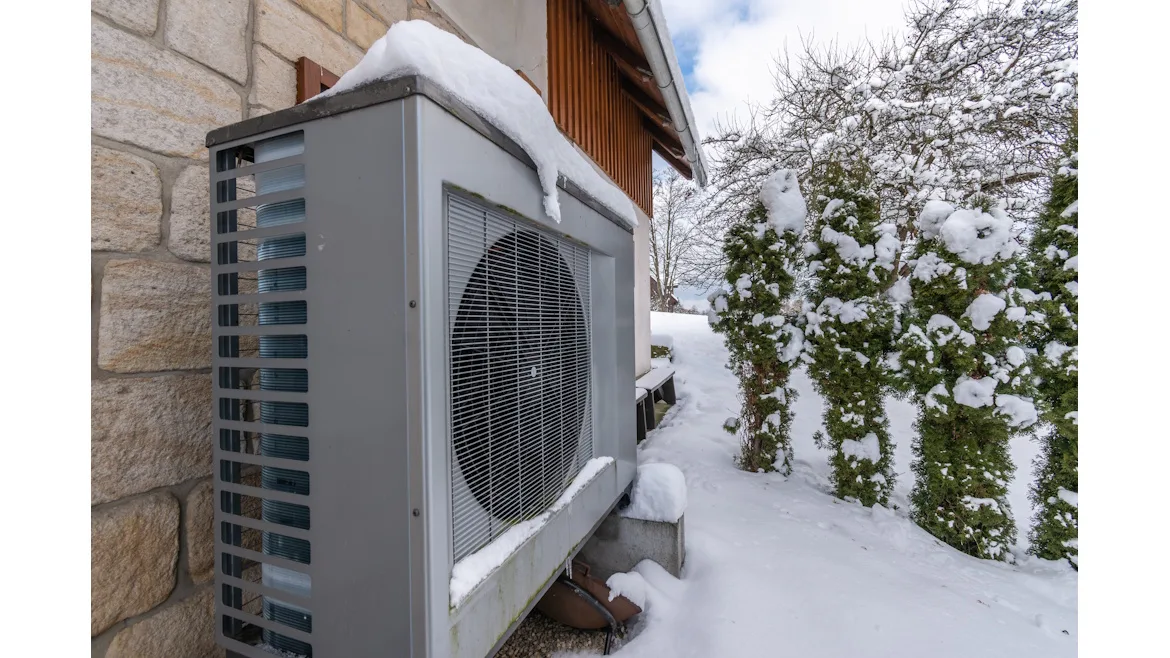
For decades, the standard blueprint for home climate control across much of North America relied on a familiar dichotomy: an air conditioner for the sweltering months of summer and a fossil-fuel or electric-resistance furnace to combat the biting chills of winter. However, a quiet revolution is reshaping residential HVAC systems. Driven by advances in inverter technology, strict energy efficiency targets, and shifting consumer expectations, heat pumps are shedding their historical reputation as regional novelties suited only for milder southern climates.
According to seasoned HVAC experts and empirical bin-temperature data, the common objection that "heat pumps don’t work in cold climates" collapses under mathematical scrutiny. By analyzing the actual number of hours cities spend in specific temperature ranges, industry analysts argue that the debate over heat pump suitability is no longer a technological gamble, but a straightforward mathematical reality. Combined with a distinct comfort profile that outperforms traditional staged furnaces, heat pumps are rapidly becoming the default choice for modern residential design.
Main Facts: The Heat Pump Paradigm Shift
At its core, a heat pump is fundamentally a two-way air conditioner equipped with a reversing valve. Rather than generating heat through combustion or electrical resistance—which consumes immense amounts of energy—a heat pump simply extracts thermal energy from ambient outdoor air and transfers it indoors. Even when outdoor temperatures drop significantly, ambient air contains usable heat energy.
Despite this well-established thermodynamics principle, industry resistance has persisted, primarily anchored in the fear of extreme winter weather. Critics frequently point to historic polar vortex events or deep winter lows to disqualify heat pumps across northern tiers.
Industry advocates counter this by shifting the metric from absolute minimum temperatures to cumulative hour distribution—known in the HVAC sector as bin data. Instead of evaluating a city solely by its coldest recorded night, bin data reveals the exact number of hours an area spends within distinct thermal bands over an entire 8,760-hour year. For perspective, 750 hours roughly equals one month.
When categorized this way, even notoriously frigid cities spend the vast majority of their annual operating hours in temperature ranges where modern heat pumps operate efficiently. Single-stage systems can comfortably handle loads down to 25°F–30°F, while advanced cold-climate and hyper-heating units maintain high capacities well below zero. For rare extreme cold snaps, hybrid systems—which pair a heat pump with a backup gas or electric furnace—provide a seamless fail-safe.
Chronology: From Southern Specialty to Nationwide Viability
To understand how heat pumps reached their current status, it helps to examine the evolution of their deployment over the last decade.
Pre-2010s (The Regional Era): Heat pumps were heavily stereotyped as "warm climate" equipment. Installations were concentrated primarily in the American South and Pacific Northwest, where winter temperatures rarely dipped below freezing for extended periods. In northern zones, they were viewed strictly as auxiliary or unreliable.
2014–2016 (The Early Northern Trials): Forward-thinking contractors began testing single-stage and early cold-climate heat pumps in notoriously demanding northern markets like Cleveland, Ohio. Installed in century-old, poorly insulated homes, these pilot systems frequently proved capable of heating entire homes through mild and moderate winters without ever engaging auxiliary resistance heat.
Late 2010s to 2020 (The Birth of Cold-Climate Standards): Driven by the U.S. Department of Energy’s Cold Climate Technology Challenge and major manufacturing investments, inverter-driven variable-speed compressors entered the market. These units decoupled heating capacity from outdoor air temperatures, maintaining nearly 100% output at sub-zero readings.
2021–Present (The Data-Driven Mainstream): HVAC professionals began utilizing comprehensive bin-data tools to map thermal performance across hundreds of North American cities. Real-world consumer feedback, notably from deep-winter hybrid installations, confirmed that modulating heat pumps delivered superior indoor comfort compared to oversized, blast-furnace setups, accelerating widespread adoption.
Supporting Data: What the Bin Numbers Reveal
To evaluate the operational feasibility of heat pumps across diverse geographies, building performance analysts have broken regional climates down into three distinct operating bands:
Easy Range (Above 25°F–30°F): Handled effortlessly by standard single-stage and multi-stage heat pumps.
Medium Range: Managed efficiently by cold-climate-rated heat pump systems.
Hard Range: Requires top-tier Hyper Heat/DOE Cold Climate-certified units or a hybrid configuration utilizing a backup furnace.
Fairbanks, Alaska: The Ultimate Stress Test
As the coldest major North American city with reliable meteorological data, Fairbanks represents the absolute stress test for thermal equipment. Intuition suggests heat pumps are completely unviable here. Yet, bin data paints a surprising picture:
Easy Range: 58% of the year.
Medium Range: 25% of the year.
Hard Range: Only 16% of the year.
Even in sub-arctic conditions, nearly six out of ten hours fall within thermal zones manageable by standard or moderately rated heat equipment, while the remaining hard hours are easily absorbed by a hybrid furnace setup.
Minneapolis, Minnesota: The Continental U.S. Worst-Case
As the largest major cold-weather metropolitan area in the contiguous United States, Minneapolis serves as a realistic worst-case benchmark for American HVAC contractors:
Easy Range: 81% of the year.
Medium Range: 17% of the year.
Hard Range: Just 3% of the year.
With 98% of the annual climate profile residing outside the "hard" category, relying entirely on fossil fuels for baseline heating is increasingly viewed as an engineering mismatch.
Cleveland, Ohio and Charlotte, North Carolina
In mid-tier industrial markets like Cleveland, historical installations demonstrate incredible durability. Systems installed in older, drafty homes a decade ago routinely navigated entire winters without triggering backup resistance heat, breaking down to 91% Easy, 9% Medium, and under 1% Hard.
Meanwhile, in southern hubs like Charlotte, the numbers eliminate any debate: 99% Easy, less than 1% Medium, and 0% Hard. Installing a standalone gas furnace in Charlotte is increasingly recognized as an unnecessary redundancy when a two-way heat pump can cover both cooling and heating demands.
Official Responses and Expert Perspectives
Industry leaders and trade specialists have increasingly voiced support for the shift toward heat-pump-centric designs, pointing out that client satisfaction serves as the ultimate endorsement.
Jim Bergmann, a prominent HVAC diagnostician and co-founder of MeasureQuick, transitioned to a hybrid heat pump system after sustained industry prodding. In subsequent technical reviews and field notes, Bergmann highlighted an unexpected benefit: chronic cold spots, such as notoriously chilly basements, were successfully warmed for the first time without rebalancing the ductwork.
Contractors working across Climate Zones 1 through 4 report that heat-pump-only configurations are now the premier standard for new construction and retrofits. Conversely, for Zones 5 through 8—where prolonged sub-freezing stretches occur—experts advocate for hybrid designs.
Nate Adams, an authority on home performance and building electrification, emphasizes that the comfort delta comes down to runtime physics.
"The reason heat pumps feel better is simple: they run more and even out temperatures better than an oversized furnace can," Adams notes. "Constantly pushing out a small amount of heat warms every surface in the house—the walls, the windows, the couch, the ceiling, the floors."
Contractors frequently report walking into century-old homes post-installation and noting an extraordinary leap in thermal uniformity, often achieving superior comfort even before building envelopes are air-sealed or insulated.
Implications: The Future of Residential HVAC
The transition from combustion-centric heating to advanced heat pump technology carries profound implications for homeowners, contractors, and municipal energy grids.
Redefining Equipment Selection: For homeowners already replacing aging air conditioning infrastructure, opting for a heat pump instead of a straight A/C unit requires only the addition of a reversing valve and minor control wiring. This transforms a single-season cooling investment into a multi-season climate solution.
Contractor Profitability and Skillsets: HVAC technicians must increasingly master variable-speed refrigerant controls, communicating thermostats, and load calculation software (Manual J/S/D). As consumers demand higher efficiency and better indoor air quality, comfort advisors who can accurately interpret bin data and explain hybrid operating thresholds will dominate local markets.
Energy Consumption and Grid Dynamics: Because heat pumps move heat rather than create it through combustion, their Coefficients of Performance (COP) often range from 2 to 4, meaning they deliver 2 to 4 units of thermal energy for every 1 unit of electrical energy consumed. When paired with modern grid-interactive controls, they offer a flexible load that can buffer electricity demand peaks.
Ultimately, the debate over whether heat pumps can survive harsh winters has been settled by the data. As building science catches up with field realities, the traditional standalone furnace is shifting from an everyday essential to a specialized safety net, making the heat pump the undisputed backbone of modern residential comfort.