

By Corporate Workforce & Labor Desk
Published: August 30
Main Facts
Nearly three decades ago, Lana Smith answered a job application call while perming her hair, racing to the bathroom as soon as she hung up to ensure the chemicals didn’t ruin her hair. Today, she is the national retirement program manager at Concord, California-based commercial contractor Swinerton. Her 28-year tenure is not merely a testament to corporate longevity; it highlights a rare economic model that bridges the gap between daily labor and long-term wealth accumulation: the Employee Stock Ownership Plan (ESOP).
As Labor Day approaches, Smith’s story brings a human face to a systemic economic conversation. Across the United States, wealth inequality has widened, with corporate profits soaring while everyday workers receive historically low shares of national economic output. Amid these broader structural concerns, employee-owned companies stand out as a viable counterweight.
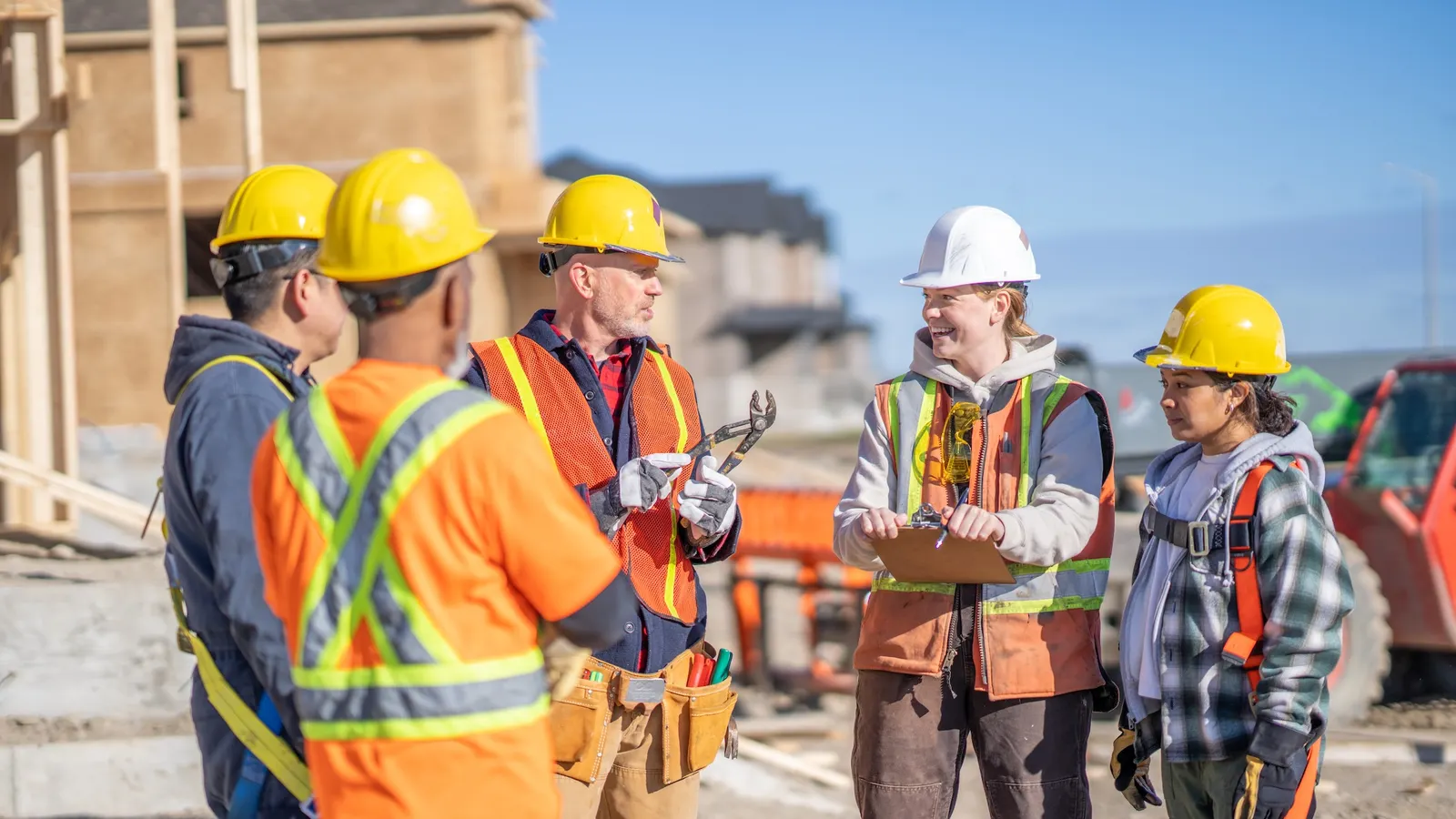
In an ESOP structure, companies share equity directly with their workforce. As the business grows and succeeds, that value is funneled back to employees through retirement portfolios that compound over time. While fewer than 6,500 ESOPs exist nationwide, the construction sector has emerged as a surprising and robust leader in the space, trailing only manufacturing and professional services in total plan adoption. For companies like Swinerton—which has roots dating back to the 1880s—employee ownership has proven to be a cornerstone of endurance, innovation, and worker security.
Chronology: A 28-Year Journey of Growth and Adaptation
1990s: The Accidental Beginning and a Culture of Support
When Smith first joined Swinerton as a benefits accountant, she was young and gave little thought to her long-term retirement. However, she quickly realized that the company operated differently than traditional corporate entities. Shortly after her hiring, she discovered that Swinerton was entirely employee-owned.
Not long after starting her career, Smith became a single parent when her son was roughly two years old. Navigating the dual pressures of early parenthood and demanding accounting responsibilities could have derailed her career in a traditional corporate environment. Instead, her fellow employee-owners rallied around her. They offered the schedule flexibility needed to handle mid-day doctor appointments and care for her son, all while supporting her transition into broader professional responsibilities. Leadership maintained an open-door policy, cultivating an atmosphere where questions were encouraged, and continuous skill development was standard practice.
2000s–2010s: Stepping into Leadership and Fostering Innovation
Over time, Smith’s internal growth culminated in a promotion to a management role. For the past decade, she has spearheaded Swinerton’s national retirement program, overseeing the mechanisms that allow thousands of employees to plan for their futures.
During this period, the "ownership mindset" unique to ESOP companies directly influenced daily operational efficiencies. Smith recalls an instance when a peer on an alternate team shared that she had transitioned to a paperless approval process. Recognizing the potential, Smith pitched the concept to her manager. Though initially hesitant, leadership trusted her to run a pilot test.
Smith demonstrated how digitizing approvals could drastically cut down processing time and streamline document storage. The workflow quickly became the departmental standard, and Smith paid the innovation forward by training other teams.
2020 and Beyond: The Resilience of Employee-Centric Operations
The true value of this grassroots, employee-driven innovation materialized during the COVID-19 pandemic. While many American corporations scrambled under immense pressure to rapidly overhaul their infrastructure for remote work, Swinerton’s departments didn’t skip a beat. Because employees had long been empowered to suggest, test, and implement digital workflows, robust remote-approval processes were already deeply embedded in the company’s daily operations.
Today, Smith’s role extends far beyond standard human resources administration. Because her son lives with disabilities and will require lifelong care, her ESOP nest egg serves as a dual-purpose safety net, guaranteeing financial stability and dignity for both mother and son long after she hangs up her hard hat.
Supporting Data: The Landscape of ESOPs in America
The structural realities facing American labor underline why voices like Smith’s are increasingly vital.
- The Share of Economic Output: According to recent economic indicators cited by Reuters, the share of America’s gross domestic product (GDP) going to worker compensation slipped to a fresh record low in mid-2026, dropping to levels unseen since 1947. High corporate profitability has consistently failed to translate into proportional long-term well-being for everyday employees.
- ESOP Demographics: Data from the National Center for Employee Ownership (NCEO) reveals that there are currently fewer than 6,500 ESOPs operating across the entire United States, with a modest 787 located in California.
- Sector Dominance: Despite low overall numbers, the construction industry punches well above its weight class. Construction represents nearly one-fifth of all ESOP structures nationwide, positioning the sector directly behind manufacturing and professional services as a haven for employee ownership models.
- Coalition Movements: Grassroots efforts are mobilizing to scale these numbers. Organizations such as the Expanding ESOPs coalition currently unite nearly 100 member organizations dedicated to advocating for and expanding employee ownership models throughout California and across the country.
Official Responses and Stakeholder Perspectives
Advocates for labor reform and corporate restructuring point to the construction sector as a blueprint for how traditional industries can modernize their compensation frameworks.
Labor economists note that traditional corporate models often create an adversarial dynamic between shareholders demanding short-term quarterly returns and workers seeking sustainable wages and job security. In contrast, ESOP structures align the interests of the entire workforce with the overall enterprise value. Every laborer, project manager, accountant, and executive shares a unified stake in completing projects safely, efficiently, and under budget.
"When employees own a piece of the company, the entire psychological contract of work shifts," notes workplace equity analysts. "Quality control improves organically because shoddy workmanship directly impacts the bottom line of the individual who built it. Innovation accelerates because workers on the front lines—whether swinging hammers in the field or balancing ledgers in the office—feel empowered to offer efficiency suggestions without fear of administrative dismissal."
Furthermore, trade organizations emphasize that ESOPs serve as a powerful recruitment tool in an industry continually grappling with labor shortages. Offering a direct path to equity and comfortable retirement sets employee-owned contractors apart in a tight labor market.
Implications: The Future of Wealth Building in Construction and Beyond
The implications of Smith’s 28-year journey extend far beyond the corporate offices of Swinerton. They challenge the foundational assumptions of modern American labor practices.
1. Closing the Retirement Crisis Gap
Millions of Americans approach retirement age facing severe financial anxiety, lacking adequate savings to maintain their standard of living. ESOPs offer a tangible antidote to this national crisis by building a secondary savings vehicle funded entirely by corporate growth rather than direct employee deductions. For workers in physically demanding fields like construction, where sustaining manual labor into advanced age is impractical, an early and comfortable retirement is not just a luxury—it is a medical and physical necessity.
2. Democratizing Corporate Wealth
As worker share of the national GDP hovers near historic lows, employee ownership models represent one of the few scalable mechanisms designed to reverse the trend. By distributing equity broadly across the workforce rather than concentrating it solely within executive suites and institutional investment portfolios, ESOPs ensure that the sweat equity of everyday laborers translates into generational wealth.
3. A Call to Action for Labor Day
As the nation prepares to celebrate Labor Day, industry leaders, policymakers, and workers are increasingly asking a fundamental question: Can the ESOP model scale to meet the needs of the broader American economy?
While employee-owned businesses cannot instantly absorb every job seeker, the steady growth of advocacy groups like the Expanding ESOPs coalition signals a changing tide. For Lana Smith, who answered a life-altering phone call while her hair was wrapped in perming chemicals nearly three decades ago, the mission is clear.
"I had no idea it would change my life this much or that I’d get to help thousands of other people grow, excel and retire with dignity," Smith reflects. "This Labor Day, let’s help more people have a story like mine. It’s time all employees got a bigger slice of the wealth and success our hard work creates."
