

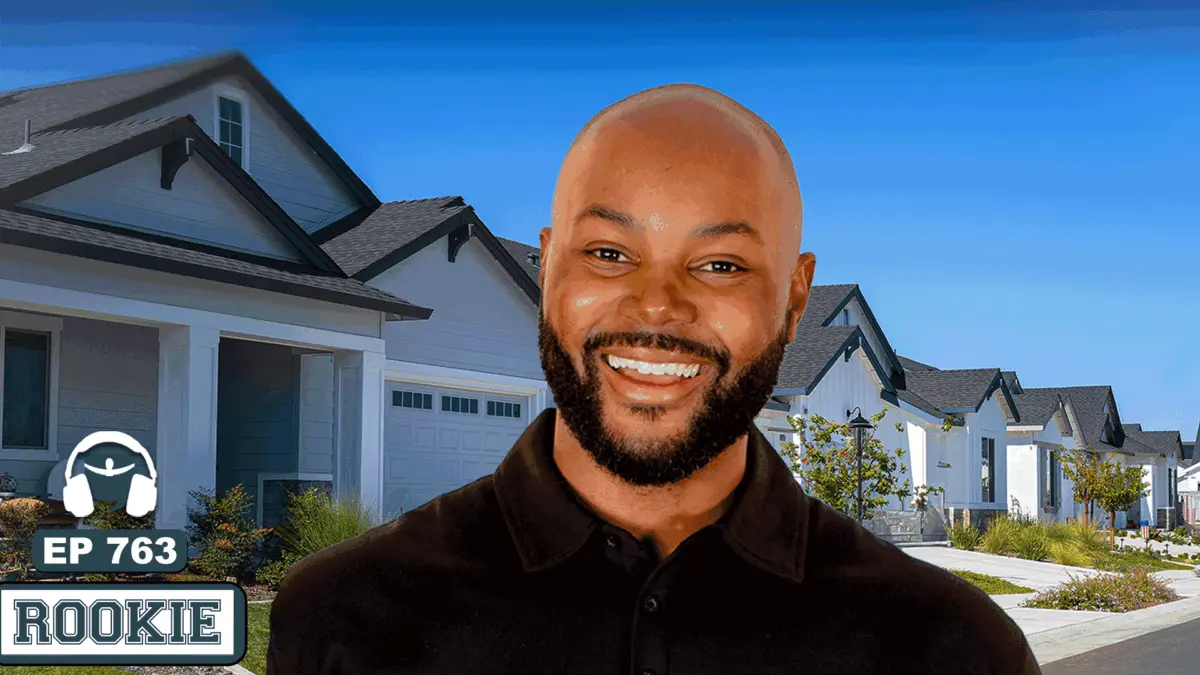
For aspiring real estate investors, the journey to purchasing a first rental property is rarely defined by a shortage of ambition. Instead, it is plagued by a very specific type of psychological barrier: the paralyzing belief that the time, capital, or knowledge base is simply "not ready."
According to real estate veterans Ashley Kehr and Tony Robinson, hosts of the popular Real Estate Rookie Podcast, this hesitation is a universal rite of passage. In a recent interactive strategy session drawn directly from the BiggerPockets Starting Out community, Kehr and Robinson dissected three distinct real estate scenarios. Their core message was clear: aspiring investors do not need an extensive portfolio or millions in capital to begin; they need a disciplined game plan, localized adaptability, and an understanding of foundational financial metrics.
Main Facts: Deconstructing the Rookie Roadblocks
The real estate market presents unique entry barriers depending on an investor’s stage in life. However, across various demographics, the hurdles consistently boil down to three categories: capital allocation, geographic constraints, and educational gaps.
- The College Student Dilemma: Young adults entering the workforce often possess strong credit scores and theoretical savings (such as Roth IRAs) but lack active work history, standard cash flow stability, and practical market experience.
- The Long-Distance Obstacle: Active-duty military personnel or corporate professionals stationed overseas often grapple with the logistical nightmare of managing properties thousands of miles away from their target market.
- The High-Cost-Of-Living (HCOL) Trap: Investors residing in expensive metropolitan areas—such as California or New York—frequently find themselves priced out of local traditional acquisitions, often sitting on modest nest eggs (e.g., $30,000) that seem entirely inadequate for real estate entry.
Addressing these challenges requires moving away from emotional decision-making and relying instead on structured data analysis, specialized loan products, and robust remote management software.
Chronology: Step-by-Step Strategic Frameworks
To help rookies transition from passive learners to active investors, the podcast broke down actionable, chronological roadmaps tailored to each specific situation.
1. The Post-Graduate Timeline: Preparing One Year Out
For students like Landon, who is heading into his final year of college with a projected $70,000 finance salary waiting upon a May 2027 graduation, preparation must be systematic and intentional.
- Phase 1: Educational Alignment (Months 1–3): Rather than trying to master every real estate asset class simultaneously, students should narrow their focus to a single strategy. Whether it is house hacking, flipping, or long-term rentals, specific literature (such as BiggerPockets’ dedicated strategy guides) should be prioritized over generalized financial media.
- Phase 2: Capital and Financing Assessment (Months 4–8): Aspiring buyers must look beyond down payments. While FHA loans require as little as 3.5% to 5.5% down and conventional loans range from 5% to 20%, additional capital must be allocated for closing costs, appraisals, and mandatory cash reserves. Furthermore, lenders evaluate risk strictly; establishing a stable income baseline is critical.
- Phase 3: Deal Analysis Mastery (Months 9–12): Rookies must discard aesthetic biases (such as choosing a property simply because it is new construction) and learn to evaluate cold, hard data: projected revenue, operational expenses, capital expenditure (CapEx) reserves, and net operating income.
2. The Remote Investing Timeline: Managing from Afar
For active-duty military personnel stationed overseas for multi-year deployments, real estate execution must rely heavily on delegation and technology.
- Phase 1: Legal and Loan Verification: Confirming whether primary residence loan products can be utilized while deployed is the first hurdle. If legally permissible, purchasing a property stateside via a primary loan allows the investor to secure lower interest rates and reduced down payment requirements—even if they are physically oceans away.
- Phase 2: Building the "Boots on the Ground" Team: Remote operators must secure two critical local partners: a responsive real estate agent/leasing specialist to handle walk-throughs and tenant acquisition, and a reliable, highly available handyman for routine and emergency maintenance.
- Phase 3: Deploying the Tech Stack: Leveraging digital management infrastructure—such as TurboTenant for lease agreements, background checks, and rent collection, or Hospitable and PriceLabs for short-term rentals—ensures that operations run smoothly without requiring the owner’s physical presence.
3. The HCOL Portfolio-Building Timeline: Capital Recycling
For investors trapped in high-cost-of-living areas with limited capital (e.g., $30,000 saved), scaling requires creative alternative strategies.
- Phase 1: House Hacking Locally: Instead of attempting to purchase a traditional single-family rental, investors can leverage low down-payment options to buy a larger home or a small multifamily property locally, renting out individual rooms to subsidize or entirely eliminate their own housing costs.
- Phase 2: Capital Recycling: As equity builds and living expenses decrease, cash is accumulated to repeat the cycle—either by purchasing a subsequent property or pivoting the original property into a full-scale rental.
- Phase 3: Alternative Entry Points (Private Lending or Joint Ventures): A $30,000 capital pool, while insufficient for a down payment in an expensive coastal market, can often fully fund a rehab or construction project for an experienced investor in a more affordable Midwest or Rust Belt market via private money lending.
Supporting Data & Financial Realities
Understanding the financial mechanics of a first real estate purchase requires separating myth from reality regarding loan structures, reserves, and capital requirements.
| Loan Type / Strategy | Typical Down Payment | Key Requirements & Caveats | Ideal Use Case |
|---|---|---|---|
| FHA Loan | 3.5% – 5.5% | Strict property inspection standards; mandatory owner-occupancy; potential repair requirements enforced by appraisers. | First-time buyers on a budget willing to house hack. |
| Conventional Loan | 5.0% – 20.0% | Lower regulatory friction than FHA, though appraisals can still trigger mandatory repair stipulations depending on the lender. | Traditional buyers or house hackers with stronger capital reserves. |
| First-Time Home Buyer Programs | Variable (often low) | Frequently mandate long-term owner-occupancy requirements (sometimes up to 5 years), limiting the investor’s ability to pivot properties into rentals quickly. | Primary residential buyers who do not intend to scale or move rapidly. |
| Private Money Lending | Full Project Funding ($30k+) | Requires strong legal contracts, high trust, and networking within affordable secondary/tertiary markets. | Coastal investors looking to deploy trapped capital into rehab projects elsewhere. |
A recurring theme emphasized by Kehr and Robinson is the absolute necessity of reserves. Regardless of whether an individual is purchasing an investment property or a primary residence, maintaining three to six months of living and operational expenses in reserve is non-negotiable. Unexpected capital expenditures, roof replacements, HVAC failures, or sudden job loss can derail an unprepared rookie instantly.
Official Responses and Expert Insights
Industry professionals and community contributors emphasize that the gap between wishing to invest and actually executing lies in systemic preparation rather than market timing.
"A lot of rookie investors are not choosing between three deals. They are still trying to figure out whether they are ready, what to do first, or if the timing even makes sense." — Ashley Kehr, Real Estate Investor and Podcast Co-Host
Kehr strongly cautions against restrictive first-time homebuyer grants that mandate prolonged owner-occupancy periods. For investors hoping to build a portfolio rapidly through sequential house hacking—moving every year or 18 months and converting the previous residence into a rental—such programs can inadvertently trap capital and slow growth.
Echoing these sentiments, Tony Robinson addressed the psychological fear of distance in remote real estate investing:
"The truth is that… there’s nothing that I could do to be able to get out there today to go check on that property if it’s in Buffalo, New York. So all of my systems and processes have to be set up in a way that allow me to not be able to quickly get to that property physically… Your systems and processes scale and they allow you to move no matter where you are in the world." — Tony J. Robinson, Real Estate Investor and Podcast Co-Host
Robinson highlighted that successful remote operators do not rely on physical proximity; they rely on digital automation. Modern property management software features AI-driven messaging tools that can manage guest inquiries, coordinate maintenance, and secure five-star reviews while operating entirely in the background.
Implications: What This Means for the Future of Real Estate Rookies
The barriers to entry in real estate are evolving, but the foundational principles of success remain immutable. As real estate prices in major metropolitan hubs continue to outpace average wage growth, the traditional path of saving 20% down for a local rental property is increasingly obsolete for standard W-2 earners and recent graduates.
- The Rise of Creative Arbitrage: Investors are forced to lean heavily into house hacking, room-by-room rentals, and out-of-state remote management. This democratization of real estate via technology (proptech, automated messaging, and digital underwriting) means physical location is no longer a definitive ceiling on portfolio growth.
- The Shift Toward Data-Driven Analysis: As economic headwinds fluctuate, emotional buying—purchasing based on aesthetic appeal or neighborhood prestige—is becoming an expensive relic of the past. Rookies who invest time in learning rigorous mathematical underwriting (calculating net operating income, cash-on-cash return, and realistic CapEx allocations) will drastically outperform those who rely on speculation.
- Early Financial Literacy Wins: Programs and platforms that target younger demographics—such as college seniors planning their financial trajectory years in advance—demonstrate a cultural shift. The modern investor is treating real estate education as a pre-professional discipline, blending W-2 income stability with aggressive alternative asset acquisition strategies from day one.
Ultimately, readiness is rarely a sudden lightning bolt of absolute confidence. As the BiggerPockets framework proves, readiness is manufactured through structured education, disciplined capital allocation, and the deployment of scalable systems that transform uncertainty into actionable execution.
