

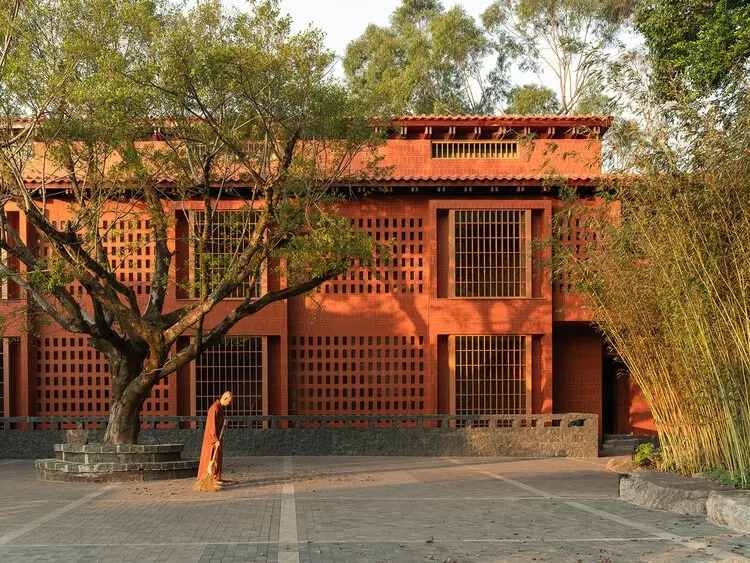
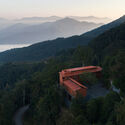
Quanzhou, China — Nestled within the perennially mist-shrouded northern foothills of Penglai Mountain in Anxi, Quanzhou, a remarkable architectural metamorphosis has taken root. Curated by Han Shuang and designed by RESP Studio, the newly completed Qing Shui Meditation Retreat Center breathes modern purpose into a forgotten relic of the past: a decommissioned, dilapidated two-story bus station.
Set against the backdrop of the thousand-year-old Qingshuiyan Ancestral Hall—a revered spiritual sanctuary originally built during the Northern Song Dynasty—the project bridges the gap between historic folk heritage and contemporary contemplative design. By weaving together native rock formations, ancient moss-draped banyan trees, and sustainable spatial programming, the project has transformed an eyesore of industrial obsolescence into an immersive sanctuary for reflection, community, and calm.
Main Facts: Architecture in Harmony with Heritage
The Qing Shui Meditation Retreat Center project is defined by a delicate balance of ecological preservation, cultural homage, and adaptive reuse.
- Project Name: Qing Shui Meditation Retreat Center (Qingshuiyan Ancestral Hall Supporting Facility Renovation)
- Architectural Firm: RESP Studio
- Curator: HAN Shuang
- Photography: Xiao Tan
- Location: Core scenic area of the Qingshuiyan Ancestral Hall, Anxi, Quanzhou, China
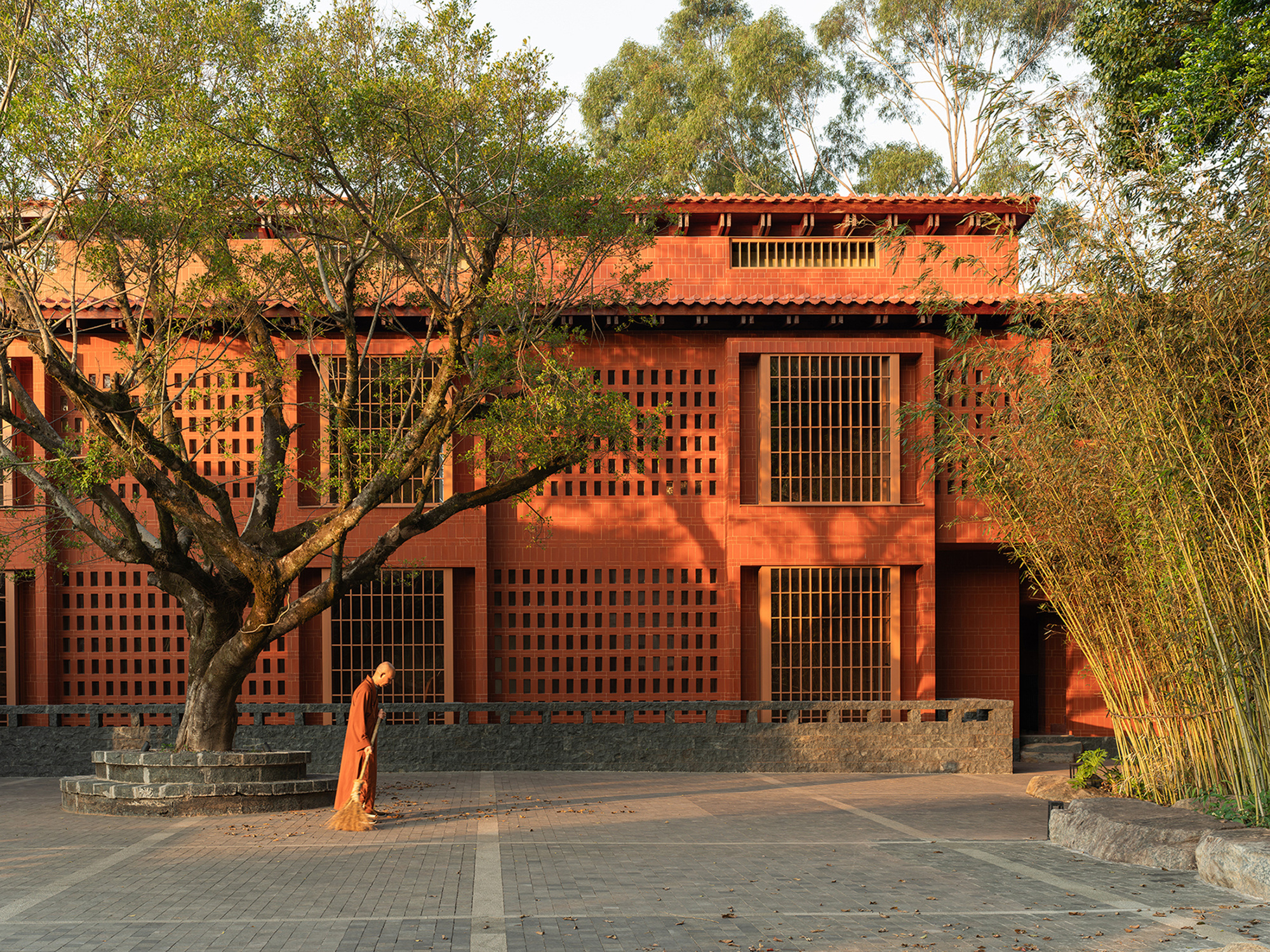
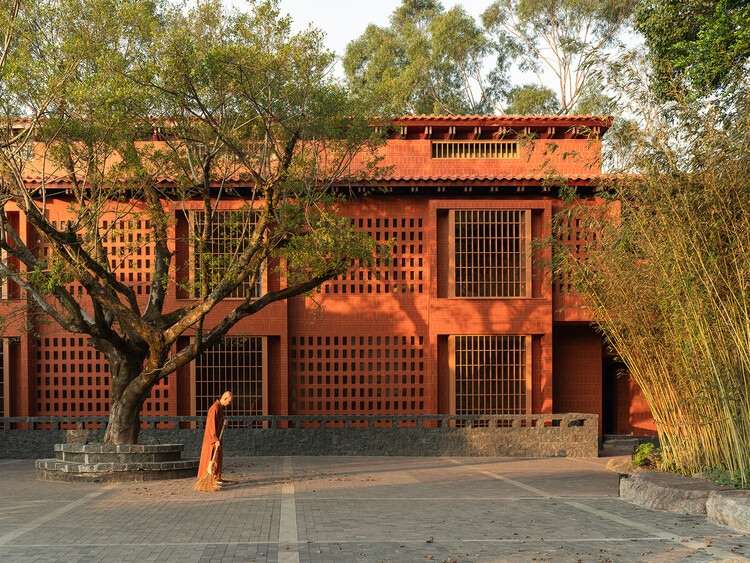
- Site Context: A former bus station site featuring a moss-draped ancient banyan tree, forest-framed open square, native rock formations, and historical mossy footpaths.
- Core Functions: Tea houses, vegetarian restaurants, resting lounges, and meditation spaces serving as complementary support facilities for the ancestral hall.
- Cultural Significance: Qingshuiyan Ancestral Hall is a vital folk belief center for over 100 million believers across Fujian, Taiwan, and Southeast Asian communities.
The design strategy sidesteps the heavy-handed demolition typical of modern commercial development. Instead, RESP Studio adopted an in-situ renovation methodology, respecting the natural topography of Penglai Mountain and honoring the profound spiritual gravity of the site.
Chronology: From Northern Song Shrine to Industrial Relic and Modern Sanctuary
The evolution of the Qing Shui Meditation Retreat Center site spans nearly a millennium, tracking a fascinating arc from ancient sacred geography to modern infrastructure, and finally to contemporary architectural mindfulness.
Phase I: The Historical Foundation (Northern Song Dynasty)
The history of the site is inseparable from the establishment of the Qingshuiyan Ancestral Hall during the Northern Song Dynasty. Perched high in the misty heights of Penglai Mountain, the ancestral hall grew over centuries into a monumental spiritual anchor. It eventually transcended regional boundaries, becoming a powerful nexus of cultural and religious identity for more than 100 million adherents spread across Fujian province, Taiwan, and expansive diaspora communities throughout Southeast Asia. For generations, pilgrims walked ancient, moss-covered stone paths winding through the dense forest canopy to reach the sacred complex.
Phase II: The Era of Infrastructure and Abandonment (Late 20th Century)
As tourism and modern infrastructure expanded around the scenic area in the latter half of the 20th century, the spatial demands of the mountain changed. To accommodate the influx of visitors, a local bus station was constructed near the core scenic area. For years, this facility served as a utilitarian transit hub, bringing travelers up the winding mountain roads.
However, shifts in regional transportation networks and traffic management eventually rendered the bus station obsolete. Relocated to a more efficient off-site terminal, the old station building was decommissioned. Left empty, the concrete structure quickly deteriorated. Weathered by the relentless mountain humidity, rain, and mist, the two-story building fell into disuse, turning into a derelict patch of industrial detritus that awkwardly disrupted the pristine natural forest and historic paths surrounding the ancestral hall.
Phase III: Conception, Design, and Transformation (Recent Years)
Recognizing the visual and environmental blight posed by the abandoned transit hub—yet seeing immense potential in its location—project leaders and designers at RESP Studio initiated the renovation project. Curated by Han Shuang, the design team embarked on a meticulous rehabilitation process. Rather than tearing down the structure, they chose to salvage the structural skeleton of the old station, repurposing its footprint to serve the millions of pilgrims and tourists visiting Qingshuiyan.
The resulting design integrates functional elements such as vegetarian dining, artisanal tea houses, and tranquil resting pavilions. Completed recently, the Qing Shui Meditation Retreat Center now stands as a seamless extension of both the natural mountain landscape and the ancient spiritual traditions that define Penglai Mountain.
Supporting Data and Spatial Programming
The architectural success of the Qing Shui Meditation Retreat Center lies in its nuanced reading of the site’s micro-climate, topography, and cultural weight. RESP Studio’s design relies on several core planning and engineering principles:
Topographical Integration
The site’s layout is anchored by a magnificent, centuries-old banyan tree draped in thick moss, standing at the heart of an open, forest-framed public square. Rather than clearing or altering these natural features, the architects designed the circulation and building volumes to wrap organically around the tree and native rock formations. Old stone paths were preserved, allowing visitors to physically trace historical footsteps as they transition from the profane world of transit into the sacred quiet of the retreat.
Materiality and Sustainable Adaptive Reuse
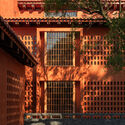
The renovation heavily emphasizes tactile, low-impact materials that harmonize with the mountain environment. Weathered wood, exposed local stone, and glass are used to blur the boundaries between indoor spaces and the surrounding forest. By retaining the core structural framework of the decommissioned bus station, the project significantly reduced construction waste and embodied carbon. Large apertures and open-air courtyards invite the mountain mist, natural light, and ambient forest sounds directly into the interior, turning environmental elements into active building materials.
Functional Zoning for Contemplative Tourism
With millions of annual visitors making the pilgrimage to Qingshuiyan Ancestral Hall, the retreat center provides essential infrastructure without compromising tranquility. The interior program is thoughtfully divided:
- Tea Houses: Designed to foster quiet contemplation and social connection over locally harvested Anxi tie guan yin tea.
- Vegetarian Restaurants: Offering plant-based dining rooted in local culinary traditions and mindful eating practices.
- Resting Areas: Quiet zones designed for meditation, pausing, and mental decompression before or after visiting the ancestral hall.
Official Responses and Design Philosophy
In their design statement, the architects at RESP Studio elaborated on the guiding philosophy behind the transformation:
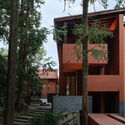
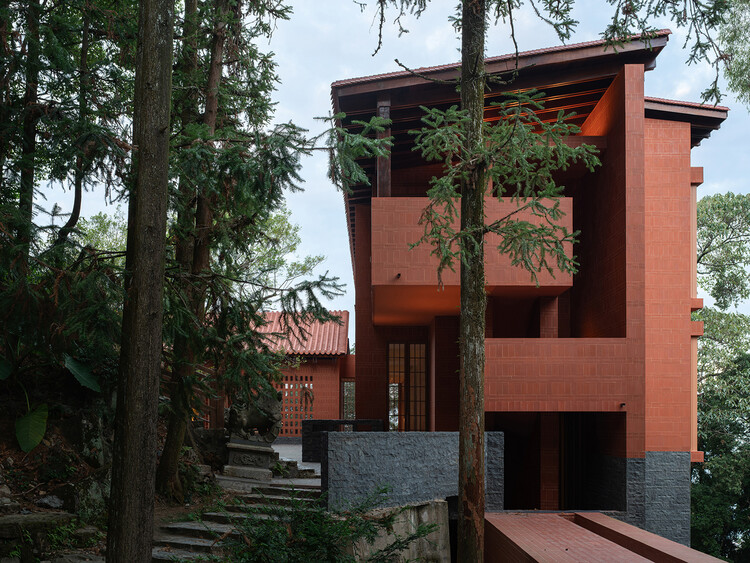
"Set within the core scenic area of the thousand-year-old Qingshuiyan Ancestral Hall in Anxi, Quanzhou, this project renovates a decommissioned old bus station left unused after its functional relocation. The site is anchored by a moss-draped ancient banyan tree at the center of a forest-framed open square, with a dilapidated two-story station building, native rock formations, and ancient mossy paths defining its unique natural and historic context."
The studio emphasized that the project’s core ethos was derived directly from the cultural legacy of the ancestral hall itself. Because the site serves as a vital spiritual anchor for over 100 million people across geographical divides, the architecture had to embody concepts of harmony, respect for nature, and communal healing.
Curator Han Shuang noted that transforming a symbol of modern transit—a place historically associated with noise, movement, and arrival—into a space for stillness and meditation represents a poetic inversion of the site’s original purpose. Instead of moving people through a space to somewhere else, the new retreat center encourages visitors to stop, look inward, and be present in the moment.

Implications: A New Blueprint for Rural and Scenic Regeneration
The completion of the Qing Shui Meditation Retreat Center carries profound implications for architectural preservation and tourism management in culturally sensitive regions across China and beyond.
1. A Sustainable Alternative to Demolition
In many rapidly developing regions, obsolete utilitarian structures—such as old bus stations, factories, and administrative offices—are routinely demolished to make way for new construction. RESP Studio’s work demonstrates that adaptive reuse can be successfully applied even to mundane, utilitarian infrastructure. By transforming an abandoned concrete building into a contemplative cultural hub, the project proves that sustainable design can honor history while drastically reducing environmental footprints.
2. Balancing Mass Tourism with Spiritual Conservation
Major pilgrimage sites and scenic areas frequently struggle with the pressures of mass tourism, which often leads to commercial over-development and the destruction of local character. By providing well-designed supporting facilities—such as quiet tea houses and meditation spaces—that distribute crowds and encourage mindful behavior, the Qing Shui Meditation Retreat Center offers a model for managing high-volume visitor traffic without sacrificing the spiritual integrity of a historic landscape.
3. Deepening Regional Identity Through Architecture
The project highlights the potential of contextual architecture. By incorporating native stone, honoring ancient banyan trees, and referencing the architectural vernacular of Fujian, the retreat center reinforces local pride and cultural continuity. For the millions of believers in Taiwan and Southeast Asia who trace their spiritual heritage back to Qingshuiyan, the renovated facility offers a welcoming, respectful gateway to their ancestral roots.
Ultimately, the Qing Shui Meditation Retreat Center stands as a testament to the power of thoughtful architecture. By listening to the whispers of the wind through the Penglai Mountain mists and respecting the layers of history embedded in the soil, RESP Studio has turned a forgotten transit station into a timeless monument of peace and reflection.
