

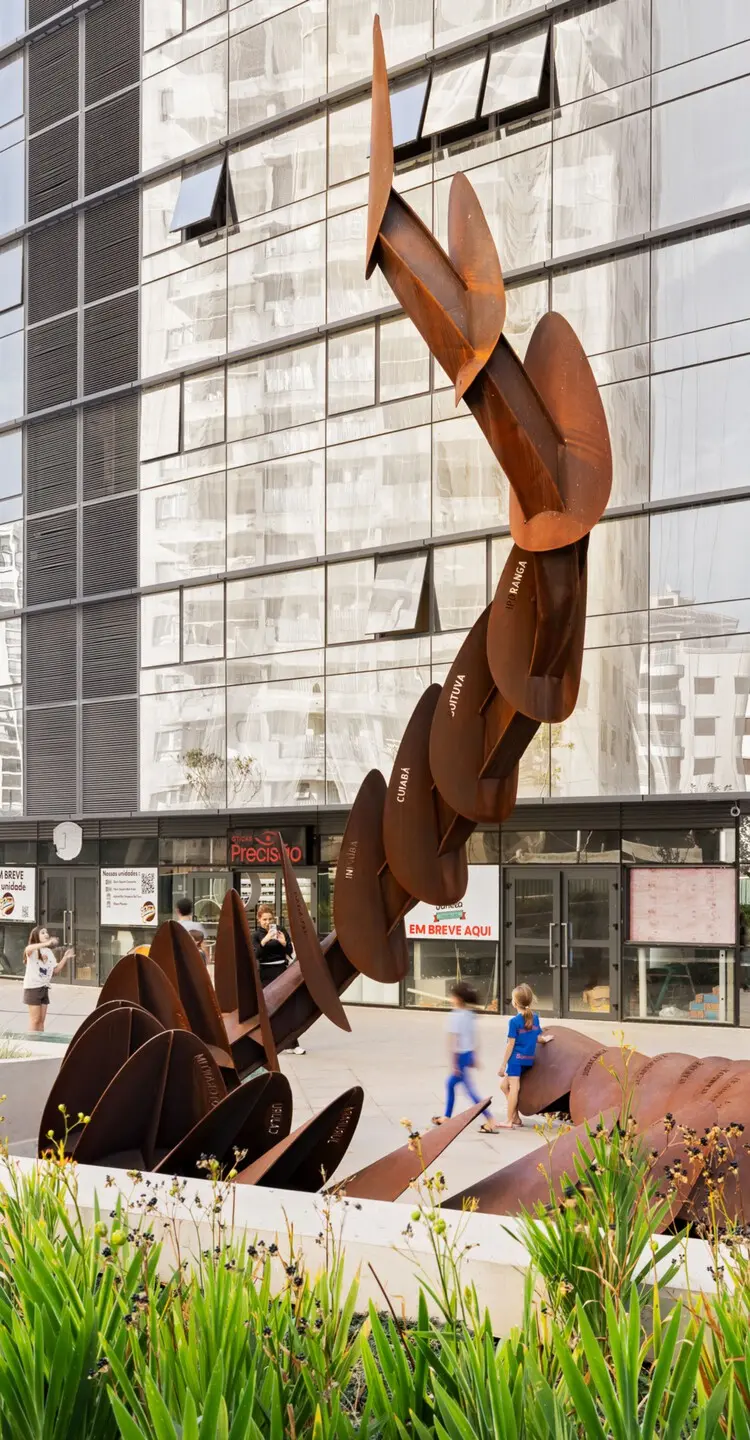
SOROCABA, BRAZIL — In a striking synthesis of contemporary design, cultural heritage, and public art, acclaimed Brazilian design practice Estudio Guto Requena has unveiled its latest monumental creation: the Encontros ("Encounters") sculpture. Curated by Susanna Moreira and captured through the lens of architectural photographer Ana Mello, the newly installed public artwork serves as a profound spatial and emotional tribute to Sorocaba, the hometown of the studio’s founder, Guto Requena.
Rooted deeply in the native Tupi-Guarani etymology of the city’s name—which translates to "torn land"—the sculpture engages in a dynamic dialogue with the urban landscape, architectural form, and collective memory. Situated within the public realm, Encontros invites citizens and visitors alike to pause, reflect, and reconsider their relationship with public spaces and shared history.
Main Facts: The Anatomy of Encontros
- Project Encontros (Encounters) Sculpture
- Design Studio: Estudio Guto Requena
- Lead Designer: Guto Requena
- Curator: Susanna Moreira
- Location: Sorocaba, São Paulo, Brazil
- Photography: Ana Mello
- Primary Theme: Intersection of indigenous heritage, digital-age design fabrication, and public engagement.
- Etymological Roots: Derived from the Tupi-Guarani term for Sorocaba, signifying "torn land."
The project extends Estudio Guto Requena’s ongoing exploration of how physical objects and public art can act as catalysts for human connection. In an era increasingly dominated by digital isolation, Encontros aims to pull citizens back into the physical public sphere by offering a tactile, visually striking landmark that commands attention and encourages communal interaction.
Chronology: From Concept to Public Installation
The realization of the Encontros sculpture represents the culmination of extensive research, structural engineering, and community-focused design thinking. While public art installations often span years from conception to inauguration, the timeline for Encontros reflects a focused, multidisciplinary effort led by Estudio Guto Requena.
Phase 1: Conceptualization and Etymological Research (Early Developmental Stages)
The genesis of the project lay in Guto Requena’s personal and professional ties to Sorocaba. Seeking to create a piece that transcended mere decoration, the studio embarked on a deep dive into the region’s pre-colonial and colonial history. The research centered on the Tupi-Guarani roots of the city’s name, Sorocaba, examining how the metaphor of a "torn land" could be translated into physical geometry. The team conceptualized the sculpture not as a solid, static mass, but as a fractured yet cohesive form that mirrors the layers of history embedded in the Brazilian soil.
Phase 2: Design Iteration and Digital Fabrication (Mid-Development)
Known for integrating digital technologies, parametric design, and interactive media into spatial projects, Estudio Guto Requena utilized advanced computational modeling to shape the sculpture. The design team tested numerous iterations to ensure the structure could withstand environmental stressors while maintaining its fluid, organic aesthetic. Scale models were scrutinized for how they would interact with natural sunlight, shadows, and pedestrian movement patterns.
Phase 3: Fabrication and Site Integration (Pre-Launch)
The intricate components of the sculpture were fabricated using precision techniques, ensuring that the physical embodiment matched the digital blueprints. Transporting and assembling the monumental artwork required careful coordination with local authorities and engineering specialists to position it seamlessly within its designated public environment in Sorocaba.
Phase 4: Official Unveiling and Public Reception (September 2026)
The sculpture was officially revealed to the public in early September 2026, accompanied by professional documentation by architectural photographer Ana Mello. The launch marked a significant milestone for Sorocaba’s cultural landscape, drawing civic leaders, art critics, and local residents to experience the piece firsthand.
Supporting Data and Architectural Context
To understand the weight of Encontros, one must examine the broader portfolio of Estudio Guto Requena and the evolving role of public sculpture in Brazilian cities.
- The Urban Canvas: Public art in rapidly growing Brazilian metropolitan areas often faces the challenge of alienation amidst concrete expansions. Encontros addresses this by utilizing human-centric scale and biomorphic forms that contrast sharply with rigid, orthogonal city grids.
- Materiality and Craftsmanship: The project blends industrial fabrication methods with artistic sensitivity. By employing durable materials designed to endure public exposure, the studio ensures the longevity of the artwork.
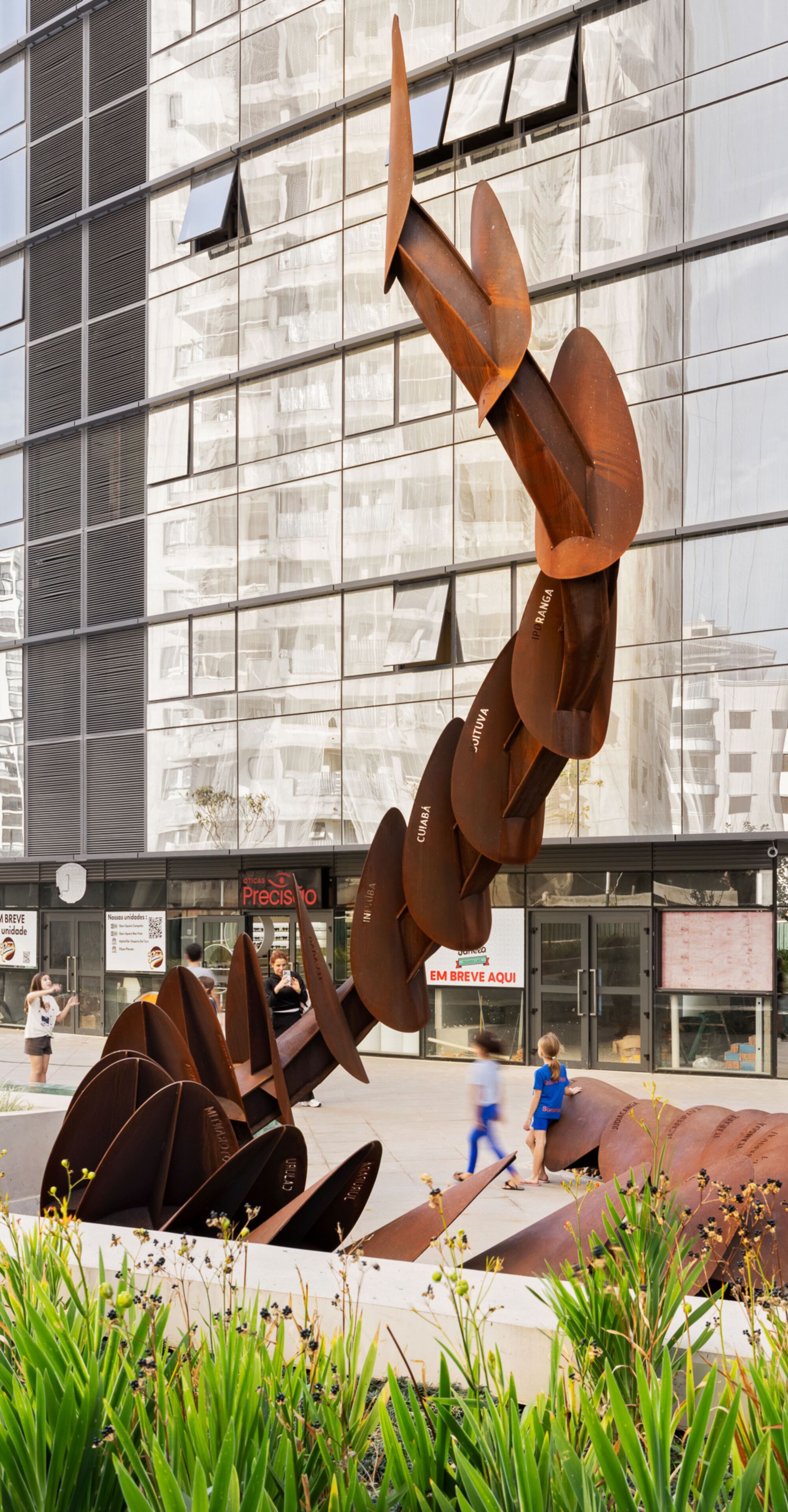
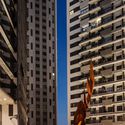
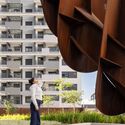
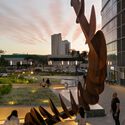
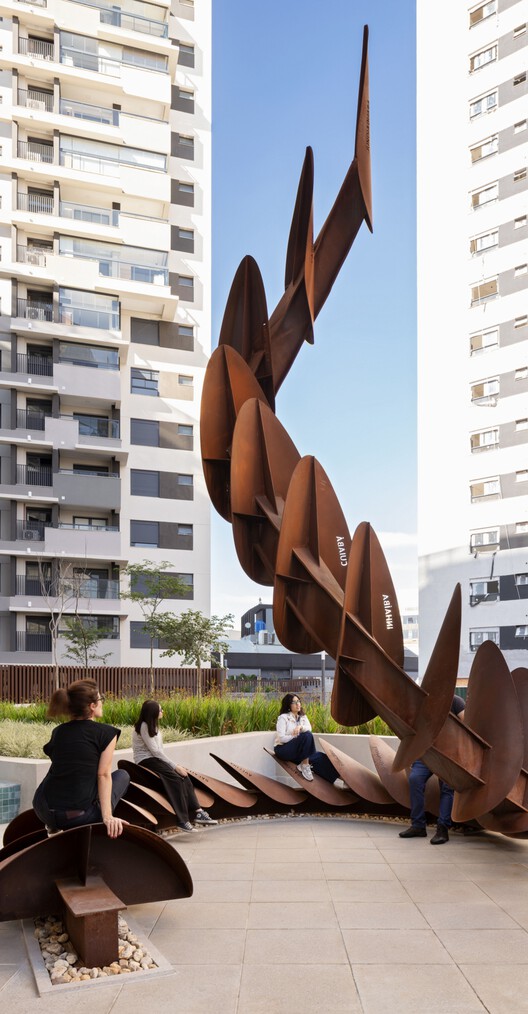
- Photographic Documentation: The architectural photography by Ana Mello captures the sculpture from multiple vantage points—emphasizing its interaction with surrounding stairways, balconies, and open plazas. Mello’s framing highlights how the sculpture changes appearance depending on the viewer’s proximity, shifting from an imposing monumental structure to an intimate frame for human interaction.
+-------------------------------------------------------------------------+
|                       PROJECT METRICS & PARAMETERS                      |
+---------------------------+---------------------------------------------+
| Primary Discipline        | Public Art / Architectural Sculpture        |
| Cultural Reference        | Tupi-Guarani Heritage ("Torn Land")         |
| Primary Medium            | Industrial Fabrication & Parametric Design  |
| Principal Photographer    | Ana Mello                                   |
| Curatorial Oversight      | Susanna Moreira                             |
+---------------------------+---------------------------------------------+
Official Responses and Critical Perspectives
The unveiling of Encontros has generated considerable dialogue within Brazil’s architectural and artistic communities. Curators, designers, and local stakeholders have praised the studio’s ability to weave historical narratives into modern spatial design.
"The Encontros sculpture is more than a physical object placed in a square; it is an active participant in the urban dialogue," notes curator Susanna Moreira. "By invoking the indigenous history of Sorocaba through a contemporary lens, the work forces us to confront the layers of identity that construct our cities."
Guto Requena reflected on the emotional resonance of designing for his hometown:
"Sorocaba shaped my early understanding of space, community, and memory. Returning to my roots to create Encontros has been a deeply moving journey. We wanted to honor the ‘torn land’ not with sorrow, but with a celebration of resilience, connection, and the unexpected encounters that define urban life."
Architectural critics have similarly lauded the project for its refusal to passify public space. Instead of a monolithic monument that demands passive admiration, Encontros invites tactile engagement, serving as a focal point for civic gatherings, informal conversations, and photographic documentation by everyday passersby.
Implications for Urban Public Art
The successful launch of Encontros signals several broader trends in contemporary Latin American design:
- Decolonizing Public Spaces: By explicitly anchoring the artwork in Tupi-Guarani nomenclature and history, Estudio Guto Requena highlights the importance of recognizing pre-colonial roots in modern urban planning and public art initiatives.
- Technological Humanism: The studio proves that advanced digital design tools do not need to result in cold, sterile environments. Instead, parametric design can be harnessed to evoke organic warmth, storytelling, and emotional resonance.
- Catalyzing Civic Engagement: As cities worldwide grapple with the privatization of public realms and digital alienation, installations like Encontros demonstrate the vital role that thoughtfully curated art plays in reclaiming public squares as spaces for genuine human connection.
As Encontros settles into its permanent home in Sorocaba, it stands as a testament to the power of design to heal, provoke, and unite—transforming a "torn land" into a landscape of shared encounters.
