

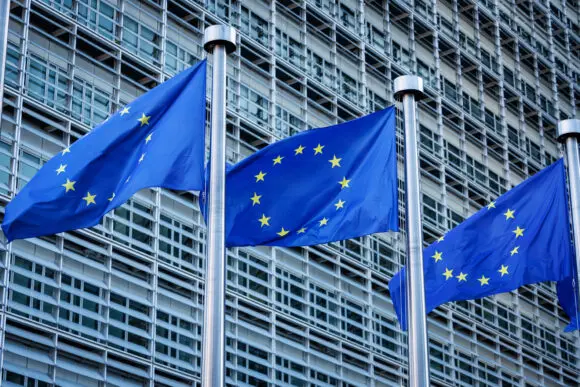
BRUSSELS — In a major pivot for European economic policy, the European Commission has unveiled a sweeping overhaul of its antitrust guidelines, offering dominant corporations significantly more regulatory breathing room. Under the newly revised framework, companies commanding substantial market power may now justify otherwise restrictive or abusive business practices—ranging from aggressive pricing strategies to complex supply arrangements—if those actions directly contribute to the European Union’s broader strategic objectives, including supply chain resilience, public health, product safety, and sustainability goals.
The policy shift, announced by EU regulators, represents a calculated departure from decades of rigid enforcement that historically prioritized consumer welfare and strict price controls above all else. By explicitly linking dominant-firm behavior to geopolitical and macroeconomic stability, Brussels is signaling a new era of industrial policy—one where the urgent need to withstand external shocks, counter overseas supply vulnerabilities, and compete with global giants takes center stage.
Main Facts: What the New Antitrust Guidelines Entail
At the heart of the European Commission’s policy revamp is a modernization of how regulators apply Article 102 of the Treaty on the Functioning of the European Union (TFEU), which prohibits the abuse of a dominant market position.
Under the updated guidelines, dominant corporations facing accusations of anticompetitive behavior—such as predatory pricing, margin squeezes, or exclusionary tactics—are now granted a formalized legal avenue to rebut these claims. Specifically, firms can defend their market conduct by demonstrating that their actions directly facilitate:
- Supply Chain Resilience: The ability to absorb external economic shocks, secure critical raw materials, and prevent severe bottlenecks in times of geopolitical crisis.
- Public Health and Product Safety: Measures that safeguard consumers, enhance the safety standards of critical goods, or ensure uninterrupted access to essential medical supplies and pharmaceuticals.
- Sustainability and Green Transitions: Efficiencies and operational adjustments that actively advance the EU’s ambitious climate targets, circular economy initiatives, and green energy goals.
Crucially, the Commission is not granting dominant firms a blanket exemption from antitrust laws. Instead, the updated framework establishes a nuanced burden-proof mechanism. Companies must provide verifiable evidence that the purported benefits of their behavior outweigh the restrictive effects on competition, and that the conduct in question is indispensable to achieving these public policy aims.
Chronology: The Evolution Toward Strategic Industrial Policy
The path toward these modernized guidelines has been paved by a series of cascading global crises that exposed the vulnerabilities of the European single market.
- 2020–2021 (The Pandemic Disruption): As the COVID-19 pandemic swept across the globe, European supply chains ground to a halt. Critical medical equipment, semiconductors, and raw materials faced severe shortages, forcing Brussels to rethink its reliance on external manufacturing hubs, particularly in Asia.
- 2022–2023 (The Energy Shock and Geopolitical Tensions): The outbreak of war in Ukraine triggered an unprecedented energy crisis across Europe. Surging inflation, weaponized commodity supplies, and mounting trade tensions with both the United States and China highlighted the fragility of Europe’s industrial base. Policymakers increasingly questioned whether strict, narrow antitrust enforcement was hindering Europe’s ability to build domestic economic muscle.
- Mid-2025 (The Merger Rules Overhaul): In a precursor to the current antitrust shift, EU regulators overhauled the bloc’s merger control rules. This earlier reform deliberately lifted several regulatory barriers to facilitate the creation of large European corporate champions. The explicit goal was to enable homegrown firms to achieve the scale necessary to compete on equal footing with dominant American and Chinese conglomerates.
- Early 2026 (The Antitrust Modernization): Culminating months of internal debate, industry consultations, and economic impact assessments, the European Commission officially unveiled its revamped antitrust guidelines. This move aligns competition enforcement with the EU’s broader geopolitical strategy of open strategic autonomy.
Supporting Data and Economic Context
To understand the magnitude of this regulatory shift, one must examine the economic landscape in which European companies operate. For decades, the European Commission’s Directorate-General for Competition (DG Competition) operated under a firmly consumer-centric paradigm. Market dominance was viewed with inherent suspicion, and efficiencies claimed by dominant players were scrutinized under extraordinarily high legal thresholds.
However, recent economic data underscores the mounting pressure facing European industry:
- Global Competitiveness Gap: According to recent market intelligence reports, Europe is home to significantly fewer global mega-corporations compared to the United States and China, particularly in high-growth sectors such as artificial intelligence, green technology, and advanced manufacturing.
- Supply Chain Vulnerability Index: Studies compiled by EU trade bodies indicate that European manufacturing sectors remain heavily dependent on concentrated foreign suppliers for critical inputs, including rare earth elements, battery materials, and active pharmaceutical ingredients.
- The Cost of Compliance: Business associations, such as BusinessEurope, have long argued that rigid European antitrust rules inadvertently penalized firms that sought to collaborate on supply chain security or sustainability standards out of fear of heavy cartel or abuse-of-dominance fines.
By integrating resilience and sustainability into antitrust assessments, the Commission is attempting to bridge the gap between rigorous market oversight and the harsh economic realities of a fragmented, increasingly adversarial global trade environment.
Official Responses and Stakeholder Reactions
The announcement has triggered a wave of reactions from policymakers, legal experts, and industry representatives across the continent.
The European Commission’s Perspective
Teresa Ribera, the high-profile EU competition chief, defended the revamp as a necessary evolution for modern regulatory governance. In an official statement accompanying the release, Ribera emphasized that the guidelines provide much-needed legal certainty:
"These updated guidelines provide clarity and predictability on the limits of the law for companies operating in Europe. We are ensuring that competition enforcement remains robust while recognizing that businesses must navigate a complex, rapidly changing global landscape. Resilience and sustainability are not luxuries; they are fundamental prerequisites for Europe’s economic future."
Commission insiders have stressed that the policy does not signal a retreat from antitrust enforcement, but rather a maturation of the regulatory toolkit. Regulators maintain that dominant firms will still face severe penalties for anticompetitive abuses that cannot be objectively justified by overriding public interests.
Industry and Legal Reactions
Corporate law firms and major business federations have largely welcomed the move, noting that it brings long-overdue flexibility to European competition law. For years, corporate legal teams advised clients to steer clear of cooperation or market strategies that could even remotely be construed as exploitative, regardless of their positive environmental or supply-securing outcomes.
However, the policy has also drawn cautious scrutiny from consumer advocacy groups and independent economic watchdogs. Critics argue that giving dominant firms "more leeway" runs the risk of cementing monopolies and oligopolies, potentially leading to higher prices for consumers under the guise of "sustainability" or "resilience."
Consumer organizations have urged the Commission to establish rigorous, transparent monitoring mechanisms to ensure that corporations do not weaponize these new exemptions as a smokescreen for anti-competitive exclusionary practices.
Implications: What This Means for the Future of European Markets
The implementation of these revised guidelines will have profound, long-term implications for the European business environment, regulatory compliance, and international trade dynamics.
1. A Shift in Corporate Strategy
Major European corporations and multinational firms operating within the single market will need to recalibrate their legal and strategic planning. Companies enjoying significant market shares can now design proactive resilience and sustainability frameworks with greater legal backing. However, they must also be prepared to shoulder the heavy evidentiary burden required to prove that their market behavior genuinely serves the public interest rather than simply suppressing rivals.
2. Tension Between Free Markets and Industrial Policy
The policy highlights an ongoing philosophical debate within the European Union: the delicate balance between free-market capitalism and state-guided industrial policy. While traditionalists fear that empowering dominant firms will erode competitive dynamism, proponents argue that Europe cannot afford a purist approach to competition while global competitors are heavily subsidized and protected by foreign states.
3. Global Geopolitical Ramifications
By explicitly empowering local firms to build scale and withstand overseas threats, Brussels is indirectly acknowledging the pressures of a shifting global order characterized by economic nationalism, trade fragmentation, and supply chain weaponization. How trading partners—particularly the United States and China—respond to these policies, especially regarding potential accusations of industrial favoritism, remains to be seen.
Conclusion
The European Commission’s overhaul of its antitrust guidelines marks a defining moment for modern European economic governance. By aligning competition law with the imperatives of resilience, sustainability, and global competitiveness, Brussels is forging a new path. Whether this pragmatic approach successfully revitalizes European industry without sacrificing consumer protection will depend entirely on the rigorous, vigilant enforcement of the newly established legal boundaries in the years to come.
