

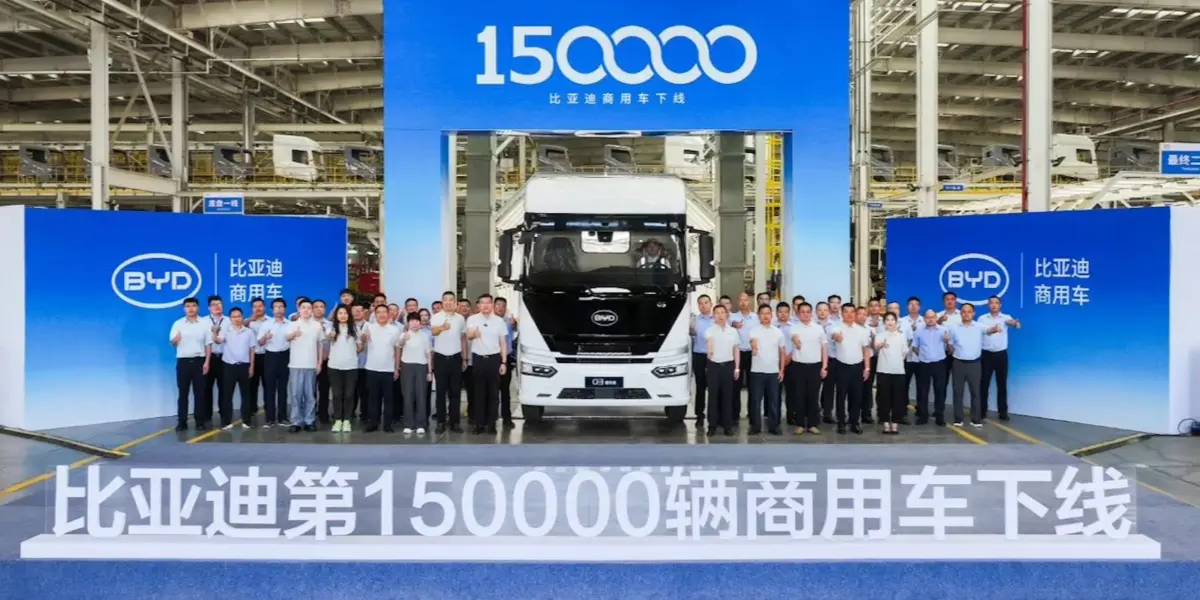
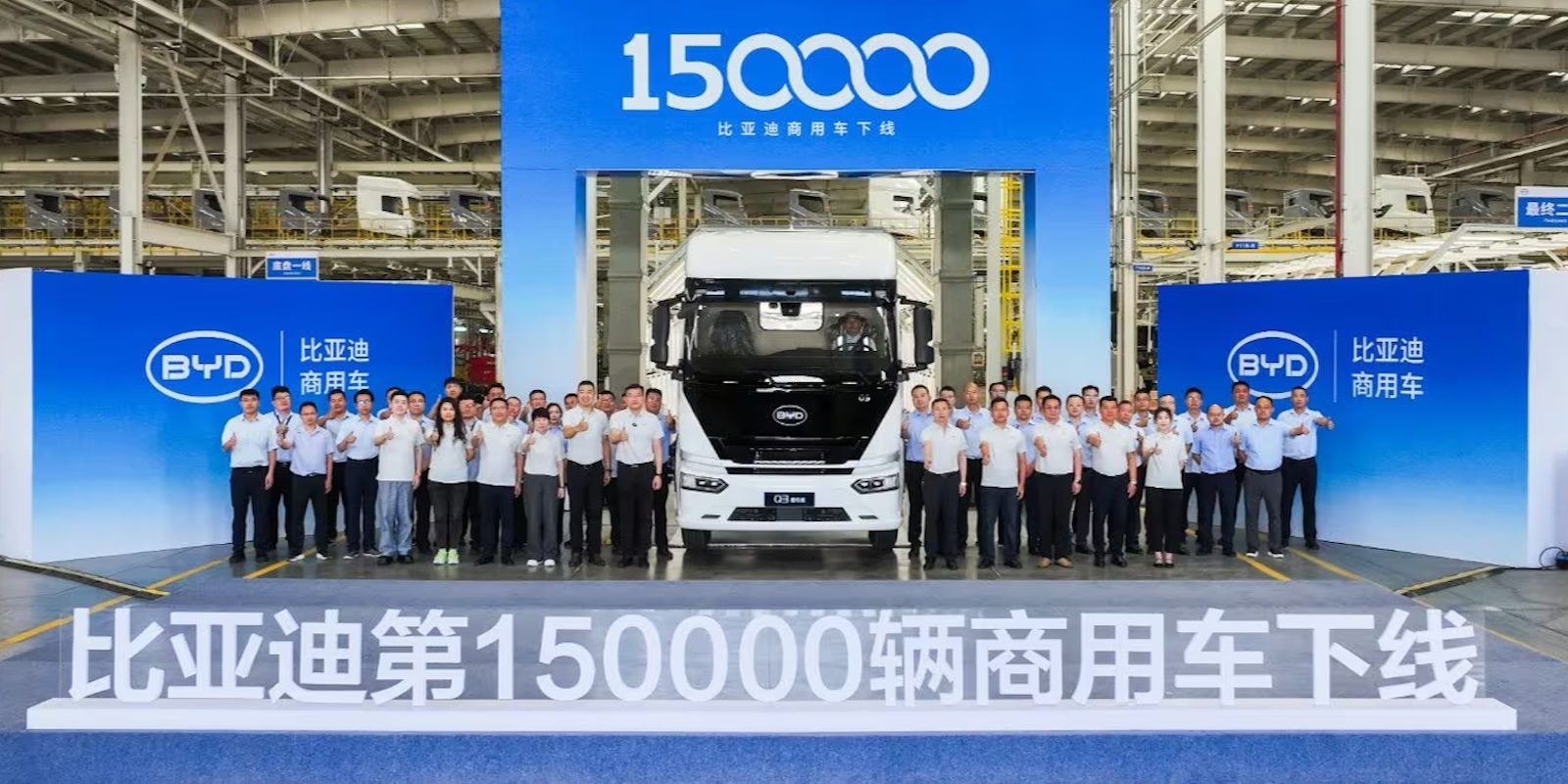
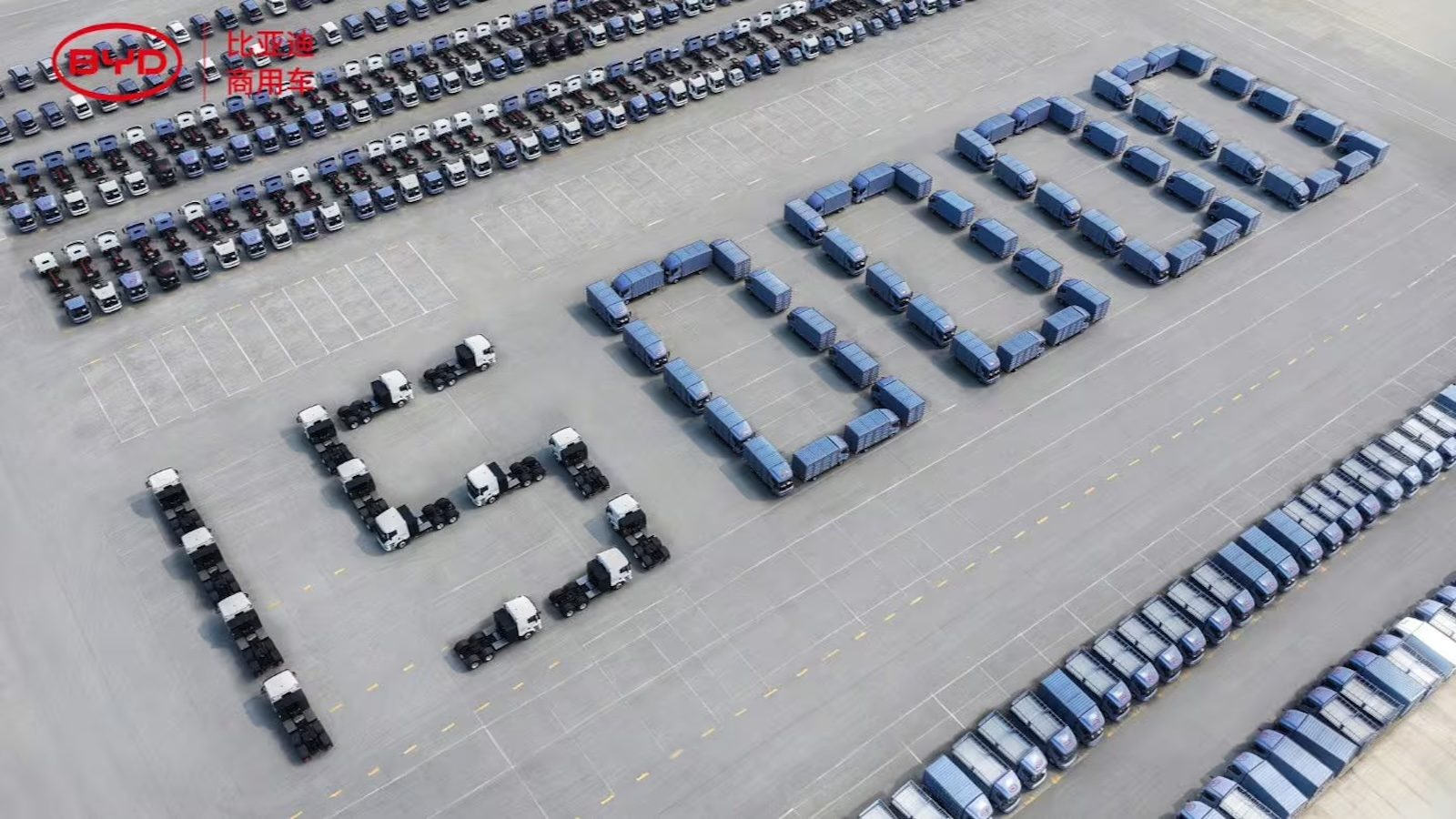
JIANGSU, CHINA — Global electric vehicle titan BYD has officially stamped another monumental achievement into the history books of zero-emission transportation. This week, the company’s advanced manufacturing facility in Huai’an, Jiangsu province, rolled its 150,000th new energy commercial vehicle (NEV) off the production line.
While BYD has spent the better part of two decades dominating passenger car markets and revolutionizing battery chemistry across the globe, this latest milestone underscores a deliberate and aggressive strategic pivot. The company’s growth engine is shifting decisively into the commercial heavy-duty sector, with battery-electric semi-trucks leading the charge toward total fleet decarbonization.
Main Facts: The 150,000-Unit Milestone and the BYD Q3
The landmark vehicle that crossed the Huai’an assembly line was a BYD Q3 battery-electric semi-truck—a heavy-duty workhorse designed to tackle grueling logistics routes without emitting a single tailpipe pollutant. As global logistics networks face mounting regulatory pressure to cut carbon footprints, heavy-duty electric vehicles (HDEVs) have emerged as the ultimate frontier. Fleet operators require high-performance alternatives to diesel that can haul massive loads across continental distances without compromising reliability or operational uptime.
At the heart of the BYD Q3 is a formidable engineering package built around the company’s proprietary technology ecosystem:
- Battery Power: A massive 600 kWh capacity utilizing BYD’s signature blade-style lithium iron phosphate (LFP) battery chemistry, renowned for its superior thermal stability, safety, and longevity.
- Powertrain: A dual-motor setup generating a staggering 600 kW—roughly equivalent to 800 horsepower—capable of moving a gross combined vehicle weight (GCVW) of 108,000 lbs.
- Range and Charging: The truck offers an estimated 325 kilometers (approximately 200 miles) of range on a single charge. To keep operations moving with minimal downtime, the Q3 features dual-gun DC fast-charging architecture, enabling a 20% to 80% state-of-charge replenishment in just 30 minutes.
With this release, BYD’s New Energy truck division is no longer just an experimental side project; it has blossomed into a substantial, highly scalable global commercial enterprise.
Chronology: The Evolution of BYD’s Commercial Expansion
To understand how BYD reached the 150,000-unit milestone, it is essential to trace the strategic trajectory of the company’s commercial vehicle division.
- The Early Foundation: Long before passenger cars like the Seal and Atto 3 made BYD a household name worldwide, the company recognized the urgent need to electrify urban public transit. BYD pioneered electric buses, deploying fleets to major metropolitan areas across China, Europe, and the Americas. This laid the crucial groundwork for heavy-duty powertrain development.
- Scaling Up Manufacturing: As demand for commercial electrification grew, BYD invested heavily in dedicated heavy-duty manufacturing infrastructure. The Huai’an plant in Jiangsu province was established as a specialized hub for building next-generation electric trucks, engineered specifically to handle high-torque demands and heavy-duty cycle testing.
- 2025 Market Acceleration: Throughout 2025, BYD refined its commercial truck portfolio, introducing upgraded LFP blade battery configurations and faster charging capabilities tailored to logistics hubs and regional freight corridors.
- The Fall 2026 Breakthrough: September 2026 marked a watershed moment for the company. BYD reported staggering monthly sales of 6,848 NEV trucks—representing a phenomenal 113.33% increase year-over-year. This explosive growth propelled total deliveries through the first nine months of 2026 to 53,032 units, a 28.46% surge compared to the same period in 2025, culminating in the 150,000th production milestone this October.
Supporting Data: Surging Sales and Market Dynamics
The numbers behind BYD’s commercial vehicle ascent tell a compelling story of market demand meeting industrial capacity. The heavy-duty truck sector has historically been one of the hardest industries to abate, heavily reliant on diesel due to the sheer energy density required to move freight. However, shifting economics and tightening environmental mandates are accelerating a paradigm shift.
| Metric | Data Point | Year-Over-Year Change |
|---|---|---|
| Total Commercial NEV Production | 150,000 units (Cumulative) | Milestone Reached Oct 2026 |
| September 2026 Truck Sales | 6,848 units | +113.33% |
| YTD Deliveries (First 9 Months 2026) | 53,032 units | +28.46% vs. 2025 |
| Q3 Battery Capacity | 600 kWh (LFP Blade Battery) | N/A |
| Q3 Power Output | 600 kW (~800 hp) | N/A |
| Gross Combined Vehicle Weight (GCVW) | 108,000 lbs | N/A |
These figures highlight a broader industry trend. As competitors like Tesla scale up their own heavy-duty programs—such as the Tesla Semi achieving volume production milestones in Nevada—the global market for electrified freight transport is transitioning from a niche trial phase into a high-stakes commercial race. BYD’s massive domestic manufacturing footprint gives it a distinct cost and scale advantage as it eyes international expansion.
Official Responses and Industry Perspectives
Industry analysts and market observers have noted that BYD’s vertical integration strategy is its greatest asset in the commercial space. Because the company manufactures its own semiconductors, motors, and LFP battery packs, it can navigate supply chain bottlenecks far more effectively than legacy commercial truck manufacturers.
While formal corporate statements accompanying the 150,000-unit milestone emphasized gratitude toward fleet partners and engineering teams, external logistics experts have been vocal about the implications.
"The hurdle for electric trucks has never been about whether they can pull a heavy load—the torque of electric motors speaks for itself," noted one senior automotive supply chain analyst. "The real hurdles have been charging infrastructure, battery cost, and turnaround times at depots. By implementing dual-gun DC fast charging and utilizing ultra-safe LFP blade cells that can endure thousands of deep cycles, BYD is directly addressing the operational pain points of fleet managers."
Furthermore, municipal authorities in regions like Jiangsu province have praised the Huai’an plant for driving green economic development, positioning the region as a global epicenter for next-generation manufacturing technology.

Implications: What 150,000 Electric Trucks Mean for the Future
The production of 150,000 commercial New Energy Vehicles is more than just a celebratory corporate milestone; it represents a major inflection point for global logistics and environmental policy.
1. Massive Emissions Reductions
Replacing 150,000 diesel-powered commercial trucks and buses with zero-emission alternatives takes a massive toll off urban air quality and global greenhouse gas inventories. Heavy-duty diesel trucks are disproportionately responsible for particulate matter and nitrogen oxide emissions. Multiplying BYD’s fleet deployment by millions of annual operational miles translates to billions of gallons of diesel saved over the lifespan of these vehicles.
2. Intensifying Global Competition
BYD’s aggressive push into heavy-duty trucks sets the stage for fierce international competition. As Chinese NEV makers continue to refine their commercial offerings, legacy heavy-duty truck manufacturers in North America, Europe, and Japan face mounting pressure to accelerate their own zero-emission timelines. The race to dominate regional freight corridors will ultimately benefit fleet operators through lower total cost of ownership (TCO) and faster technological innovation.
3. Infrastructure and Grid Adaptation
The rapid deployment of heavy-duty electric fleets carrying massive battery packs—such as the Q3’s 600 kWh system—places new demands on electrical grids and charging corridors. The success of BYD’s commercial expansion will increasingly rely on the rapid buildout of megawatt-scale charging stations and depot-level energy management systems to ensure that massive fleets can charge simultaneously overnight or during driver rest breaks.

As BYD looks toward its next hundred thousand commercial NEVs, the message to the global logistics industry is clear: the electric truck revolution is no longer coming—it is already hauling freight down the highway.
