As European cities face the escalating realities of climate change—marked by soaring summer temperatures, severe urban heat islands, and a pressing need for integrated natural systems—urban planners are searching for agile, scalable solutions. The traditional approach to urban development, which relies on multi-year master plans and rigid zoning laws, often proves too slow to meet the urgent demands of a warming planet.
Enter initiatives like ReGreeneration, a Horizon Europe program spanning nine major European cities. By focusing on neighborhood-scale urban renaturing, the project explores how communal spaces, complete neighborhoods, and nature-based solutions can coalesce into a cohesive model for climate resilience. In Barcelona—a city world-renowned for its progressive public space interventions—the initiative centers on the Trinitat Nova neighborhood. Here, urban designers and policymakers are investigating how small, peripheral, and often overlooked "in-between" spaces can serve as catalysts for broader urban transformation.
Main Facts: The Intersection of Tactical Urbanism and Climate Policy
The core objective of Barcelona’s involvement in the ReGreeneration project is bridging the gap between agile, short-term tactical urbanism and long-term municipal policy.
The Core Challenge: Municipalities must rapidly adapt existing urban environments to mitigate excessive heat, improve biodiversity, and expand access to green infrastructure without displacing local communities.
The Living Laboratory: The Trinitat Nova neighborhood acts as a primary testbed, showcasing how peripheral and residual spaces can be converted into functional, climate-resilient community assets.
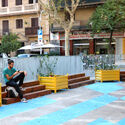
The Methodology: Utilizing tactical urbanism—low-cost, temporary, and reversible interventions—designers can test new uses for public space at a fraction of the time and cost required for traditional capital projects.
The Policy Gap: While tactical interventions have successfully energized local populations worldwide, the critical challenge remains: how to institutionalize the flexibility of temporary projects into permanent municipal legislation and structural urban policy.
Chronology: Barcelona’s Evolution of Public Space
To understand Barcelona’s current experiments in neighborhood renaturing, it is essential to trace the city’s storied history of reclaiming the public realm.
Following the transition to democracy in Spain, Barcelona initiated a municipal strategy known as urbanismo ajardinado (landscaped urbanism) and the creation of "squares of many colors." Neighborhood associations and local architects fought to reclaim neglected industrial lots, transforming them into civic plazas that served as the social glue for working-class districts.
2. The Olympic Catalyst (1992)
The 1992 Olympic Games fundamentally shifted Barcelona’s spatial layout, opening the city to the Mediterranean Sea, modernizing infrastructure, and establishing a global benchmark for mega-event-driven urban renewal. However, this period also prompted critical reflection on the need to balance large-scale infrastructural projects with everyday neighborhood needs.
3. The Superblock (Superadilles) Era (2016–Present)
Under recent municipal administrations, the Superblock model emerged as a radical traffic-reduction strategy. By grouping existing city blocks into larger traffic-calmed zones where pedestrians and cyclists take priority over private vehicles, Barcelona demonstrated how existing street grids could be rapidly repurposed to slash emissions, reduce noise pollution, and return asphalt to nature.
4. Temporary to Permanent: The School Streets and Reversible Urbanism (2020–2025)
Recent interventions by practices like Leku Studio have tested reversible urbanization strategies—particularly around schools—transforming asphalt drop-off zones into vibrant green micro-spaces. These projects have served as direct precursors to the current Horizon Europe initiatives, testing materials and community engagement strategies that can be quickly altered or permanently integrated.
Supporting Data: The Urgency of Renaturing
Urban environments across Southern Europe are warming at rates significantly higher than the global average. Data gathered across participating ReGreeneration cities underscores the quantitative need for tactical and permanent green infrastructure:
The Urban Heat Island Effect: Densely built neighborhoods like Trinitat Nova experience surface temperatures up to 6–8°C higher than surrounding rural areas during peak summer heatwaves.
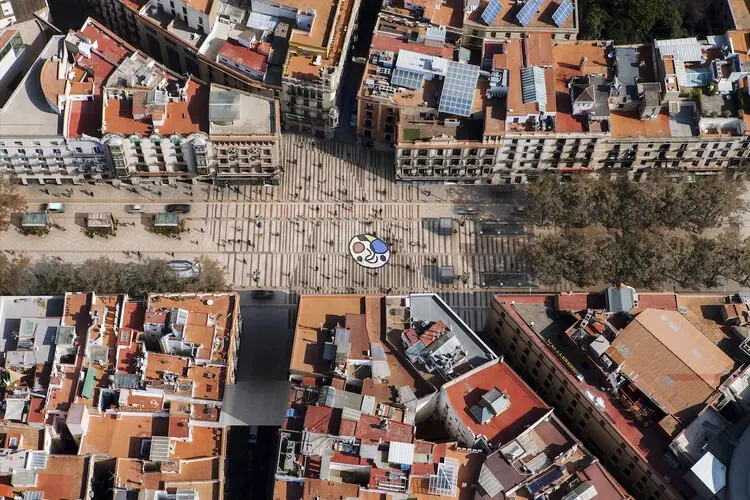
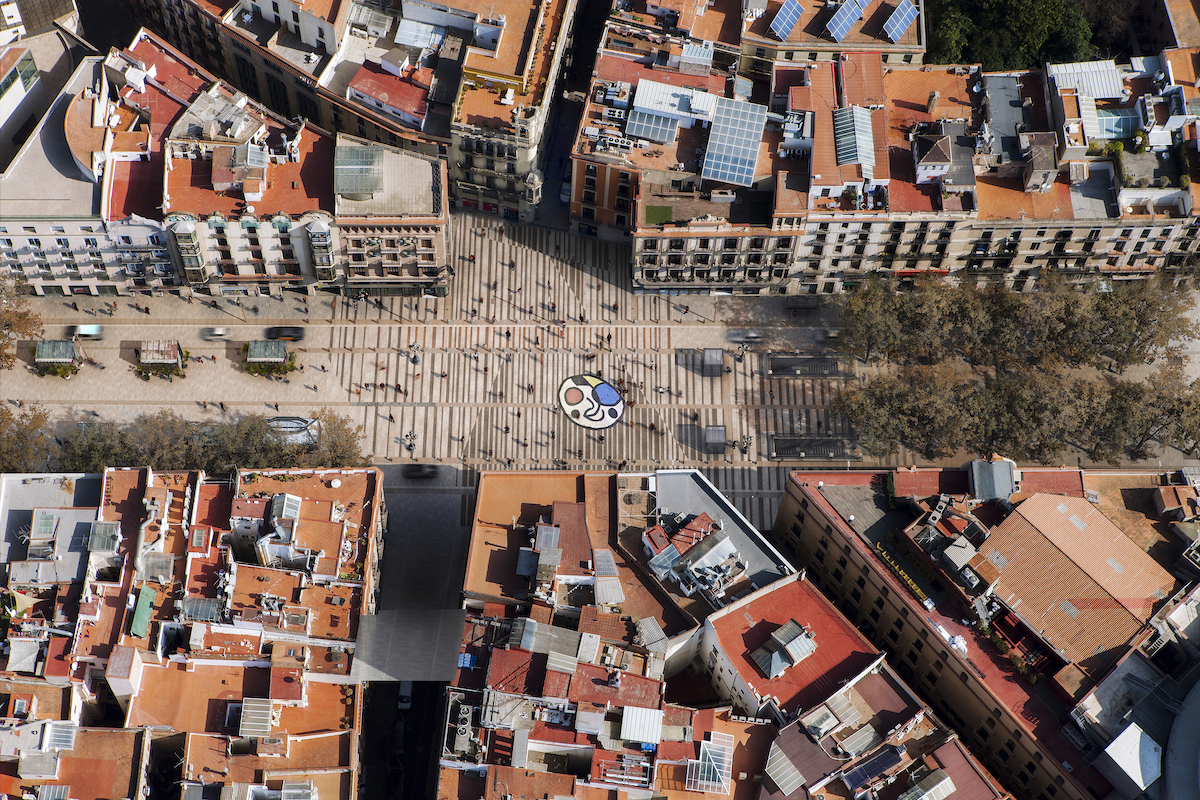
Public Space Deficit: While Barcelona boasts iconic tourist avenues like La Rambla and the wide grids of the Eixample, peripheral districts often suffer from a lack of shaded, high-quality public green space per capita.
Reversibility and Speed: Tactical interventions deployed in pilot zones have shown a reduction in localized surface temperatures by up to 3°C through the strategic introduction of temporary shading devices, permeable paving, and pocket vegetation.
Community Uptake: Post-occupancy evaluations of tactical school zones and pocket parks reveal a 40% increase in social interaction among neighborhood elderly and child demographics within the first six months of implementation.
Official Responses and Stakeholder Perspectives
The tension between grassroots tactical urbanism and institutional bureaucracy is a central theme in Barcelona’s urban planning discourse.
Municipal Planners and City Council Representatives emphasize that while temporary interventions are invaluable for community engagement, they cannot replace comprehensive infrastructure. A spokesperson for the Barcelona City Council noted:
"Tactical urbanism gives us permission to experiment, to fail quickly, and to listen to the neighborhood without the crushing economic burden of a permanent concrete overhaul. However, the true test of our administration is whether we can encode these grassroots successes into our official General Urban Plan, securing funding and maintenance for the long haul."
Urban Designers and Landscape Architects, such as those involved with Leku Studio and local research collaboratives, argue that the "in-between" spaces offer a democratic canvas that traditional zoning ignores.
"When we design the spaces between buildings—the forgotten alleys, the widened road shoulders, the concrete school perimeters—we are designing the daily rituals of urban life," shared a lead researcher on the Barcelona ReGreeneration project. "Policy must catch up to the reality that citizens want green, adaptable spaces right outside their doorsteps, not just in master-planned parks across town."
Local residents in Trinitat Nova have expressed cautious optimism. While community workshops have successfully co-designed several micro-interventions, residents frequently voice concerns over long-term maintenance, gentrification pressures, and ensuring that municipal promises of permanent greening are fully realized rather than left as temporary paint-on-asphalt solutions.
Implications: Translating the In-Between into Global Policy
The experiments unfolding in Barcelona carry profound implications for urban design on a global scale. As cities worldwide grapple with climate extremes, the traditional timeline of urban planning—often spanning decades—is obsolete.
1. Shifting from Master Planning to Adaptive Frameworks
Barcelona’s trajectory suggests that future cities must adopt an adaptive framework model. Instead of dictating a rigid blueprint, municipal policies should establish performance standards—such as maximum temperature thresholds, biodiversity indices, and pedestrian accessibility metrics—allowing neighborhoods to use tactical interventions as legal stepping stones toward permanent zoning changes.
2. Democratizing the Design Process
By focusing on the "in-between" spaces, cities can democratize design. Small-scale interventions lower the barrier to entry for community participation, allowing marginalized neighborhoods to take an active role in shaping their local micro-climates.
3. Institutionalizing Reversibility
One of the most radical policy takeaways from the Barcelona case study is the institutionalization of reversibility. If a temporary bioswale or pedestrian plaza fails to meet community needs or climate metrics, the policy framework should allow for rapid reconfiguration. This flexibility prevents cities from locking themselves into expensive, outdated infrastructure.
Conclusion
Barcelona’s role in the ReGreeneration initiative is more than a local beautification effort; it is a laboratory for the future of European urban policy. By proving that tactical interventions can evolve from temporary experiments into permanent structural policy, Barcelona offers a roadmap for cities striving to remain livable, equitable, and green in an era of rapid climate uncertainty.