

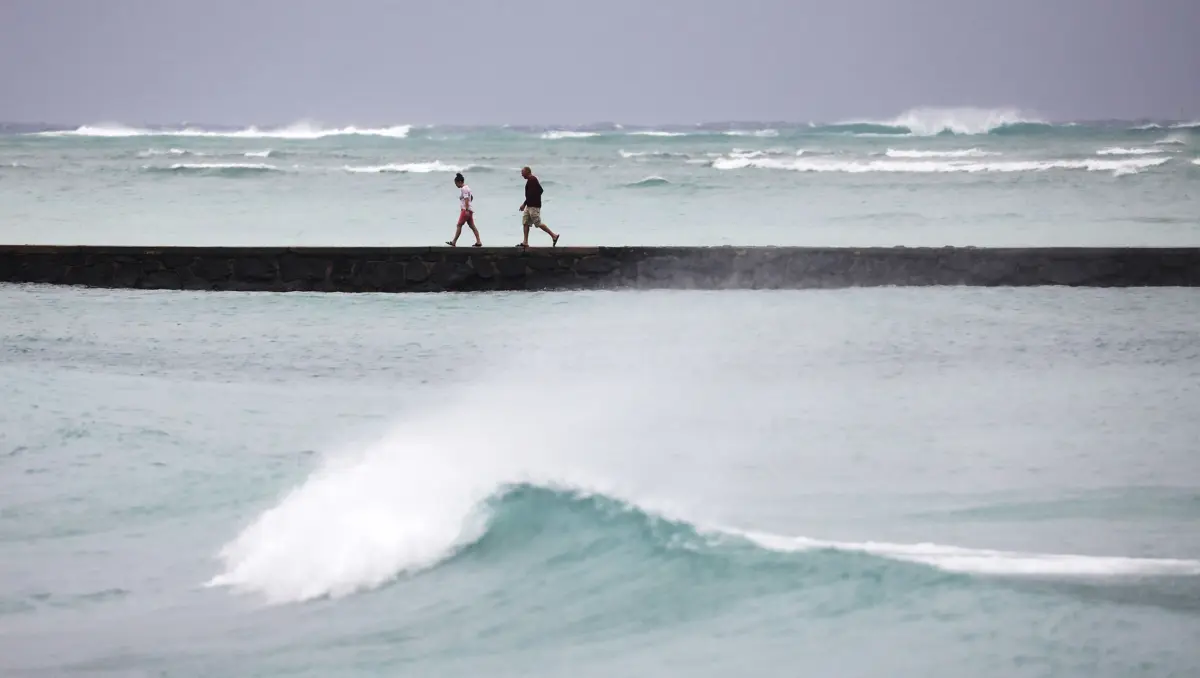
NEW YORK/HONOLULU — Emergency management agencies are stretched to their limits from the Pacific to the American heartland as a dangerous meteorological double-whammy unfolds across the United States. In the Pacific, the Hawaiian Islands are bracing for what could be the state’s first direct hurricane strike in more than three decades, as Tropical Storm Lala intensifies on a direct collision course with the Big Island. Simultaneously, a relentless onslaught of severe thunderstorms has left nearly 300,000 homes and businesses without power across the Midwest, triggering widespread catastrophic flooding, disrupting major transportation hubs, and placing tens of millions of residents under immediate weather alerts.
Meteorologists, emergency planners, and federal disaster officials are monitoring both catastrophic fronts concurrently. The unfolding crisis highlights the growing vulnerability of disparate American regions to extreme, compounding weather anomalies driven by shifting climatic patterns, oceanic warmth, and atmospheric instability.
Main Facts
The United States is currently grappling with two high-impact, simultaneous weather catastrophes that are testing the resilience of local infrastructure and emergency response frameworks.
In the Pacific Ocean, Tropical Storm Lala has evolved into an immediate and severe threat to the Hawaiian archipelago. According to advisories issued by the National Hurricane Center (NHC), Lala is rapidly organizing approximately 435 miles east-southeast of Hilo, packing sustained winds of 60 miles per hour (97 kilometers per hour) while tracking steadily on a west-northwest trajectory. Forecasters predict that the storm will intensify further, crossing the critical threshold into a Category 1 hurricane on the Saffir-Simpson hurricane wind scale just before its closest approach to the Big Island of Hawaii.
If Lala strikes the island as a hurricane, it will mark the first time a tropical cyclone of hurricane intensity has made landfall or directly struck the Hawaiian Islands since Hurricane Iniki devastated Kauai in September 1992. In response to the escalating danger, local authorities have issued a hurricane warning for the Big Island, anticipating destructive winds, dangerous storm surges, and catastrophic rainfall totals that threaten isolated communities, roadways, and coastal infrastructure.
Half a continent away, the U.S. Midwest is reeling from days of relentless, punishing severe weather. An estimated 200,000 homes and businesses remain entirely without electrical power across Indiana alone, following days of severe squall lines, torrential downpours, and damaging straight-line winds. Neighboring states—principally Illinois, Ohio, and Kentucky—are grappling with an additional 87,000 outages, according to real-time data from PowerOutage.com.
The compounding storms have disrupted commercial aviation, flooded low-lying urban and rural areas, and forced numerous swift-water rescues. With yet another round of severe downpours and thunderstorms bearing down on the region, the crisis is far from over. Flood watches and flash flood warnings now extend across a massive geographic corridor stretching from Iowa to West Virginia, with nearly 46 million people residing in areas at risk of severe weather from Colorado to the Mid-Atlantic.
Chronology of Events
The escalation of these dual weather emergencies has unfolded rapidly over the course of the week, catching many communities by surprise and forcing a rapid mobilization of emergency resources.
The Buildup in the Pacific
- Early Week: Atmospheric disturbances in the central Pacific begin organizing under favorable conditions, fueled by anomalously warm sea-surface temperatures. Meteorologists note increasing cyclonic spin, leading to the classification of a tropical depression.
- Midweek: The system strengthens into Tropical Storm Lala, initially tracking safely to the east of the Hawaiian island chain. However, computer models begin shifting the storm’s track westward faster than anticipated.
- Friday: The National Hurricane Center upgrades its outlook, noting that Lala is accelerating and intensifying. Forecasters issue urgent hurricane warnings for the Big Island of Hawaii as sustained winds climb toward 60 mph.
- Saturday (Projected): Lala is forecast to reach Category 1 hurricane strength, with winds hitting 75 mph just off the coast of the Big Island, bringing the immediate threat of torrential rain, mudslides, and destructive winds.
The Midwest Deluge
- Earlier in the Week: A slow-moving frontal boundary stalls over the Mississippi and Ohio River valleys, interacting with deep tropical moisture streaming northward from the Gulf of Mexico. This dynamic produces days of continuous, heavy thunderstorms.
- Midweek: Severe storms erupt across Illinois, Indiana, and Ohio, producing widespread wind damage, downed power lines, and flash flooding that overtakes urban drainage systems and rural river basins alike. Major airports experience severe delays and cancellations.
- Friday: Power outages peak in Indiana near the 200,000 mark. The U.S. Weather Prediction Center issues a moderate risk (Level 3 of 4) for excessive rainfall, warning that saturated soils can no longer absorb additional water. Iowa and northwestern Illinois face the heaviest immediate impacts.
- Weekend Outlook: Storm prediction models indicate that the frontal boundary will continue to spark severe thunderstorms, extending the threat zone eastward toward the Mid-Atlantic states, including parts of Virginia and Maryland.
Supporting Data and Meteorological Analysis
Understanding the scale of these dual events requires a close examination of the meteorological data driving them.
Tropical Storm Lala: The Threat of Water and Wind
Meteorologists emphasize that while Lala’s winds—projected to reach 75 mph—place it squarely at the lower end of the Saffir-Simpson scale as a Category 1 hurricane, the primary hazard facing Hawaii is not wind, but water.
Alex Gibbs, a senior hurricane specialist at the National Hurricane Center, underscored this risk in a technical analysis: "Rainfall may produce life-threatening flooding and mudslides, especially in areas of steep terrain."
- Topography and Rainfall: Hawaii’s unique volcanic geography, characterized by steep mountain slopes and deep valleys, makes it exceptionally vulnerable to flash floods and catastrophic mudslides. When moisture-laden tropical systems impinge upon high mountain peaks like Mauna Kea and Mauna Loa, orographic lifting forces immense volumes of rain to drop in localized areas, sometimes exceeding 10 to 15 inches in a matter of hours.
- Historical Context: Hawaii has historically been spared direct hurricane landfalls due to cooler surrounding ocean waters and strong vertical wind shear. The last major hurricane to strike the islands was Iniki in 1992, which devastated Kauai with Category 4 winds. While Lane in 2018 brought catastrophic rainfall (dropping over 50 inches in places), it weakened to a tropical storm before its core made landfall. Lala represents a rare and dangerous alignment of atmospheric conditions.
- Broader Climate Factors: Experts note that this event occurs against the backdrop of heightened tropical activity in the Pacific, often exacerbated by El Niño-charged oceanic patterns that warm central Pacific waters and alter typical storm tracks.
The Midwest Deluge: Ground Saturation and Outages
The crisis in the Midwest is characterized by extreme hydrological loading and electrical grid vulnerability.
- Power Grid Failures: According to tracking data from PowerOutage.com, Indiana is bearing the brunt of the electrical failures, with approximately 200,000 customers disconnected. Neighboring Illinois, Ohio, and Kentucky account for another 87,000 outages. Heavy winds have snapped utility poles, while lightning strikes have disabled transformers.
- Rainfall Rates and Extent: The Weather Prediction Center has established a "moderate risk" (Level 3 out of 4) for excessive rainfall across parts of the Midwest. This designation indicates that numerous flash floods are likely, many of which could be significant and potentially life-threatening.
- Population at Risk: The U.S. Storm Prediction Center highlights that nearly 46 million people—stretching from the foot of the Rocky Mountains in Colorado across the plains and into Virginia—are currently under at least a marginal risk for severe thunderstorms. Major metropolitan centers, including Chicago, find themselves directly in the crosshairs of severe weather watches.
Official Responses and Emergency Preparedness
Federal, state, and local emergency management agencies have mobilized swiftly to address the unfolding dual crises.
Hawaii: Prepping the Big Island
In Hawaii, Governor Josh Green and local county emergency management officials have activated emergency operations centers across the Big Island. Shelters have been designated and stocked with emergency supplies, water, and cots to accommodate residents living in low-lying coastal areas or vulnerable flood zones.
- Evacuations and Closures: Mandatory and voluntary evacuation advisories have been issued for flood-prone valleys and coastal tracts susceptible to storm surge. Public schools, government offices, and non-essential municipal services have suspended operations ahead of the storm’s arrival.
- Federal Coordination: The Federal Emergency Management Agency (FEMA) has pre-positioned personnel, search-and-rescue teams, and emergency supplies in the region. The U.S. Coast Guard has issued advisories to commercial shipping and recreational vessels, urging them to secure boats in harbors or move them to deep-water safety.
- Utility Readiness: Hawaiian Electric has mobilized line crews and staging areas to respond immediately to expected power outages, though officials warn that severe wind and flooding may delay restoration efforts in remote areas of the island.
The Midwest: Emergency Responders on High Alert
Across Indiana, Illinois, and surrounding states, governors and municipal leaders have deployed National Guard units, swift-water rescue teams, and extra highway patrol units to manage flooded roadways and assist stranded motorists.
- Search and Rescue Operations: First responders in Indiana and Illinois have conducted dozens of water rescues, pulling residents from stranded vehicles and flooded homes. Swift-water teams remain staged in high-risk river basins.
- Utility Crews: Power companies have called in mutual aid crews from neighboring states not currently impacted by the storms. However, downed trees and ongoing severe weather warnings have hampered restoration efforts, leaving utility workers waiting for storms to pass before scaling damaged poles.
- Public Warnings: Emergency management agencies have repeatedly broadcasted the classic safety mantra: "Turn Around, Don’t Drown." Officials are urging residents to avoid driving across flooded roadways, where just a few inches of moving water can sweep away a standard passenger vehicle.
Implications
The simultaneous occurrence of a rare tropical strike in Hawaii and widespread severe flooding in the Midwest carries profound implications for infrastructure, emergency management economics, and the broader conversation regarding climate resilience in the United States.
Strain on National Disaster Response Networks
When a major disaster strikes a single region, federal and state agencies can typically marshal resources from unaffected parts of the country to assist. However, when multiple high-impact disasters unfold concurrently in geographically distant locations—such as the Pacific islands and the American Midwest—the logistics of resource allocation become vastly more complicated.
FEMA, private insurance adjusters, and mutual-aid utility crews must divide their attention, specialized equipment, and personnel between two very different theaters of operation. This strain highlights potential vulnerabilities in the nation’s disaster response architecture, raising questions about whether emergency networks are adequately scaled to handle compounding, multi-region climate extremes.
Infrastructure Resilience and Adaptation
Both the Hawaiian crisis and the Midwest deluge expose critical vulnerabilities in aging American infrastructure:
- The Hawaiian Infrastructure Challenge: Many roads, bridges, and power distribution networks on the Big Island are built across rugged terrain with limited redundancy. A major storm can easily isolate entire communities by washing out the single highway connecting them to medical centers and supply hubs.
- The Midwest Drainage Dilemma: Urban and suburban areas throughout Indiana, Illinois, and Ohio feature stormwater management systems designed decades ago under historical precipitation models. These systems are increasingly overwhelmed by modern, high-intensity rain events fueled by warmer, moisture-laden air masses. The repeated flooding underscores the urgent need for massive capital investments in green infrastructure, expanded drainage capacity, and climate-resilient urban planning.
Economic and Insurance Impacts
The economic toll of these combined events is expected to run into the hundreds of millions of dollars, encompassing structural damage, agricultural losses in water-logged Midwestern fields, business interruption, and utility repairs. Property and casualty insurers are bracing for a surge in claims.
In Hawaii, where hurricane insurance is already tightly regulated and notoriously difficult or expensive to secure, homeowners face renewed anxieties regarding coverage availability and long-term insurability. In the Midwest, the repeat occurrence of severe convective storms and flash flooding challenges traditional flood insurance models, particularly for properties located outside officially designated FEMA flood zones that nevertheless experienced inundation.
As Tropical Storm Lala approaches the Big Island and the Midwest braces for yet another line of severe thunderstorms, the nation watches anxiously. These events serve as a stark reminder of the power of natural disasters and the imperative for communities nationwide to adapt to an increasingly volatile meteorological landscape.
