

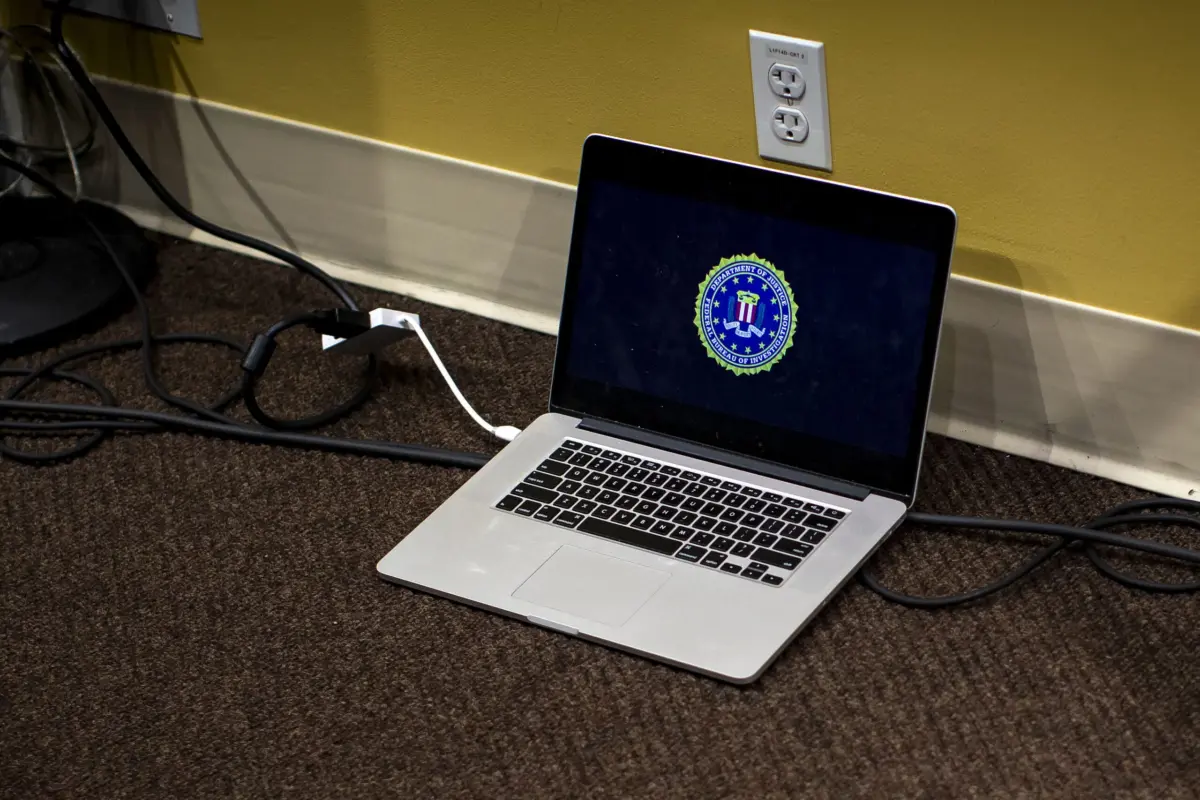
WASHINGTON — The Federal Bureau of Investigation is confronting one of the most sensitive cybersecurity crises in its recent history. Federal law enforcement officials confirmed on September 23 that they are actively probing claims by a notorious cybercrime collective that it successfully breached bureau systems, exfiltrating the personal and medical data of thousands of current and former personnel.
The intrusion, allegedly spearheaded by the prolific data-extortion syndicate known as ShinyHunters, targets a critical vulnerability point: the bureau’s career portal, FBIjobs.gov. If verified, the incident represents a profound psychological and operational blow to the premier law enforcement and counterintelligence agency of the United States, exposing private personnel records and raising alarming questions about the digital defense mechanisms protecting federal infrastructure.
Main Facts of the Incident
The scope of the alleged compromise centers primarily on FBIjobs.gov, the external-facing recruitment and career management website utilized by the bureau. According to statements and circulating digital intelligence, the hackers claim to have accessed databases containing extensive personal identification information (PII) of thousands of individuals who have applied to, worked for, or interacted with the FBI.
To substantiate their claims, representatives of ShinyHunters shared document samples with journalists. These records purportedly contained sensitive employee health reports, detailing private medical conditions and historical mental health disclosures of named federal personnel. While independent verification of the leaked documents remains pending, the mere existence of such records in the hands of malicious actors has triggered immediate defensive protocols across the federal government.
The attack underscores a broader, deeply concerning trend: the increasing vulnerability of high-value public sector targets to sophisticated, financially and politically motivated cybercriminals. As the FBI scrambles to assess the blast radius of the alleged intrusion, the incident highlights the persistent challenges law enforcement faces in securing peripheral web assets that serve as potential bridges into deeper, more classified internal networks.
Chronology of Events
The unfolding cyber crisis follows a specific timeline of digital exposure, retaliation, and internal mobilization:
- February 17: In a separate, earlier-disclosed incident, the Justice Department initiates an inquiry into abnormal activity on FBI networks used to manage wiretaps and surveillance operations—an intrusion later classified as a "major incident."
- September 23 (Morning): The career portal
FBIjobs.govabruptly goes offline, returning automated error messages stating that the site is "temporarily unavailable." - September 23 (Afternoon): The cybercrime collective ShinyHunters publicly claims responsibility for breaching the FBI’s systems. The gang asserts that the attack is an act of direct retaliation against the bureau for public statements downplaying the group’s prior exploits and dismissing their capabilities as exaggerated.
- September 23 (Late): The FBI issues its first public statement acknowledging awareness of claims regarding "unauthorized activity affecting FBIjobs.gov" and confirms an ongoing investigation.
- September 24 (Morning): Internal communications circulate within the bureau. An urgent email from leadership is sent to all personnel, formally advising them of the hackers’ allegations and urging immediate personal cybersecurity precautions, though stopping short of explicitly confirming a systemic data breach.
Supporting Data and The Threat Actor: ShinyHunters
To understand the gravity of the current FBI investigation, security analysts look to the track record of the threat actor involved. According to intelligence compiled by the cybersecurity firm Huntress and other private-sector threat intelligence groups, ShinyHunters has operated as one of the most aggressive and prolific data theft and extortion syndicates in the global cybercrime ecosystem since 2019.
The group is infamous for high-profile, devastating breaches against corporate titans and multinational organizations. Their prior victims include major enterprises such as:
- AT&T: Mass data exfiltration incidents affecting millions of customers.
- Salesforce: Enterprise cloud data compromises.
- Jaguar Land Rover: High-end automotive supply chain and customer data intrusions.
ShinyHunters specializes in breaking into cloud environments, stealing vast repositories of structured and unstructured data, and subsequently leveraging that information for public shaming, extortion, and ransom demands. Their motivation in targeting the FBI appears to transcend traditional financial extortion; the group explicitly framed the attack as punitive retribution, reacting against law enforcement posturing that undermined their criminal reputation.
Official Responses and Internal Communications
The response from the federal government has been a mix of cautious public transparency and urgent internal mobilization.
In its official public stance, an FBI spokesperson issued a concise email response noting that the bureau "is aware of claims regarding unauthorized activity affecting FBIjobs.gov, a bureau career website, and is currently investigating." Beyond this initial acknowledgment, leadership has adopted a strict "no further comment" policy regarding the technical specifics of the intrusion, citing the ongoing nature of the criminal and technical probes.
Concurrently, internal measures tell a story of high-level anxiety. On Wednesday morning, a communication was dispatched to all bureau personnel detailing the hackers’ claims. According to sources familiar with the internal memo who spoke on condition of anonymity, the email avoided explicitly validating whether a full-scale network penetration had successfully occurred. However, the tone was distinctly precautionary. Personnel were strongly advised to immediately heighten their personal digital security hygiene, monitor their personal financial and medical accounts for suspicious activity, and remain vigilant against secondary social engineering or phishing campaigns that typically exploit such high-profile leaks.
Broader Implications: A Pattern of Federal Vulnerabilities
The FBIjobs.gov incident does not occur in a vacuum. It represents the latest in a troubling succession of cybersecurity breaches affecting the apex of American law enforcement and national security infrastructure over recent years.
The Surveillance Network "Major Incident"
Earlier this spring, the FBI officially concluded an internal review determining that a sophisticated breach of the internal networks utilized to manage wiretaps and electronic surveillance operations constituted a "major incident." This classification triggered a formal criminal probe and forced the agency to aggressively overhaul its digital defenses. According to a notice submitted to Congress by the Department of Justice and reviewed by media outlets, the compromised surveillance system contained hyper-sensitive law enforcement material, including logs of electronic surveillance and personal identification records belonging to subjects of active federal investigations.
The AT&T Fallout and Informant Risk
The bureau’s digital resilience was also severely tested in the wake of the massive 2024 cyberattack against telecom giant AT&T Inc. In the aftermath of that breach, FBI leadership briefed agents across the country with a sobering warning: hackers were believed to have stolen months of detailed call and text logs belonging to federal agents.
This realization sparked an emergency internal scramble within the bureau to audit and safeguard the identities of confidential informants whose communications with handlers may have been exposed within the billions of telecom records swept up in the AT&T intrusion.
The Strategic Dilemma
As the primary federal law enforcement and domestic counterintelligence agency, the FBI occupies a uniquely vulnerable position in cyberspace. It is simultaneously tasked with hunting down the world’s most dangerous hackers while serving as a premier, high-prestige target for foreign state-sponsored cyber espionage units (particularly from adversaries like China, Russia, Iran, and North Korea) and financially motivated criminal syndicates alike.
The fact that groups like ShinyHunters feel emboldened enough to directly target FBI infrastructure—and publicize the attacks as retaliation against law enforcement messaging—signals a dangerous shift in the cyber threat landscape. It demonstrates that elite criminal syndicates no longer fear the retaliatory reach of Western law enforcement; instead, they view high-profile government agencies as viable trophies in their campaigns for notoriety and extortion leverage.
As the FBI’s technical teams, partnering with private cybersecurity investigators and the Cybersecurity and Infrastructure Security Agency (CISA), continue to dissect the FBIjobs.gov logs and evaluate the authenticity of the leaked medical and personnel data, the incident serves as an uncomfortable reminder. Even the organizations charged with securing the digital borders of the nation remain intensely vulnerable to the relentless tide of modern cybercrime.
