

By Industry News Desk
Published: June 2026
Main Facts
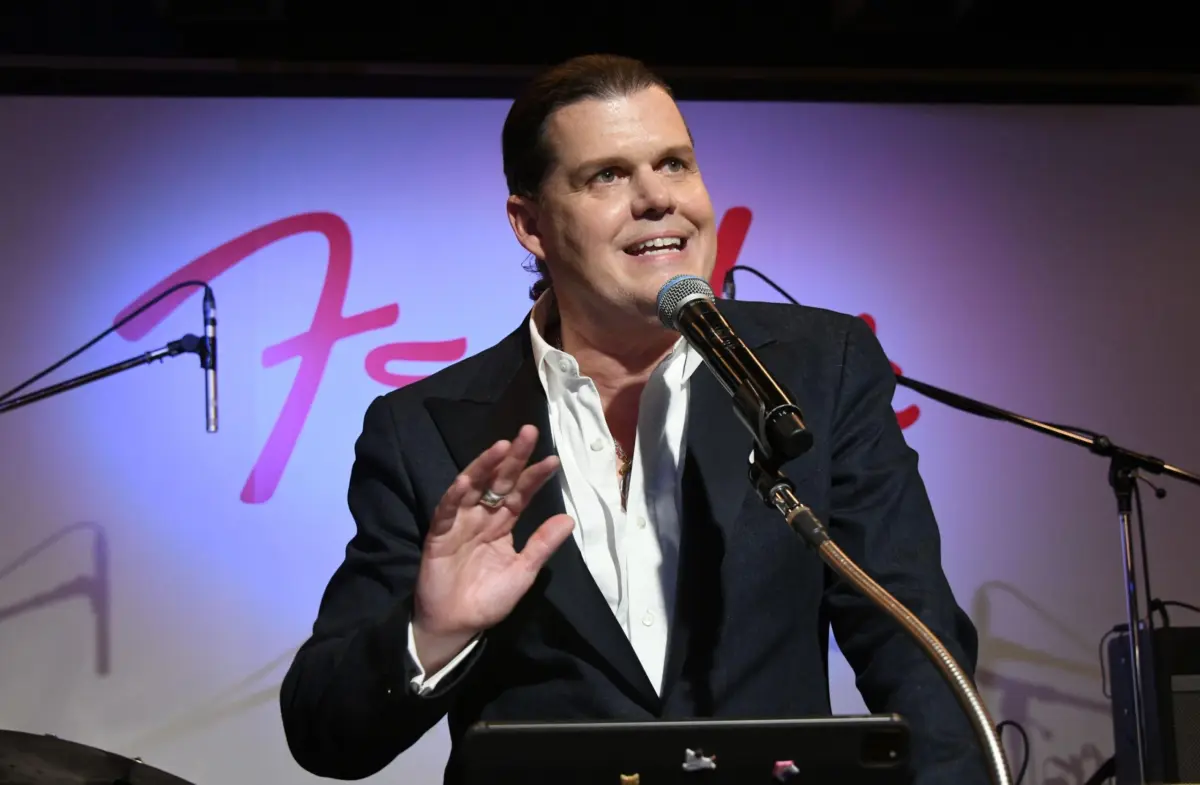
Fender Musical Instruments Corporation CEO Edward “Bud” Cole has found himself at the center of a burgeoning public relations crisis following the resurfacing of controversial remarks regarding artificial intelligence in music. In a wide-ranging interview with T3 magazine published in May to commemorate the 75th anniversary of the iconic Telecaster electric guitar, Cole equated human musical milestones—such as learning cover songs and collaborating with bandmates—to an "analog form of AI."
The comments, which initially went unnoticed when the interview was first released, have recently gained significant traction across prominent guitar forums, social media channels, and independent YouTube creator networks. This digital firestorm has compounded existing animosity toward Fender. The heritage guitar manufacturer has recently faced intense criticism from the grassroots music community for aggressive legal maneuvers, including the issuing of cease-and-desist letters to independent luthiers over the trademarked body shape of the Stratocaster.
For a company that has historically positioned itself as a champion of authentic musicianship and craftsmanship, Cole’s philosophical stance on generative technology has alienated a core demographic: working musicians, independent builders, and vocal online gear enthusiasts.
Chronology of the Controversy
To understand how a routine anniversary interview snowballed into a major corporate relations hurdle, it is helpful to examine the timeline of events leading up to the current backlash.
- May 2026: Fender CEO Edward “Bud” Cole sits down with T3 editor-in-chief Mat Gallagher to celebrate the diamond jubilee of the Telecaster. During the conversation, Cole offers expansive thoughts on the future of guitar playing, the barriers to entry in songwriting, and his perspective on how artificial intelligence intersects with musical creativity. The interview is published, initially drawing standard industry readership without immediate controversy.
- Late May to Early June 2026: Concurrently, tensions rise between Fender and independent guitar builders. Fender initiates a wave of legal warnings targeting custom guitar makers over copyright claims regarding the legendary Stratocaster body contour. The move is widely publicized across guitar-centric YouTube channels, provoking immediate and intense community backlash.
- Early June 2026: Several influential online gear reviewers and guitar YouTubers publicly announce boycotts, declaring they will no longer purchase, review, or endorse Fender equipment in protest of the company’s aggressive legal posture.
- Mid-June 2026: Amid this simmering discontent, online commentators and guitar journalists unearth Cole’s May T3 interview, zeroing in on his comparisons between human collaboration, cover songs, and artificial intelligence. The quotes quickly circulate on platforms like Reddit, X (formerly Twitter), and YouTube, exacerbating existing PR challenges.
- Present: Fender corporate communications face mounting pressure from media outlets and consumers alike, though official clarifications or retractions have yet to be issued.
Supporting Data and Technical Analysis
At the core of the controversy is Cole’s philosophy regarding how musicians develop their craft. In the T3 interview, Cole argued that AI in music is not a novel phenomenon:
"I think AI has existed in music as long as there’s been recorded music," Cole stated. Pointing out that songwriting is often a primary barrier for aspiring musicians, he added, "I actually believe cover music has been sort of analog AI for a long time. Those that don’t yet have the skills to write their own songs can play the songs written by their favourite artists instead."
Furthermore, Cole extended this analogy to band dynamics, suggesting that human collaborators function similarly to computational prompts:
"I actually think that we are on the brink of freeing up people to move beyond the same old covers and to really get into working like they do with their bands… You might just have a chorus or a riff to start with but then the drummer or bassist can add to it, and a song is born. AI can also play this role."
Critical Flaws in the Analog-AI Comparison
Industry analysts, music theorists, and prominent gear educators—such as Steve Onotera (widely known as Samurai Guitarist)—have pointed out critical logical fallacies in equating human musical development with machine learning models:
- Scale and Dataset Ingestion: A human musician learns a finite number of songs through deliberate practice, physical coordination, and emotional resonance. Conversely, generative AI models (such as Suno or Udio) ingest datasets comprising millions of copyrighted sound recordings, lyrics, and compositions scraped from the internet without direct compensation or consent.
- Physicality and Imperfection: Human performance is defined by physical limitations, muscle memory, and accidental imperfections. These unique human errors and bodily nuances give rise to stylistic breakthroughs—a phenomenon entirely absent from the deterministic, algorithmic output of large language models (LLMs).
- Agency and Intent: Human collaborators—such as a jazz-trained bassist or a rock drummer—bring lived experiences, active listening, and subjective taste to a session. Treating a human bandmate as a mere functional equivalent to a generative text prompt diminishes the deeply social and emotional reality of collaborative art-making.
Official Responses and Industry Silence
As the remarks continue to ripple across the digital landscape, the corporate response from Fender has been notably muted.
- Fender’s Position: As of publication, Fender has not issued an official statement, press release, or clarifying comment addressing Cole’s interview or the subsequent online uproar. Requests for comment sent to Fender’s corporate communications team regarding the distinction between human artistic internalization and machine learning algorithms went unanswered at the time of publication.
- Media Representation: The original feature by T3 editor-in-chief Mat Gallagher primarily synthesized and paraphrased Cole’s viewpoints rather than challenging the broader implications of generative AI within the legacy instrument market.
- Creator Community Response: Independent creators have filled the communication vacuum. Prominent guitar educators and digital commentators have dissected Cole’s quotes frame-by-frame, contrasting the CEO’s corporate optimism about productivity tools against the real anxieties felt by working musicians facing economic displacement from generative technologies.
Implications for the Future of Fender and the Guitar Industry
The convergence of aggressive trademark enforcement and tone-deaf executive commentary highlights a widening cultural disconnect between legacy music conglomerates and the modern creative community.
The Threat of "Deskilling"
Cole’s assertion that AI will help bridge the gap for students transitioning from songwriting novices to masters stands in stark contrast to growing body of sociological and educational research. Numerous recent studies across creative and technical industries indicate that over-reliance on generative AI tools leads to "deskilling"—the gradual atrophy of foundational competencies due to a lack of repetitive practice.
In songwriting, growth is forged through iteration. As the adage among professional songwriters goes, an artist must write hundreds of flawed, uninspired songs before stumbling upon structural intuition and authentic emotional resonance. By encouraging shortcuts via automated generation, critics argue that corporate leaders risk undermining the very foundation upon which lifelong instrument loyalty is built: the personal, sometimes painful journey of discovering one’s unique musical voice.
Brand Loyalty at a Crossroads
Fender has long enjoyed status as a cultural institution, synonymous with the birth of rock and roll, blues, and modern popular music. However, brand equity is not immutable. By simultaneously alienating independent builders over historic intellectual property and championing a technology viewed by many artists as an existential threat to intellectual property rights, Fender risks eroding the goodwill of its most passionate brand advocates.
Whether Fender will issue a formal clarification to mend fences with the guitar-playing community remains to be seen. What is clear, however, is that in an era where authenticity is prized above all else by musicians and fans alike, corporate missteps regarding the soul of artistic creation do not easily fade into the background.
