

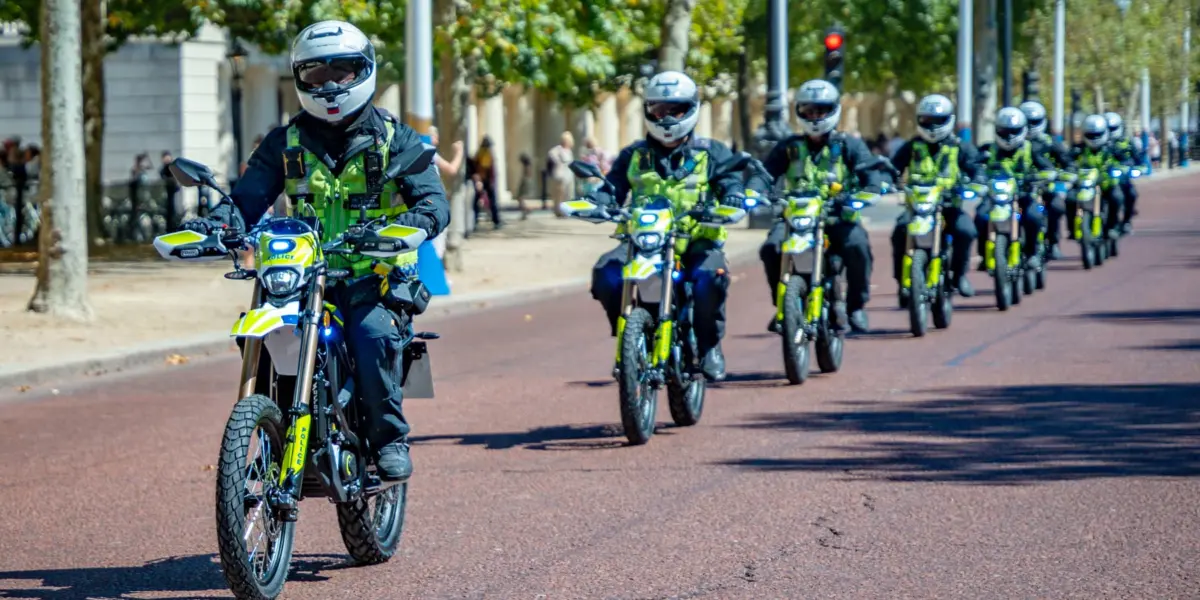
LONDON — In the shifting landscape of urban crime and law enforcement, the adage "if you can’t beat them, join them" has taken on a literal, high-voltage meaning. Facing an epidemic of agile criminals utilizing high-powered electric dirt bikes to weave through pedestrian zones, evade traditional pursuit vehicles, and commit brazen daylight robberies, the Metropolitan Police of London has chosen a pragmatic counter-strategy. They are fighting the criminals using the exact same machinery.
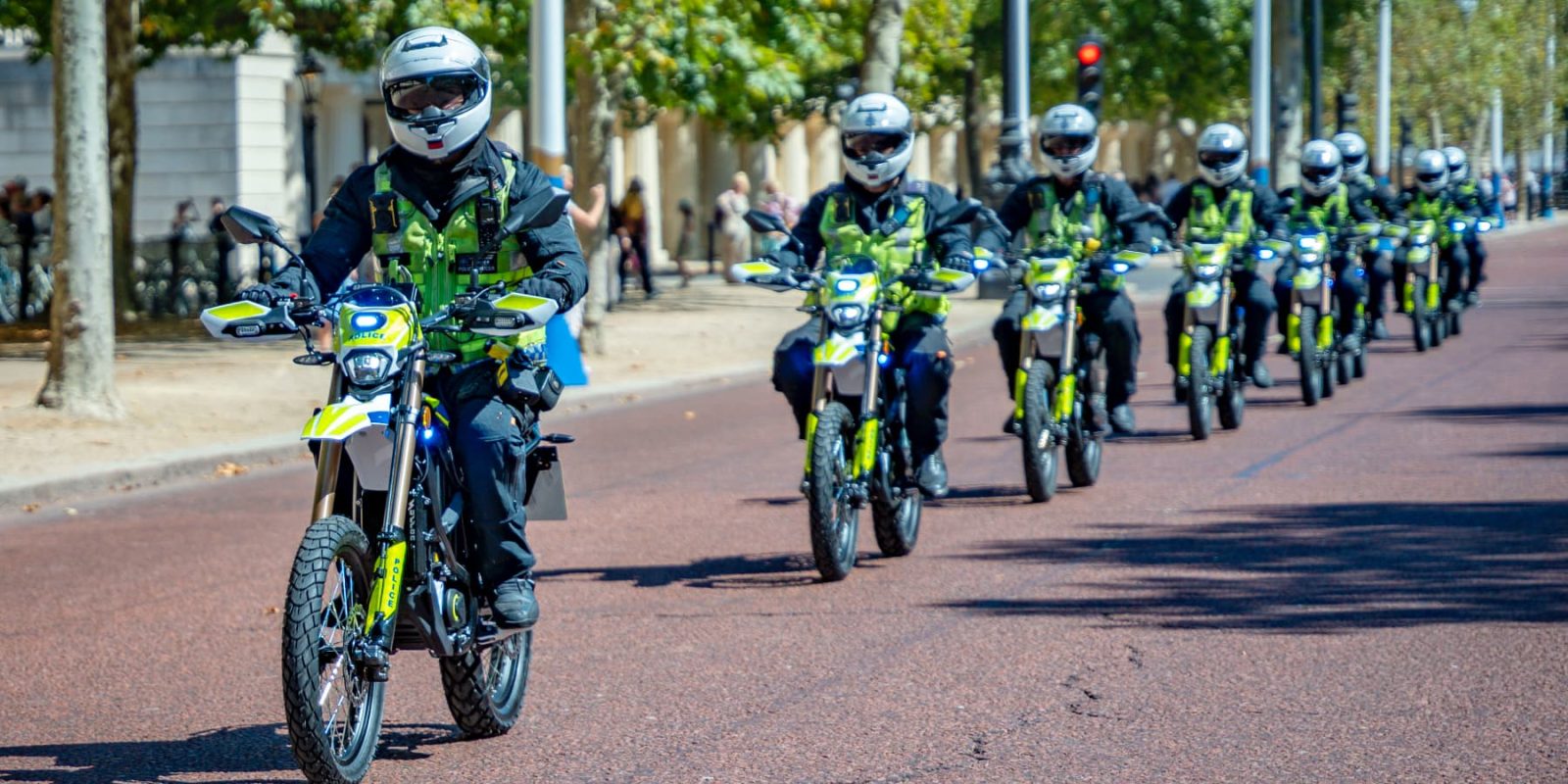
The Metropolitan Police recently announced a significant expansion of its specialized electric two-wheeler fleet, adding 20 new high-performance electric motorcycles to bring its total tactical contingent to 25. Released photographs from Scotland Yard confirm that the newly commissioned units are Sur-Rons—the exact brand of lightweight, high-torque electric dirt bikes that have become synonymous with illegal street riding, phone snatching, and organized urban criminality across the British capital.
The irony has not been lost on the public, internet commentators, or even Sur-Ron’s own social media teams, who lightheartedly poked fun at the twist on Instagram. Yet, beneath the punchlines lies a serious tactical pivot. Law enforcement agencies worldwide are discovering that conventional squad cars and heavy patrol motorcycles are increasingly poorly matched for modern urban environments dominated by agile, off-road-capable electric mobility.
The Main Facts: Leveling the Playing Field in London’s Streets
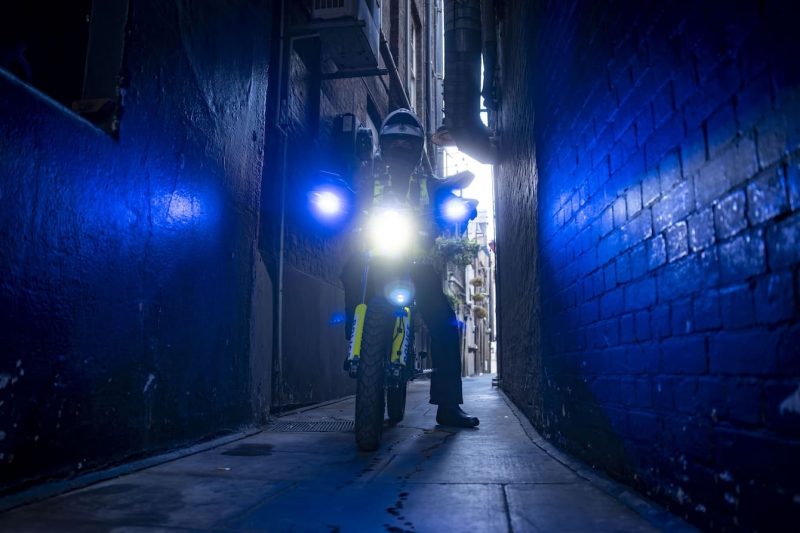
The newly deployed fleet of 25 Sur-Ron electric motorbikes provides Met officers with capabilities previously unavailable to standard patrol units. These lightweight machines are capable of hitting speeds around 50 mph (80 km/h). More importantly, their structural agility allows officers to hop curbs, charge up and down staircases, navigate narrow alleyways, and seamlessly follow suspects into pedestrianized shopping districts, parks, and dense housing estates—locations where traditional police cars, bicycles, or heavy motorbikes are physically blocked from entering.
However, the acquisition has cast a sharp spotlight on the legal contradictions surrounding these vehicles in the United Kingdom.
In British legal terms, the Sur-Rons utilized by both criminals and now the police occupy a heavily regulated gray area. Legally classified as motor vehicles rather than standard bicycles, electrically assisted pedal cycles (EAPCs) in the UK are strictly limited to a continuous motor power output of 250W, with assistance capped at 15.5 mph (25 km/h). Anything exceeding these parameters legally requires registration, vehicle insurance, a proper driver’s license, and type-approval to be operated on public roads.
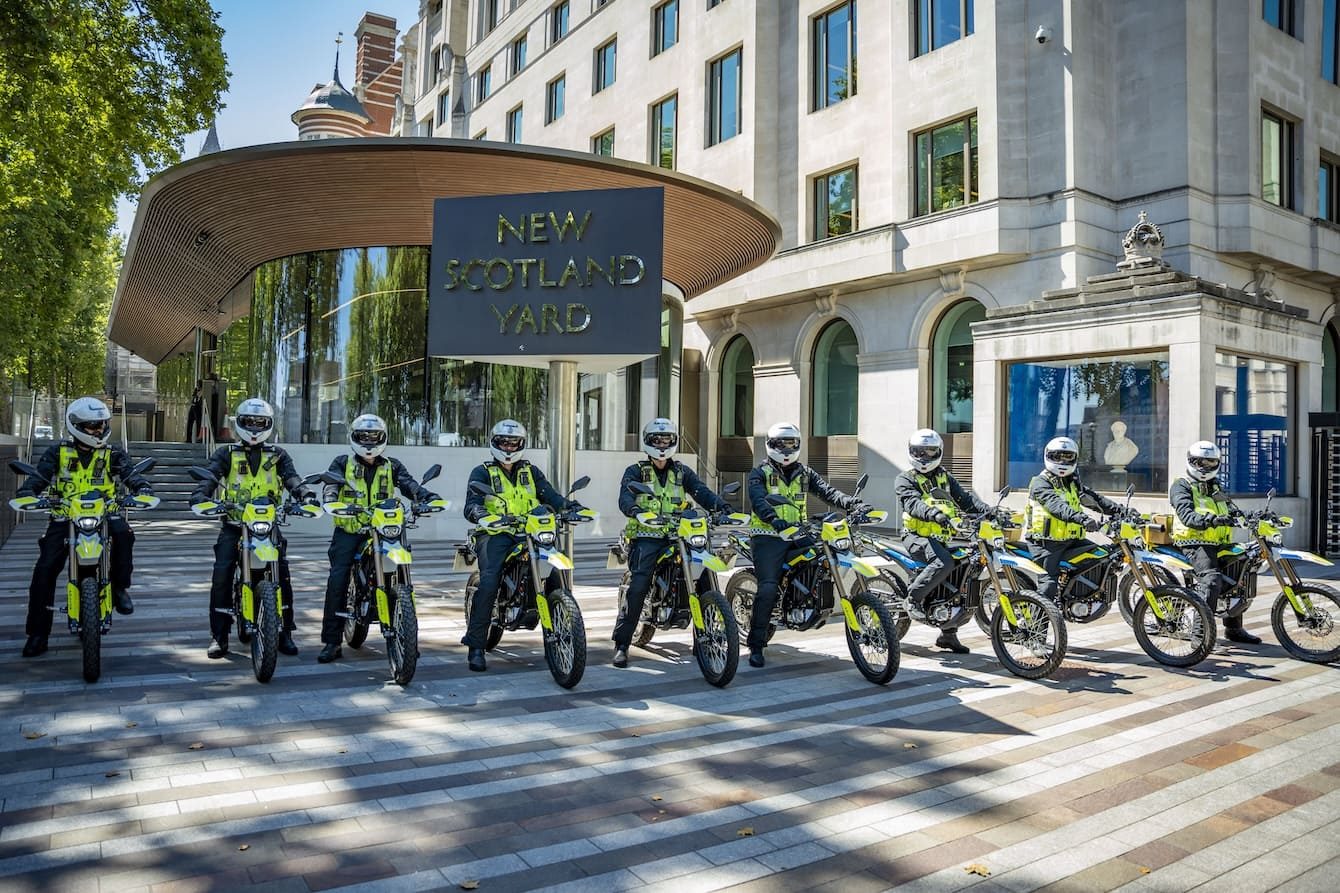
Because standard consumer Sur-Rons vastly exceed these limits—often featuring power outputs measured in kilowatts rather than watts and top speeds well above 45 mph—unmodified models ridden on public streets are thoroughly illegal. Paradoxically, the Met itself lists the enforcement and seizure of illegally ridden e-bikes and e-motos as a primary neighborhood policing objective in hotspots like Islington and Tufnell Park.
While the police operate their fleet under strict exemptions and appropriate legal frameworks for emergency services, the sight of officers patrolling on the very same unregistered machines they routinely confiscate from civilians highlights a profound shift in urban policing philosophy.
Chronology of an Urban Crisis: The Rise of the E-Moto Criminal
To understand why the Met felt compelled to adopt Sur-Rons, one must examine the rapid evolution of mobile crime in London over the past half-decade.
- The Pre-Pandemic Era (Pre-2020): Traditional moped-enabled crime dominated London’s headlines. Criminal gangs utilized petrol-powered scooters for snatch-and-grab operations, primarily targeting luxury watches and high-end smartphones. Police countered these with tactical "nudge" maneuvers, safely knocking riders off mopeds when they wore helmets, which temporarily suppressed the trend.
- The Electric Transition (2021–2024): As lightweight, high-performance electric dirt bikes like Sur-Ron, Talaria, and Stark Varg flooded the global market, urban criminals quickly pivoted. These e-motos offered distinct tactical advantages over petrol mopeds: they were virtually silent, produced zero exhaust emissions, required no gear-shifting, and possessed immense low-end torque. Gangs realized they could ride them down narrow walkways, through pedestrian precincts, and across muddy parks where police vehicles could not follow.
- The Phone Snatching Surge (2024–2025): London faced a severe crisis centered on mobile phone theft. Thieves operating in coordinated pairs on e-motos would mount sidewalks, violently rip phones from the hands of distracted pedestrians, and vanish into traffic or public parks within seconds. Response times by four-wheeled units were routinely beaten by the sheer maneuverability of the electric getaway bikes.
- The Response and Adaptation (Late 2025–August 2026): Recognizing a critical "mobility gap," the Metropolitan Police began experimenting with deploying their own lightweight electric two-wheelers supported by aerial drone units. Following successful pilot programs, the Met authorized a funding push to dramatically scale up the specialized unit, culminating in the August 2026 rollout of 20 additional Sur-Ron machines.
Supporting Data: The Scale of Phone Theft and Policing Realities
The deployment of the expanded e-bike fleet does not happen in a vacuum; it is a direct response to soaring crime statistics that have heavily criticized law enforcement efficacy in the UK capital.
According to data compiled by Reuters, reported mobile phone thefts across London reached staggering heights, hovering at roughly 68,000 offenses annually before dipping slightly to 54,000 in the 12 months leading up to May 2026. Despite tens of thousands of victims, the clearance rate for these crimes has remained distressingly low. Industry and law enforcement reports indicate that fewer than 1% of reported mobile phone thefts currently result in a "positive outcome"—defined as a formal charge, caution, or court summons.
Criminals recognized this low-risk, high-reward environment. Operating a high-speed e-moto provided a near-guaranteed escape route because pursuit protocols for traditional police vehicles were restricted by safety regulations when dealing with suspects not wearing crash helmets or driving erratically through crowds.
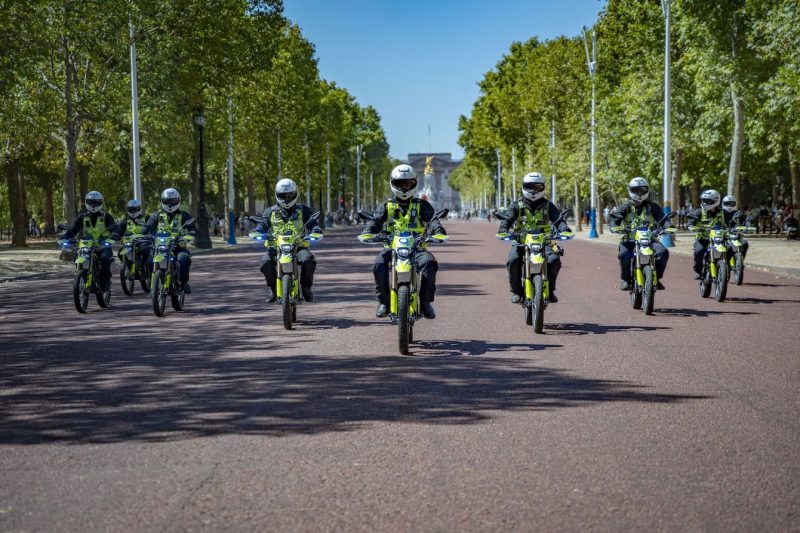
By introducing Sur-Rons into the tactical mix, the Met aims to fundamentally alter the risk calculus for offenders. Paired with thermal-imaging police drones that can track suspects from the air without requiring high-speed ground pursuits through heavy traffic, the ground units can shadow, corner, and apprehend suspects safely.
Official Responses: City Hall and Scotland Yard Speak Out
The rollout of the expanded e-moto fleet has received high-level backing from municipal leaders eager to demonstrate that public safety measures are keeping pace with technological changes in criminal enterprise.
London Mayor Sadiq Khan issued a robust defense of the program, framing the investment as a triumph of innovation over opportunistic crime.
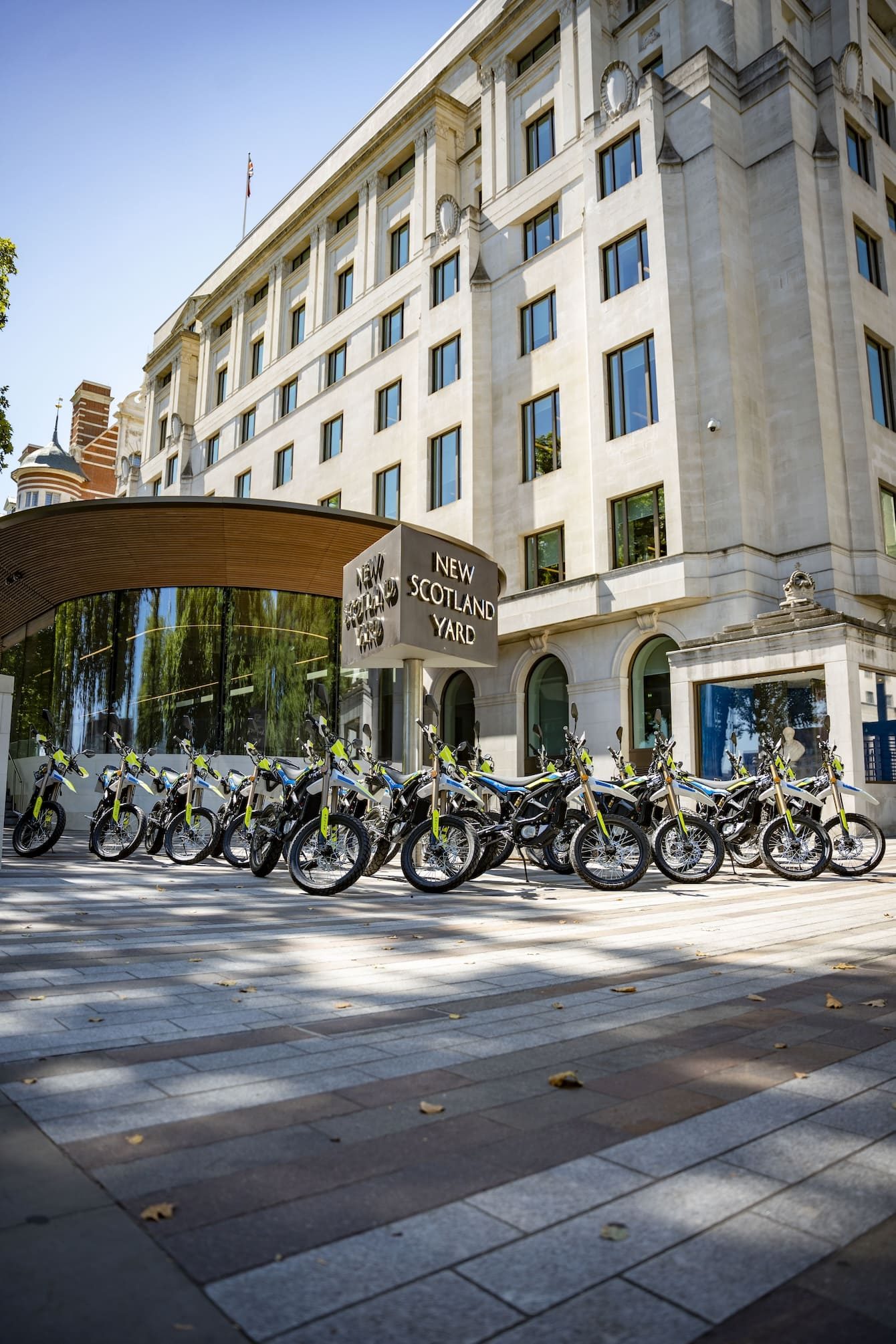
"The Met’s new fleet of Sur-Ron e-bikes sends a clear message that London will not tolerate criminal behaviour," Sadiq Khan explained in an official statement. "These bikes have been successfully helping the Met to go after offenders who are increasingly using high-powered, illegally modified e-bikes to commit crimes, and it’s great to be able to expand the fleet. With record funding from City Hall, the Met are using the latest innovation and technology, alongside neighbourhood policing, to stay one step ahead of criminals."
Senior officers within Scotland Yard echoed the sentiment, emphasizing that the modern city requires modern tools. While police forces have historically relied on heavy BMW or Yamaha motorcycles for traffic duties, those machines—weighing several hundred pounds—are poorly suited for chasing agile dirt bikes through housing estates or down park pathways. The Sur-Ron platform bridges the gap between bicycle mobility and motorcycle power, giving officers the freedom of movement necessary to neutralize the criminals’ primary advantage.
Implications: What This Means for the Future of Urban Law Enforcement
The Metropolitan Police’s decision to adopt Sur-Rons carries significant implications that extend far beyond the streets of London, signaling a broader transformation in global policing tactics.

1. The Normalization of Micro-EVs in Emergency Services
For decades, police vehicle procurement focused on heavier, safer, and more durable platforms. The pivot toward lightweight electric two-wheelers proves that law enforcement agencies are increasingly willing to adopt niche, consumer-grade technology when operational necessity demands it. As urban centers become more congested and pedestrianized zones expand, standard squad cars are losing their utility in core metropolitan areas.
2. Escalation of the "Cat-and-Mouse" Game
While equipping police with e-motos closes the tactical gap, it also raises questions about urban safety and escalation. High-speed pursuits involving lightweight dirt bikes in crowded pedestrian spaces carry inherent risks to innocent bystanders. Critics and safety advocates will closely monitor how the Met manages pursuit policies, ensuring that the chase for a stolen phone does not inadvertently result in pedestrian injuries or dangerous collisions.
3. Regulatory Pressure on E-Motos
The high-profile adoption of Sur-Rons by law enforcement highlights the bizarre duality of these machines. On one hand, they are celebrated by authorities as vital tools for modern policing; on the other, civilians caught riding identical unregistered models face heavy fines, vehicle seizures, and potential criminal prosecution. This dichotomy may force the UK government to re-examine how micro-mobility vehicles are classified, potentially leading to clearer pathways for legal, road-registered e-motos or significantly harsher penalties for illicit importation and sale.

Conclusion
Ultimately, the Metropolitan Police’s deployment of Sur-Ron electric dirt bikes is a testament to adaptive strategy in modern law enforcement. Criminals weaponized lightweight electric mobility to exploit the rigid boundaries of traditional policing infrastructure. By neutralizing that advantage—trading in heavy patrol cars for silent, nimble, curb-hopping e-motos—London police have proven that when facing a new breed of urban crime, sometimes the only way forward is to match your adversary wheel for wheel.
