

By Tech Wire Staff
Published: October 2024
Main Facts
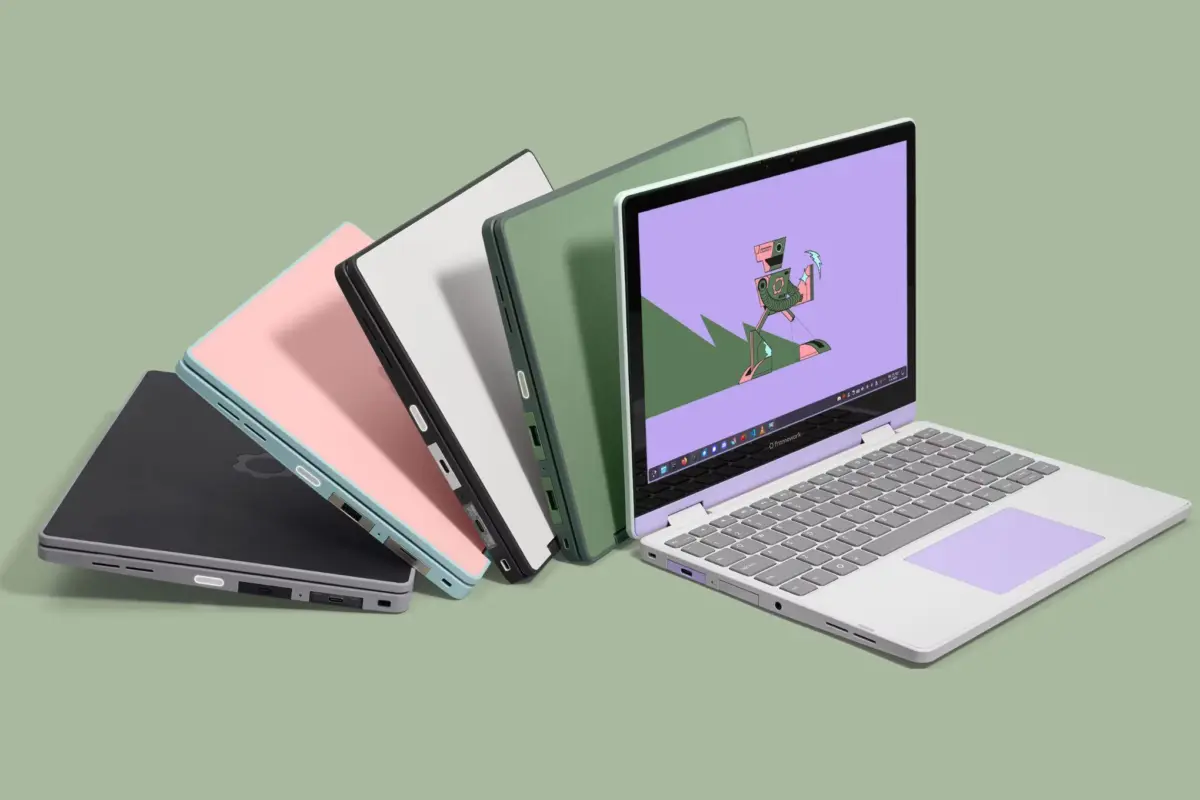
Modular computing pioneer Framework has officially announced a major refresh of its ultra-compact 12-inch convertible laptop. The updated device introduces Intel’s latest Core Series 3 processors, significantly expanded hardware customization options, faster memory speeds, next-generation connectivity standards, and—notably—a dedicated pre-built Linux configuration out of the box.
Despite bringing a host of internal upgrades, the entry-level pricing for the refreshed Framework Laptop 12 has dropped. The cheapest pre-built base configuration now starts at $699, representing a welcome $100 price reduction compared to the launch price of the previous-generation model released last year. For tinkerers and DIY enthusiasts, the DIY Edition starts even lower at $549.
Preorders for the refreshed lineup are currently open via Framework’s official store, with the initial wave of customer shipments slated to begin arriving in October.
The headline features of the refreshed Framework Laptop 12 include:
- Intel Core Series 3 Processors: Tailored specifically for small-form-factor, lower-power, entry-priced machines.
- Native Linux Support: The base pre-built configuration comes preloaded with Fedora 44 KDE Plasma, catering to a user base where nearly 80 percent run Linux.
- Enhanced Connectivity: Integration of Wi-Fi 7 R2, Thunderbolt 4 support on the rear expansion slots, and higher DDR5 memory speeds up to 6400 MT/s.
- Upgraded Standard Features: Core 5 and Core 7 configurations now ship standard with a fingerprint reader integrated into the power button and a backlit keyboard.
Chronology of the Framework Laptop 12 Refresh
To understand the trajectory of Framework’s latest release, it helps to look at the timeline of events leading up to this iteration, as well as the immediate roadmap for the product.
The Foundation: The 13th Gen Era
Last year, Framework shook up the ultraportable and 2-in-1 market by introducing its 12-inch convertible laptop powered by Intel’s 13th Generation Core processors. Earning praise for its modular touchscreen, repairability, and unique form factor, the device carved out a distinct niche among developers, Linux enthusiasts, and consumers tired of soldered, unrepairable electronics. However, initial entry pricing sat at $799 for pre-built variants, leaving some budget-conscious consumers looking for a more accessible entry point.
The Shift to Intel Core Series 3 (Late 2024)
Recognizing the need for better thermal efficiency, optimized battery performance in smaller chassis, and more aggressive pricing, Framework collaborated closely with component suppliers to integrate Intel’s newest Core Series 3 silicon (codenamed under Intel’s latest low-power architectures). This engineering pivot allowed the company to lower the BOM (Bill of Materials) cost while simultaneously boosting baseline performance metrics in key areas like memory bandwidth and wireless networking.
Preorders and the October Shipping Window
Framework officially opened preorder channels in mid-October. Demand has reportedly been steady, particularly among the open-source software community. The company has confirmed that the first wave of production units is already rolling off assembly lines, with doorstep deliveries scheduled to commence before the end of October. Subsequent waves will fulfill custom DIY builds and higher-tier Core 5 and Core 7 configurations on a rolling basis.
Supporting Data and Technical Specifications
A granular look at the technical architecture of the refreshed Framework Laptop 12 reveals a careful balancing act between cost-cutting, performance tuning, and modular versatility.
Configuration Pricing Matrix
| Model / Edition | Starting Price | Operating System | Default Specs | Key Inclusions |
|---|---|---|---|---|
| Pre-Built Base | $699 | Fedora 44 KDE Plasma (Linux) | Core 3 304, 8GB RAM, 512GB Storage | Green chassis only, non-backlit keyboard |
| Pre-Built Windows | $799 | Windows 11 Home | Core 3 304, 8GB RAM, 512GB Storage | Includes Windows license fee ($100 markup) |
| DIY Edition | $549 | None (Bring Your Own OS) | Barebones (No RAM, Storage, or OS) | Wider color options, customizable parts |
| Legacy 13th Gen (Pre-Built) | $699 | Varies | 13th Gen Intel Core | Retained for budget-focused legacy buyers |
| Legacy 13th Gen (DIY) | $499 | None | Barebones | Lowest-cost entry to the 12-inch ecosystem |
Processor Performance & The Core 3 304 Dilemma
Framework has positioned the new Intel Core Series 3 processors as being "purpose-built for smaller, lower-power, entry-priced laptops." In theory, these chips should dramatically improve battery life, reduce operating temperatures, and quiet fan noise compared to pushing older, heavier silicon into a 12-inch chassis.
However, tech analysts and reviewers have noted a potential pain point: the base Core 3 304 CPU features only a single performance core. Early industry testing of similar Intel Wildcat Lake / Core Series 3 implementations in competing devices (such as the Chuwi Unibook) has occasionally left reviewers underwhelmed regarding multi-threaded heavy lifting. For light productivity, web browsing, and terminal-based development, the chip is more than adequate, but power users will undoubtedly want to look toward the Core 5 and Core 7 tiers.
Internal Hardware and Port Architecture
The transition to the new processor platform unlocked several key infrastructure upgrades across the motherboard:
- Memory Speeds: DDR5 memory speeds have been bumped up to an impressive 6400 MT/s, ensuring snappier data handling and faster execution cycles.
- Wireless Connectivity: The inclusion of Wi-Fi 7 R2 guarantees state-of-the-art wireless throughput, lower latency, and superior performance in congested network environments.
- Thunderbolt 4 Integration: The rear two Expansion Card slots now feature full Thunderbolt 4 support. This allows users to effortlessly daisy-chain dual 4K monitors running at 60Hz or hook up external graphics processing units (eGPUs) for heavy graphical workloads.
- I/O Trade-offs: In a minor concession, the front two USB slots have been stepped down to USB 3.2 Gen 2 speeds. Fortunately, all four expansion slots retain full power input capabilities for charging the device from any angle.
Standardizing Quality-of-Life Features
In previous iterations, certain quality-of-life enhancements were gated behind higher-tier purchases or added as DIY accessories. With this refresh, Framework has standardized two critical features across all Core 5 and Core 7 configurations:
- Fingerprint Reader: Built directly into the power button for seamless, secure biometric authentication.
- Backlit Keyboard: Previously an extra add-on, illumination is now built-in for higher-tier models and remains available as an optional customization for DIY Edition buyers.
Official Responses and Strategic Rationale
Framework’s leadership and engineering teams have been vocal about the strategic decisions behind this refresh, particularly regarding their embrace of the Linux community and hardware pricing strategies.
Embracing the Linux Majority
One of the most radical departures from traditional mainstream PC manufacturing is Framework’s decision to offer a pre-built laptop running Linux out of the box. According to internal metrics cited by the company, nearly 80 percent of existing Framework Laptop 12 owners are already running Linux across a wide variety of distributions.
Rather than treating Linux as an afterthought or forcing users to wipe a pre-installed Windows partition, Framework listened directly to its telemetry and customer feedback. By partnering with the Fedora project, the base $699 model ships preloaded with Fedora 44 KDE Plasma.
"Our community has spoken loud and clear," notes Framework’s official product blog. "When four out of five users choose open-source operating systems on a specialized form factor, it isn’t a niche preference—it’s our core demographic. Providing a polished, pre-configured Linux experience lowers the barrier to entry for developers, students, and privacy advocates who want a machine that works out of the box without paying a Microsoft Windows licensing tax."
For consumers who still require the Windows ecosystem, Microsoft Windows 11 Home remains available as a configuration option, though it incurs a standard $100 price adjustment to cover licensing costs.
Balancing Cost and Accessibility
Addressing the $100 price drop on the base model, Framework executives emphasized that scaling supply chains and leveraging more efficient entry-level silicon enabled them to pass savings directly to the consumer. In a market dominated by inflation and rising tech prices, offering a modular, repairable laptop starting at $699 (or $549 for the DIY kit) positions Framework as a fierce competitor against major OEMs like Dell, HP, and Lenovo—all while maintaining their foundational commitment to right-to-repair ethics.
Industry Implications and Market Impact
The launch of the refreshed Framework Laptop 12 carries several broad implications for the personal computer industry, the right-to-repair movement, and the Linux hardware market.
1. Normalizing Linux as a First-Class Citizen
Historically, major Tier-1 PC vendors have treated Linux pre-installs as enterprise-only offerings or buried them behind specialized developer editions. By making Fedora KDE Plasma the default operating system on its most affordable consumer pre-built laptop, Framework is sending a powerful message to the industry. If smaller OEMs can successfully market Linux-first consumer hardware, consumer demand for vendor-agnostic, spyware-free operating systems may force larger players to reconsider their default software bundles.
2. The Viability of Modular Ultraportables in the Budget Tier
Skeptics have long argued that modularity—which requires extra mechanical clearance, connector rails, and swappable I/O cards—is fundamentally incompatible with budget-friendly pricing and ultra-thin chassis design. By offering a $549 DIY kit and a $699 pre-built configuration with modern Intel processors, Wi-Fi 7, and Thunderbolt 4, Framework is actively disproving this notion. They are proving that repairability and upgradability do not inherently belong solely in the luxury or enterprise price brackets.
3. Pressure on Legacy Competitors
While traditional manufacturers continue to solder RAM, glue down batteries, and design disposable devices destined for e-waste landfills after three to four years, Framework’s continued iteration puts subtle but persistent pressure on the market. As consumers become increasingly conscious of electronic waste and the right to repair—bolstered by legislative pushes in the European Union and various U.S. states—Framework’s ecosystem offers a future-proof alternative that legacy brands cannot easily replicate without overhauling their entire manufacturing pipelines.
Looking Ahead
As the first wave of orders ships out in October, all eyes will be on real-world user reviews, particularly concerning how the Intel Core Series 3 processor handles daily multitasking and thermal management in the ultra-compact 12-inch chassis. If the performance holds up under scrutiny, Framework may have successfully engineered the ultimate portable companion for developers, students, and minimalists alike.
