

By David Lumb
Managing Editor, Mobile
SAN FRANCISCO — Google took the wraps off its latest hardware ecosystem on Wednesday during its annual "Made by Google" showcase, introducing a fresh array of devices that includes the new Pixel 11 smartphone series, a cutting-edge foldable, an updated smartwatch, and a brand-new personal item tracker. However, the headline across the entire launch wasn’t just about new hardware features or software capabilities; it was about cost.
Following broader macroeconomic trends and industry-wide manufacturing hurdles, nearly all of Google’s newly announced devices carry higher price tags than their predecessors. As the technology sector continues to navigate persistent supply chain bottlenecks—particularly a severe global RAM shortage that has sent memory component costs soaring—Google is passing some of those realities directly to the consumer. The tech giant joins competitors like Samsung in acknowledging that the cost of building cutting-edge mobile hardware has fundamentally shifted.
For consumers looking to upgrade, preorders for all four new Pixel 11 devices are open now, with a formal retail rollout scheduled for August 20.

Main Facts: What Google Announced
The centerpiece of Wednesday’s event was, unquestionably, the Pixel 11 phone family, which spans four distinct models designed to capture every tier of the flagship market:
- Google Pixel 11 (Baseline Flagship): The entry point to Google’s flagship phone experience now starts at $899, representing a $100 increase over last year’s Pixel 10. Crucially, Google has eliminated the traditional 128GB base model, forcing buyers to start at a minimum of 256GB of storage.
- Google Pixel 11 Pro: Starting at $1,099 for the 256GB configuration, the Pro model also scraps its 128GB variant. While mid-tier pricing remains relatively stable, the top-tier 1TB version climbs to $1,499 ($50 higher than last year).
- Google Pixel 11 Pro XL: The largest of Google’s traditional slate phones received a flat $100 price hike across all storage tiers, starting at $1,299 for 256GB and maxing out at $1,649 for the 1TB option.
- Google Pixel 11 Pro Fold: Google’s next-generation foldable device also received a uniform $100 price increase across the board, starting at $1,899 for 256GB and peaking at $2,249 for the 1TB model.
Beyond the phones, Google used the event to showcase an expanded ecosystem, including a new iteration of its Pixel Watch and a dedicated item tracker meant to compete with Apple’s AirTag and Tile.
Chronology of the Launch Event
The "Made by Google" event followed a meticulously orchestrated schedule, reflecting the company’s maturation as a major hardware player:
- Pre-Briefings and NDA Lifts: In the days leading up to Wednesday, tech journalists and industry analysts were treated to closed-door briefings where Google executives outlined the strategic and manufacturing hurdles behind their 2026 hardware slate. Executives heavily emphasized silicon and software optimizations designed to offset physical hardware constraints.
- The Keynote Reveal: On Wednesday morning, Google executives took the stage in San Francisco to walk through the new ecosystem. The presentation opened with the standard environmental and sustainability commitments before quickly pivoting to the core hardware announcements: the Pixel 11 series, the Pixel Watch, and the item tracker.
- Immediate Preorder Phase: Moments after the keynote concluded, Google’s online storefront and major carrier partners (including Verizon, AT&T, and T-Mobile) flipped their systems live, opening preorders for the entire Pixel 11 family alongside launch-day promotional bundles.
- Upcoming Release Window: Preorders will run for roughly two weeks, culminating in the official in-store availability and shipping date of August 20.
Supporting Data: Pricing, Storage, and RAM Adjustments
A granular look at the Pixel 11 lineup reveals how Google is restructuring its configurations to cope with component pricing pressures. The most controversial change is the eradication of the 128GB entry tier across both the standard Pixel 11 and the Pixel 11 Pro.

Pixel 11 Series Pricing Breakdown
| Model | Storage Tier | New Price | Price Difference vs. Previous Gen |
|---|---|---|---|
| Pixel 11 | 256GB (New Base) | $899 | +$100 (No 128GB option) |
| 512GB (New Tier) | $1,019 | N/A | |
| Pixel 11 Pro | 256GB (New Base) | $1,099 | +$100 (No 128GB option) |
| 512GB | $1,219 | Unchanged | |
| 1TB | $1,499 | +$50 | |
| Pixel 11 Pro XL | 256GB | $1,299 | +$100 |
| 512GB | $1,419 | +$100 | |
| 1TB | $1,649 | +$100 | |
| Pixel 11 Pro Fold | 256GB | $1,899 | +$100 |
| 512GB | $2,019 | +$100 | |
| 1TB | $2,249 | +$100 |
The RAM Compromise
Perhaps the most telling data point regarding the semiconductor market’s volatility is the adjustment made to device memory. Last year, both the Pixel 10 Pro and Pixel 10 Pro XL shipped with a generous 16GB of RAM across their lineups.
For the Pixel 11 Pro and 11 Pro XL, that 16GB standard is now restricted to the higher-end 512GB and 1TB configurations. The new 256GB entry-level Pro models come equipped with 12GB of RAM.
Official Responses and Industry Context
Google has been transparent about the external forces shaping its pricing and hardware specs. During briefings ahead of the event, company representatives pointed directly to the ongoing RAM shortage plaguing the consumer electronics market.
"Our pricing reflects the current reality of the component market," a Google spokesperson noted, echoing sentiments heard throughout the mobile industry over the past year.

This mirrors statements made by rival manufacturer Samsung just last month. When launching its latest foldable devices, Samsung explicitly cited escalating RAM and memory costs to justify its own price hikes.
Despite the reduction in base RAM for the entry-level Pro models, Google’s engineering teams defended the devices’ performance capabilities. Executives asserted that deep optimizations within Google’s custom Tensor silicon and Android software will ensure the 2026 Pro phones run noticeably faster and smoother than their predecessors, effectively masking the reduction in raw memory. Independent reviewers, however, have noted that full testing will be required to validate these claims.
Implications for Consumers and the Market
The debut of the Pixel 11 series carries significant implications for budget-conscious tech enthusiasts and the broader smartphone market:
1. The Death of the Budget-Friendly Flagship Entry Point
Last year, CNET’s Director of Content, Patrick Holland, enthusiastically dubbed the Pixel 10 a "feature-packed value monster" thanks to its accessible $799 price point. By bumping the starting price of the baseline Pixel 11 to $899 and eliminating the 128GB option, Google has effectively abandoned the sub-$900 tier for its primary flagships. Consumers who prefer a smaller financial commitment will now be forced to look toward older generation clearance models, the budget-focused Pixel "a" series (when available), or third-party carrier promotions.

2. Foldables Remain Exclusively Ultra-Premium
While the Pixel 11 Pro Fold’s $2,249 maximum price tag is undoubtedly steep, it arrives in an ecosystem where foldables are increasingly pushing the boundaries of luxury pricing. For context, Samsung’s top-end Galaxy Z Fold 8 Ultra shocked the industry last month with an astronomical price tag nearing $2,700 for its 1TB variant. Google’s pricing strategy keeps its foldable positioned as an expensive alternative, yet slightly more digestible than its chief competitor.
3. Aesthetic Choices and Ecosystem Uniformity
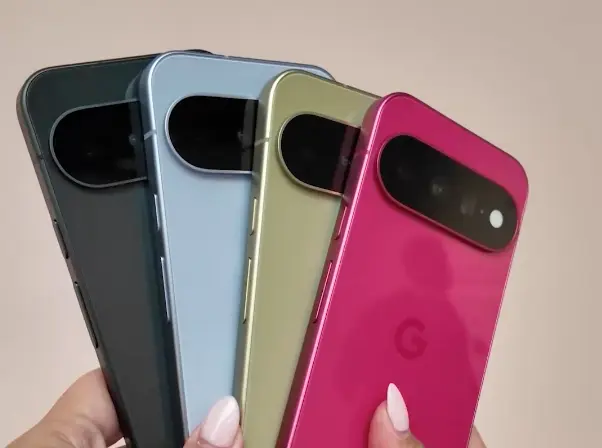
On a brighter note for style-conscious buyers, Google has refreshed its color palettes. The standard Pixel 11 will be available in four distinct finishes: frost, pistachio, hibiscus, and obsidian. Meanwhile, the Pro lineup and the Pixel 11 Pro Fold share a sophisticated palette consisting of canyon, fog, olive, and obsidian (matte black). Google even updated its Pixel Buds Pro 2 with a matching olive hue to ensure ecosystem synergy for users who like their accessories to color-match.
As consumers digest these price increases, the true test for Google will be whether the promised software optimizations and doubled base storage (moving from 128GB to 256GB) are enough to convince buyers that the Pixel 11 family still delivers robust value in an increasingly expensive tech landscape. Full reviews and performance benchmarks in the coming weeks will ultimately determine if Google’s gamble pays off.
