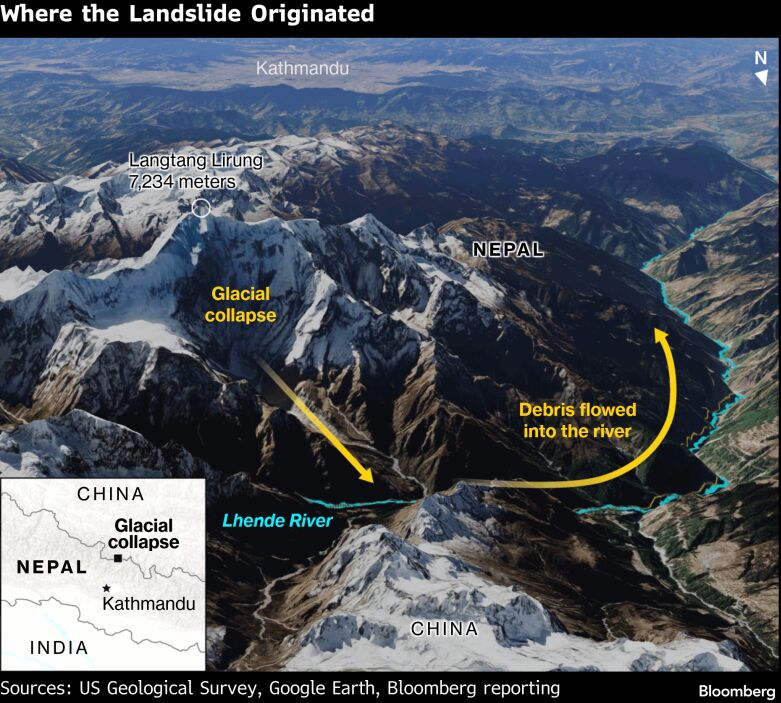
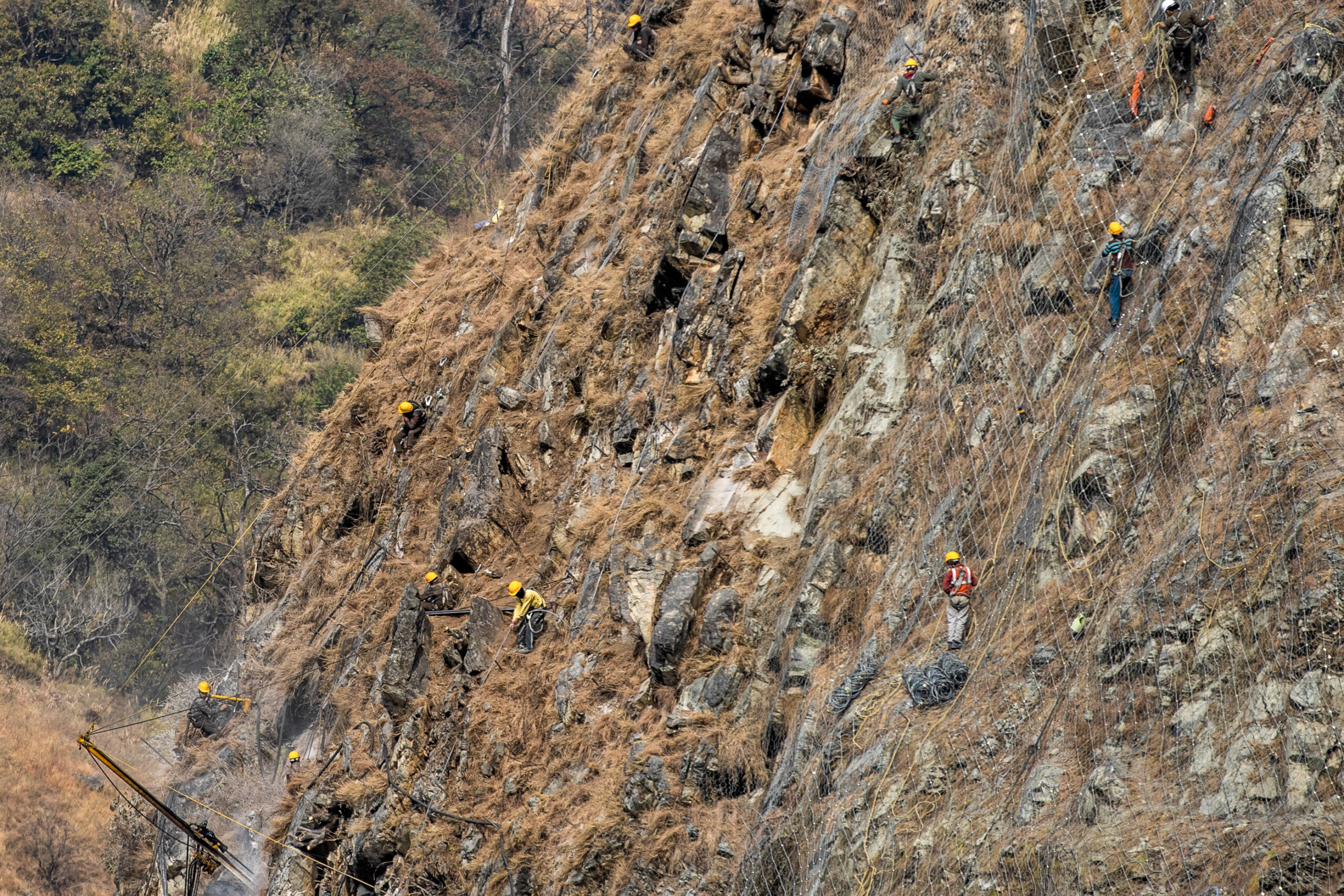
Across the precipitous borderlands dividing Nepal and the Tibet Autonomous Region of China, a catastrophic deluge has laid bare a profound vulnerability at the heart of South Asia’s green-energy transition. Triggered by a deadly combination of a massive landslide and a high-altitude glacier collapse, the late-August disaster unleashed a wall of water and debris down narrow mountain valleys, devastating local communities and severely crippling the region’s critical energy infrastructure.
The catastrophe wiped out approximately 10% of Nepal’s total operational hydropower capacity in a matter of hours. More than 700 megawatts (MW) of clean-energy projects have sustained heavy damage, leaving at least 12 individual hydropower plants incapacitated along the crucial Trishuli River basin. Hundreds of workers remain missing in the aftermath, turning a localized environmental shock into a regional humanitarian crisis.
This disaster is not an isolated anomaly. It is the latest and most acute manifestation of a growing existential threat facing clean-energy development in the world’s most hazard-prone topography. Governments spanning the Himalayas—including Nepal, India, Bhutan, and China—have heavily bet on mountain rivers as the ultimate antidote to rising electricity demands, entrenched fossil-fuel dependence, and historical economic underdevelopment. Yet, as global greenhouse gas emissions warm the planet’s mountain ranges at a rate well above the global average, melting glaciers, thinning permafrost, and erratic monsoon rains are upending the traditional calculus of hydro-engineering.
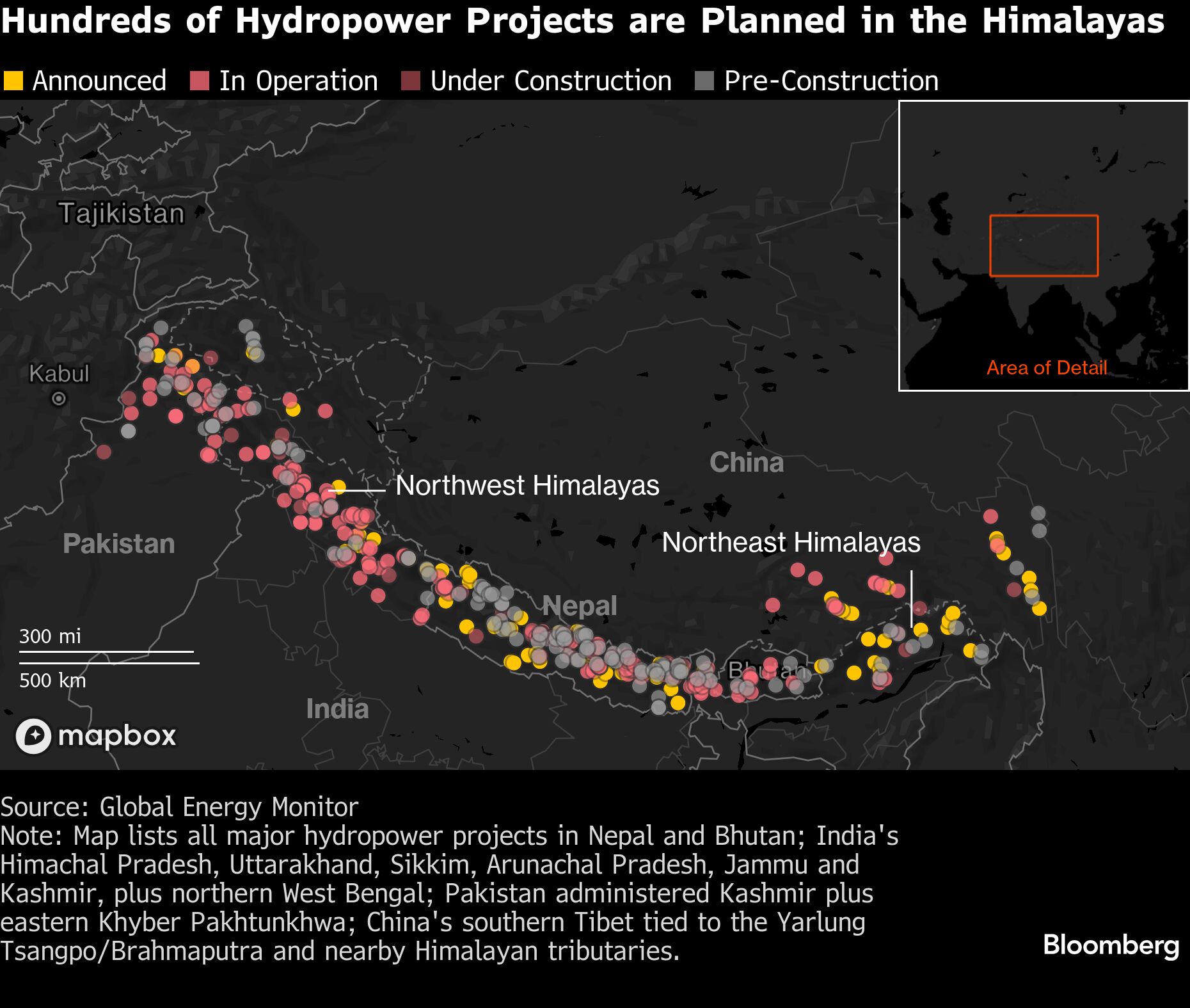
The fundamental dilemma facing the region is stark: hydropower remains indispensable for global climate change adaptation and the clean-energy transition, but the physical environment required to harvest it is becoming dangerously unstable. With over 40 gigawatts (GW) of hydropower capacity currently operating in the Himalayan region and an astronomical 200 GW in various stages of planning—an energy output equivalent to the combined grids of France and Germany—the stakes for the global energy transition could not be higher.
Chronology of Vulnerability and Recent Disasters
To understand the scale of the crisis unfolding in the Himalayas, experts trace a clear trajectory of escalating climate-induced catastrophes over the past decade:
Pre-2020: Rapid industrialization and surging energy demands drive governments across South and East Asia to accelerate dam construction in remote, steep Himalayan valleys. Planners rely on historical hydrological data, assuming consistent snowmelt and predictable monsoon patterns.
February 2021 (Uttarakhand, India): A massive rock and ice avalanche crashes down a steep slope in the Chamoli district, triggering a flash flood that surges down the Rishiganga and Dhauliganga rivers. The disaster sweeps away two major hydropower projects, including the Tapovan Vishnugad plant, leaving more than 200 people dead or missing. It serves as an early, unmistakable warning to regional engineers.
Summer 2022 (Pakistan): Unprecedented, climate-amplified monsoon rains submerge a third of Pakistan underwater. While distinct from a glacial outburst, the floods devastate vulnerable watershed management systems and underline the catastrophic potential of changing precipitation patterns across South Asian river basins.
August 26, 2026 (Nepal-Tibet Border): A sudden glacier collapse coupled with a catastrophic mountain landslide unleashes a devastating flood into the borderlands. The torrent tears through the Trishuli River basin, heavily damaging 12 hydroplants, wiping out 400+ MW of operating capacity, causing an estimated 130 billion Nepali rupees ($850 million) in infrastructure damage, and leaving hundreds of hydropower workers missing. It sets back Nepal’s national energy ambitions by an estimated five to six years.
Late Summer 2026 (Guangxi Province, China): Heavy rainfall brought by Typhoon Maysak causes a major dam to overtop and breach, resulting in at least 26 fatalities. The disaster prompts the Chinese government to launch a public inquiry and pivot its national climate policies toward relocating vulnerable infrastructure.
Supporting Data and Regional Metrics
The rapid expansion of clean energy in High Mountain Asia—often referred to as the "Third Pole" because it contains the largest reserves of ice outside the polar regions—is underpinned by striking statistical realities:
Global Dominance of Hydro: Despite the exponential growth of solar and wind generation, hydroelectric dams remain the world’s single largest source of low-carbon electricity. Data from Ember shows that hydro generated over 50% more power globally than nuclear, wind, or solar combined in 2025.
The Himalayan Pipeline: According to the Global Energy Monitor, the Himalayan region hosts more than 40 GW of operational hydropower capacity, with an additional 200 GW in various stages of planning.
Nepal’s Economic Exposure: Nepal’s national roadmap aims to expand its generation capacity more than sixfold, reaching nearly 30 GW by 2035. More than half of this output is intended for export to energy-hungry neighbors like India and Bangladesh. However, the recent August disaster alone inflicted roughly 130 billion Nepali rupees ($850 million) in damages, abruptly halting the country’s momentum.
Comparative Energy Mix in Nepal: Highlighting the deep institutional reliance on water-driven energy, Nepal’s current development pipeline for hydropower projects is 14 times larger than its utility-scale photovoltaic (solar) pipeline.
Systemic Downstream Threats: A landmark 2023 study published in Nature assessing potential Glacial Lake Outburst Floods (GLOFs) revealed that 105 operational or planned hydropower projects are directly in the path of extreme water hazards across the wider Third Pole region.
Official Responses and Expert Perspectives
As the human and economic toll mounts, scientists, policymakers, and industry leaders are grappling with the urgent need to re-evaluate regional energy strategies.
Holger Frey, a researcher leading a hazard and risk study group at the University of Zurich, frames the core policy dilemma:
"Hydropower is very important for climate change adaptation and the energy transition. This is a dilemma for countries investing in renewables and hydro, and at the same time having to deal with the consequences of climate change."
Frey notes that while similar permafrost and glacial risks exist in the European Alps and the Andes, the Himalayas present a uniquely catastrophic hazard due to the immense density of human populations and high-value infrastructure situated directly in narrow, vulnerable river valleys.
Rayees Ahmed, a project scientist at the Divecha Centre for Climate Change at the Indian Institute of Science in Bengaluru, emphasizes that the danger extends far beyond simple glacial melting.
"An ice-rock avalanche can interact with a river and generate a much larger downstream disaster," Ahmed explains. "Hydropower is particularly exposed because many projects are located in narrow Himalayan valleys and downstream of glaciers, unstable slopes, and potential flood pathways."
From an economic and energy-security perspective, proponents of the technology argue that viable alternatives remain severely constrained. Bhim Prasad Gautam, chief executive officer of the Independent Power Producers’ Association Nepal, describes the country’s strategic position:
"Nepal is the green energy battery store for the region. India wants green energy. Bangladesh wants green energy. In the future, they must import green energy from Nepal."
Government authorities are slowly shifting their posture. In China—where state planners are pursuing the gargantuan Yarlung Tsangpo mega-dam in Tibet, projected to be the world’s largest power plant upon completion—recent five-year climate policies have explicitly mandated that new population centers and industrial infrastructure be steered away from high-hazard zones.
Nevertheless, energy analysts emphasize that geopolitical and strategic imperatives will prevent major cancellations. Yuxi Wang, a senior research analyst at Wood Mackenzie Ltd., points out that projects in Tibet hold irreplaceable strategic value for China’s national grid, though she acknowledges they will likely face chronic construction delays and reduced efficiency due to shrinking snowpack and altered hydrological cycles.
Implications for the Future of Infrastructure and Finance
The recent devastation along the Nepal-Tibet border is widely viewed by international risk experts as a watershed moment for high-altitude engineering and project finance.
1. Engineering and Design Overhauls
Future infrastructure cannot rely on historical meteorological assumptions. Hitendra Dev Shakya, the recently retired head of the Nepal Electricity Authority, argues that project blueprints must be fundamentally restructured to withstand high-energy debris flows. This includes relocating powerhouses underground rather than positioning them exposed beside riverbanks, and outfitting long water-diversion tunnels with rapid-action emergency gates to block sediment and debris before they destroy turbines.
2. The Hardening Insurance Market
The financial sector is taking immediate notice of the escalating risks. Benjamin Ng, Asia power leader for insurance brokerage Aon, warns that the frequency and severity of recent flood events are fundamentally altering risk assessment.
"These events are likely to make insurers more cautious, and the market for hydropower risks may harden further," Ng states, pointing toward rising premiums and stricter underwriting requirements for high-altitude energy investments.
3. A Paradigm Shift in Development
Christian Huggel, a professor at the University of Zurich who advises multilateral development banks on climate adaptation, believes the recent disaster must force an irreversible change in how international aid agencies and national governments back Himalayan projects.
"This event will change a lot," Huggel asserts. "And I hope so, because otherwise billions of dollars in investment will be lost and so many more lives will be lost across the Himalayas."
Ultimately, the debate is no longer about whether to abandon hydropower in the world’s highest mountain ranges—as alternative energy sources like solar struggle with intermittent output and severe land constraints in rocky terrain. Instead, as Ahmed summarizes, the defining question for the 21st century is whether nations will continue developing their river basins based on the static Himalayan conditions of the past, or adapt rapidly to the volatile, high-stakes realities of an uncertain climate future.