

By Financial and Infrastructure Desk
Published September 17, 2026
Introduction and Main Facts
The modern American high-speed rail movement is facing an unprecedented financial reckoning. Promoted for years as triumphs of private-sector ingenuity and market-driven efficiency, the flagship passenger rail projects championed by Brightline in Florida and the American Southwest are now grappling with severe capital crunches.
Both Brightline West—the high-profile venture linking Las Vegas to Southern California—and its operational sister company, Brightline Florida, are struggling under the weight of mounting expenditures, delayed equity injections, and missed bond obligations. Backed by Fortress Investment Group, these ventures have historically positioned themselves as rare models of privately financed intercity passenger rail in the United States. However, recent regulatory filings, market analyses, and missed capital deadlines reveal a heavy reliance on public subsidies, municipal debt structures, and pending federal loans to keep their tracks from stalling.
At the same time, public mega-projects like the California High-Speed Rail initiative are looking toward private consortia to bridge astronomical funding chasms. With project estimates ballooning and government funding streams facing structural threats, the viability of high-speed rail in the United States hangs in the balance. Can these multi-billion-dollar corridors survive without an influx of new, highly speculative financing, or are taxpayers ultimately on the hook for the shortfall?
Chronology of the Crisis
Understanding the current predicament requires tracing the timeline of missed deadlines, skyrocketing budgets, and escalating financial dependencies that have defined Brightline’s operations through 2026.
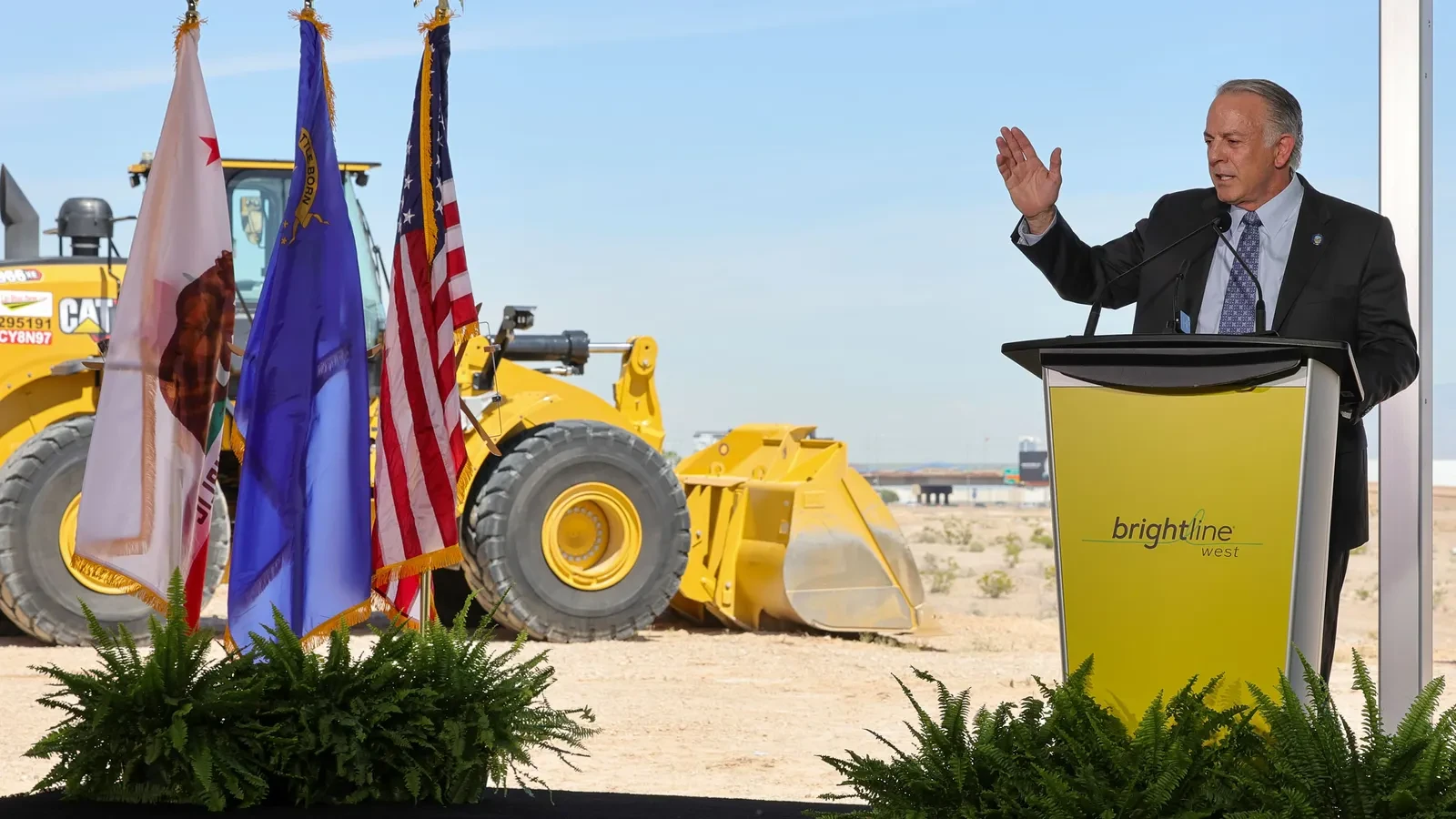
- 2024: Brightline West breaks ground on its ambitious Las Vegas station project, fueled by initial optimism and early federal backing. At this stage, project cost estimates hover around $12 billion.
- March 31, 2026: The initial contractual deadline for Brightline West to raise and inject a required $400 million equity investment into the project. This milestone passes without fulfillment, triggering scrutiny from financial markets and industry publications like Bloomberg and The Bond Buyer.
- June 2026: Alon Levy, a fellow at the New York University Marron Institute’s transportation and land use program, notes in public commentary that purely private-sector rail plans are largely unworkable, predicting that Brightline West will inevitably pivot toward demanding even heavier federal bailouts. Concurrently, the California High-Speed Rail Authority enters a $25 million co-development agreement with a global consortium of infrastructure and investment firms to attract private capital.
- July 31, 2026: The Office of the Inspector General for the California High-Speed Rail Authority releases a sobering report warning that the state venture could run completely out of money by December 2027.
- September 17, 2026: Financial analysts sound the alarm as Brightline Florida—plagued by repeated delays on mandatory bond payments—faces the genuine specter of restructuring or bankruptcy.
- November 2, 2026: The final extended deadline for Brightline West to secure its delinquent $400 million equity investment. Industry watchers regard this date as a make-or-break juncture for the project’s ongoing construction schedule.
- Late October 2026 (Projected): Brightline West anticipates a decision on a massive, highly anticipated $6 billion Railroad Rehabilitation and Improvement Financing (RRIF) loan from the federal government.
Supporting Data and Financial Metrics
The sheer scale of the capital requirements for American high-speed rail is staggering, characterized by soaring cost overhauls and precarious debt-to-equity ratios.

Brightline West Financial Profile
- Project Cost Inflation: Originally estimated at $12 billion in 2024, projected completion costs for the Las Vegas-to-Southern California line have skyrocketed to $21 billion.
- Equity Shortfall: A delinquent $400 million equity investment remains the immediate stumbling block, with the drop-dead deadline ticking down to November 2, 2026.
- Federal and Public Backing: Despite branding as a private enterprise, Brightline West has leveraged $3.5 billion in tax-exempt private activity bonds issued through the U.S. Department of Transportation, alongside a $3 billion direct grant courtesy of the federal administration.
- The RRIF Loan Target: The project is pinning its immediate survival on a pending $6 billion low-interest Railroad Rehabilitation and Improvement Financing loan, which offers repayment windows of up to 35 years.
Brightline Florida Financial Profile
- Operating under the same Fortress Investment Group umbrella, Brightline Florida has repeatedly delayed meeting its required bond obligations.
- Having initially pitched itself as an entirely private-sector endeavor, the Florida route ultimately became tethered to municipal bonds issued via the Florida Development Finance Corp., exposing it to severe debt distress and potential bankruptcy proceedings.
California High-Speed Rail Financial Profile
- Total Project Price Tag: According to the authority’s 2026 business plan, completing the full San Francisco-to-Los Angeles corridor will require an astronomical $126 billion.
- Current Funding Gap: The state has secured, authorized, or projected approximately $39.3 billion through 2045, leaving a gaping $87 billion shortfall.
- The 2027 Cliff: The Inspector General’s report underscores that without the ability to borrow against anticipated annual revenues ($1 billion per year) from the state’s cap-and-invest program extending to 2046, the authority faces total insolvency by December 2027.
Official Responses and Stakeholder Perspectives
As the financial pressure mounts, transit experts, federal administrators, and state officials are increasingly divided over the sustainability of blending private ambition with public bailouts.
Independent transportation researchers have long warned that the underlying economics of high-speed rail do not square with traditional private-equity expectations. Alon Levy’s assessment—that pure private-sector funding models for high-speed rail are inherently unworkable—has gained significant traction among urban planners. When capital costs double over short periods and anticipated private equity fails to materialize, projects inevitably turn to the public purse.
Conversely, public authorities continue to court private investment partnerships as a desperate alternative to complete stagnation. The California High-Speed Rail Authority’s June 2026 partnership with a global consortium of infrastructure firms represents an acknowledgement that state coffers alone cannot shoulder an $87 billion deficit. Over a 30-month term, this consortium is tasked with identifying "viable strategies" to secure construction capital past the current 119-mile Merced-to-Bakersfield initial operating segment.

Federal agencies, meanwhile, find themselves walking a tightrope. By doling out multi-billion-dollar grants and considering multi-decade RRIF loans, departments like the USDOT are effectively acting as the lenders of last resort for ventures that promised to stand entirely on their own commercial merits.
Implications for the Future of American Rail
The unfolding crisis surrounding Brightline West, Brightline Florida, and the California network carries profound implications for the future of national infrastructure policy.
- The Death of the "Pure Private" Rail Myth: For years, politicians and investors used Brightline as a shining counter-example to government-run rail, arguing that private discipline could deliver projects faster and cheaper. The reality in 2026 demonstrates that passenger rail infrastructure remains fundamentally capital-intensive, requiring robust, long-term public subsidies to survive market downturns and construction overruns.
- Systemic Risk to Public Credit: As municipal bonds tied to Brightline Florida edge closer to default, and as federal loan programs like RRIF are tapped to rescue multi-billion-dollar shortfalls, taxpayers and public agencies assume immense fiscal exposure. A high-profile bankruptcy or default could chill appetite for future tax-exempt private activity bonds across the infrastructure sector.
- The Fate of Western and Coastal Corridors: If Brightline West fails to clear its November 2 equity hurdle or secure its $6 billion RRIF loan, construction on the desert corridor could grind to a halt, dealing a severe psychological blow to the American high-speed rail movement. Simultaneously, California’s race against its December 2027 funding cliff means lawmakers will soon have to decide whether to scale back the grand vision of a statewide bullet train or inject unprecedented new revenues into an already beleaguered bureaucracy.
Ultimately, the coming months will test whether America’s grand rail experiment can evolve past its financing bottlenecks, or if it will stand as a cautionary tale of ambition colliding with hard economic reality.
