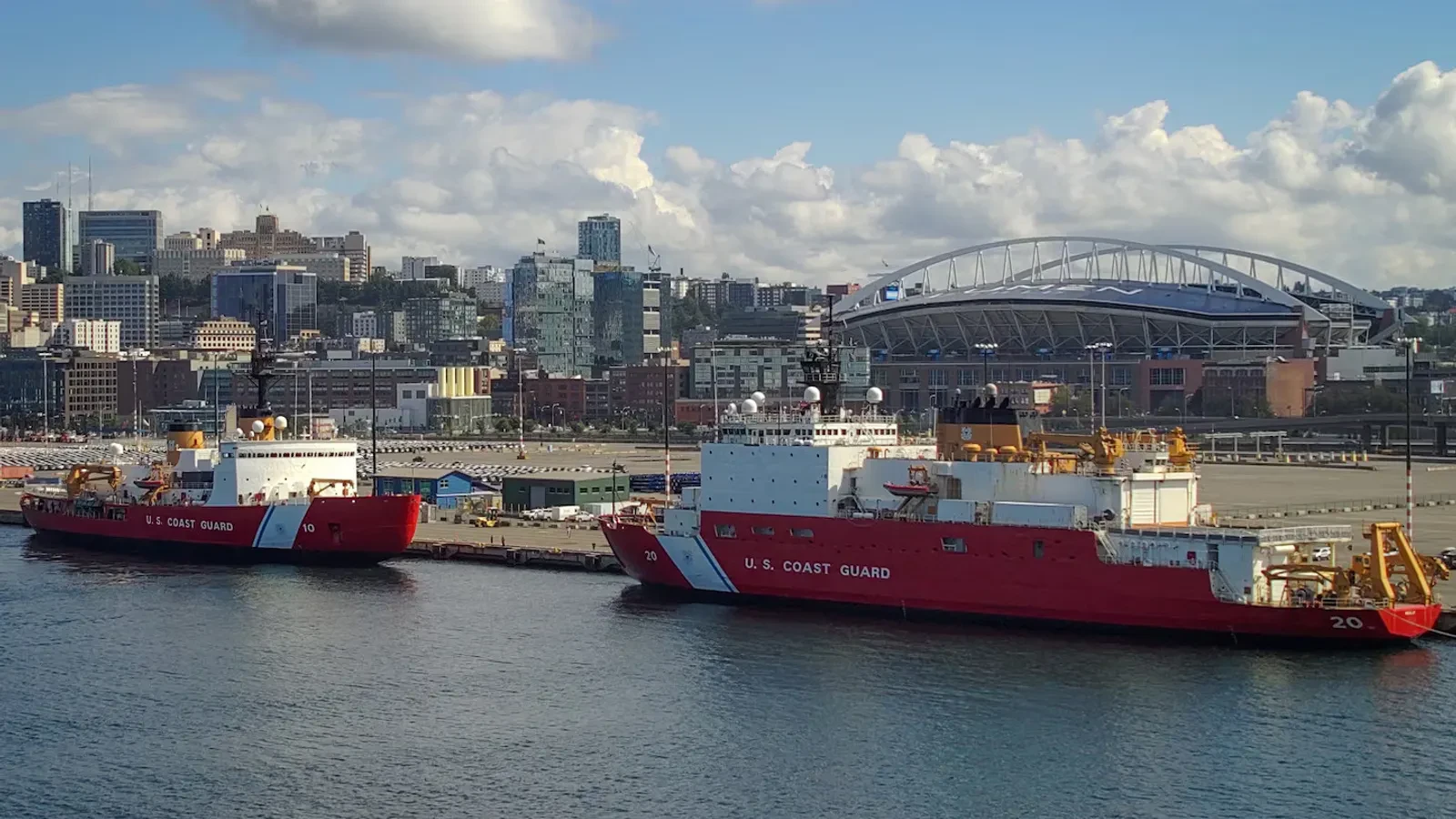
SEATTLE — The U.S. Coast Guard has officially advanced its sweeping infrastructure overhaul in the Pacific Northwest, awarding a massive $173.7 million contract to Baltimore-based builder Whiting-Turner for Phase 1B of the Base Seattle modernization project. Funded through fiscal year 2025 budget reconciliation allocations, the latest contract deepens a robust, multi-year partnership between the military branch and the prominent contractor, focusing heavily on upgrading strategic defense capabilities to meet escalating geopolitical and environmental demands in the polar regions.
Main Facts
The $173.7 million contract targets critical logistical and structural deficits at Coast Guard Base Seattle, a vital hub for maritime security and high-latitude operations. According to official project briefs, Phase 1B centers on the construction of a brand-new pier at Slip 36B, comprehensive structural enhancements across aging base facilities, and extensive utility and electrical grid upgrades designed to support modern, high-draw vessels.
This latest injection of capital is part of an ongoing, multi-phase capital improvement campaign aimed at transforming Base Seattle into a primary homeport for the nation’s next generation of polar security cutters. As climate change opens up Arctic shipping lanes and heightens international competition for natural resources in both the Arctic and Antarctic, the U.S. military is racing to modernize its physical footprint in the Pacific Northwest.
Whiting-Turner, one of the nation’s premier construction management and general contracting firms, secured the award following a competitive procurement cycle. The company has become a preferred builder for the Coast Guard, having amassed a formidable portfolio of high-profile defense infrastructure projects ranging from Pacific island aviation hubs to Atlantic training academies.
Chronology of the Seattle Modernization and Broader Coast Guard Expansion
The $173.7 million award for Phase 1B is not an isolated transaction; rather, it represents the continuation of a meticulously planned, multi-stage engineering strategy for Base Seattle.
Late 2024 (Phase 1A Award): The foundation for the current project was laid when the Coast Guard tapped Whiting-Turner for Phase 1A of the Base Seattle modernization initiative. Valued at approximately $137 million, that initial contract laid the groundwork for major spatial reconfiguration. Phase 1A responsibilities included widening and upgrading the slip between berths, executing complex structural demolition, and stabilizing the waterfront to prevent erosion and accommodate larger deep-draft vessels.
Late 2024 (Hawaii Air Station Expansion): Expanding its footprint across the Pacific, the Coast Guard awarded Whiting-Turner a separate $69 million contract to design and construct two state-of-the-art aircraft hangars at Air Station Barbers Point in Kapolei, Hawaii, modernizing aviation support infrastructure for maritime patrol aircraft.
May 2025 (East Coast and Gulf Upgrades): The momentum continued into the spring when the military branch selected Whiting-Turner for a massive slate of improvements spanning the Atlantic seaboard. This package included an expansive, multi-year contract valued at up to $400 million to overhaul barracks, training facilities, and support structures at Coast Guard Training Center Cape May in New Jersey. Simultaneously, the firm was awarded a $116.7 million project to reconstruct and upgrade Pier Mike at Base Charleston in South Carolina.
September 2026 (Phase 1B Award): The current announcement brings the total committed capital for Phase 1B of Base Seattle to $173.7 million, directly building upon the marine construction achievements completed during Phase 1A.
Supporting Data and Financial Overview
A review of recent federal procurement data highlights the unprecedented scale of capital investment the U.S. Coast Guard is directing toward facilities modernization. For decades, the branch operated under severe budgetary constraints that left many of its historic waterfront installations, piers, and aviation bases vulnerable to deferred maintenance. However, recent geopolitical shifts and legislative funding packages have unlocked billions of dollars for recapitalization.
Project / Location
Contractor
Estimated Value
Scope of Work
Base Seattle (Phase 1B) Seattle, WA
Whiting-Turner
$173.7 million
New pier at Slip 36B, structural enhancements, electrical and utility upgrades.
Base Seattle (Phase 1A) Seattle, WA
Whiting-Turner
$137.0 million
Slip widening between berths, waterfront stabilization, demolition work.
Training Center Cape May Cape May, NJ
Whiting-Turner
Up to $400.0 million
Comprehensive barracks overhaul, training facility upgrades, campus modernization.
Construction of two advanced aircraft hangars and support facilities.
The concentration of these high-value contracts with a single general contractor—Whiting-Turner—underscores the trust the federal government places in large-scale firms capable of navigating complex regulatory frameworks, environmental compliance requirements, and specialized marine engineering demands.
Official Responses and Leadership Perspectives
The strategic necessity of these infrastructure investments has been championed by senior military leadership, who frame base modernization not merely as a real estate endeavor, but as a core pillar of national security.
In the official announcement regarding the Phase 1B contract, Adm. Thomas Allan, vice commandant of the Coast Guard, emphasized the direct link between shore-side construction and operational readiness at sea.
"This investment strengthens our ability to homeport and maintain polar security cutters, enhances readiness for our growing surface fleet, and ensures our crews have the facilities they need to meet the Nation’s evolving maritime security needs," Adm. Allan stated.
Military planners have repeatedly pointed out that modern cutters—which feature reinforced hulls, specialized propulsion systems, and advanced electronic warfare and communications suites—cannot be effectively serviced by mid-20th-century pier infrastructure. Without robust electrical shore-power connections, heavy-lift cranes, and reinforced quay walls, the Coast Guard’s newest vessels would be unable to execute sustained missions in sub-zero environments.
Industry analysts have similarly praised the collaborative delivery models being utilized between the Coast Guard and contractors like Whiting-Turner, noting that integrated project delivery and phased design-build strategies are essential for keeping complex marine construction projects on schedule and within budget amidst inflationary pressures in the building materials sector.
Broader Implications for National Security and the Construction Industry
The $173.7 million award for Base Seattle carries profound implications for both the defense sector and the commercial construction industry, signaling long-term stability and robust market opportunities in federal contracting.
1. Geopolitical Realignment in the Polar Regions
As melting sea ice opens trans-Arctic shipping routes, international actors—most notably Russia and China—have ramped up their military and commercial presence in the high latitudes. The United States has historically lagged behind peer competitors in polar icebreaker capacity. By modernizing Base Seattle to properly homeport, fuel, and maintain a modern polar surface fleet, the U.S. is establishing a permanent, credible deterrent and operational anchor in the Pacific Northwest. This infrastructure ensures that search-and-rescue, environmental disaster response, and sovereignty patrols can be launched rapidly into the Bering Sea and the Arctic Circle.
2. Economic Catalyst for Pacific Northwest Marine Construction
The influx of nearly $310 million in combined Phase 1A and Phase 1B funding for Base Seattle acts as a major economic stimulant for the regional construction supply chain. Marine construction requires highly specialized labor, including pile drivers, marine electricians, environmental remediation specialists, and structural steel fabricators. Subcontractors and material suppliers throughout Washington state stand to benefit from years of steady subcontracting work, providing resilience against commercial construction downturns.
3. Precedent for Federal-Contractor Partnerships
The heavy reliance on Whiting-Turner for multiple concurrent mega-projects across Hawaii, New Jersey, South Carolina, and Washington demonstrates a growing preference within the federal government for enterprise-level contractor agreements. Rather than fragmenting base upgrades across dozens of localized, smaller firms, agencies are increasingly looking to tier-one national contractors capable of self-performing complex engineering tasks, managing rigorous Department of Defense cybersecurity and safety protocols, and scaling rapidly to meet shifting congressional spending timelines.
As Phase 1B gets underway in Seattle, engineering teams face a tight schedule to deliver the new Slip 36B pier and utility upgrades. With national security interests increasingly tied to the freezing waters of the far north, the success of Whiting-Turner’s hammers and cranes in the Pacific Northwest will directly dictate how effectively the United States can project power, protect commerce, and maintain sovereignty at the top of the world.