

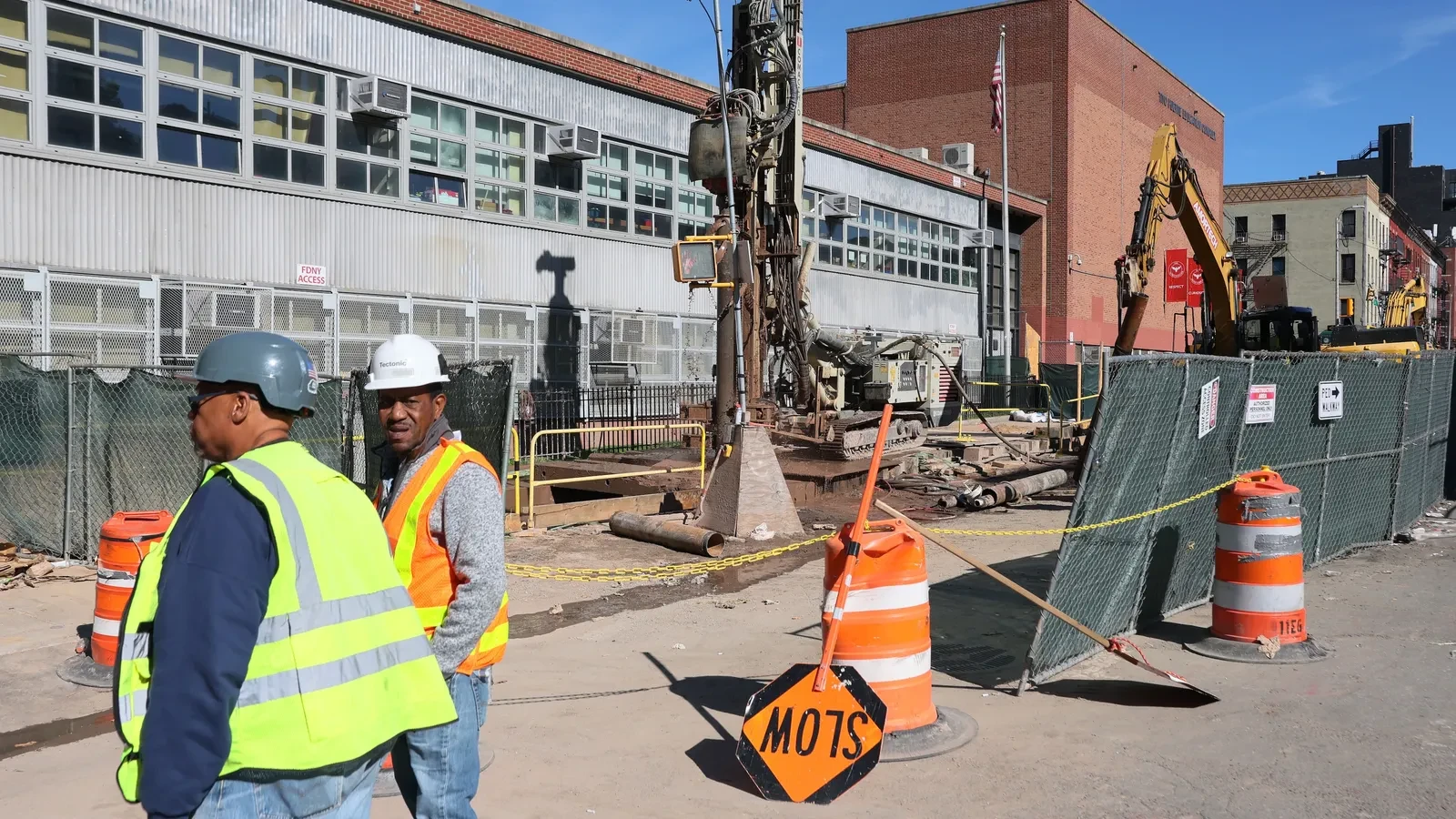
NEW YORK — Decades of waiting, planning, and political maneuvering are finally culminating in tangible subterranean progress for upper Manhattan. The Metropolitan Transportation Authority (MTA) has officially advanced the procurement process for the fourth and final major contract of the Second Avenue Subway Phase 2 project. This monumental milestone brings the long-promised extension of the Q line closer to reality, promising modernized transit access to a community that has historically lacked rapid rail connectivity.
According to the MTA, the completed Phase 2 project will successfully extend the Second Avenue Subway northward, introducing three brand-new, fully accessible Q line stations in East Harlem located at 106th Street, 116th Street, and 125th Street. Current projections anticipate that passenger service across the new expansion will officially launch by the fall of 2032.
As New York City’s infrastructure continues to evolve to meet the demands of a growing population and shifting urban landscapes, the Second Avenue Subway Phase 2 stands out as one of the most complex, vital, and closely watched public works initiatives in the United States.
Main Facts: The Scope of Phase 2 and the Final Package
The release of the fourth contract represents the crown jewel of the East Harlem transit expansion. As the largest of the project’s four major contracting packages, this final phase focuses heavily on the passenger-facing elements and critical infrastructure that will bring the stations to life.
The upcoming work encompasses a comprehensive array of architectural, mechanical, and technological installations. Crews will be tasked with building striking new entrance canopies, constructing interior station platforms, and erecting six ancillary buildings. Notably, these ancillary structures have been designed with urban integration in mind, featuring dedicated spaces for potential ground-floor retail and community uses that could help revitalize neighborhood commercial corridors.
Beyond the physical aesthetics and passenger facilities, the final contract involves heavy technical integration. Contractors will install advanced track infrastructure, robust traction power systems, and cutting-edge communications and train control networks. These systems are essential for ensuring safe, reliable, and frequent service for the hundreds of thousands of commuters who are expected to use the extension daily.
MTA Chair and CEO Janno Lieber emphasized the significance of this final package. "Three contracts down, one to go in our quest to bring long-awaited transit justice to East Harlem," Lieber said. "This fourth and final RFQ covers the architectural finishes and the communications and other systems in the stations — the things that riders directly experience — and we can’t wait to get started."
Chronology and Contract Breakdown: A Four-Part Engineering Feat
Executing a massive transit expansion through the densely populated, utility-packed bedrock of Manhattan requires a meticulously phased approach. The MTA divided the Second Avenue Subway Phase 2 into four distinct, overlapping contracts to manage risk, mitigate surface disruptions, and streamline specialized engineering tasks.
Contract 1: Utility Relocation at 106th Street
Before any heavy tunneling or subterranean structural work could begin, engineers had to untangle the labyrinth of aging water, gas, electric, and telecommunications lines running beneath East Harlem’s streets.
The MTA awarded the initial utility relocation contract—valued at approximately $182 million—to New York City-based C.A.C. Industries. Work under this contract has focused heavily on the future 106th Street Station footprint. According to recent MTA updates, this foundational phase is roughly 60% complete and remains on track to reach full completion by the summer of 2027.
Contract 2: Tunneling, Rehabilitation, and Structural Shells
The second major contract tackles the heavy civil engineering required to clear paths for trains and secure the underground environment. This package was awarded to Connect Plus Partners, a powerhouse joint venture comprising Nanuet, New York-based Halmar International and Madrid, Spain-based FCC Construction.
The scope of work for Connect Plus Partners is extensive, involving the construction of two new transit tunnels, the rehabilitation of existing pre-excavated tunnel segments, the creation of seven vertical shafts, and the construction of structural shells alongside various station upgrades. Final design work for this contract is already more than 50% complete. MTA officials project that the joint venture will achieve substantial completion by September 2029.

Contract 3: Excavation and Structural Construction
Building upon the groundwork laid by the first two contracts, the third package dives deeper into the physical architecture of the stations and connection points.
This critical contract was awarded to a high-profile international joint venture featuring Stockholm-based Skanska, Evansville, Indiana-based Traylor Bros., and Chicago-based Walsh Construction. Their mandate includes the heavy excavation and construction of the 106th Street Station structural shell, vital tunnel connections, ancillary buildings, station entrances, and accompanying utility work. Skanska and its partners anticipate reaching substantial completion for their portion of the work in the third quarter of 2030.
Contract 4: Architectural Finishes and Systems Integration
As detailed in the MTA’s latest announcement, the fourth and final contract serves as the finishing touch. While the first three packages focus primarily on digging, utilities, and structural concrete, the fourth package transforms cold concrete caverns into fully functioning, modern transit hubs. By handling architectural finishes, lighting, signage, and state-of-the-art communication and train control systems, this contract directly shapes the daily experience of future commuters.
Supporting Data and Financial Realities
Mega-projects of this scale require staggering financial investments, rigorous oversight, and steady logistical coordination. The Second Avenue Subway Phase 2 is no exception, drawing funding from a combination of federal transit grants, state commitments, and MTA capital funds.
- Project Timeline: Groundwork and preliminary utility shifts began in earnest ahead of the 2026 milestones, with the ultimate completion target set for the fall of 2032.
- Station Locations: Three new accessible stations will be added to the Q line at 106th Street, 116th Street, and 125th Street.
- Ancillary Infrastructure: The final contract accounts for six ancillary buildings, incorporating modern design features that allocate space for potential community services and ground-floor retail.
- Contractor Collaboration: The project has brought together a diverse roster of local, national, and international engineering heavyweights, including C.A.C. Industries, Halmar International, FCC Construction, Skanska, Traylor Bros., and Walsh Construction.
- Milestone Progress: Utility relocation (Contract 1) is 60% complete (slated for a summer 2027 finish); final designs for tunneling and rehabilitation (Contract 2) are over 50% complete (slated for a September 2029 completion).
Official Responses and Stakeholder Perspectives
The advancement of Phase 2 has elicited widespread praise from local elected officials, urban planners, and community advocates who have championed the expansion for decades. For generations, East Harlem has suffered from transit deserts compared to Manhattan’s affluent West Side or downtown corridors, relying heavily on overcrowded bus lines and the Lexington Avenue IRT (4/5/6 lines), which consistently ranks as one of the busiest subway corridors in the Western Hemisphere.
Community leaders note that the extension is not merely a convenience project, but a matter of economic equity and public health. Improved transit access can dramatically reduce commute times, expand job opportunities for local residents, reduce street-level bus congestion, and lower carbon emissions across the borough.

Furthermore, the integration of ground-floor retail and community spaces within the six new ancillary buildings has been hailed as a progressive step in station design. Rather than erecting imposing, dead-zone industrial utility structures, the MTA’s blueprint seeks to weave the transit infrastructure seamlessly into the existing urban fabric of East Harlem, preserving neighborhood walkability and commerce.
Implications for New York City’s Infrastructure Future
The Second Avenue Subway Phase 2 serves as a critical test case for the future of American transit construction. For years, New York City infrastructure projects have faced intense scrutiny regarding ballooning costs, sluggish delivery timelines, and bureaucratic hurdles. By breaking the East Harlem extension into four distinct, manageable contracts and partnering with experienced global and domestic joint ventures, the MTA is striving to prove that complex subterranean projects can be executed with greater efficiency and predictability.
Successful delivery of the Q line extension by 2032 will validate this modular contracting strategy, potentially setting a new benchmark for upcoming MTA megaprojects, such as the subsequent phases of the Second Avenue Subway intended to snake further down into Lower Manhattan.
As construction crews push forward beneath the streets of upper Manhattan, the vision of a fully connected Second Avenue line moves steadily closer to reality. For the residents of East Harlem, the ongoing rumble of machinery is no longer just a source of localized disruption—it is the sound of a long-awaited transit future finally coming into view.
