

By Anthony Capkun
Published: September 16, 2026
Main Facts
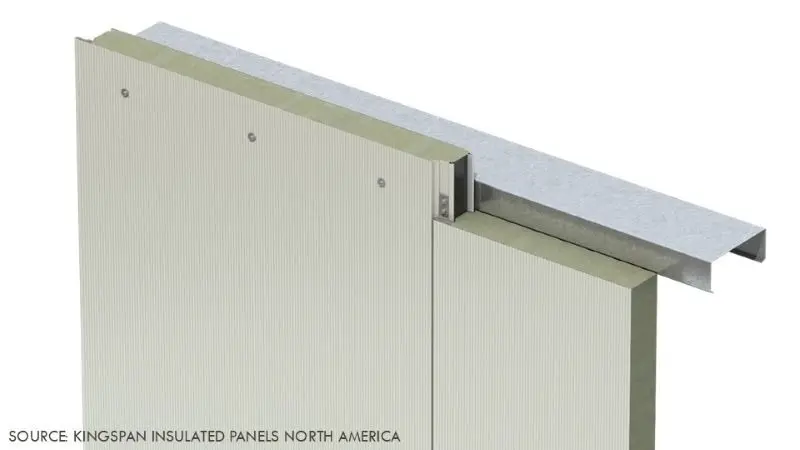
Kingspan Insulated Panels North America (KIPNA), a recognized global leader in high-performance building envelope solutions, has officially announced the launch of its latest product innovation: the K-Roc FX fire-rated insulated metal panel (IMP) system. Designed to meet the increasingly stringent demands of modern commercial, industrial, and institutional construction, the K-Roc FX system features an advanced mineral wool insulation core that combines exceptional thermal performance with superior fire resistance.
The system has been rigorously engineered and tested to comply with demanding North American building standards, including ASTM E119 and ULC-S101. Available in 4-inch, 6-inch, and 8-inch thicknesses, the K-Roc FX panels provide versatile design options for both wall and ceiling applications. Depending on the panel thickness and assembly type, walls constructed with the system can achieve a 1-hour fire rating (using 4-inch panels) all the way up to a 3-hour fire rating (using 8-inch panels). For ceiling configurations, the system delivers up to a 2-hour fire rating when utilizing 8-inch panels, though specific installation guidelines and ratings vary according to the designated assembly requirements.
Beyond fire performance, the K-Roc FX system is built to deliver high-level airtightness and water-penetration resistance, safeguarding building interiors against the elements. It features a standardized 42-inch cover width and supports flexible architectural integration through both vertical and horizontal installation methods.
A standout feature of the K-Roc FX is its labor-saving design. The system incorporates factory-applied Promat intumescent tape directly within the panel joint. This innovative manufacturing inclusion eliminates the traditional, time-consuming requirement for contractors to manually apply beads of Safire intumescent mastic on the job site, streamlining the installation process and reducing potential points of human error.
Chronology of Development and Industry Evolution
The introduction of the K-Roc FX system represents the culmination of years of research, development, and market observation within the insulated metal panel sector. To understand the significance of this 2026 release, it is necessary to examine the historical trajectory of building envelope technology and how safety standards have shaped modern construction practices.
The Shift Toward Advanced Building Materials
For decades, the construction industry relied on traditional multi-component wall assemblies consisting of concrete masonry units, exterior insulation and finish systems (EIFS), or field-assembled metal siding backed by fiberglass or batt insulation. While these methods were standard, they suffered from significant vulnerabilities regarding thermal bridging, extended installation timelines, and complex labor requirements.
The advent of insulated metal panels (IMPs) revolutionized the market by combining exterior and interior facings with a rigid insulating core into a single, factory-manufactured component. However, early IMP generations primarily utilized combustible foam cores (such as polyurethane or polyisocyanurate), which, while offering high R-values, required specialized detailing or barriers to meet strict commercial fire codes, particularly for high-rise or boundary-wall applications.
The Mineral Wool Revolution
Recognizing the need for non-combustible alternatives that did not sacrifice thermal performance, manufacturers began exploring mineral wool insulation cores. Mineral wool—derived from natural rock or recycled slag—naturally resists extreme temperatures, does not melt or contribute fuel to a fire, and provides excellent acoustic dampening properties.
Over the past decade, building codes across North America have grown progressively stricter regarding fire safety, smoke development, and energy efficiency. Architects and engineers began demanding materials that could offer multi-hour fire ratings without compromising the speed of construction associated with IMPs. In response, Kingspan developed its proprietary K-Roc technology platform, laying the groundwork for specialized, high-performance fire-rated solutions.
The Development and Testing Phase (2024–2026)
The journey toward the K-Roc FX release involved extensive laboratory testing, structural optimization, and constructability feedback from industry contractors. Engineering teams focused heavily on two seemingly opposing goals: maximizing structural fire endurance and minimizing field labor complexity.
During 2024 and 2025, prototype panels underwent rigorous fire endurance testing under ASTM E119 and ULC-S101 protocols. Simultaneously, air and water infiltration testing (ASTM E283 and ASTM E331) was conducted to ensure the joint design could withstand severe weather events.
A major breakthrough during this development phase was addressing the field-application bottlenecks associated with fire-rated joints. Traditionally, installers had to manually apply intumescent sealants or mastics between panel joints during erection—a process vulnerable to weather delays, inconsistent bead application, and increased labor costs. By partnering with fire-protection material specialists, Kingspan’s product development team successfully integrated factory-applied Promat intumescent tape into the panel tongue-and-groove system.
By early 2026, the product completed all final compliance verifications, setting the stage for its official September 2026 market rollout across North America.
Supporting Data and Technical Specifications
The performance profile of the K-Roc FX system is backed by extensive third-party laboratory testing, confirming its capability to withstand demanding structural, environmental, and thermal conditions. Below is a detailed breakdown of the technical data associated with the new panel system.
Fire Resistance Ratings
Fire-rated building components must prove their ability to contain flames, limit heat transfer, and maintain structural integrity under intense heat exposure. The K-Roc FX system has been certified under two of the most rigorous North American fire test standards:
- ASTM E119: Standard Test Methods for Fire Tests of Building Construction and Materials.
- ULC-S101: Standard Methods of Fire Endurance Tests of Building Construction and Materials.
Based on these protocols, the system’s performance varies by thickness and application:
- Wall Applications:
- 4-inch panels: Achieve a 1-hour fire rating.
- 6-inch panels: Provide intermediate performance tiers per engineering specifications.
- 8-inch panels: Achieve up to a 3-hour fire rating, making them suitable for high-risk industrial fire walls and property line divisions.
- Ceiling Applications:
- 8-inch panels: Capable of achieving up to a 2-hour fire rating in approved overhead ceiling configurations.
- Note: Specific assembly requirements, framing details, and fastener schedules vary by installation type and must be verified against local building code approvals.
Air and Water Infiltration Performance
Building envelope airtightness is critical for energy conservation, moisture control, and indoor air quality. The K-Roc FX system demonstrated exceptional resistance to air and water intrusion during standardized testing:
- Air Leakage (ASTM E283): Tested at a static pressure difference of 6.24 psf, the system exhibited an extremely low air leakage rate of just 0.01 cfm/sq. ft. of panel area. This performance significantly exceeds standard building code requirements, virtually eliminating uncontrolled air exfiltration and infiltration.
- Water Penetration (ASTM E331): Tested under a differential pressure of 10 psf, the system showed no uncontrolled water penetration. This guarantees that wind-driven rain is effectively deflected away from the building interior, protecting the structural substrate and preventing mold growth.
Dimensional and Installation Parameters
- Cover Width: Standardized at 42 inches, allowing for rapid wall and ceiling coverage and simplified architectural layout planning.
- Orientation: Engineered for maximum design flexibility, supporting both vertical and horizontal installation orientations.
- Joint Technology: Features factory-applied Promat intumescent tape within the panel joint. This proprietary integration eliminates the need for field-applied beads of Safire intumescent mastic, ensuring uniform application and saving valuable labor hours on site.
Official Responses and Industry Perspectives
The introduction of the K-Roc FX system has generated significant discussion among industry leaders, highlighting the ongoing industry push toward smarter, safer, and more efficient construction materials.
Karim Muri, representing Kingspan Insulated Panels North America, emphasized the dual challenges that modern contractors face: meeting uncompromising safety standards while dealing with skilled labor shortages and tight construction schedules.
“Fire-rated IMPs are critical for many commercial and industrial projects, but contractors also need building envelope solutions that help them work efficiently in the field,” stated Muri.
Muri’s comments underscore a core philosophy behind the K-Roc FX engineering process: product safety should not come at the expense of constructability. By addressing the operational friction points traditionally associated with fire-rated assemblies—such as messy field-applied mastics and complex joint sealing—Kingspan has positioned the product as an installer-friendly alternative in a market sector often characterized by meticulous, time-consuming installation procedures.
Industry analysts and building envelope consultants have also weighed in on the release. Many note that as urban density increases and industrial facilities expand, the demand for high-performance fire walls that can be erected rapidly is at an all-time high. The ability to achieve up to a 3-hour fire rating with an 8-inch panel—while simultaneously maintaining a high thermal R-value and a weather-tight seal—addresses a long-standing engineering compromise.
Furthermore, structural engineers have praised the factory-applied Promat intumescent tape innovation. Field-applied firestopping materials are frequently subject to quality control inconsistencies due to adverse weather conditions, temperature fluctuations, or human error during hectic construction phases. Moving this critical step into a controlled factory environment ensures consistent chemical composition, precise placement, and reliable expansion performance when exposed to heat.
Implications for the Construction Industry
The commercial launch of the Kingspan K-Roc FX system carries far-reaching implications for architects, general contractors, building owners, and the broader modular and metal construction sector.
1. Enhanced Jobsite Safety and Quality Control
By eliminating the need to manually apply Safire intumescent mastic on site, the K-Roc FX reduces potential liabilities related to improper firestopping installation. Factory-applied Promat tape guarantees that every panel joint possesses the exact material composition required to achieve its certified fire rating. This shifts quality assurance from the unpredictable environment of an active construction site back to the stringent manufacturing controls of Kingspan’s production facilities.
2. Labor Efficiency and Schedule Acceleration
Labor shortages remain one of the single greatest challenges facing the construction industry. Every step removed from the field equates to reduced labor costs, shorter project schedules, and minimized exposure to weather-related construction delays. The 42-inch cover width, combined with the streamlined joint detail, allows erection crews to install fire-rated walls and ceilings significantly faster than traditional multi-layer, field-assembled constructions.
3. Architectural Design Flexibility
The availability of multiple thicknesses (4-inch, 6-inch, and 8-inch) combined with support for both vertical and horizontal panel orientations gives architects unprecedented creative freedom. Designers no longer need to sacrifice aesthetic intent to meet strict property-line fire ratings or industrial boundary regulations. The clean lines of the IMP system integrate seamlessly into modern architectural vernaculars for distribution centers, manufacturing plants, cold storage facilities, and institutional buildings.
4. Long-Term Energy Performance and Sustainability
With building energy codes becoming increasingly stringent across the United States and Canada, thermal envelope performance is paramount. The combination of a high-density mineral wool core and an airtight joint design (proven by ASTM E283 ratings of 0.01 cfm/sf) ensures that buildings clad in K-Roc FX will maintain superior thermal performance over their lifespan, lowering HVAC loads and reducing operational carbon emissions.
Conclusion
The release of the K-Roc FX fire-rated insulated metal panel system by Kingspan Insulated Panels North America marks a significant milestone in building envelope technology. By synthesizing multi-hour fire resistance (up to 3 hours for walls and 2 hours for ceilings), outstanding weather and air infiltration defense, and intelligent labor-saving manufacturing features like factory-applied Promat intumescent tape, KIPNA has delivered a comprehensive solution tailored to the realities of modern construction. As commercial and industrial projects continue to demand higher safety, greater energy efficiency, and faster delivery times, innovations like the K-Roc FX will undoubtedly set the standard for future building envelope engineering.
