

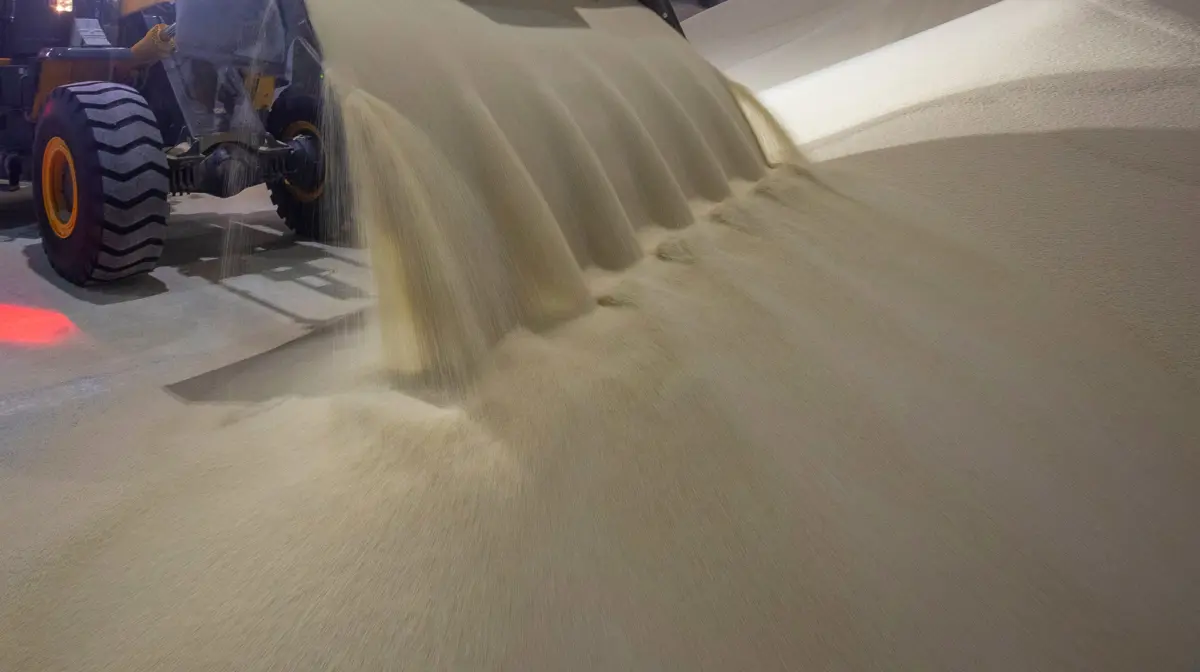
WAGGAMAN, La. — In a historic move designed to shore up domestic food security and inject much-needed competition into a heavily consolidated market, agricultural giant CHS Inc. and global fertilizer leader OCP North America have announced a joint proposal to build a $450 million phosphate fertilizer manufacturing facility in Waggaman, Louisiana.
The ambitious project represents a watershed moment for American agriculture. If completed, it will be the first domestic phosphate fertilizer plant built in the United States in more than four decades. Designed to produce upwards of one million tons of phosphate-based fertilizer annually, the facility aims to slash the nation’s reliance on foreign imports by nearly half, providing a vital buffer against escalating global trade disruptions and geopolitical volatility.
Main Facts
The proposed industrial complex in Waggaman is structured as a strategic partnership between CHS Inc., the nation’s leading farmer-owned cooperative, and OCP North America, a subsidiary of Morocco’s OCP Group, which commands the world’s largest reserves of phosphate rock.
Key details of the project include:
- Capital Investment: Approximately $450 million.
- Production Capacity: More than 1 million tons of phosphate-based fertilizer annually.
- National Impact: Capable of reducing US dependency on imported phosphate fertilizers by over 48%.
- Supply Chain Mechanics: OCP will supply essential phosphoric acid to the facility. The finished products will be distributed jointly through OCP North America and CHS’s extensive farm-cooperative network.
- Timeline: Construction is projected to take up to two years, pending final project-related permits and funding approvals.
- Historical Significance: The facility is the first grassroots phosphate production plant of its kind initiated in the United States in over 40 years.
Chronology of Events
The road to the Waggaman facility has been paved by a series of compounding global crises, regulatory tensions, and trade policy shifts over recent years:
- The Geopolitical Shockwaves (2022–2024): The onset of the Russia-Ukraine conflict dramatically disrupted global fertilizer and energy markets, pinching nitrogen and phosphate flows. Subsequent conflicts in the Middle East compounded these supply chain shocks, sending international fertilizer prices skyrocketing and exposing vulnerabilities in Western food supply networks.
- Antitrust Scrutiny Mounts (May 2026): Amid growing concerns over the concentration of domestic fertilizer production—dominated historically by a small handful of players—the US Department of Agriculture (USDA) and federal regulators turned a critical eye toward the industry. In late May, Federal Trade Commission (FTC) Chairman Ferguson announced a formal agency probe into the fertilizer sector to address anti-competitive practices and high costs for growers.
- Tariffs Suspended to Aid Farmers (June 2026): For roughly five years, domestic producers like The Mosaic Co. successfully backed heavy duties on Moroccan fertilizers, arguing they were dumped into the US market at below-market rates. However, facing immense pressure on farm margins, the White House intervened in late June 2026, temporarily pausing duties on Moroccan fertilizer imports to lower costs and stabilize the agricultural economy.
- Price Volatility Reaches a Head (August 2026): Diammonium phosphate (DAP) benchmark prices in New Orleans climbed to a one-year high early in the month, though they retreated slightly by late August according to Bloomberg Green Markets data, underscoring the urgent need for predictable domestic output.
- The Official Announcement (Late August 2026): CHS Inc. and OCP North America formally unveiled the $450 million joint venture at a high-profile industry and government event in Louisiana, instantly shifting the narrative toward domestic infrastructure investment.
Supporting Data and Market Dynamics
To fully grasp the magnitude of the Waggaman plant, it is necessary to examine the current baseline of American phosphate production. According to data from Bloomberg Green Markets, the entire United States produced approximately 5 million metric tons of finished phosphate fertilizers in 2024.
Adding an additional 1 million tons of annual capacity from a single domestic facility will fundamentally alter national supply equations. The United States currently relies heavily on international imports to meet the demands of its massive agricultural sector. By mitigating this reliance by more than 48%, the plant will insulate American farmers from international price shocks.
Furthermore, the project alters the competitive landscape regarding foreign supply. Morocco’s OCP Group provides a steady stream of phosphoric acid—the primary building block for phosphate fertilizers—leveraging its status as the holder of the world’s largest phosphate rock reserves.
This partnership directly impacts the domestic market structure. Historically, The Mosaic Co. has stood as the undisputed titan of US phosphate production. Mosaic previously spearheaded trade petitions resulting in countervailing duties on Moroccan imports, arguing that state-backed pricing disadvantaged domestic miners and manufacturers. While those duties were paused by the White House to give relief to the farm economy, the entry of OCP into a direct joint manufacturing venture with a major American cooperative like CHS introduces a novel economic dynamic that bypasses traditional import-versus-domestic friction through localized production.
Official Responses
The announcement drew immediate, enthusiastic praise from senior government officials who flew to Louisiana to herald the multi-million-dollar investment.
Agriculture Secretary Brooke Rollins did not mince words when addressing the audience at the launch event. Urging stakeholders to recognize the strategic weight of the project, Rollins stated:
"We need to clap real loud for that. That is a really big deal."
Echoing these sentiments, Deputy Agriculture Secretary Stephen Vaden emphasized the long-awaited introduction of market competition. For years, the USDA has monitored corporate consolidation within the agricultural inputs sector, expressing deep concern that high input costs were eroding farm profitability.
"The facility will provide true competition for the American farmer’s dollar as a new entry comes to play to battle for their business," Vaden remarked during the event.
By fostering a competitive marketplace, the federal government hopes to see downward pressure on pricing, giving relief to growers who have weathered extreme volatility in seed, fuel, and chemical expenses over the past half-decade.
Implications for American Agriculture and Global Trade
The construction of the Waggaman phosphate facility carries profound implications across multiple economic and geopolitical vectors:
1. Enhanced National Food Security
Agriculture is a matter of national security. When foreign wars disrupt shipping lanes in the Black Sea or the Red Sea, American crop yields are indirectly threatened by skyrocketing nutrient prices. By producing a significant portion of its required fertilizer domestically, the United States insulates its agricultural output from foreign conflicts, ensuring stable food production for domestic consumption and global export.
2. Redefining Domestic Market Competition
The entry of CHS and OCP breaks up long-standing supply monopolies and regional pricing power. Independent retailers and agricultural co-ops will have alternative avenues for sourcing essential nutrients, driving price transparency and commercial competitiveness. This directly aligns with the broader antitrust enforcement trends sweeping through Washington, signaling that federal agencies favor decentralized, competitive agricultural supply chains.
3. Geopolitical Alignment and Supply Chain Realignment
The partnership bridges the gap between North American agricultural logistics and North African resource reserves. While trade friction and anti-dumping duties previously created friction between US producers and Morocco’s OCP Group, this joint venture shifts the relationship from adversarial trade conflict to integrated industrial cooperation. By anchoring foreign reserves to domestic processing infrastructure on the Mississippi River corridor, both entities secure long-term market access.
4. Environmental and Regulatory Hurdles
Though the project has received high-level political backing, it still faces the rigorous gauntlet of American environmental and industrial permitting. Constructing a major chemical and mineral processing facility along the Gulf Coast requires navigating complex state and federal regulations, particularly concerning wastewater management, air quality, and emissions standards. If CHS and OCP can successfully navigate these reviews within their targeted two-year construction window, the plant could serve as a blueprint for future infrastructure investments in critical domestic sectors.
Ultimately, the Waggaman project stands as a testament to the changing paradigm of global trade—where resilience, localized manufacturing, and strategic international partnerships are replacing the fragile, hyper-globalized supply chains of the past. For the American farmer, relief may finally be on the horizon.
