

DUBAI/WASHINGTON — The geopolitical landscape of the Middle East plunged deeper into uncertainty on Monday as a senior Iranian official announced that Tehran is abandoning its defensive military posture in favor of a "fully offensive" strategy. The policy pivot comes amid the total collapse of diplomatic efforts to broker a permanent end to the devastating war initiated by the United States and Israel on February 28, 2026.
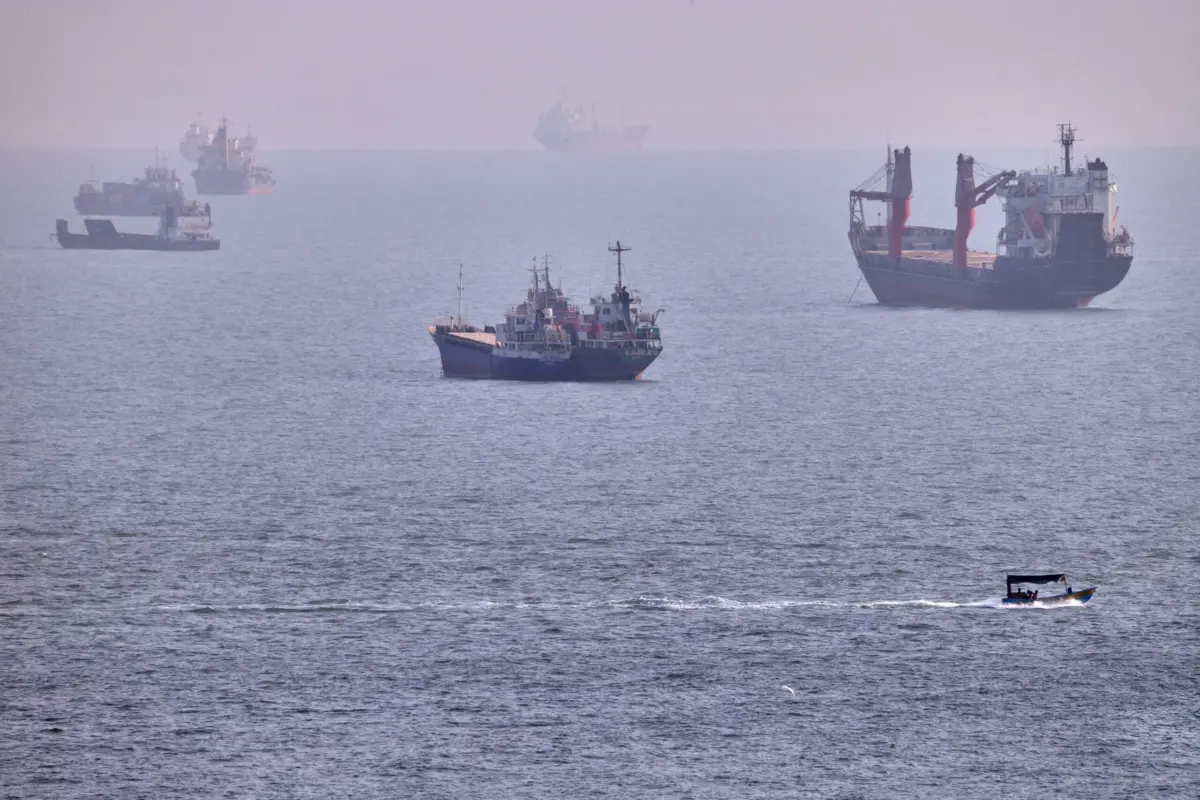
With peace negotiations deadlocked and regional maritime trade choking under an ongoing U.S. naval blockade, prospects for regional stability have evaporated. The breakdown threatens not only to escalate military confrontations in the vital Strait of Hormuz but also to widen the theater of war as allied militant groups renew attacks on strategic shipping lanes.
Main Facts
The collapse of the diplomatic framework stems from the expiration of a June 17 Memorandum of Understanding (MoU). Designed to establish a 60-day ceasefire and lay the groundwork for a comprehensive treaty—including curbs on Iran’s nuclear program and the lifting of punishing U.S. economic sanctions—the interim agreement officially unraveled on Monday.
At the heart of the failure is an intractable dispute over the management of the Strait of Hormuz, a narrow maritime chokepoint through which roughly one-fifth of the world’s petroleum and liquefied natural gas transited prior to the outbreak of hostilities.
- The Sovereignty Dispute: Tehran insists that Point 5 of the June MoU granted it the authority to manage the strait, which it shares with Oman. Washington firmly rejects this interpretation, leading to renewed hostilities as the Iranian military began targeting vessels attempting to traverse the waterway via unapproved routes.
- Iran’s Ultimatum: A senior Iranian official told Reuters that Tehran is prepared to execute a "timely and precise" military strike to break the U.S. naval blockade if diplomatic channels remain closed. Iran has also issued a strict short-term ultimatum demanding full U.S. implementation of all agreement provisions as a non-negotiable precondition for future talks.
- U.S. Stance: Rejecting compromise, U.S. President Donald Trump asserted in a Monday interview with Fox News that Iran "should put up the white flag of surrender." Trump has previously floated unilateral plans to declare the Strait of Hormuz sovereign U.S. territory once the military campaign concludes.
Chronology of the Conflict
The current crisis represents the culmination of months of escalating tensions, diplomatic false starts, and shifting military maneuvers:
- February 28, 2026: United States and Israeli forces launch a massive wave of military strikes against targets inside Iran, officially igniting the current war.
- June 17, 2026: Washington and Tehran sign an interim Memorandum of Understanding aimed at an immediate, permanent cessation of military operations across all fronts, setting a 60-day deadline for a final settlement.
- July 7, 2026: Following weeks of friction over maritime rights in the Persian Gulf, President Trump declares that the June peace pact is "over."
- August 2026: Separate bilateral negotiations between Tehran and Muscat regarding the management of the Strait of Hormuz stall, prompting severe American threats directed at regional intermediaries.
- Monday (Expiration Date): The deadline for the final deal under the June MoU passes without agreement. Tehran formally announces its shift to a "fully offensive" military doctrine, while Houthi forces execute new missile strikes in the Bab el-Mandeb Strait.
Official Responses and Rhetoric
The diplomatic failure has been met with a hardening of rhetoric from both Washington and Tehran, accompanied by threats directed at regional actors.
Following the breakdown of the talks, President Trump took to Truth Social to reiterate the foundational war aims of his administration, writing: "The number one Goal is, and always will be, that Iran cannot have, in any way, shape, or form, a Nuclear Weapon."
In his Fox News interview, Trump adopted an aggressively combative tone regarding Oman, which has been attempting to mediate the management of the Strait of Hormuz. When asked about Omani involvement in the maritime negotiations, Trump bluntly stated: "If Oman gets in the way, we’ll bomb the shit out of them." Omani authorities have thus far issued no official response to the threat.
Meanwhile, Iranian officials have signaled that restraint is no longer part of their strategic calculus. "Iranian entities must be prepared to escalate tensions in the Strait of Hormuz and wider region, as Iran will be ready to make decisions and take action on difficult decisions," the senior Iranian official warned. Tehran plans to transmit its strict implementation deadlines to Washington through regional intermediaries, placing the onus entirely on the United States to avert a wider conflagration.
Supporting Data and Economic Fallout
The human and financial toll of the multi-front conflict continues to mount, rippling through global markets and drawing in non-state actors.
Human Cost and Regional Spillover
Thousands of lives have been lost since the war began in late February, with the heaviest casualties concentrated in Iran and Lebanon. In retaliation for the initial U.S. and Israeli bombardment, Iranian forces have successfully struck American military assets and infrastructure across several regional states, including Oman, Jordan, Kuwait, Israel, the United Arab Emirates, and Saudi Arabia.
The conflict has also metastasized via regional proxies. On Monday, Yahya Saree, the military spokesperson for Yemen’s Iran-backed Houthi movement, announced via Telegram that the group had launched a missile attack targeting a Saudi military ship and four escort vessels in the Bab el-Mandeb Strait. This strategic chokepoint connects the Red Sea to the Gulf of Aden, serving as a critical artery for international trade. Saudi authorities have not yet issued an official confirmation of the incident.
Global Energy Markets
The disruption of Persian Gulf logistics has thrown global energy markets into turmoil. Benchmark Brent crude oil futures (LCOc1), which hovered near historical norms before the conflict, skyrocketed to a peak of $126 a barrel—roughly 75% above pre-war levels.
While prices have fluctuated wildly based on conflicting reports regarding peace breakthroughs, Brent crude ticked upward on Monday to trade at approximately $89 a barrel. The volatile pricing reflects lingering deep-seated market anxiety over persistent supply chain vulnerabilities. Addressing domestic concerns at a rally on Friday, President Trump warned American consumers to brace for sustained high fuel prices for the duration of the conflict.
Implications
The transition of Iran’s military doctrine from defensive containment to a "fully offensive" posture carries profound implications for global security and economic stability.
- Increased Risk of Direct Naval Confrontation: With Iran vowing to use precise military force to break the U.S. naval blockade in the Strait of Hormuz, the probability of an unintended escalation between regular military forces has spiked exponentially. A miscalculation in the narrow waters could rapidly draw external powers into a direct shooting war.
- Prolonged Energy Insecurity: The breakdown of diplomatic channels ensures that shipping lanes in the Persian Gulf and the Red Sea will remain high-risk zones. This persistent maritime insecurity guarantees that global energy prices will stay elevated, threatening to stoke inflationary pressures worldwide.
- Expansion of the Regional Footprint: The continued involvement of groups like the Houthis demonstrates that the conflict can no longer be contained within the borders of Iran, Israel, and the immediate Gulf states. Peripheral nations, including critical regional mediators like Oman and Saudi Arabia, find themselves directly in the crosshairs of both belligerents and allied militant factions.
As the deadlines pass and diplomatic channels freeze, the Middle East stands at a perilous precipice, bracing for what both Washington and Tehran signal could be the most violent phase of the conflict yet.
