

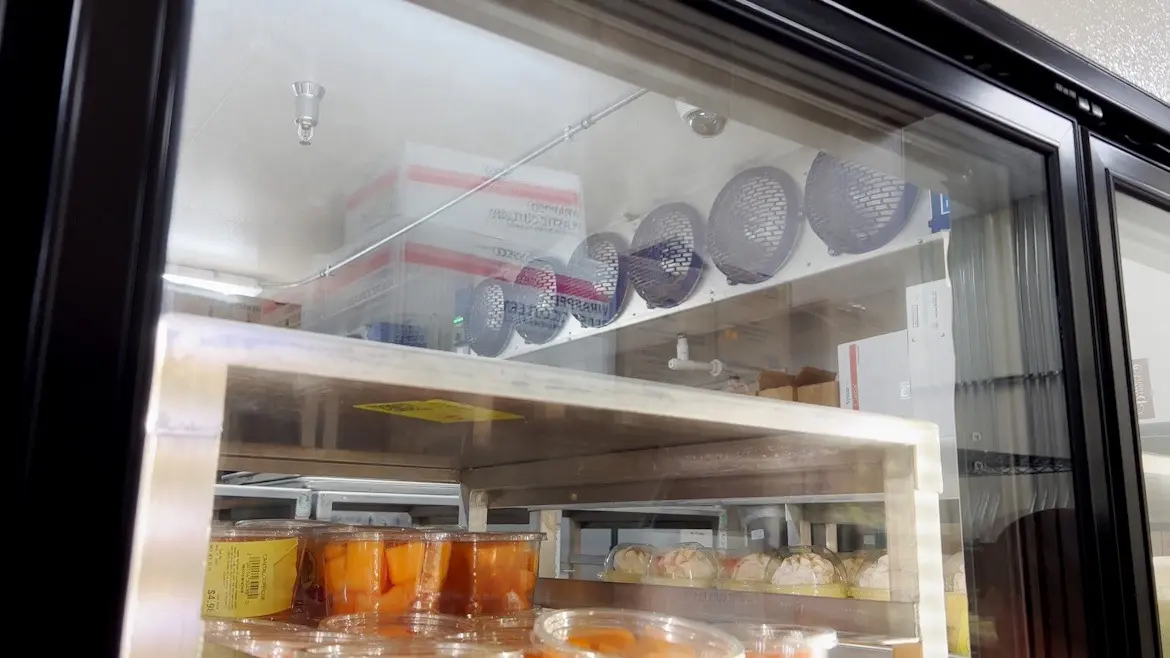
For restaurateurs, convenience store operators, and small-format retailers, survival has always been a masterclass in managing razor-thin profit margins. From food costs and fluctuating utility rates to labor shortages and supply chain hiccups, running a Main Street business leaves little room for error. Today, however, a new, complex layer of regulatory pressure is forcing these operators to make multi-decade capital equipment decisions that could quietly make or break their bottom lines.
Ongoing, aggressive changes to federal and international refrigerant regulations are compelling store owners to weigh infrastructure options that carry staggering cost and compliance implications. These are not choices that can be deferred or ignored; they strike at the heart of daily operations, touching everything from cold-storage display cases to rooftop HVAC systems.
As the regulatory noose tightens around traditional synthetic chemicals, small-format operators find themselves at a historic crossroads. The equipment choices they make today will dictate their compliance status, energy consumption, and capital expenditures for the next twenty to thirty years.
The Main Facts: The End of an Era for Synthetic Refrigerants
At the core of this industrial upheaval is a sweeping federal and global mandate to eliminate synthetic chemicals that damage the Earth’s atmosphere. Over the past several decades, the U.S. Environmental Protection Agency (EPA) and international environmental bodies have systematically restricted the use of hydrochlorofluorocarbons (HCFCs) and hydrofluorocarbons (HFCs).
Older HCFCs—notoriously recognized by brand names like Freon—were found to severely deplete the ozone layer. Under the landmark Montreal Protocol and domestic clean-air laws, they were aggressively phased out. To replace them, the industry pivoted heavily toward HFCs. While HFCs proved to be ozone-safe, scientists later realized they are potent greenhouse gases with global warming potentials (GWPs) thousands of times higher than carbon dioxide.
Consequently, the EPA—most notably through the American Innovation and Manufacturing (AIM) Act—is executing a mandatory phasedown of HFC production and consumption by 85% over a span of fifteen years. This phasedown has drastically increased the market price of legacy refrigerants while placing strict caps on new equipment installations that rely on them.
Faced with these federal restrictions, small-format operators are forced to look at the next generation of cooling agents. The market has bifurcated into two primary pathways: newer synthetic HFO (hydrofluoroolefin) blends and natural refrigerants like propane (R-290) and carbon dioxide ($CO_2$, or R-744). Each option comes with a complex web of trade-offs, balancing upfront capital expenses against long-term operational ownership costs, safety regulations, and looming environmental liabilities.
Chronology of Change: A History of Chemical Transitions
To understand the weight of today’s decisions, it is crucial to examine how the commercial refrigeration industry arrived at this juncture. The trajectory of refrigerant evolution highlights a recurring cycle of technological adaptation driven by environmental discovery and government intervention.
- The Early 20th Century ($CO_2$ Era): Long before synthetic chemicals dominated the market, carbon dioxide was widely used as a refrigerant. Its use peaked during the 1930s. However, because $CO_2$ operates at significantly higher pressures than other compounds of the era, systems required heavy, specialized steel piping and complex welding techniques.
- The Rise of Synthetics (Mid-to-Late 20th Century): The discovery of chlorofluorocarbons (CFCs) and later HCFCs revolutionized commercial cooling. These chemicals operated at much lower pressures, were cheaper to produce, and were perceived as safe and stable. They quickly eclipsed $CO_2$, which was largely relegated to industrial history books for the next several decades.
- The Ozone Crisis and Montreal Protocol (1987): Scientific consensus revealed that CFCs and HCFCs were destroying the stratospheric ozone layer. The international community rallied to sign the Montreal Protocol, setting legal frameworks to ban ozone-depleting substances and ushering in the HFC generation.
- The Climate Awakening (Late 2000s–2010s): While HFCs saved the ozone layer, climate scientists identified them as super-pollutants driving global temperature increases. Global pressure mounted to address HFCs directly.
- The AIM Act and Modern Mandates (2020–Present): The passage of the AIM Act in the United States gave the EPA direct authority to phase down HFCs. Simultaneously, building codes and safety standards began adapting to accommodate flammable and high-pressure alternatives, bringing natural refrigerants and advanced synthetics into the commercial mainstream.
Supporting Data: Weighing the Technical Alternatives
As store operators consult with HVAC/R (Heating, Ventilation, Air Conditioning, and Refrigeration) contractors, they must evaluate the engineering realities of the two main replacement categories.
1. HFO Refrigerants: The Synthetic Compromise
Many of the EPA-approved HFO blends designed to replace HFCs boast significantly lower GWPs. However, many of these low-GWP HFOs are classified by safety standards as A2L—meaning they are mildly flammable.
- Infrastructure Impact: Installing A2L-compatible equipment is not a simple drop-in replacement. It often requires the integration of dedicated refrigerant leak-detection sensors throughout the store. Depending on the building’s layout, operators may also need to install new exhaust fans or drill additional roof and wall penetrations to ensure proper ventilation in the event of a leak.
- The PFAS "Forever Chemical" Threat: Beyond installation hurdles, long-term regulatory clouds are gathering over HFOs. Many HFO refrigerants contain per- and polyfluoroalkyl substances (PFAS), commonly referred to as "forever chemicals." Linked to cancer, endocrine disruption, and other severe health risks, PFAS are already facing sweeping regulatory bans and restrictions in Europe.
For small business owners who have already survived multiple costly refrigerant transitions over the past thirty years, the prospect of investing in a synthetic chemical that could be outlawed domestically due to PFAS concerns is a massive, unacceptable business risk.
2. Natural Refrigerants: Returning to the Elements
To bypass the regulatory uncertainties of synthetic chemistry, many engineers and forward-thinking retailers are turning to natural refrigerants, which have zero or near-zero GWP and do not degrade into persistent chemical pollutants.
- Propane (R-290) for Self-Contained Units: For small, self-contained display cases, reach-in refrigerators, and standalone freezers, hydrocarbon refrigerants like R-290 have proven exceptionally efficient and reliable. However, strict safety limits on charge sizes restrict propane’s use to self-contained equipment. It cannot safely be used in large, remote systems that require piping refrigerant across a building to a centralized rack.
- Carbon Dioxide ($CO_2$ / R-744) for Remote Systems: For walk-in coolers, large cold-room applications, and remote supermarket-style layouts, $CO_2$ is rapidly gaining market share. Modern metallurgy has solved the historical problems that sidelined $CO_2$ in the mid-20th century. Today, advanced copper alloys and precise electronic controls allow $CO_2$ systems to withstand high operating pressures using standard brazing practices—eliminating the need for the specialized steel pipe welding required by historical systems. Furthermore, modern microprocessors allow these systems to dynamically maintain stable temperatures as ambient outdoor conditions fluctuate.
Official Responses and Industry Insights: The NASRC Training Summit
Recognizing that education is the primary bottleneck in the adoption of natural refrigerants, industry stakeholders are mobilizing. At a recent natural refrigeration training summit hosted by the North American Sustainable Refrigeration Council (NASRC), more than a half-dozen major equipment manufacturers showcased remote $CO_2$ condensing units engineered specifically for small-footprint store applications.
The summit provided contractors, technicians, and end-users with a rare hands-on opportunity to interrogate manufacturers about installation requirements, maintenance protocols, and operational best practices.
A dominant, recurring theme across nearly all presentations at the summit was the critical importance of ambient temperature management.
"Operators must understand the thermodynamic limits of the equipment they are buying," noted one lead applications engineer during a technical seminar. "$CO_2$ systems operate brilliantly under normal conditions, but they have a specific physical threshold."
That threshold is the critical point—the exact temperature and pressure at which $CO_2$ loses the direct relationship between temperature and pressure, occurring at 88°F. When ambient outdoor temperatures climb above 88°F, the energy efficiency of a standard $CO_2$ system begins to decline.
To combat this limitation, manufacturers at the NASRC summit showcased robust new units rated for seamless operation in ambient temperatures up to 110°F. Several companies even introduced advanced adiabatic cooling options—systems that utilize a fine mist of water to pre-cool incoming air during extreme heatwaves, thereby preserving system efficiency even in scorching summer climates.
Additionally, manufacturers emphasized that modern $CO_2$ equipment is intentionally designed to mimic the user experience of traditional HFC systems. Piping requires standard brazing, and electrical user interfaces are increasingly intuitive. However, representatives stressed that system charging procedures, pressure safety margins, and emergency handling protocols are entirely unique. To bridge this knowledge gap, equipment makers are aggressively rolling out specialized technician training programs across North America.
Financial Implications: Upfront Costs vs. Long-Term Survival
For a convenience store owner or restaurateur operating on razor-thin margins, capital expenditure is king. When evaluating these new refrigeration technologies, the financial picture requires careful analysis of both short-term pain and long-term gain.
Upfront Capital Expenditures
It is no secret that $CO_2$ systems and advanced A2L-compliant setups carry a higher initial price tag than legacy HFC equipment. Specialized valves, high-pressure-rated components, and leak-detection safety systems inflate equipment and installation costs.
However, as manufacturing scale increases and component availability improves, that cost gap is rapidly narrowing. Recognizing the public health and environmental benefits of moving away from harmful synthetics, several progressive states—most notably California—are actively exploring financial incentive programs, grants, and tax credits to help offset the initial hardware costs for small businesses.
Long-Term Operating Economics
When viewed through a multi-year lens, natural refrigerants offer compelling economic advantages:
- Lower Refrigerant Replacement Costs: Synthetic HFCs and HFOs are proprietary chemicals whose prices are skyrocketing under federal phasedown caps. By contrast, $CO_2$ is an inexpensive, readily available commodity-grade fluid. If a leak occurs, recharging a $CO_2$ system costs a fraction of refilling a synthetic system.
- Energy Efficiency: When properly designed—especially with heat-management features like adiabatic cooling—$CO_2$ systems deliver exceptional energy efficiency, helping to trim monthly utility bills.
- Regulatory Immunity: Perhaps the greatest financial benefit of choosing natural refrigerants is the absolute elimination of regulatory risk. Store owners who invest in $CO_2$ or R-290 units completely insulate themselves from the looming threat of future EPA bans, compliance fines, and forced equipment retrofits tied to synthetic chemicals and potential PFAS restrictions.
Strategic Recommendations for Small-Format Retailers
As regulatory deadlines draw closer, industry experts urge small business operators to avoid making reactive, panic-driven purchasing decisions when a legacy walk-in cooler or display case finally fails.
Instead, proactive planning is essential. Retailers should take the following steps:
- Consult Early with Certified Contractors: Engage reputable HVAC/R contractors who possess specific, certified training in A2L synthetics and natural refrigerant systems. Do not rely on legacy technicians who are unfamiliar with high-pressure $CO_2$ or flammable hydrocarbons.
- Evaluate Total Cost of Ownership: Look past the initial invoice. Calculate projected utility costs, anticipated maintenance expenses, refrigerant refill costs, and the risk of future regulatory fines over a 15-to-20-year horizon.
- Investigate Local Incentives: Check with state energy offices, local utility providers, and environmental agencies to determine if grants or rebates are available for energy-efficient, low-GWP commercial refrigeration upgrades.
By carefully weighing these critical factors today, restaurateurs and small-format retailers can protect their narrow profit margins, ensure seamless compliance with federal mandates, and future-proof their operations for decades to come.
