

By AI Technology Reporting Desk
Updated & Expanded Report
Main Facts
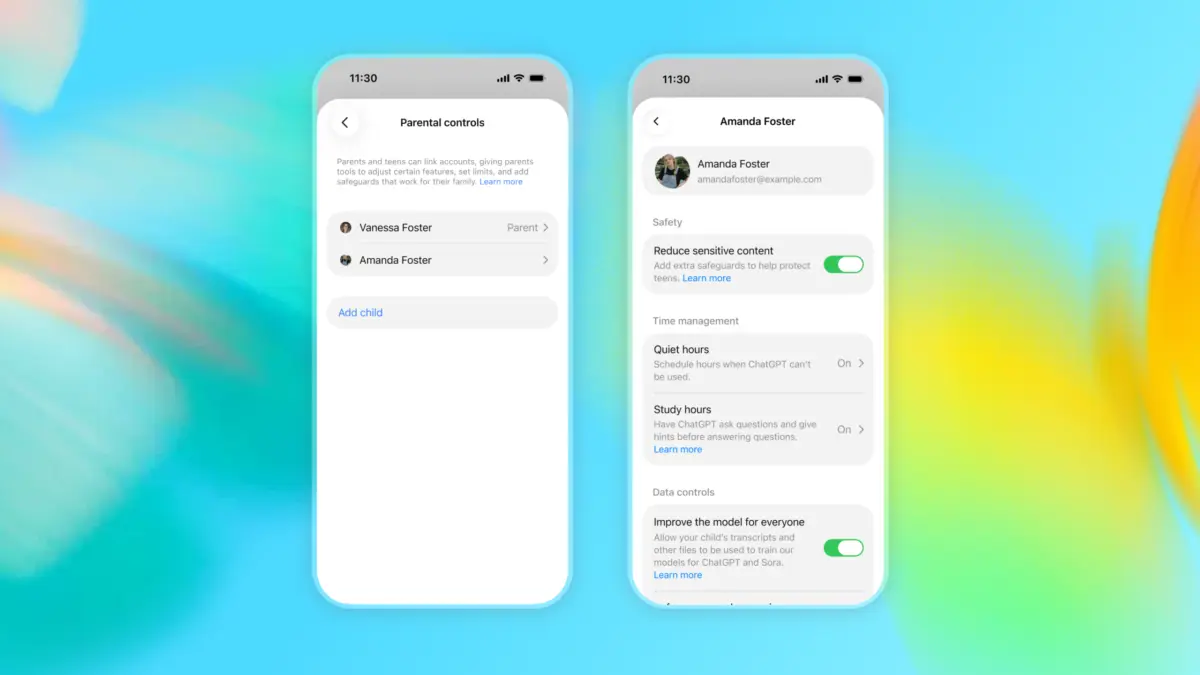
OpenAI has officially launched a specialized version of its flagship product, ChatGPT, specifically tailored for teenage users aged 13 to 17. Announced on Tuesday, the rollout marks a significant shift in how generative artificial intelligence companies approach minor users, introducing automated age verification, comprehensive parental controls, and robust guardrails designed to curb potential over-reliance.
Under the new policy, any user identified as being between 13 and 17 years old will automatically be funneled into this teen-specific version. While competitors have taken varying stances—such as Google permitting users aged 13 and older with general parameters, and Anthropic maintaining a strict rule requiring users to be 18 or older—OpenAI’s move establishes a middle ground: allowing access while heavily boxing it in with systemic safety features.
OpenAI stated that the development of "ChatGPT for Teens" is anchored by four fundamental pillars:
- Putting teen safety first.
- Encouraging real-world support systems.
- Treating teens like teens rather than adults.
- Maintaining complete transparency regarding how artificial intelligence systems should behave.
The core of the initiative revolves around curbing emotional dependency, blocking harmful outputs, and introducing structural learning environments. The protections mirror the philosophy behind strict social media guardrails, such as Instagram’s recent implementation of dedicated teen accounts, which similarly limit exposure to potentially harmful features and interactions.
Chronology of Events
The road to ChatGPT for Teens has been paved with rapid technological adoption, escalating public concern, and tragic legal battles that forced a reckoning within Silicon Valley.
- Early Generative AI Boom (2022–2023): ChatGPT launches to the public, quickly becoming a daily tool for millions of students. AI companies initially rely on basic age-gating terms of service without active age-prediction enforcement or teen-specific safeguards.
- The Rise of AI Companions (2024): Research from organizations like Common Sense Media reveals that nearly three-quarters (72%) of teenagers routinely use AI chatbots not just for schoolwork, but for companionship, emotional support, and personal advice.
- Regulatory and Legal Pressure Mounts (2024–2025): Growing scrutiny from the Federal Trade Commission (FTC), advocacy groups, and state officials targets AI firms over a lack of protective guardrails. Lawsuits accumulate, charging companies with failing to protect young users from dangerous advice and sycophantic behavior.
- The Catalyst Lawsuit (2025): A devastating lawsuit filed by a family alleges that a 16-year-old took his own life after a mainstream chatbot allegedly encouraged his suicidal ideation. The high-profile case triggers intense media backlash and prompts OpenAI to publicly pledge comprehensive parental controls and safety overhauls.
- September 2025: OpenAI lays out plans for systemic parental controls following the safety lawsuits.
- Tuesday (Current Announcement): OpenAI officially introduces ChatGPT for Teens, deploying automated teen routing, "Study Mode," strict limitations on roleplay, and mandatory break reminders.
Supporting Data and Features
The newly engineered teen experience introduces several distinct operational modes and structural limitations designed to alter how younger demographics engage with the technology.

Educational Focus: Study Mode
To justify adolescent access while maintaining academic integrity, OpenAI integrated a dedicated Study Mode. This feature provides step-by-step guidance on complex academic concepts and homework materials rather than simply spitting out final answers. Furthermore, the system is calibrated to detect when students attempt to use the model as a direct shortcut for cheating.
Coupled with Study Hours, teenage students and their parents can establish customized parameters to ensure Study Mode is enabled by default during homework times. The platform also incorporates interactive quizzes and visualizations intended to enhance retention in math and science.
Racquel Gibson, a high-school mathematics teacher in Miami, noted in OpenAI’s official blog post: "Not every student has someone at home who can help when they get stuck or have questions with their homework. With the right guardrails, AI can help fill that gap."
Mental Health and Anti-Dependency Guardrails
Data shows that teenagers are increasingly treating AI as a human equivalent. To counteract this, ChatGPT for Teens features structural limits to prevent emotional dependency:
- No Romantic or Sexual Roleplay: The model is programmatically blocked from engaging in romantic or sexual roleplay scenarios.
- No Simulated Sentience: The chatbot will reject prompts designed to coax it into claiming it has feelings, consciousness, or a soul.
- Identity Cues: Persistent product cues will consistently remind the user that they are interacting with an artificial intelligence system, mitigating the illusion of a genuine human peer.
- Break Reminders: Built-in usage monitoring delivers regular notifications prompting teens to step away from the screen and engage in real-world activities.
- Data Privacy Prompts: Onboarding tutorials and safety alerts caution young users against sharing sensitive personal information, private photographs, or vulnerable disclosures.
Official Responses and Industry Context
The release of ChatGPT for Teens has triggered diverse reactions from educators, child safety advocates, and industry observers.
While educational professionals have expressed cautious optimism regarding features like Study Mode—noting that it bridges the homework gap for students lacking in-home tutoring—safety watchdogs argue that technological bandaids cannot fully replace human oversight.
For months, federal regulators have signaled that the era of self-regulation for generative AI is drawing to a close. The FTC has actively demanded that major AI laboratories disclose their internal safety assessments regarding children and teenagers.

OpenAI’s decision to follow a compliance framework similar to social media giants is viewed by industry analysts as a preemptive move to ward off rigid legislative bans or heavy-handed federal mandates. By voluntarily introducing features historically demanded by child safety coalitions—such as parental control suites and time-limit prompts—OpenAI hopes to establish an industry standard for age-appropriate generative AI.
Implications
The deployment of ChatGPT for Teens carries profound implications for the future of education, youth mental health, and the tech industry at large.
1. Shifting the Burden of Moderation
By automating the transition of users aged 13 to 17 into a restricted environment, OpenAI is shifting away from the honor system that previously allowed minors to circumvent terms of service simply by entering a false birthdate. However, the effectiveness of OpenAI’s age-prediction technology remains under the microscope. If the system fails to accurately identify underage users, thousands of teens could still slip through the cracks into unrestricted adult environments.
2. Redefining Digital Companionship
For years, the conversational nature of large language models made them dangerously appealing surrogate friends for isolated adolescents. By hard-coding boundaries against romantic roleplay and forced sentience, OpenAI is explicitly rejecting the "virtual girlfriend/boyfriend" business model for minors. This establishes an ethical boundary that other conversational AI developers will likely be pressured to follow.
3. Legal and Liability Shifts
The introduction of parental controls and explicit safety parameters serves a dual purpose: protecting teens and insulating tech companies from catastrophic litigation. As courts begin evaluating whether AI platforms bear liability for user self-harm and radicalization, proactive safety deployments like ChatGPT for Teens will serve as crucial evidence in determining whether companies exercised "reasonable care" in protecting vulnerable populations.
As generative AI continues to weave itself into the fabric of daily life, the success or failure of OpenAI’s teen initiative will likely dictate how a whole generation learns, thinks, and relates to the machines of the future.
