ANAHEIM, Calif. — Entering its momentous 10th-anniversary year, Blizzard Entertainment’s flagship hero shooter, Overwatch, is undergoing one of the most volatile transformations in its history. Following a sweeping February announcement that promised an unprecedented 10 new heroes throughout the year—more than triple the historical annual average—the game is keeping its foot firmly on the gas.
Unveiled to an ecstatic crowd at BlizzCon 2026, Season 5 is slated to launch next month, bringing the ninth of those promised 10 heroes to the battlefield. But the impending update is far from a standard content drop. Alongside the introduction of a brand-new support character named Doctrine, Blizzard is rolling out profound, kit-reconfiguring reworks for two legacy roster members: the notorious hacker Sombra and the apex predator Tank, Roadhog.
For a game striving to maintain momentum a decade into its lifecycle, Season 5 represents a major philosophical pivot toward team synergy, high-skill expression, and the mitigation of long-standing community frustrations.
Main Facts: The Season 5 Paradigm Shift
The upcoming fifth season of Overwatch’s milestone year centers on three primary character updates that will dramatically alter team compositions across casual and competitive play:
Doctrine Joins the Support Roster: A vampiric villain tied deeply to Doomfist’s lore, Doctrine debuts as the ninth hero of the 10-hero initiative. He relies on a staff rather than a firearm, utilizing an accuracy-based, mechanics-heavy toolkit centered on empowering allies and enfeebling enemies.
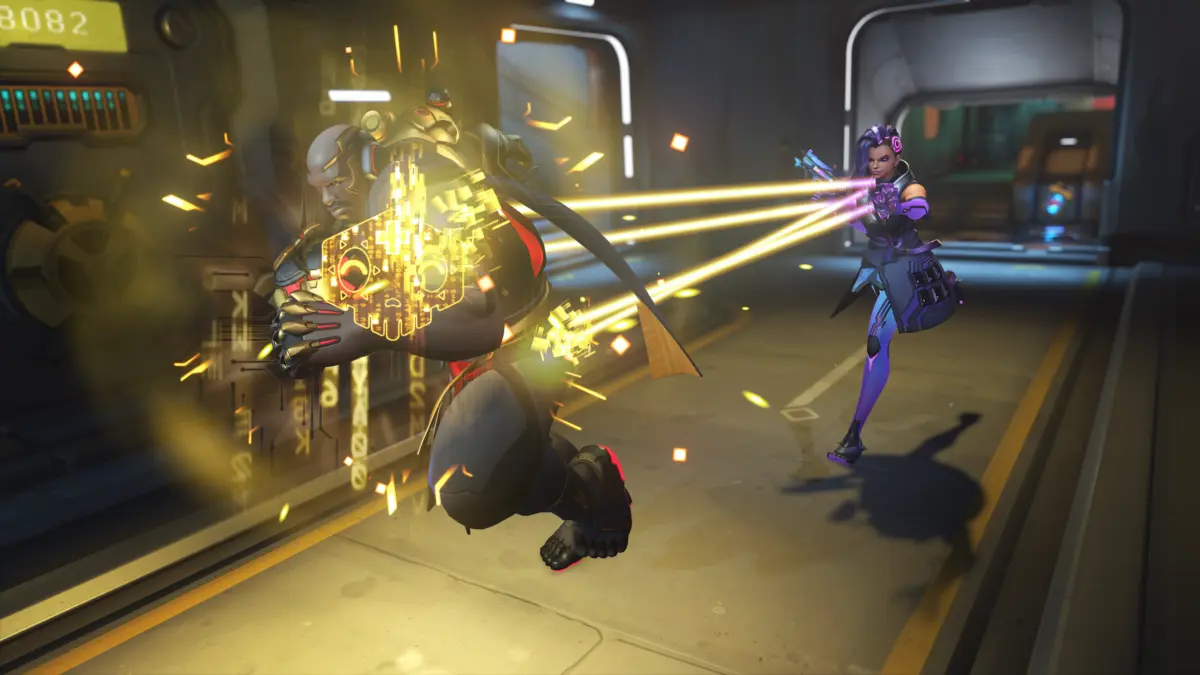
Sombra Moves to the Support Role: After years of serving as a polarizing damage-role disruptor, Sombra is officially crossing the aisle. Her reworked kit introduces healing capabilities and defensive utility while preserving her core identity as an invisible hacker equipped with a translocator and an EMP ultimate.
Roadhog Loses His One-Shot Combo: Remaining in the Tank role, Roadhog is receiving adjustments to his chain hook distance and gun mechanics designed to eliminate his infamous instant-kill combo. In exchange, he receives a new "Trash Compactor" ability that converts absorbed damage into offensive output.
Chronology: The Road to BlizzCon 2026 and Beyond
To understand the weight of the Season 5 updates, one must look at the rapid cadence Blizzard has established throughout Overwatch’s anniversary year.
February 2026: Blizzard kicks off Overwatch’s 10th-anniversary celebrations by dropping a bombshell roadmap: 10 new heroes would be added to the hero shooter over the course of the year. This aggressive strategy aimed to revitalize interest and disrupt stale meta-strategies that had plagued competitive play.
September 2026 (BlizzCon): Attendees at BlizzCon 2026 get their first hands-on experience with the upcoming content. Blizzard showcases the ninth hero of the year, Doctrine, and details the forthcoming reworks for Sombra and Roadhog. Journalists and content creators are given early playtest windows to evaluate how the new and modified kits function in live environments.
Next Month (Season 5 Launch): Doctrine, the Sombra support transition, and the Roadhog rework are officially deployed to live servers. Blizzard plans to monitor community reception closely, particularly looking at how players adapt to Sombra’s healing output and Doctrine’s high skill ceiling.
Supporting Data & Character Breakdowns
Blizzard’s design philosophy for Season 5 leans heavily into mechanical depth and tactical resource management. Hands-on impressions from BlizzCon reveal intricate details about how these characters play in practice.
Doctrine: The Vampire Strategist
Doctrine’s design bridges the gap between a menacing aesthetic and high-utility support play. Armed with a staff rather than a gun, his posture and demeanor project an air of aristocratic superiority. However, his gameplay is fiercely active.
Alternate Fire (The Core Mechanic): Doctrine’s alternate fire allows him to accumulate charges that supercharge his active abilities.
Infuse: When combined with Infuse, Doctrine’s primary fire transitions into a piercing projectile that damages enemies more effectively. Furthermore, pairing Infuse with his dash grants him free flight (Shrouded Momentum), while simultaneously applying self-healing and attack-speed buffs to himself that he would otherwise grant exclusively to allies.
Ultimate Ability: Deliverance: Embodying his vampiric fantasy, Doctrine summons a swarm of bat-like drones. These drones grant overhealth to friendly targets while systematically draining and reducing the maximum health pool of opposing players for several seconds.
Sombra: From Flanker to Healer
Sombra holds the dubious distinction of receiving more reworks than any other hero in Overwatch history—totaling five major iterations before this shift. Historically plagued by a design loop where her invisibility and silence mechanics generated immense community frustration, Sombra is now being re-engineered to heal teammates and strip enemy damage output rather than simply locking opponents out of using their abilities. Despite the shift, her signature Translocator and EMP ultimate remain intact.
Roadhog: Moving Away from the "Lone Wolf" Mentality
Roadhog’s traditional playstyle has long depended on the "hook-and-cook" combo—reeling an enemy in with his chain hook and instantly eliminating them with a point-blank scrap gun blast. Season 5’s modifications reduce the pull distance and alter weapon mechanics to effectively neuter this instant-kill loop, forcing Roadhog players to adopt a more team-oriented approach supplemented by his new Trash Compactor ability.
Official Responses and Developer Insights
Speaking at BlizzCon 2026, Overwatch developers shed light on the motivations behind these radical changes, emphasizing player experience, balance, and role identity.
Kenny Hudson, Lead Hero Producer on Overwatch, addressed the high skill ceiling associated with the game’s newest additions.
"He [Doctrine] seems pretty versatile, but I think there’s going to be a high skill ceiling for him as well, because it’s accuracy-based," Hudson noted.
Commenting on Doctrine’s ultimate ability, Hudson suggested that its impact on team fights would mirror the decisive nature expected of support ultimates, dictating the flow of engagements.
Regarding Sombra’s historic transition to the support category, Hudson explained that the development team aimed to eliminate the friction inherent in her previous kit.
"The idea was [to] take away the frustration of getting hacked and shot out of anywhere and the friction that comes from being unable to use your abilities," Hudson said, noting that internal playtests yielded surprisingly smooth results regarding how naturally the hacker translated into a supportive role.
Art Director Dion Rogers elaborated on Doctrine’s visual language, explaining how the character’s austere presentation and use of a staff help maintain role clarity.
"His posture and use of a staff, rather than a gun, embody a dangerous support character without connoting a different role entirely," Rogers stated, distinguishing Doctrine from traditional damage-dealing threats.
On the Tank side, Hero Designer Scott Kennedy discussed the intent behind Roadhog’s new Trash Compactor ability. Kennedy explained that the feature was engineered to give Roadhog a mechanism for protecting and assisting his team, steering him away from his historical reputation as a solitary, roaming flanker.
Implications: What Season 5 Means for the Meta
The impending arrival of Season 5 raises critical questions about team composition, meta stability, and community adaptation.
For Doctrine, the high skill ceiling means early adoption may be rocky. Because his abilities require precise accuracy and careful management of empowered states, low-rank players may struggle to extract maximum value, whereas high-ranking competitors could find him a dominant pick.
For Sombra, the implications are even more profound. Shifting a character from the damage roster to the support roster is a rare maneuver in hero shooters. The core community anxiety centers on healing throughput: will Sombra possess enough raw healing output to function as a primary support, or will selecting her force a team’s second support player to lock in a high-burst healer like Ana or Baptiste? If her utility fails to offset a lack of healing numbers, she risks remaining stuck in a liminal space between a maligned damage dealer and an ineffective healer. Conversely, if her utility package (speed boosts, overhealth, and damage mitigation) clicks, she could pioneer a hyper-aggressive support meta.
For Roadhog, the removal of his instant-kill hook combo alleviates a primary source of player frustration, but it introduces concerns regarding team chemistry. Critics worry that without his solo elimination threat, Roadhog players will continue to wander off-angle, leaving their frontline exposed if they whiff their skillshots. However, modern Overwatch tanking in a 5v5 environment often rewards off-angle pressure—a tactical reality that could ultimately make Roadhog a more consistent, less feast-or-famine asset.
As the community prepares to dive into the upcoming trial weekend and the official Season 5 launch next month, Overwatch stands at a fascinating crossroads. By aggressively injecting new blood into the support category and daringly reinventing problematic veterans, Blizzard is signaling that its 10th-year celebration is not just a look back at a decade of gaming history, but a bold gamble on the game’s future.